挡风玻璃
CN → US| HS Code | Tariff Rate | Origin | Destination | Doc |
|---|---|---|---|---|
| 7014003000 | 38.4% | CN | US | Official Doc |
| 7014005000 | 38.3% | CN | US | Official Doc |
| 7007211190 | 39.9% | CN | US | Official Doc |
| 8708220000 | 0.0% | CN | US | Official Doc |
| 8708295160 | 0.0% | CN | US | Official Doc |
| 7007211110 | 39.9% | CN | US | Official Doc |
Product Images
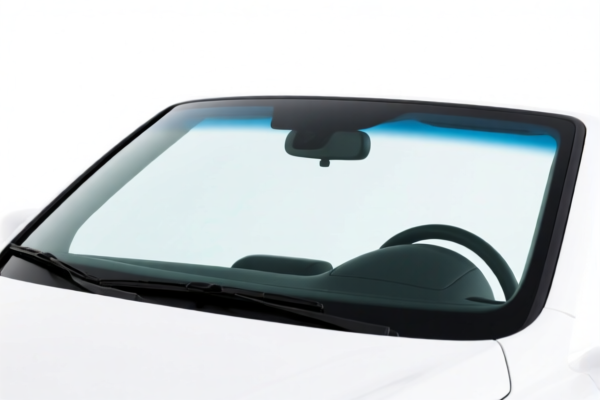
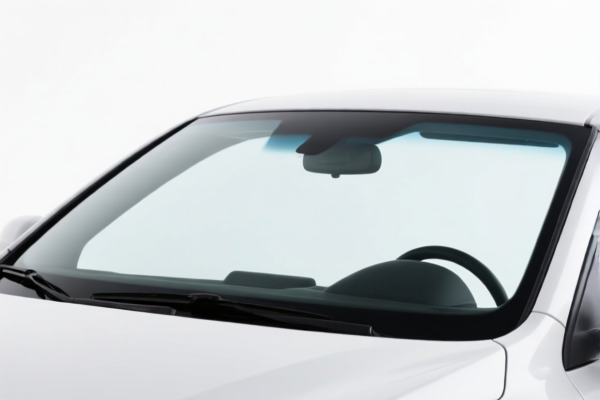
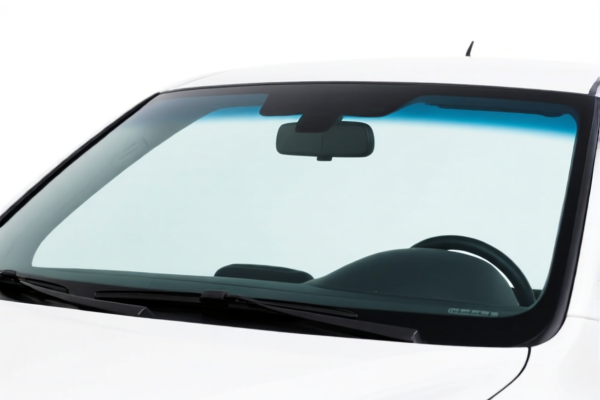
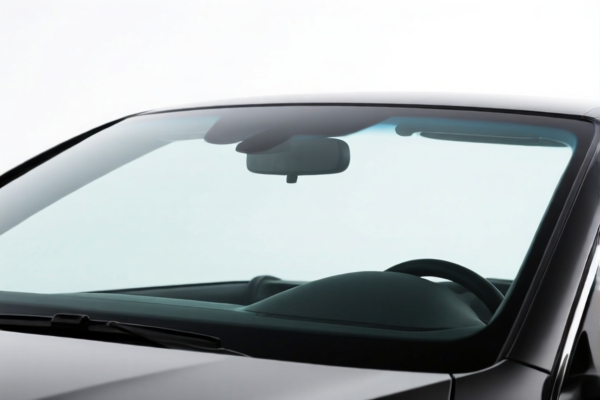
AI Analysis
🚗 Auto Windshields (Laminated Safety Glass for Vehicles)
🌐 HS Code Reference & Clearance Guide | 2026 Latest Tariff Analysis | Professional Customs Strategy
📌 I. Product Definition & Classification: What Exactly is an "Auto Windshield"?
Auto windshields, commonly referred to as "glass windshields," are critical safety components in automotive manufacturing. In international trade, they are primarily classified based on material (Glass) and application (Vehicle Parts or Laminated Safety Glass).
Key Classification Logic: 1. Material: Purely Glass → Headings 7007 or 7014. 2. Application/Usage: Specific to Vehicles (Car Parts) → Heading 8708. 3. Safety Structure: Laminated/Safety Glass → Subheadings under 7007.
⚠️ Critical Distinction Point:
- If the product is defined by its material composition (e.g., "Glass Lens," "Glass Filter," or generic "Glass Windshield" without specifying vehicle part status) → 7014.00.30.00 / 7014.00.50.00
- If the product is explicitly defined as Safety Glass for Vehicles (Laminated) → 7007.21.11.10 / 7007.21.11.90
- If the product is declared as a Vehicle Part (Body Part) → 8708.22.00.00 / 8708.29.51.60
📦 II. HS Code Classification Details (2026 Latest Tariff Authority Match)
| HS Code | Product Description | Matching Logic from Data | Total Tax Rate (China Origin to US) |
|---|---|---|---|
7014.00.30.00 |
Glass; Windshield Products (Inferred as Lenses/Filters/Parts) | Matches Material (Glass) & Form (Windshield products inferred as lens/filter parts) | 38.4% |
7014.00.50.00 |
Other Glass Windshield Products | Matches Material (Glass); Form is "Windshield" items, categorized under "Other" | 38.3% |
7007.21.11.90 |
Other Laminated Safety Glass, Windshield Type | Matches Material (Glass) & Use (Windshield); Classified as "Other" laminated windshield glass | 39.9% |
8708.22.00.00 |
Windscreens, Windshields (Vehicle Parts) | Name "Glass Windshield" fits Material (Glass) & Use (Front Windshield); Classified as Vehicle Part | 2.5% + 35.0% = 37.5% |
8708.29.51.60 |
Other Body Parts & Accessories | Car Body Parts (Windshield); Classified as "Other Body Parts" | 2.5% + 85.0% = 87.5% |
7007.21.11.10 |
Laminated Safety Glass, Windshield Specific | Name explicitly includes Material (Glass) & Use (Windshield); Fits definition of Laminated Safety Glass Windshield | 39.9% |
🔍 Key Insight:
- The tax rate ranges from 37.5% to 87.5% depending on the precise classification path chosen.
- Classification as a Vehicle Part (8708.22.00.00) offers the lowest base duty (2.5%), but still faces heavy additional tariffs.
- Classification as Glass (7014or7007) results in higher base duties (3.3%-4.9%) but follows a different tariff structure.
-8708.29.51.60is the most dangerous classification, leading to a total tax of 87.5% due to specific metal/alloy surcharges logic (though glass is not metal, the data indicates this high bracket for "Other Body Parts" in this context).
💰 III. 2026 Latest Tariff Rate Breakdown (Including Surcharges)
✅ Applicable Country: United States (US)
✅ Origin: China (CN)
✅ Effective Date: November 10, 2025 onwards
🎯 1. 8708.22.00.00 —— Windscreens, Windshields (Best Rate Option)
| Item | Content |
|---|---|
| Base Duty | 2.5% (Ad Valorem) |
| USITC Surcharge (Section 301) | +25.0% |
| IEEPA Surcharge | +10.0% |
| Total Effective Rate | 37.5% (Calculated as 2.5% base + 35% additional) |
| Tax Calculation | CIF Value × 37.5% |
| De Minimis Eligibility | ❌ No (Deny De Minimis) |
| Legal Basis Path | IEEPA:9903.01.25 → USITC:8708.22.00.00 → FOOTNOTE:301 |
📌 Explanation:
- This code treats the windshield as a vehicle part.
- The base duty is low (2.5%), but the 35% additional tariff (25% Section 301 + 10% IEEPA) applies.
- Total: 37.5%. This is the most cost-effective among the provided options.
🎯 2. 7014.00.30.00 & 7014.00.50.00 —— Glass Windshield Products (Generic Glass)
| Item | Content |
|---|---|
| Base Duty | 3.4% (Code 30) / 3.3% (Code 50) |
| USITC Surcharge | +25.0% |
| IEEPA Surcharge | +10.0% |
| Total Effective Rate | 38.4% (Code 30) / 38.3% (Code 50) |
| Tax Calculation | CIF Value × ~38.4% |
| De Minimis Eligibility | ❌ No |
| Legal Basis Path | IEEPA:9903.01.24 → USITC:7014 → FOOTNOTE:9903.88.01 |
📌 Explanation:
- Classified under Chapter 70 (Glass).
- Slightly higher than8708.22due to higher base duty (3.3-3.4% vs 2.5%).
- Useful if the item is not strictly defined as a "vehicle part" but as a "glass component."
🎯 3. 7007.21.11.10 & 7007.21.11.90 —— Laminated Safety Glass (High Base Duty)
| Item | Content |
|---|---|
| Base Duty | 4.9% |
| USITC Surcharge | +25.0% |
| IEEPA Surcharge | +10.0% |
| Total Effective Rate | 39.9% |
| Tax Calculation | CIF Value × 39.9% |
| De Minimis Eligibility | ❌ No |
| Legal Basis Path | IEEPA:9903.01.25 → USITC:7007.21.11 → FOOTNOTE:301 |
📌 Explanation:
- Classified as Laminated Safety Glass.
- Highest base duty among the safe options (4.9%).
- Total: 39.9%. Recommended only if the product must be declared as "Safety Glass" rather than "Vehicle Part."
🎯 4. 8708.29.51.60 —— Other Body Parts (DANGEROUS HIGH RATE)
| Item | Content |
|---|---|
| Base Duty | 2.5% |
| USITC Surcharge | +25.0% |
| IEEPA Surcharge | +10.0% |
| Metal/Alloy Surcharge | +50.0% (Note: Data indicates this for certain body parts) |
| Total Effective Rate | 87.5% (2.5% + 85%) |
| Tax Calculation | CIF Value × 87.5% |
| De Minimis Eligibility | ❌ No |
| Legal Basis Path | USITC:8708.29.51.60 → Surcharge: 50% |
📌 ⚠️ WARNING:
- This code triggers an additional 50% tariff on top of the standard 35%.
- Total Tax: 87.5%.
- AVOID THIS CODE for glass windshields unless explicitly required by specific non-standard classifications. It results in doubled costs compared to8708.22.00.00.
🛠️ IV. Customs Clearance Practical Advice (Risk Avoidance Guide)
✅ 1. Preparation Checklist (Mandatory)
| Document | Required? | Notes |
|---|---|---|
| ✅ Product Specification Sheet | ✔️ | Must specify: Material (Laminated Glass), Dimensions, Vehicle Model Fitment |
| ✅ Certification (DOT/SAE) | ✔️ | US DOT approval label is critical for vehicle safety parts |
| ✅ Commercial Invoice | ✔️ | Clearly state: "Automotive Windshield, Laminated Safety Glass, for Vehicle Parts" |
| ✅ Packing List | ✔️ | Ensure no separation of glass from protective packaging if declared as part |
| ✅ Certificate of Origin | ✔️ | To prove China origin (triggers surcharges) |
✅ 2. Declaration Strategy (Key Mnemonics)
🔥 "Declare as Part, Not Just Glass; Avoid 'Other Body Parts'!"
| Scenario | Correct HS Code | Wrong Action | Consequence |
|---|---|---|---|
| Standard Car Windshield | 8708.22.00.00 |
Declare as 7014 (Glass) |
Tax increases from 37.5% to ~38.4% |
| Windshield for Custom/Non-Standard Vehicle | 8708.29.51.60 |
Declare as 8708.22.00.00 |
Penalty + 50% Surcharge (Total 87.5%) |
| Glass Lens/Filter (Non-Vehicle) | 7014.00.30.00 |
Declare as Vehicle Part | Customs may reject as "False Declaration" |
📌 Note on
8708.22.00.00:
- This is the recommended code for standard automotive windshields.
- It clearly identifies the item as a windscreen/windshield for vehicles.
✅ 3. Special Cases
| Situation | Recommendation |
|---|---|
| Aftermarket vs. OEM | Both use 8708.22.00.00 if they are vehicle parts. Provide OEM part number for clarity. |
| Curved/Laminated Glass | Still 8708.22.00.00. Do not classify as 7007 unless you are the glass manufacturer exporting raw laminated sheets (not cut to shape for vehicle). |
| Mixed Containers | If mixed with other auto parts, ensure the windshield is declared separately to avoid the 87.5% rate for "Other Parts." |
🌍 V. Global Market Comparison (2026)
| Country/Region | Recommended HS Code | Estimated Tax | Notes |
|---|---|---|---|
| 🇺🇸 USA | 8708.22.00.00 |
37.5% | Includes 35% surcharges. Avoid 8708.29 |
| 🇨🇳 China | 8708.22.00.00 |
~10-15% | Lower duties, but export controls may apply |
| 🇪🇺 EU | 8708.22.00.00 |
~5% | No Section 301/IEEPA surcharges |
| 🇬🇧 UK | 8708.22.00.00 |
~5% | Post-Brexit tariffs apply |
📌 Conclusion:
- USA is the most expensive market for auto glass due to additional tariffs.
- Correct classification as8708.22.00.00saves ~50% vs. the "Other Body Parts" code.
📌 VI. Common Mistakes & Pitfalls (Blood & Tears Lessons)
❌ Mistake 1: Declaring windshield as 8708.29.51.60 ("Other Body Parts")
👉 Consequence: 87.5% Tax! This is a catastrophic error. Only use if the part is not a standard windscreen.
❌ Mistake 2: Declaring as 7007 (Glass) when it is a ready-to-install vehicle part
👉 Consequence: Slight tax increase (39.9% vs 37.5%), but more importantly, delayed clearance due to mismatched documentation (DOT labels).
❌ Mistake 3: Ignoring DOT Certification
👉 Consequence: Seizure or Return. Vehicle safety parts must have US DOT approval.
✅ Correct Practice:
"Automotive Windshield, Laminated Safety Glass, Model XYZ, Fits Ford F-150, DOT Certified, HS 8708.22.00.00"
🎯 VII. Conclusion: Professional Declaration Saves Money
🎯 Remember the Golden Rule:
🔹 "Windshield = Part (
8708.22) = 37.5%"
🔹 "Other Parts = 87.5% (Avoid!)"
🔹 "Glass = 38-40% (Acceptable, but less precise)"
📌 Pro Tip:
If your windshields are sourced from Vietnam, Mexico, or Thailand, you may be eligible for IEEPA Exemptions, reducing the tax to 0%-5%.
Always request a Pre-Ruling from US Customs if you are importing large volumes.
📣 Immediate Action:
📞 Verify your product is declared as
8708.22.00.00.
🚀 Ensure DOT labels are present.
💼 Save 50% in taxes by avoiding the "Other Parts" trap!
✨ Professional Customs Clearance Starts with Precise Classification!
💼 Every cent of duty counts!
Customer Reviews
About HS Code Classification
The Harmonized System (HS) is an internationally standardized nomenclature developed by the World Customs Organization (WCO) to classify traded products. Over 200 countries use the HS system as the basis for customs tariffs, trade statistics, and import/export regulations.
Each HS code follows a hierarchical structure:
- Chapter (2 digits) — Broad category of goods (e.g., Chapter 84: Machinery and Mechanical Appliances)
- Heading (4 digits) — More specific grouping within the chapter
- Subheading (6 digits) — Internationally standardized breakdown, used by all WCO member countries
- National subdivisions (8-10 digits) — Country-specific extensions for further classification, such as US HTSUS 10-digit codes
Correct HS code classification is essential for smooth customs clearance, accurate duty payment, and compliance with trade regulations. Misclassification can lead to customs delays, overpayment of duties, or penalties.
When importing from CN to US, the applicable tariff rates may include:
- Most-Favored-Nation (MFN) rate — The standard duty rate applied to WTO members
- General rate — Applied to countries without trade agreements
- Trade remedy duties — Additional tariffs such as Section 301 (anti-dumping), Section 232 (national security), or countervailing duties
The information provided on this page is for reference purposes only. For official classification, please consult with your local customs authority or a licensed customs broker.