排气管
CN → US| HS Code | Tariff Rate | Origin | Destination | Doc |
|---|---|---|---|---|
| 8708925000 | 37.5% | CN | US | Official Doc |
| 8708921000 | 35.0% | CN | US | Official Doc |
| 8421320000 | 35.0% | CN | US | Official Doc |
| 8421390130 | 35.0% | CN | US | Official Doc |
| 7307933010 | 91.2% | CN | US | Official Doc |
Product Images
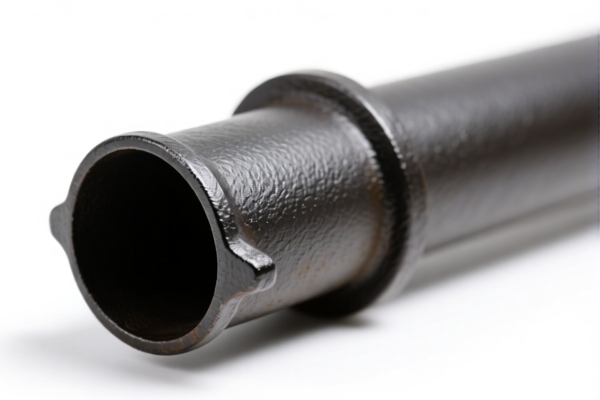
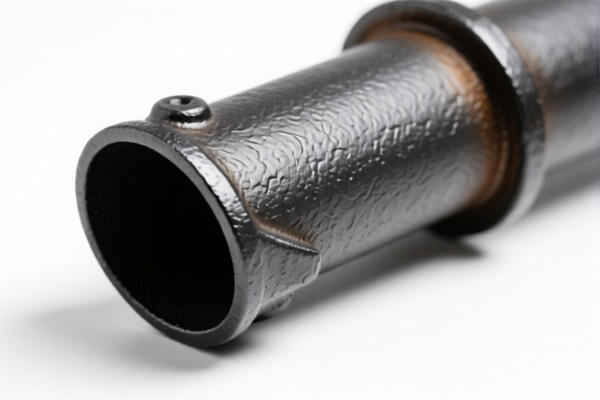
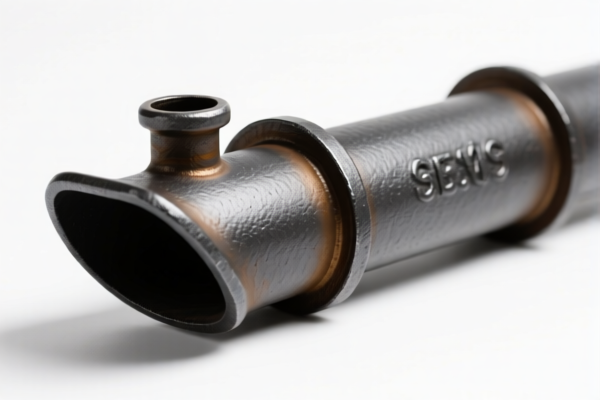
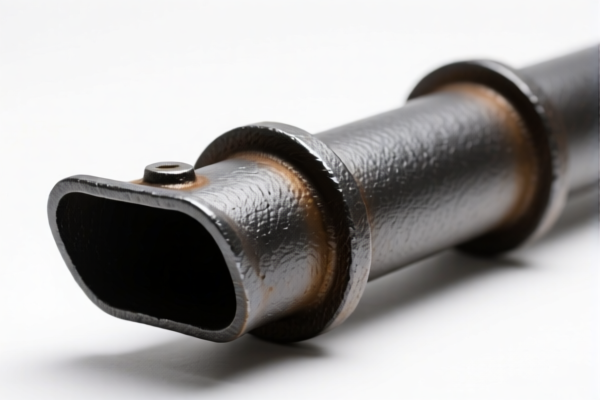
AI Analysis
🚗 Exhaust Pipes & Mufflers (Automotive Exhaust Systems)
🌐 HS Code Reference & Customs Clearance Guide | 2026 Latest Tariff Analysis | Professional Entry Strategy
📌 I. Product Definition & Classification: Do You Truly Understand "Exhaust Pipes"?
Exhaust pipes are critical components of an automotive emission control system, responsible for directing harmful gases away from the engine and cabin. In international trade, they are generally classified into two distinct categories based on material composition and functional definition:
1. Steel/Iron Pipe Fittings (7307 Series):
Made of iron or non-alloy steel, these are treated as generic industrial pipe fittings or tubes. This classification focuses on the material rather than the end-use.
2. Vehicle Parts & Accessories (8708 Series):
Treated specifically as auto parts, regardless of material, provided they are identifiable as components for motor vehicles. This classification focuses on the function.
⚠️ Key Distinction Point:
- If the exhaust system is made of non-alloy steel (most common for standard automotive pipes), it often falls under the high-tariff7307category due to specific trade restrictions on steel products.
- If classified strictly as a vehicle part under Chapter 87, it may benefit from a lower base rate, but still attracts significant surcharges.
- Critical Warning: The US imposes heavy "122 Clause" tariffs on steel, aluminum, and copper products, which drastically impacts the7307classification.
📦 II. HS Code Classification Details (2026 Latest Tariff Authority Comparison)
Based on the provided data, here are the precise HS Codes, summaries, and corresponding tax structures.
| HS Code | Product Summary | Material/Function | Total Tax Rate* |
|---|---|---|---|
7307.93.30.40 |
Pipe fittings of iron or non-alloy steel, suitable for automotive exhaust pipes and tubular structures. | Material: Iron/Non-alloy Steel | 91.2% |
8708.92.50.00 |
Parts and accessories for motor vehicles, matching the use of automotive exhaust pipes. | Function: Auto Part | 37.5% |
7307.99.50.45 |
Inferred as pipe fittings made of iron or non-alloy steel based on automotive part common sense. | Material: Iron/Non-alloy Steel | 89.3% |
7307.93.30.40 |
Exhaust systems fall under the pipe fitting/component category, meeting iron/non-alloy steel material requirements. | Material: Iron/Non-alloy Steel | 91.2% |
8708.92.50.00 |
Components included in the exhaust system meet the definition of parts and accessories under this code. | Function: Auto Part | 37.5% |
🔍 Important Note:
- The same physical product (exhaust pipe) can be declared under7307(higher tax) or8708(lower tax) depending on how the customs authority interprets the primary characteristic.
-7307.93.30.40and7307.99.50.45carry extremely high tariffs due to the "122 Clause" (Section 232) targeting steel products.
-8708.92.50.00is the most favorable option for auto parts but is still subject to 301 tariffs and IEEPA surcharges.
💰 III. 2026 Latest Tariff Rate Breakdown (Including Surcharges & Policy Add-ons)
✅ Applicable Country: United States (US)
✅ Origin: China (CN)
✅ Effective Time: From November 10, 2025 (for subsequent imports)
🎯 1. 7307.93.30.40 —— Pipe Fittings of Iron or Non-Alloy Steel
This code attracts the highest tariffs due to the combination of base duty, Section 301 tariffs, and Section 232 (Steel) tariffs.
| Item | Details |
|---|---|
| Base Duty | 6.2% (ad valorem) |
| Section 301 Surcharge | +25.0% (Trade Act of 1974, Section 301) |
| 122 Clause (Section 232) Surcharge | +50% (Specifically for Steel, Aluminum, Copper products) |
| Total Tax Rate | 91.2% |
| Tax Calculation | CIF Value × 91.2% |
| De Minimis Exemption | ❌ Not Eligible (deny_de_minimis) |
| Legal Basis Path | IEEPA:9903.01.25 → USITC:7307.93.30.40 → FOOTNOTE:9903.88.01 (Steel/Copper/Aluminum) |
📌 Explanation:
- The 50% steel surcharge is the main driver of the high cost. Any exhaust pipe made of iron or non-alloy steel falls under this strict category.
- Even if intended for cars, the material definition triggers the Section 232 tariff.
- Total 91.2% makes this classification commercially unviable for most standard steel exhaust components without significant duty mitigation strategies.
🎯 2. 8708.92.50.00 —— Parts and Accessories of Motor Vehicles
This code classifies the exhaust system as a generic auto part, avoiding the specific steel surcharge but still incurring trade war tariffs.
| Item | Details |
|---|---|
| Base Duty | 2.5% (ad valorem) |
| Section 301 Surcharge | +25.0% (Trade Act of 1974, Section 301) |
| 122 Clause Surcharge | +10% (General 122 Clause application for certain goods) |
| Total Tax Rate | 37.5% |
| Tax Calculation | CIF Value × 37.5% |
| De Minimis Exemption | ❌ Not Eligible (deny_de_minimis) |
| Legal Basis Path | IEEPA:9903.01.24 → USITC:8708.92.50.00 |
📌 Note:
- This is the preferred classification for automotive exhaust systems if defensible as a "part."
- It avoids the heavy 50% steel tariff, saving ~50% in duties compared to the7307classification.
- However, it is still not duty-free. The 37.5% rate remains high.
🎯 3. 7307.99.50.45 —— Other Pipe Fittings of Iron or Non-Alloy Steel
Similar to 7307.93.30.40, this code targets non-alloy steel fittings but under a different subheading.
| Item | Details |
|---|---|
| Base Duty | 4.3% (ad valorem) |
| Section 301 Surcharge | +25.0% |
| 122 Clause Surcharge | +50% (Steel, Aluminum, Copper) |
| Total Tax Rate | 89.3% |
| Tax Calculation | CIF Value × 89.3% |
| De Minimis Exemption | ❌ Not Eligible |
📌 Note:
- Slightly lower base duty (4.3% vs 6.2%) than7307.93.30.40, but the total tax remains prohibitive due to the 50% steel surcharge.
🛠️ IV. Customs Clearance Practical Advice (Battle-Tested Pitfall Guide)
✅ 1. Required Documentation Checklist (No Exceptions)
| Document | Must Provide | Explanation |
|---|---|---|
| ✅ Product Specification Sheet | ✔️ | Must detail material (e.g., "Stainless Steel 304" vs "Iron/Non-Alloy Steel"). Crucial for avoiding Section 232 tariffs. |
| ✅ Material Certificates | ✔️ | Proof of alloy composition. If it's stainless steel, it may escape the "non-alloy steel" 50% surcharge. |
| ✅ Product Photos (Clear Label) | ✔️ | Must show "Made in China" and part numbers. |
| ✅ Commercial Invoice | ✔️ | Description must be precise: e.g., "Automotive Exhaust Pipe, Part #XYZ." |
| ✅ Packing List | ✔️ | Clearly state quantity and weight. |
| ✅ Origin Certificate | ✔️ | If from a country with FTAs, claim preferential rates. |
✅ 2. Declaration Strategies (Key Mnemonics)
🔥 "Material Matters, Part Status Saves!"
| Scenario | Correct Declaration | Wrong Action | Consequence |
|---|---|---|---|
| Exhaust Pipe made of Iron/Non-Alloy Steel | Try to declare as 8708.92.50.00 (Auto Part) |
Declare as 7307... (Pipe Fitting) |
Save ~54% in taxes! |
| Exhaust Pipe made of Stainless Steel | Declare as Stainless Steel Pipe Fitting | Declare as "Non-Alloy Steel" | Avoid the 50% Section 232 surcharge. |
| Complete Exhaust System with Muffler | Declare as Auto Part (8708) |
Split into pipes + mufflers | Consistency is key; splitting may raise red flags. |
| OEM Custom Exhausts | Provide OEM Order + Diagrams | Generic description "Exhaust Pipe" | Proves it is a dedicated auto part. |
✅ 3. Special Case Handling
| Situation | Handling Advice |
|---|---|
| High-End Stainless Steel Exhausts | If material is Stainless Steel (e.g., 304, 316), it is NOT "non-alloy steel." It may avoid the 50% Section 232 tariff. Ensure specs are explicit. |
| Aftermarket vs. OEM | OEM parts are easier to classify under 8708. Aftermarket may be scrutinized more heavily as "pipe fittings." |
| Mixed Shipments | Do not mix stainless steel and iron pipes in one declaration if possible. Keep them separate to optimize tariff application. |
🌍 V. Global Market Comparison (2026 Latest)
| Country/Region | Recommended HS Code | Estimated Duty | Certification | Note |
|---|---|---|---|---|
| 🇺🇸 USA | 8708.92.50.00 |
37.5% | NHTSA (if safety related) | Avoid 7307 if possible (91.2%). |
| 🇨🇳 China | 8708.92.50.00 |
Low/Exempt | CCC (if applicable) | No Section 301/232 tariffs. |
| 🇪🇺 EU | 8708.92.90 |
~10% | ECE R10/R34 | Standard auto part duty. |
| 🇬🇧 UK | 8708.92.90 |
~10% | UKCA | Post-Brexit rules apply. |
📌 Conclusion:
- The USA is the most challenging market due to the layered tariffs (Base + 301 + 232).
- Stainless Steel is a key differentiator. If you use stainless steel, you can potentially avoid the brutal 50% steel tariff.
- Non-alloy steel exhausts face a ~91% tax rate if classified as fittings.
📌 VI. Common Mistakes & Pitfall Guide (Lessons from the Field)
❌ Mistake 1: Declaring iron exhaust pipes as "General Pipe Fittings" (7307)
👉 Consequence: You pay 91.2% tax.
👉 Fix: Argue for Auto Parts (8708) classification to pay 37.5%.
❌ Mistake 2: Claiming "Stainless Steel" for non-alloy steel pipes to avoid Section 232
👉 Consequence: Customs inspection reveals mismatch → Seizure + Fines.
👉 Fix: Use accurate material specs. If it is 304/316, declare it as such.
❌ Mistake 3: Ignoring the "122 Clause" definition of Steel
👉 Consequence: Even auto parts made of steel can be hit if misclassified.
👉 Fix: Ensure 8708 classification is robustly supported by OEM documentation.
❌ Mistake 4: Using vague descriptions like "Auto Accessories"
👉 Consequence: Customs delays, manual classification → Higher risk of error.
👉 Fix: Be specific: "Automotive Exhaust System, Part Number XYZ, Material: Iron."
✅ Correct Approach:
"Automotive Exhaust Pipe, Part #ABC, Made of Iron, for Vehicle Model XYZ, OEM Part."
🎯 VII. Conclusion: Professional Declaration, Cost Savings!
🎯 Remember the Rules:
🔹 "Auto Parts Save, Steel Suffers!" (37.5% vs 91.2%)
🔹 "Stainless Steel is Your Friend!" (Avoids Section 232)
🔹 "HS Code Determines Fate!"
📌 Pro Tip:
If your exhaust pipes are made of stainless steel, ensure your supplier provides a Material Test Report confirming the alloy grade. This can significantly reduce your duty burden.
For non-alloy steel, consult a customs broker to see if 8708.92.50.00 can be successfully claimed as an auto part.
📣 Immediate Action:
📞 Contact a licensed customs broker + Provide Material Specs + Apply for Advance Ruling
🚀 Minimize your tax bill, ensure smooth clearance, and protect your profit margins!
✨ Professional Customs Clearance Starts with Precise Classification!
💼 Every Dollar Saved is a Dollar Earned!
Customer Reviews
About HS Code Classification
The Harmonized System (HS) is an internationally standardized nomenclature developed by the World Customs Organization (WCO) to classify traded products. Over 200 countries use the HS system as the basis for customs tariffs, trade statistics, and import/export regulations.
Each HS code follows a hierarchical structure:
- Chapter (2 digits) — Broad category of goods (e.g., Chapter 84: Machinery and Mechanical Appliances)
- Heading (4 digits) — More specific grouping within the chapter
- Subheading (6 digits) — Internationally standardized breakdown, used by all WCO member countries
- National subdivisions (8-10 digits) — Country-specific extensions for further classification, such as US HTSUS 10-digit codes
Correct HS code classification is essential for smooth customs clearance, accurate duty payment, and compliance with trade regulations. Misclassification can lead to customs delays, overpayment of duties, or penalties.
When importing from CN to US, the applicable tariff rates may include:
- Most-Favored-Nation (MFN) rate — The standard duty rate applied to WTO members
- General rate — Applied to countries without trade agreements
- Trade remedy duties — Additional tariffs such as Section 301 (anti-dumping), Section 232 (national security), or countervailing duties
The information provided on this page is for reference purposes only. For official classification, please consult with your local customs authority or a licensed customs broker.