排气阀
CN → US| HS Code | Tariff Rate | Origin | Destination | Doc |
|---|---|---|---|---|
| 8481400000 | 37.0% | CN | US | Official Doc |
| 8481809050 | 37.0% | CN | US | Official Doc |
| 8503009580 | 38.0% | CN | US | Official Doc |
| 8503009520 | 88.0% | CN | US | Official Doc |
| 7308909590 | 85.0% | CN | US | Official Doc |
| 7308305050 | 85.0% | CN | US | Official Doc |
Product Images
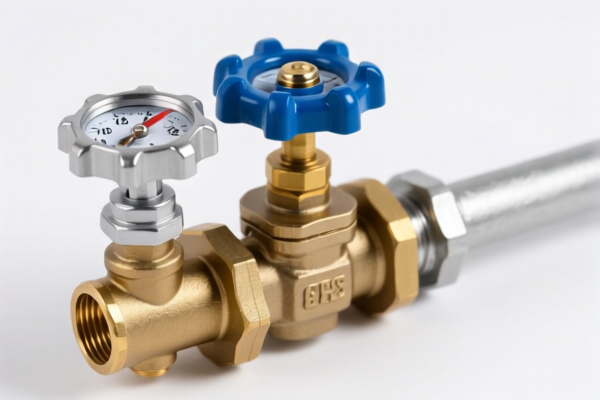
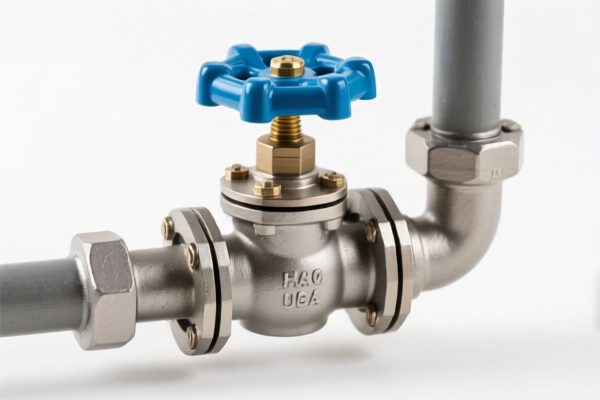
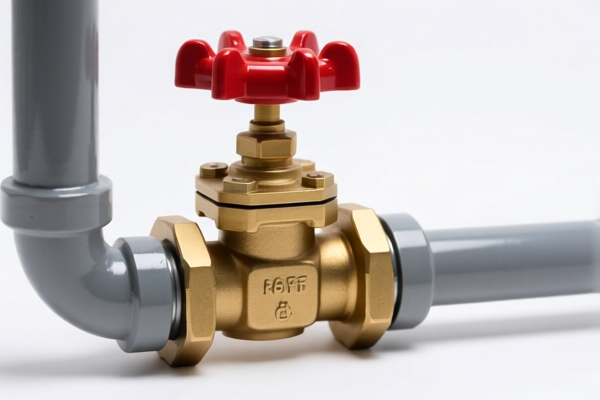
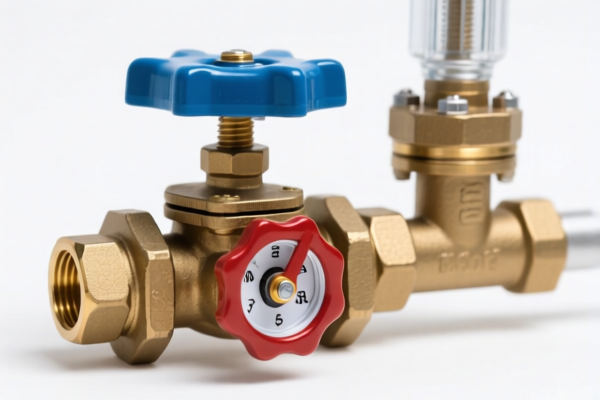
AI Analysis
⚙️ Exhaust Valve / Air Relief Valve (排气阀)
🌐 HS Code Reference & Customs Clearance Guide | 2026 Latest Tariff Analysis | Strategic Compliance Strategy
📌 I. Product Definition: What is an "Exhaust Valve"?
The term "Exhaust Valve" (排气阀) is a functional description rather than a strict material or structural classification. In international trade, it typically refers to valves used to release air, gas, or excess pressure from systems such as pipelines, tanks, pumps, or machinery.
Crucial Clarification:
The Harmonized System (HS) classification depends heavily on the primary function, material, and specific application of the valve. It is not a single category but a broad item that can fall under multiple headings based on its design.
⚠️ Key Distinction Points:
- Pressure Control vs. General Piping: Is it specifically designed to regulate pressure (Safety/Relief Valve)? Or is it a general pipe fitting?
- Material Dependency: Is the classification driven by being a mechanical part of a motor/pump (Section 85)? Or by being a steel/iron structure (Section 73)?
- End-Use: Does it belong to the machine it serves, or is it a standalone component?
📦 II. HS Code Classification Details (2026 Latest Tariff Authority Match)
Based on the provided data, here are the possible classifications for "Exhaust Valves," ranging from low-risk to high-risk interpretations:
| HS Code | Product Description | Application Scenario | Classification Logic |
|---|---|---|---|
8481.40.00.00 |
Pressure Regulating or Safety Valves | Industrial pipelines, boilers, hydraulic systems where pressure relief is the primary function. | Low Risk: Classified under "Valves" (Headings 84.81). Matches "Safety/Relief Valve" definition. |
8481.80.90.50 |
Other Valves & Similar Appliances | General purpose valves where specific pressure relief features are not dominant, or material is ambiguous. | Medium Risk: Classified under "Other Valves." Used when specific safety features aren't declared. |
8503.00.95.80 |
Parts of Electric Motors (Other) | Exhaust valves specifically designed as components for electric motors (e.g., cooling vents, pressure regulation within motor housing). | Contextual: Classified as a part of machinery (Heading 85.03), not a standalone valve. |
8503.00.95.20 |
Parts of Electric Motors (Other) | Similar to above, but specific to motor system排气/pressure regulation components. | Contextual: High tariff risk due to steel/aluminum surcharge implications. |
7308.30.50.50 |
Structures and Parts of Structures (Iron/Steel) | Large-scale steel framework valves, door/window frame related, or heavy structural pipe components. | High Risk: Misclassification as "Structure" rather than "Valve." Triggers heavy surcharges. |
7308.90.95.90 |
Other Structures and Parts (Iron/Steel) | General steel/iron structural components. If the valve is viewed as a structural metal part rather than a functional valve. | High Risk: Triggers heavy surcharges based on material (Steel/Aluminum/Copper). |
🔍 Critical Insight:
- The difference between 8481 (Valves) and 8503/7308 (Parts/Structures) is massive in terms of tax liability.
- 8481.40.00.00 is generally the most accurate for standard industrial exhaust/pressure relief valves.
- 8503 applies only if the valve is an integral, non-replaceable part of a specific motor.
- 7308 is likely a misclassification for standard valves, treating them as generic steel structures.
💰 III. 2026 Latest Tariff Rate Breakdown (Including Additional Duties & Policy Surcharges)
✅ Applicable Country: United States (US)
✅ Origin: China (CN)
✅ Effective Date: Current import regulations (2025-2026)
🎯 1. 8481.40.00.00 & 8481.80.90.50 —— Standard Industrial Valves (Recommended)
| Item | Content |
|---|---|
| Base Duty Rate | 2.0% |
| Section 301 Surcharge | +25.0% |
| IEEPA Surcharge (Section 122/Other) | +10.0% |
| Total Effective Tax Rate | 37.0% |
| Tax Calculation | CIF Value × 37% |
| De Minimis Eligibility | ❌ Not Eligible (Subject to full duty) |
| Legal Basis Path | USITC:8481.40.00.00 → FOOTNOTE:301.8481 → IEEPA:9903 |
📌 Explanation:
- This is the most standard classification for exhaust valves functioning as pressure control devices.
- The total tax burden is 37%. While significant, it is the lowest risk among the options provided in the data.
- Base Duty (2%) is low for valves; the bulk comes from trade war surcharges.
🎯 2. 8503.00.95.80 & 8503.00.95.20 —— Parts of Electric Motors
| Item | Content |
|---|---|
| Base Duty Rate | 3.0% |
| Section 301 Surcharge | +25.0% |
| IEEPA Surcharge (Section 122) | +10.0% |
| Steel/Aluminum/Copper Surcharge | +50.0% (If material is steel/aluminum/copper) |
| Total Effective Tax Rate | 38.0% (Standard) OR 88.0% (With Material Surcharge) |
| Tax Calculation | CIF Value × Total Rate |
| De Minimis Eligibility | ❌ Not Eligible |
| Legal Basis Path | USITC:8503.00.95 → IEEPA:9903 → Section 232 Steel/Aluminum |
📌 Warning:
- If classified as motor parts, the 50% steel/aluminum surcharge may apply if the valve is made of these materials.
- 8503.00.95.20 explicitly lists 88.0% total tax, indicating the full impact of material-based surcharges.
- Do not use this classification unless the valve is exclusively an internal motor part with no other marketable valve function.
🎯 3. 7308.30.50.50 & 7308.90.95.90 —— Steel/Iron Structures (High Risk)
| Item | Content |
|---|---|
| Base Duty Rate | 0.0% |
| Section 301 Surcharge | +25.0% |
| IEEPA Surcharge (Section 122) | +10.0% |
| Steel/Aluminum/Copper Surcharge | +50.0% |
| Total Effective Tax Rate | 85.0% |
| Tax Calculation | CIF Value × 85% |
| De Minimis Eligibility | ❌ Not Eligible |
| Legal Basis Path | USITC:7308 → Section 232 → IEEPA:9903 |
📌 Critical Alert:
- These codes are for structures (e.g., bridges, buildings, large steel frameworks), not functional valves.
- The 85.0% total tax is punitive and likely due to incorrect classification as a "structural steel component" rather than a "valve."
- Avoid this classification unless the item is literally a steel beam with a valve mechanism embedded, intended for structural support.
🛠️ IV. Customs Clearance Practical Advice (Battle-Tested Pitfall Guide)
✅ 1. Documentation Checklist (Non-negotiable)
| Document | Required | Description |
|---|---|---|
| ✅ Product Specification Sheet | ✔️ | Must detail: Function (Pressure Relief/Air Exhaust), Pressure Rating, Flow Rate. |
| ✅ Technical Drawings | ✔️ | Show internal mechanism to prove it is a Valve (84.81) and not a Structure (73.08) or Motor Part (85.03). |
| ✅ Product Photos | ✔️ | Clear images of nameplate, connections, and overall structure. |
| ✅ Commercial Invoice | ✔️ | Describe as "Pressure Relief Valve" or "Air Exhaust Valve", NOT "Steel Pipe Fitting" or "Motor Component". |
| ✅ Material Declaration | ✔️ | Specify material (e.g., Brass, Stainless Steel, Plastic) to avoid material-based surcharges if misclassified. |
| ✅ Origin Certificate | ✔️ | If not China-origin, could reduce duties. |
✅ 2. Declaration Strategy (Key Mantra)
🔥 "Function First, Material Second, Avoid 'Structure', Confirm 'Valve'!"
| Scenario | Correct Declaration | Wrong Practice | Result |
|---|---|---|---|
| Standard Industrial Valve | 8481.40.00.00 (Pressure Relief Valve) |
Calling it "Steel Pipe Part" | 37% Tax (Correct) |
| Motor-Cooling Valve | 8503.00.95.80 (If strictly integral) |
General "Valve" declaration | 38% Tax (Risky if audited) |
| Large Steel Framework | 7308.30.50.50 |
Calling it "Valve" | 85% Tax (Incorrect) |
| General Pipe Fitting | 8481.80.90.50 |
No specific function declared | 37% Tax (Backup option) |
📌 Pro Tip:
- Always describe the item as a "Valve" in the commercial invoice.
- Highlight "Pressure Control" or "Air Exhaust" functionality to support 8481 classification.
- Do not use words like "Structure," "Frame," or "Bracket" unless it is truly a non-functional steel piece.
✅ 3. Special Case Handling
| Situation | Handling Advice |
|---|---|
| Custom Valve Material | If made of Brass/Copper, check if steel/aluminum surcharges apply. Usually, Section 232 targets Steel/Aluminum. Brass may have lower surcharges but verify HS code specifics. |
| Integrated Assembly | If the valve comes attached to a pump or motor, consider 8503 (Motor Part) but be prepared for higher scrutiny. |
| Sample Shipments | Even samples are subject to full duties if classified under 8481/8503/7308. De Minimis ($800) does not apply to China-origin goods under Section 301/IEEPA. |
| Misclassification Risk | If customs questions the 8481 code, have technical drawings ready to prove it regulates pressure/flow, distinguishing it from simple pipe fittings. |
🌍 V. Global Market Comparison (2026 Update)
| Country/Region | Recommended HS Code | Total Tax (China Origin) | Key Certification | Note |
|---|---|---|---|---|
| 🇺🇸 USA | 8481.40.00.00 |
37.0% | No specific cert, but must prove function | 301 + IEEPA apply. Avoid 7308 (85%). |
| 🇨🇳 China | 8481.40.00.00 |
~3-5% (VAT + Duty) | CCC (if applicable) | Low duty for domestic use. |
| 🇪🇺 EU | 8481.40.00.00 |
~0-3% (WTO MFN) | CE, PED (Pressure Equipment Directive) | No US-style surcharges. |
| 🇬🇧 UK | 8481.40.00.00 |
~0-3% | UKCA, PED | Post-Brexit rules apply. |
📌 Conclusion:
- USA is the most challenging market due to the 37% combined tariff.
- EU/UK are far more favorable if compliant with local safety directives (like PED).
- Misclassification in the US can lead to an 85% tax bill, so accuracy is paramount.
📌 VI. Common Errors & Pitfalls (Blood & Tears Lessons)
❌ Error 1: Declaring a Pressure Relief Valve as "Steel Pipe Fitting"
👉 Consequence: Risk of being reclassified as 7308 (Structure) → 85% Tax + Penalties.
❌ Error 2: Using "Exhaust Valve" without specifying Function
👉 Consequence: Customs may default to 8481.80 (General) or question it. Better to specify "Safety/Pressure Relief Valve".
❌ Error 3: Confusing "Motor Part" with "Standalone Valve"
👉 Consequence: If it can be used independently, 8503 is wrong. 8481 is correct. Misuse leads to audit delays.
❌ Error 4: Ignoring Material-Based Surcharges
👉 Consequence: If classified as 8503.00.95.20 (Motor Part), the 50% steel surcharge may apply, totaling 88%. Avoid this unless necessary.
✅ Correct Declaration Example:
"Industrial Pressure Relief Valve, Stainless Steel, 1/2 Inch NPT, for Pipeline System, Model XYZ, HS Code 8481.40.00.00"
🎯 VII. Conclusion: Precision Saves Money!
🎯 Remember the Mantra:
🔹 "Valve is King (8481), Structure is Pit (7308), Motor Part is Risk (8503)."
🔹 "37% is Standard, 85% is Penalty, 88% is Catastrophe!"
📌 Tips:
- If your exhaust valves are non-steel (e.g., plastic, brass), check if material surcharges still apply.
- Always request an Advance Ruling from US Customs (CBP) if shipping high-volume orders.
- Keep technical datasheets accessible for quick customs verification.
📣 Immediate Action:
📞 Contact your freight forwarder with the exact product specs.
🚀 Declare as "Pressure Relief Valve" under 8481.40.00.00 to lock in the 37% rate.
💼 Do not risk the 85% classification!
✨ Professional Customs Clearance Starts with Accurate Classification!
💼 Every Percent Saved is Profit Gained!
Customer Reviews
About HS Code Classification
The Harmonized System (HS) is an internationally standardized nomenclature developed by the World Customs Organization (WCO) to classify traded products. Over 200 countries use the HS system as the basis for customs tariffs, trade statistics, and import/export regulations.
Each HS code follows a hierarchical structure:
- Chapter (2 digits) — Broad category of goods (e.g., Chapter 84: Machinery and Mechanical Appliances)
- Heading (4 digits) — More specific grouping within the chapter
- Subheading (6 digits) — Internationally standardized breakdown, used by all WCO member countries
- National subdivisions (8-10 digits) — Country-specific extensions for further classification, such as US HTSUS 10-digit codes
Correct HS code classification is essential for smooth customs clearance, accurate duty payment, and compliance with trade regulations. Misclassification can lead to customs delays, overpayment of duties, or penalties.
When importing from CN to US, the applicable tariff rates may include:
- Most-Favored-Nation (MFN) rate — The standard duty rate applied to WTO members
- General rate — Applied to countries without trade agreements
- Trade remedy duties — Additional tariffs such as Section 301 (anti-dumping), Section 232 (national security), or countervailing duties
The information provided on this page is for reference purposes only. For official classification, please consult with your local customs authority or a licensed customs broker.