控制模块
CN → US| HS Code | Tariff Rate | Origin | Destination | Doc |
|---|---|---|---|---|
| 9032896075 | 36.7% | CN | US | Official Doc |
| 9032896030 | 36.7% | CN | US | Official Doc |
| 8537109160 | 37.7% | CN | US | Official Doc |
| 8537109130 | 37.7% | CN | US | Official Doc |
| 8471801000 | 35.0% | CN | US | Official Doc |
| 8471804000 | 35.0% | CN | US | Official Doc |
Product Images
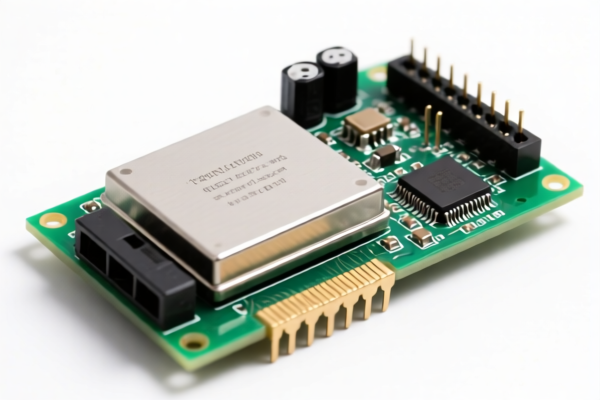
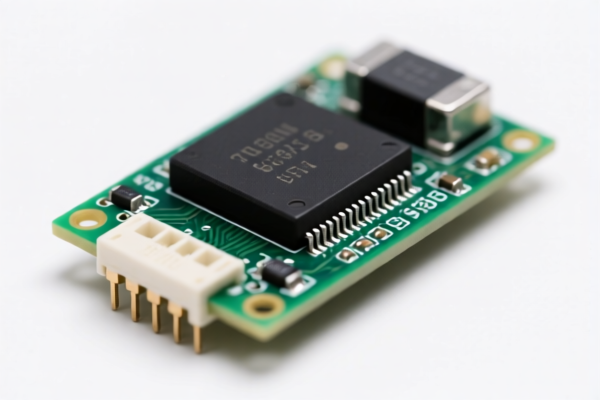
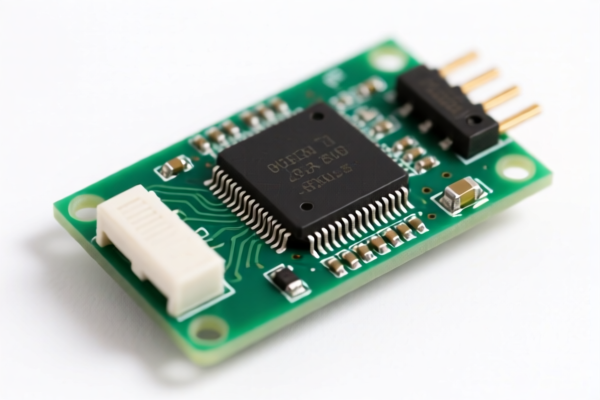

AI Analysis
🎛️ Control Modules (Automation & Process Control Units)
🌐 HS Code Reference & Customs Clearance Guide | 2026 Latest Tariff Analysis | Professional-Level Entry Strategy
📌 I. Product Definition: What is a "Control Module"?
A Control Module is a generic term often used in industrial automation and IT infrastructure. It is not a single, specific HS Code but rather a functional description. Depending on its specific application, circuitry, and integration method, it can fall into different chapters of the Harmonized System.
In international trade, "Control Module" usually refers to one of two main categories: 1. Industrial Automation Controllers: Used for process control, PLCs (Programmable Logic Controllers), or industrial automation. 2. IT/Data Processing Units: Used as input/output or auxiliary units for Automatic Data Processing (ADP) machines (e.g., servers, mainframes).
⚠️ Key Distinction:
- If the module is primarily for industrial process control (e.g., regulating temperature, pressure, flow in a factory) → It likely belongs to Chapter 90 (Instruments/Apparatus) or Chapter 85 (Electrical Machinery) under specific control device headings.
- If the module is an integral part of a computer/server system (e.g., a control board embedded in a data machine) → It likely belongs to Chapter 84 (Machinery) under ADP machine parts or Chapter 85 under electrical control apparatus.
📦 II. HS Code Classification Details (Based on Provided Data)
Based on the provided dataset, the "Control Module" is classified into six specific HS Codes. Below is the breakdown of why each code applies and its corresponding tax implications.
| HS Code | Classification Logic (Why this code?) | Total Tax Rate | Tax Composition Breakdown |
|---|---|---|---|
| 9032.89.60.75 | Process Control Instrument: The module is considered a component of a process control apparatus, fitting the definition of instruments for regulating continuous variables (e.g., temp, pressure). | 36.7% | Base: 1.7% + Section 301: 25.0% + IEEPA (Sec 122): 10.0% |
| 8471.80.40.00 | ADP Machine Unit: The module serves as a component unit for an Automatic Data Processing (ADP) Machine, suitable for physical embedding into data processing hardware. | 35.0% | Base: 0.0% + Section 301: 25.0% + IEEPA (Sec 122): 10.0% |
| 8471.80.10.00 | ADP Control/Adapter: Functions as a control or adapter unit for ADP systems, classified as a unit form of an automatic data processing machine. | 35.0% | Base: 0.0% + Section 301: 25.0% + IEEPA (Sec 122): 10.0% |
| 8537.10.91.30 | Electrical Control Device: The module is part of an electrical control apparatus, where its primary function aligns with general electrical control devices (e.g., switching, protection). | 37.7% | Base: 2.7% + Section 301: 25.0% + IEEPA (Sec 122): 10.0% |
| 9032.89.60.30 | Process Control Core Component: Similar to .75, but classified as a core component or complete system logic for process control apparatus. | 36.7% | Base: 1.7% + Section 301: 25.0% + IEEPA (Sec 122): 10.0% |
| 8537.10.91.60 | PLC/Programmable Controller Base: Highly matched with Programmable Logic Controller (PLC) functions, considered part of an electrical control base or control device. | 37.7% | Base: 2.7% + Section 301: 25.0% + IEEPA (Sec 122): 10.0% |
🔍 Critical Insight:
- The Total Tax Rate ranges from 35.0% to 37.7%. - All rates include the 25% Section 301 Tariff and 10% IEEPA (122 Clause) Tariff. - The difference in rates comes from the Base Tariff (0% for ADP, 1.7% for Process Control, 2.7% for Electrical Control).
💰 III. Detailed Tariff Explanation (US Market Focus)
✅ Applicable Country: United States (US)
✅ Origin: China (CN) (Implied by Section 301 and IEEPA applicability)
✅ Effective Time: Current 2026 Tariff Schedule
🎯 1. ADP-Related Control Modules (HS: 8471.80.40.00 / 8471.80.10.00)
Total Tax: 35.0%
| Item | Detail |
|---|---|
| Base Tariff | 0.0% (Free) – Classified under "Parts and accessories of automatic data processing machines." |
| Section 301 Tariff | +25.0% – Additional duty on Chinese goods under US Trade Act Section 301. |
| IEEPA (Sec 122) | +10.0% – Additional duty under International Emergency Economic Powers Act. |
| Total Effective Rate | 35.0% |
| Legal Basis | Base: HTSUS 8471.80; Add-ons: USITC Footnotes, IEEPA Authorities. |
📌 Explanation:
These codes are used when the control module is embedded in or integral to a computer/server system. Because the base tariff for ADP parts is often 0%, the total cost is slightly lower than process control equivalents. However, the 35% total is still significant.
🎯 2. Process Control Control Modules (HS: 9032.89.60.75 / 9032.89.60.30)
Total Tax: 36.7%
| Item | Detail |
|---|---|
| Base Tariff | 1.7% – Classified under "Other instruments and apparatus for physical or chemical analysis/control." |
| Section 301 Tariff | +25.0% – Additional duty on Chinese goods. |
| IEEPA (Sec 122) | +10.0% – Additional duty under IEEPA. |
| Total Effective Rate | 36.7% |
| Legal Basis | Base: HTSUS 9032.89; Add-ons: USITC Footnotes, IEEPA Authorities. |
📌 Explanation:
These codes apply when the module is used in industrial process control (e.g., factory automation lines, HVAC systems, water treatment). The base tariff is slightly higher (1.7%), leading to a 36.7% total rate.
🎯 3. Electrical Control Modules (HS: 8537.10.91.30 / 8537.10.91.60)
Total Tax: 37.7%
| Item | Detail |
|---|---|
| Base Tariff | 2.7% – Classified under "Boards, panels, consoles, desks, cabinets and other bases equipped with two or more apparatus of heading 8535 or 8536." |
| Section 301 Tariff | +25.0% – Additional duty on Chinese goods. |
| IEEPA (Sec 122) | +10.0% – Additional duty under IEEPA. |
| Total Effective Rate | 37.7% |
| Legal Basis | Base: HTSUS 8537.10; Add-ons: USITC Footnotes, IEEPA Authorities. |
📌 Explanation:
These codes are used for PLCs (Programmable Logic Controllers) or general electrical control bases. The base tariff is the highest (2.7%), resulting in the highest total rate (37.7%). This classification is common for industrial automation controllers that switch or control electrical circuits.
🛠️ IV. Customs Clearance Practical Advice (Avoiding Pitfalls)
✅ 1. Documentation Checklist (Mandatory)
| Document | Required? | Purpose |
|---|---|---|
| Product Technical Specification | ✔️ | Must clearly state: "Control Module for [Specific Equipment]" (e.g., ADP, Process, PLC). |
| Circuit Diagram / Block Diagram | ✔️ | To prove if it is an ADP part (embedded) or an external control device. |
| Product Photos | ✔️ | Show ports, labels, and physical form factor (embedded vs. standalone). |
| Commercial Invoice | ✔️ | Must match HS Code description precisely (e.g., "PLC Control Unit" vs. "ADP Control Board"). |
| Country of Origin Certificate | ✔️ | To confirm Chinese origin (triggers 301+122 tariffs). |
| Declaration of Non-ADP Use | ❌ | If claiming ADP status, ensure it’s used with ADP. If not, it may be misclassified. |
✅ 2. Classification Strategy (Key Mnemonics)
🔥 “Function Determines Code, Embedding Defines ADP, Process Controls is 9032, Electrical is 8537!”
| Scenario | Recommended HS Code | Reason |
|---|---|---|
| Module embedded in a server/computer | 8471.80.40.00 or 8471.80.10.00 |
It’s an ADP part. Lowest base tariff (0%). |
| Module controls industrial process (temp/pressure) | 9032.89.60.75 or 9032.89.60.30 |
It’s a process control instrument. Base 1.7%. |
| PLC or Electrical Control Panel/Base | 8537.10.91.30 or 8537.10.91.60 |
It’s an electrical control apparatus. Base 2.7%. |
⚠️ Warning:
- Do not simply declare as "Control Module" without specifying the application. US Customs (CBP) will reclassify it, leading to delays and penalties. - If the module is used both for ADP and industrial control, you must declare the primary use. Primary use for ADP yields the lowest tax (35%).
✅ 3. Special Cases & Exemptions
| Case | Handling Advice |
|---|---|
| OEM Custom Modules | Provide the end-user’s specification sheet. If the end-user is an IT firm, argue for ADP classification (8471). |
| Hybrid Modules | If a module controls both IT servers and factory equipment, prioritize the major use or the more complex function. |
| IEEPA Exemptions | Check if your specific product type has any recent exemptions under IEEPA Section 122. Most control modules are not exempt. |
| Section 301 Exclusions | Most electronic components are not excluded from the 25% Section 301 tariff. Assume it applies. |
🌍 V. Global Market Comparison (2026)
| Market | Recommended HS Code | Estimated Total Tax | Notes |
|---|---|---|---|
| 🇺🇸 USA | See Table Above | 35.0% – 37.7% | High tariffs due to Section 301 + IEEPA. |
| 🇨🇳 China | 8471.80 / 9032.89 / 8537.10 | 0% – 2.7% | Base tariffs apply; no Section 301. |
| 🇪🇺 EU | 8471.80 / 9032.89 / 8537.10 | 0% – 4.5% | No Section 301. Check local VAT. |
| 🇬🇧 UK | 8471.80 / 9032.89 / 8537.10 | 0% – 4.5% | Post-Brexit tariffs. No Section 301. |
| 🇯🇵 Japan | 8471.80 / 9032.89 / 8537.10 | 0% – 2.0% | Generally low tariffs for electronic components. |
📌 Conclusion:
- The US market is the most expensive due to the 35-37.7% total tariff. - For US imports, accuracy in classification is critical to avoid audits. - Consider supply chain diversification if tariffs impact profitability significantly.
📌 VI. Common Mistakes & Pitfalls (Lessons Learned)
❌ Mistake 1: Declaring all control modules under one generic HS code.
👉 Consequence: CBP may reclassify to the highest applicable rate (37.7%) or demand detailed usage proof, causing delays.
❌ Mistake 2: Using "ADP Part" for a module that is actually a standalone PLC.
👉 Consequence: Misclassification fraud risk. If the module is used independently in a factory, it should be 8537 or 9032, not 8471.
❌ Mistake 3: Ignoring the IEEPA (122 Clause) 10% tariff.
👉 Consequence: Underpayment of duties. Always include the 10% IEEPA in your cost calculations for Chinese-origin goods.
❌ Mistake 4: Claiming 0% base tariff without proof of ADP integration.
👉 Consequence: Audit trigger. You must prove the module is intended for use with ADP machines (e.g., invoices, user manuals).
✅ Correct Practice:
"PLC Control Module for Industrial Automation, Model XYZ, Voltage 24V DC, Input/Output Specs Included" →
8537.10.91.60
"Embedded Control Board for Server Unit, Model ABC, No External Power Supply" →8471.80.40.00
🎯 VII. Conclusion: Precise Classification for Cost Efficiency
🎯 Key Takeaways:
🔹 ADP Integration = Lower Tax (35%): If your module is part of a computer/server, aim for
8471.80.
🔹 Industrial Process = Medium Tax (36.7%): If it controls physical processes, use9032.89.
🔹 Electrical/PLC Control = Highest Tax (37.7%): If it’s a standalone PLC or control base, use8537.10.
🔹 All Rates Include 35% Additional Duties: 25% (Section 301) + 10% (IEEPA).📌 Pro Tip:
If you are importing to the US, consult a licensed customs broker to confirm the "primary use" of your control module. A slight change in product description can shift the HS Code from8537to8471, saving 2.7% on the base tariff (though total remains high).
📣 Immediate Action:
📞 Contact Customs Broker: Provide technical specs to confirm HS Code.
📄 Prepare Technical Docs: Ensure invoices and manuals align with the chosen classification.
💰 Budget for 35-37.7% Tariff: Factor this into your landed cost calculations.
✨ Professional Classification Starts with Precision!
💼 Every Percent Counts in Global Trade!
Customer Reviews
About HS Code Classification
The Harmonized System (HS) is an internationally standardized nomenclature developed by the World Customs Organization (WCO) to classify traded products. Over 200 countries use the HS system as the basis for customs tariffs, trade statistics, and import/export regulations.
Each HS code follows a hierarchical structure:
- Chapter (2 digits) — Broad category of goods (e.g., Chapter 84: Machinery and Mechanical Appliances)
- Heading (4 digits) — More specific grouping within the chapter
- Subheading (6 digits) — Internationally standardized breakdown, used by all WCO member countries
- National subdivisions (8-10 digits) — Country-specific extensions for further classification, such as US HTSUS 10-digit codes
Correct HS code classification is essential for smooth customs clearance, accurate duty payment, and compliance with trade regulations. Misclassification can lead to customs delays, overpayment of duties, or penalties.
When importing from CN to US, the applicable tariff rates may include:
- Most-Favored-Nation (MFN) rate — The standard duty rate applied to WTO members
- General rate — Applied to countries without trade agreements
- Trade remedy duties — Additional tariffs such as Section 301 (anti-dumping), Section 232 (national security), or countervailing duties
The information provided on this page is for reference purposes only. For official classification, please consult with your local customs authority or a licensed customs broker.