握把
CN → US| HS Code | Tariff Rate | Origin | Destination | Doc |
|---|---|---|---|---|
| 9506390060 | 22.4% | CN | US | Official Doc |
| 9506516000 | 20.6% | CN | US | Official Doc |
| 8467990190 | 35.0% | CN | US | Official Doc |
| 3926902500 | 24.0% | CN | US | Official Doc |
| 3926301000 | 24.0% | CN | US | Official Doc |
Product Images
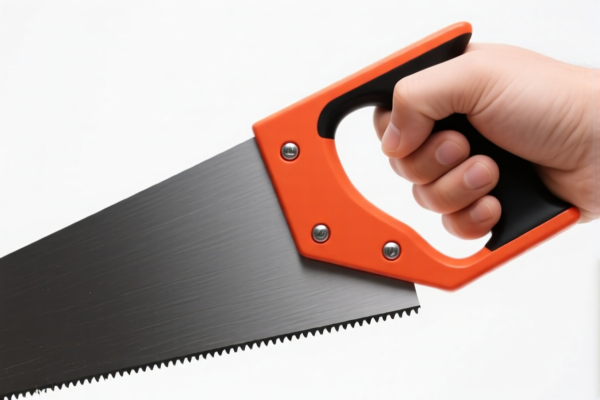


AI Analysis
🤝 Grip (Handgrip) – Comprehensive HS Code & Tariff Guide | 2026 Updated | U.S. Customs Compliance & Strategic Clearance Tips
🌐 HS Code Classification & Duty Breakdown | 2026 Latest Tariff Rules | Proven Clearance Strategies
📌 One Product, Multiple Classifications – Why the Grip Matters in Global Trade
The grip — a seemingly simple component — can be classified under five different HS Codes depending on its function, end-use, and product type. Misclassification leads to overpayment, delays, or even seizure.
⚠️ Critical Insight:
- A plastic grip on a power tool is not the same as a golf club grip or a tennis racket grip.
- The same physical part can face 20.6% to 35% total duty based on how it’s declared.
📦 HS Code Classification Breakdown (2026 U.S. Tariff Schedule)
| HS Code | Product Description | End-Use / Function | Key Differentiator |
|---|---|---|---|
3926.30.10.00 |
Plastic grips used as handles or knobs | General-purpose plastic grips (e.g., on appliances, tools, furniture) | Handles & knobs – not part of a larger tool |
3926.90.25.00 |
Plastic grips as "other plastic articles" (catch-all) | Non-specific plastic grips not covered elsewhere | Default category when no better fit |
8467.99.01.90 |
Grips as parts of hand-held tools | Used in power tools, screwdrivers, pliers, etc. | Functional part of a tool – not standalone |
9506.51.60.00 |
Grips for tennis rackets and accessories | Used in tennis rackets (e.g., overgrips, replacement grips) | Sport-specific – part of a racquet |
9506.39.00.60 |
Grips for golf clubs | Used in golf clubs (e.g., putter grips, driver grips) | Golf-specific – not general-purpose |
🔍 Why This Matters:
- A golf grip cannot be declared as a general plastic handle – it triggers sport-specific tariffs.
- A grip on a drill must be classified under tool parts, not as a standalone plastic item.
💰 2026 U.S. Tariff Breakdown – Full Tax Detail (China-Origin)
✅ Applicable Country: United States (US)
✅ Origin: China (CN)
✅ Effective Date: November 10, 2025 (and ongoing)
✅ All tariffs apply to goods from China unless exempted under IEEPA or trade agreements.
🎯 1. 3926.30.10.00 – Grip as Handle or Knob (Plastic)
| Component | Rate | Legal Basis |
|---|---|---|
| Base Duty | 6.5% | HTSUS §3926.30.10 |
| Section 301 (USITC) Add-on | +7.5% | USITC Footnote 9903.88.01 |
| Section 122 (IEEPA) Add-on | +10% | IEEPA: 9903.01.24 |
| Total Duty | 24.0% | — |
| De Minimis Exemption? | ❌ No | Deny de minimis for China-origin goods |
| Tax Calculation | CIF × 24.0% | — |
| Legal Pathway | IEEPA:9903.01.24 → USITC:3926.30.10.00 → FOOTNOTE:9903.88.01 |
📌 Explanation:
- This is the standard plastic grip used as a handle or knob (e.g., on a kitchen appliance, drawer pull, or small tool).
- No sport or tool-specific function → falls under general plastic goods.
- 24% total duty is high but not the worst – avoid misclassifying as a tool part.
🎯 2. 3926.90.25.00 – Grip as Other Plastic Articles (Catch-All)
| Component | Rate | Legal Basis |
|---|---|---|
| Base Duty | 6.5% | HTSUS §3926.90.25 |
| Section 301 (USITC) Add-on | +7.5% | USITC Footnote 9903.88.01 |
| Section 122 (IEEPA) Add-on | +10% | IEEPA: 9903.01.24 |
| Total Duty | 24.0% | — |
| De Minimis Exemption? | ❌ No | China-origin goods excluded |
| Tax Calculation | CIF × 24.0% | — |
| Legal Pathway | IEEPA:9903.01.24 → USITC:3926.90.25.00 → FOOTNOTE:9903.88.01 |
📌 Explanation:
- Used when the grip doesn’t fit into any specific category (e.g., no clear tool or sport use).
- Same 24% rate as3926.30.10.00– but riskier because it’s a “catch-all” code.
- Higher audit risk – customs may question if it should be classified under a more specific code.
🎯 3. 8467.99.01.90 – Grip as Part of Hand-Held Tools
| Component | Rate | Legal Basis |
|---|---|---|
| Base Duty | 0.0% | HTSUS §8467.99.01 |
| Section 301 (USITC) Add-on | +25.0% | USITC Footnote 9903.88.01 |
| Section 122 (IEEPA) Add-on | +10% | IEEPA: 9903.01.24 |
| Total Duty | 35.0% | — |
| De Minimis Exemption? | ❌ No | China-origin goods excluded |
| Tax Calculation | CIF × 35.0% | — |
| Legal Pathway | IEEPA:9903.01.24 → USITC:8467.99.01.90 → FOOTNOTE:9903.88.01 |
📌 Explanation:
- This is the highest tariff category.
- Applies when the grip is a functional part of a hand-held tool (e.g., drill, screwdriver, pliers).
- Even if the grip is plastic, if it’s intended to be used with a tool, it’s classified here.
- 35% total duty – avoid this if possible.
🎯 4. 9506.51.60.00 – Grip for Tennis Rackets & Accessories
| Component | Rate | Legal Basis |
|---|---|---|
| Base Duty | 3.1% | HTSUS §9506.51.60 |
| Section 301 (USITC) Add-on | +7.5% | USITC Footnote 9903.88.01 |
| Section 122 (IEEPA) Add-on | +10% | IEEPA: 9903.01.24 |
| Steel/Aluminum/Copper Add-on | +50% | If material contains steel, aluminum, or copper |
| Total Duty | 20.6% (if non-metal) or 70.6% (if metal) | — |
| De Minimis Exemption? | ❌ No | China-origin goods excluded |
| Tax Calculation | CIF × 20.6% (non-metal) or × 70.6% (metal) | — |
| Legal Pathway | IEEPA:9903.01.24 → USITC:9506.51.60.00 → FOOTNOTE:9903.88.01 |
📌 Explanation:
- Sport-specific – only applies to tennis rackets.
- Metal content is critical:
- If the grip contains steel, aluminum, or copper, +50% is added.
- Even metal wire inside the grip triggers this.
- 20.6% is lower than most, but metal content can spike to 70.6%.
🎯 5. 9506.39.00.60 – Grip for Golf Clubs
| Component | Rate | Legal Basis |
|---|---|---|
| Base Duty | 4.9% | HTSUS §9506.39.00 |
| Section 301 (USITC) Add-on | +7.5% | USITC Footnote 9903.88.01 |
| Section 122 (IEEPA) Add-on | +10% | IEEPA: 9903.01.24 |
| Total Duty | 22.4% | — |
| De Minimis Exemption? | ❌ No | China-origin goods excluded |
| Tax Calculation | CIF × 22.4% | — |
| Legal Pathway | IEEPA:9903.01.24 → USITC:9506.39.00.60 → FOOTNOTE:9903.88.01 |
📌 Explanation:
- Golf-specific – applies only to golf club grips.
- No metal add-on – unlike tennis grips.
- 22.4% is moderate, but higher than general plastic grips.
- Do not classify as a general handle – it will be rejected.
🛠️ Proven Clearance Strategies (Avoid Costly Mistakes!)
✅ 1. Documentation Checklist (MUST-HAVE)
| Document | Required? | Why It Matters |
|---|---|---|
| ✅ Product Photos (clear, labeled) | ✔️ | Show material, shape, and attachment |
| ✅ Technical Specs (material, dimensions, weight) | ✔️ | Prove function (e.g., "used in golf clubs") |
| ✅ Packing List (with part numbers) | ✔️ | Show if grip is sold with tool or sport item |
| ✅ Commercial Invoice (clear description) | ✔️ | Must say: "Golf Club Grip, 100% Rubber, for Driver" |
| ✅ Origin Certificate (CO) | ✔️ | If from Vietnam/Mexico, may qualify for lower duty |
| ✅ Material Test Report (if metal content) | ✔️ | Prove no steel/aluminum/copper → avoid 50% add-on |
| ✅ Design Drawings (if tool part) | ✔️ | Prove it’s a functional tool component |
✅ 2.申报技巧 (申报口诀)
🔥 “功能定分类,材料定税率,金属要申报,拆分要小心!”
| Scenario | Correct HS Code | Wrong Code | Risk |
|---|---|---|---|
| Grip on a drill | 8467.99.01.90 |
3926.30.10.00 |
+11% duty → $10,000+ extra |
| Tennis grip with metal wire | 9506.51.60.00 + +50% |
9506.51.60.00 (no metal) |
+50% → $25,000+ extra |
| Golf grip | 9506.39.00.60 |
3926.30.10.00 |
+2.4% → cumulative over time |
| General plastic grip | 3926.30.10.00 |
8467.99.01.90 |
-11% duty → save money |
✅ 3. Special Cases & Workarounds
| Case | Solution |
|---|---|
| Grip sold with tool | Declare as tool part (8467.99.01.90) – even if it’s plastic |
| Grip with metal core | Declare as tennis grip (9506.51.60.00) + disclose metal → 70.6% duty |
| Grip sold separately | Use catch-all (3926.90.25.00) – 24% |
| Grip from Vietnam/Mexico | Apply for IEEPA exemption → 0% duty |
| High-volume shipments | Request Advance Ruling (Pre-Clearance) → lock in HS Code & duty |
🌍 Global Market Comparison (2026)
| Country | Recommended HS Code | Duty | Certification | Notes |
|---|---|---|---|---|
| 🇺🇸 U.S. | 8467.99.01.90 (tool) |
35% | None | Highest risk |
| 🇨🇳 China | 3926.30.10.00 |
6.5% | CCC | No extra tariffs |
| 🇪🇺 EU | 3926.30.10.00 |
0% | CE | No 301/IEEPA |
| 🇦🇺 Australia | 3926.30.10.00 |
5% | RCM | No extra |
| 🇯🇵 Japan | 3926.30.10.00 |
0% | PSE | No extra |
📌 Insight:
- U.S. is the only market with 301/IEEPA tariffs on Chinese grips.
- Vietnam/Mexico origin = 0% duty in U.S. – consider shifting production.
📌 Common Mistakes & Costly Pitfalls (Avoid These!)
❌ Mistake 1: Classifying a golf grip as a plastic handle
👉 Result: 24% duty instead of 22.4% → $1,000+ extra per container
❌ Mistake 2: Not disclosing metal content in a tennis grip
👉 Result: +50% duty → $25,000+ per shipment
❌ Mistake 3: Declaring a tool grip as a general plastic part
👉 Result: +11% duty → $10,000+ extra
❌ Mistake 4: Using “plastic grip” as a generic name
👉 Result: Customs may reclassify to higher tariff – delay or seizure
✅ Correct Description Example:
"Golf Club Grip, 100% Rubber, for Driver, No Metal Core, Model XYZ, FCC & RoHS Certified"
🎯 Final Verdict: Precision Pays Off!
🎯 Key Takeaways:
🔹 Function determines HS Code – not material or shape
🔹 Metal content can triple the tax (tennis grips)
🔹 Tool parts = 35% duty – avoid if possible
🔹 Sport grips = 20.6%–22.4% – lower than general plastic
🔹 China-origin = no de minimis – always pay full duty
📌 Pro Tip:
If your grip is from Vietnam, Mexico, Thailand, or Malaysia, apply for IEEPA exemption → 0% duty in U.S.
Request an Advance Ruling – lock in your HS Code and duty before shipment.
📣 Act Now!
📞 Contact a U.S. Customs Broker + HS Code Pre-Ruling Service
🚀 Avoid $50,000+ in unexpected duties
💼 Your grip is small – but your duty risk is huge!
✨ Professional Clearance Starts with Accurate Classification!
💼 One wrong code = Thousands in extra cost. One right code = Millions in savings.
Customer Reviews
About HS Code Classification
The Harmonized System (HS) is an internationally standardized nomenclature developed by the World Customs Organization (WCO) to classify traded products. Over 200 countries use the HS system as the basis for customs tariffs, trade statistics, and import/export regulations.
Each HS code follows a hierarchical structure:
- Chapter (2 digits) — Broad category of goods (e.g., Chapter 84: Machinery and Mechanical Appliances)
- Heading (4 digits) — More specific grouping within the chapter
- Subheading (6 digits) — Internationally standardized breakdown, used by all WCO member countries
- National subdivisions (8-10 digits) — Country-specific extensions for further classification, such as US HTSUS 10-digit codes
Correct HS code classification is essential for smooth customs clearance, accurate duty payment, and compliance with trade regulations. Misclassification can lead to customs delays, overpayment of duties, or penalties.
When importing from CN to US, the applicable tariff rates may include:
- Most-Favored-Nation (MFN) rate — The standard duty rate applied to WTO members
- General rate — Applied to countries without trade agreements
- Trade remedy duties — Additional tariffs such as Section 301 (anti-dumping), Section 232 (national security), or countervailing duties
The information provided on this page is for reference purposes only. For official classification, please consult with your local customs authority or a licensed customs broker.