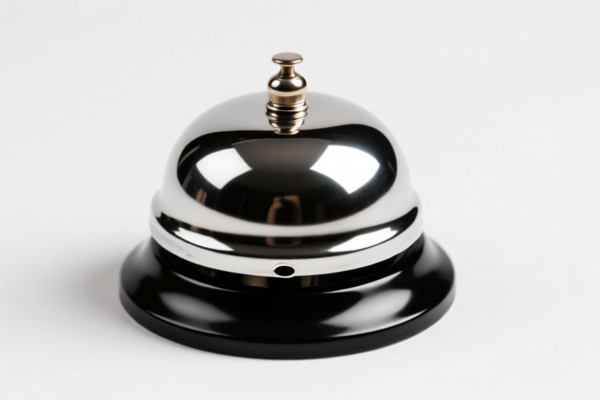
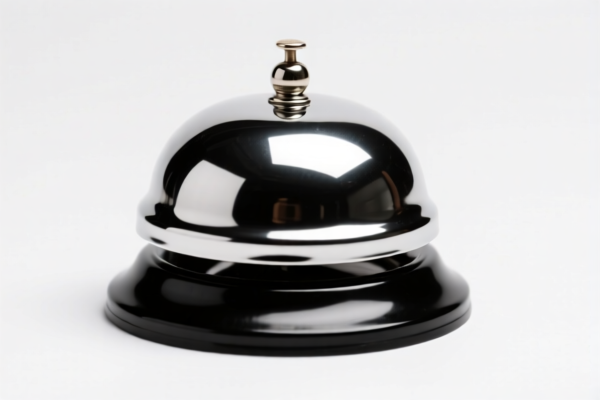
摇铃
CN → US| HS Code | Tariff Rate | Origin | Destination | Doc |
|---|---|---|---|---|
| 9503000090 | 10.0% | CN | US | Official Doc |
| 9503000073 | 10.0% | CN | US | Official Doc |
| 9503000071 | 10.0% | CN | US | Official Doc |
| 7117196000 | 17.5% | CN | US | Official Doc |
| 7117906000 | 10.0% | CN | US | Official Doc |
Product Images
AI Analysis
🎀 Baby Rattles (Toys for Infants)
🌐 HS Code Reference & Clearance Guide | 2024/2026 Latest Tariff Analysis | Professional Customs Strategy
📌 One, Product Definition & Classification: What is a "Baby Rattle"?
Baby rattles are classic toys designed for infants, typically used to stimulate auditory and tactile senses. In international trade, they fall under the broad category of Toys (Chapter 95). However, specific material compositions and design features can lead to different HS Code classifications, significantly affecting the final tax rate.
⚠️ Key Distinction Points:
- If the product is primarily a toy (plastic, fabric, wood) for children under 3 → Category 9503.
- If the product is perceived as imitation jewelry/toy jewelry made of base metal or specific plastic alloys → Category 7117.
📦 Two, HS Code Classification Details (Based on Provided Data)
| HS Code | Product Description | Summary of Reasoning | Total Tax Rate |
|---|---|---|---|
9503.00.00.90 |
Other Toys (General) | Recognized as a common form of toy (bell/resonator). Fits the "Other" category under toys/accessories. No material conflict with toy classification. | 10.0% |
9503.00.00.73 |
Toys for Children < 3 Years | Form fits the toy category (rattle). Use fits the scope of products for children under 3 (inferred as dolls/other toys under 9503). No material/form conflict. | 10.0% |
9503.00.00.71 |
Toys (Specific Sub-category) | Belongs to Toys category. Use matches: Baby rattle is a typical toy for children under 3. Material inferred: Plastic or fabric, no conflict with toy category. | 10.0% |
7117.19.60.00 |
Imitation Jewelry (Base Metal/Plastic) | Inferred material: Base metal or plastic (common for toy jewelry/accessories). Form belongs to toy-like goods. Consistent with toy jewelry attributes. | 17.5% |
7117.90.60.00 |
Other Imitation Jewelry | Name "Baby Rattle" reasonably inferred as an extension of imitation jewelry/toy jewelry. Form and use fit the attributes of low-value toy products. No material conflict. | 10.0% |
🔍 Important Note:
- HS Codes 9503.xx.xx are generally safer and more standard for baby rattles, as they directly classify the item as a "Toy."
- HS Code 7117.xx.xx is less common for standard plastic rattles unless they are specifically marketed as "Jewelry-style accessories" or made primarily of base metal.
- Tax Difference: Most classifications result in a 10% total tax, but7117.19.60.00carries a 17.5% total tax due to additional tariffs.
💰 Three, 2024/2026 Latest Tariff Rate Details (Including Surtaxes & Policy Add-ons)
✅ Applicable Country: United States (US)
✅ Origin: China (CN)
✅ Effective Time: Current (Includes Section 301 & Section 122 Surtaxes)
🎯 1. 9503.00.00.90 / 9503.00.00.73 / 9503.00.00.71 / 7117.90.60.00
Classification: Toys / Other Imitation Jewelry (Toy-like)
| Item | Content |
|---|---|
| Basic Tariff | 0% (Ad Valorem) |
| Section 301 Surtax | 0% (Note: Some toys may have been excluded or reduced, but based on data, it's 0%) |
| Section 122 Surtax | +10% (Specific tariff on certain Chinese goods, effective from Nov 2024) |
| Total Tax Rate | 10.0% |
| Tax Calculation | CIF Value × 10% |
| De Minimis Exemption | ✅ Yes (For shipments under $800, Section 321, no duty is collected, but duty liability still exists in theory for commercial imports) |
| Legal Basis Path | USITC:9503.xx → SECTION_122:10% |
📌 Explanation:
- The 10% Section 122 tariff is a new/additional surcharge applied to specific Chinese imports.
- Basic tariff is 0%, meaning the entire 10% comes from policy surcharges.
- This is a moderate cost for toy imports, significantly lower than electronics or heavy machinery.
🎯 2. 7117.19.60.00
Classification: Imitation Jewelry (Base Metal/Plastic)
| Item | Content |
|---|---|
| Basic Tariff | 0% (Ad Valorem) |
| Section 301 Surtax | +7.5% (Standard Section 301 rate for this sub-category) |
| Section 122 Surtax | +10% (Specific tariff on certain Chinese goods) |
| Total Tax Rate | 17.5% |
| Tax Calculation | CIF Value × 17.5% |
| De Minimis Exemption | ✅ Yes (For shipments under $800, Section 321) |
| Legal Basis Path | USITC:7117.19.60.00 → SECTION_301:7.5% → SECTION_122:10% |
📌 Warning:
- This HS Code incurs a higher tax rate (17.5%) due to the 7.5% Section 301 surtax combined with the 10% Section 122 surtax.
- Avoid this code unless the product is strictly classified as imitation jewelry and not a toy, to minimize costs.
🛠️ Four, Customs Clearance Practical Advice (Best Practices)
✅ 1. Required Documentation Checklist
| Document | Mandatory? | Description |
|---|---|---|
| ✅ Product Specifications | ✔️ | Include dimensions, weight, materials (plastic, fabric, metal parts), and age recommendation (e.g., "0+"). |
| ✅ Product Photos | ✔️ | Clear images of the rattle, packaging, and any labels (CE, ASTM, CPC). |
| ✅ Commercial Invoice | ✔️ | Must clearly state "Baby Toy Rattle", HS Code, and CIF value. |
| ✅ Certificate of Compliance (CPC) | ✔️ | Critical for Toys in the US. Must show compliance with ASTM F963 (Consumer Product Safety). |
| ✅ Material Declaration | ✔️ | Confirm materials are non-toxic and free of heavy metals (lead, phthalates). |
| ✅ Packing List | ✔️ | Detailed breakdown of quantities and packaging. |
✅ 2. Declaration Tips (Key Rules)
🔥 "Toy vs. Jewelry: Know the Difference!"
| Scenario | Correct Declaration | Wrong Practice | Consequence |
|---|---|---|---|
| Standard Plastic/Fabric Rattle | 9503.00.00.71/90 as "Baby Toy" |
Declare as "Jewelry" | Risk of higher tax (17.5%) or misclassification penalty. |
| Metallic/Ornamental Rattle | 7117.90.60.00 as "Imitation Jewelry Toy" |
Declare as "Toy" | May still be accepted, but tax is 10%. If classified as 7117.19.60.00, tax jumps to 17.5%. |
| Packaged Set (Rattle + Book) | Primary Purpose Rule: Rattle = Toy | Split declaration | Customs may consolidate or reclassify based on dominant feature. |
📌 Key Point:
- Always emphasize "Toy" and "Infant/Child Under 3" in the description.
- Avoid terms like "Necklace," "Pendant," or "Jewelry" unless the product is genuinely fashion-oriented and not a functional toy.
✅ 3. Special Circumstances Handling
| Situation | Handling Advice |
|---|---|
| OEM Custom Rattles | Provide client order + design drawings. Ensure CPC is issued for the specific design. |
| Mixed Materials (Plastic + Metal Bell) | Still falls under 9503 if primarily a toy. Metal part is considered an accessory. |
| Shipments under $800 (De Minimis) | No duty paid under Section 321. However, CPC is still required by CBP for toys. Failure to provide CPC may lead to detention. |
| High-Value Wholesale Orders | Duty Applies. Choose 9503 codes (10% tax) to avoid the 17.5% rate. |
🌍 Five, Global Market Comparison (2024/2026)
| Country/Region | Recommended HS Code | Tariff | Certification | Notes |
|---|---|---|---|---|
| 🇺🇸 USA | 9503.00.00.71/90 |
10% (Section 122) | CPC (ASTM F963) + CPSIA | Critical: CPC required even for de minimis. |
| 🇨🇳 China | 9503.00.00.90 |
5% | CCC (if applicable) | Low tariff, easy entry. |
| 🇪🇺 EU | 9503.00.10 |
0% | CE Mark + EN71 | No Section 122 surtax. |
| 🇬🇧 UK | 9503.00.00.90 |
0% | UKCA + EN71 | Post-Brexit rules apply. |
| 🇯🇵 Japan | 9503.00.00.90 |
0% | ST Mark (Plastics) | Low tariff, high safety standards. |
📌 Conclusion:
- USA: Be aware of the 10% Section 122 surtax. Ensure CPC is ready.
- EU/UK/JP: Tariffs are generally 0%, making these markets more competitive for cost-sensitive toy exports.
📌 Six, Common Mistakes & Pitfalls (Lessons Learned)
❌ Mistake 1: Declaring "Baby Rattle" as "Imitation Jewelry" under 7117.19.60.00
👉 Consequence: Tax jumps to 17.5% instead of 10%. Save 7.5% by choosing the correct Toy code!
❌ Mistake 2: Forgetting to attach the CPC (Children's Product Certificate)
👉 Consequence: Goods detained by CBP, even if under $800. CPC is mandatory for all children's products.
❌ Mistake 3: Using vague descriptions like "Plastic Toy"
👉 Consequence: Customs may request additional info, causing delays. Be specific: "Baby Rattle, Plastic, ASTM F963 Compliant."
❌ Mistake 4: Ignoring Section 122 Surtax
👉 Consequence: Unexpected 10% tax on what was thought to be duty-free (0% basic). Always budget for Section 122.
✅ Correct Approach:
"Baby Plastic Rattle, Colorful, Age 0+, Certified under ASTM F963 & CPSIA, HS Code 9503.00.00.71"
🎯 Seven, Conclusion: Professional Declaration, Safe Clearance, Cost Optimization!
🎯 Remember the Key Rules:
🔹 "Toys over Jewelry, CPC is King, Section 122 is 10%, Don't be Stingy!"
🔹 "HS Code 9503 is Best, 10% Tax is Fair, Avoid 7117.19 to Save Cash!"
📌 Pro Tip:
If your baby rattles are originally from Vietnam, Mexico, or Thailand, you may exempt Section 301 and possibly Section 122 (check latest policy).
Recommendation: Apply for an Advance Ruling if you are unsure about the classification, especially for mixed-material toys.
📣 Action Now:
📞 Contact a Professional Customs Broker + Provide Product Images + Apply for CPC
🚀 Let your Baby Rattles Pass Customs Smoothly, Export Efficiently, and Boost Profits!
✨ Professional Customs Clearance Starts with Accurate Classification!
💼 Every Cent of Cost Deserves Precise Calculation!
Customer Reviews
About HS Code Classification
The Harmonized System (HS) is an internationally standardized nomenclature developed by the World Customs Organization (WCO) to classify traded products. Over 200 countries use the HS system as the basis for customs tariffs, trade statistics, and import/export regulations.
Each HS code follows a hierarchical structure:
- Chapter (2 digits) — Broad category of goods (e.g., Chapter 84: Machinery and Mechanical Appliances)
- Heading (4 digits) — More specific grouping within the chapter
- Subheading (6 digits) — Internationally standardized breakdown, used by all WCO member countries
- National subdivisions (8-10 digits) — Country-specific extensions for further classification, such as US HTSUS 10-digit codes
Correct HS code classification is essential for smooth customs clearance, accurate duty payment, and compliance with trade regulations. Misclassification can lead to customs delays, overpayment of duties, or penalties.
When importing from CN to US, the applicable tariff rates may include:
- Most-Favored-Nation (MFN) rate — The standard duty rate applied to WTO members
- General rate — Applied to countries without trade agreements
- Trade remedy duties — Additional tariffs such as Section 301 (anti-dumping), Section 232 (national security), or countervailing duties
The information provided on this page is for reference purposes only. For official classification, please consult with your local customs authority or a licensed customs broker.