数码钢琴架
CN → US| HS Code | Tariff Rate | Origin | Destination | Doc |
|---|---|---|---|---|
| 9403608093 | 35.0% | CN | US | Official Doc |
| 9403910080 | 35.0% | CN | US | Official Doc |
| 4418999195 | 38.2% | CN | US | Official Doc |
| 9209918000 | 21.7% | CN | US | Official Doc |
| 9209998000 | 22.8% | CN | US | Official Doc |
Product Images
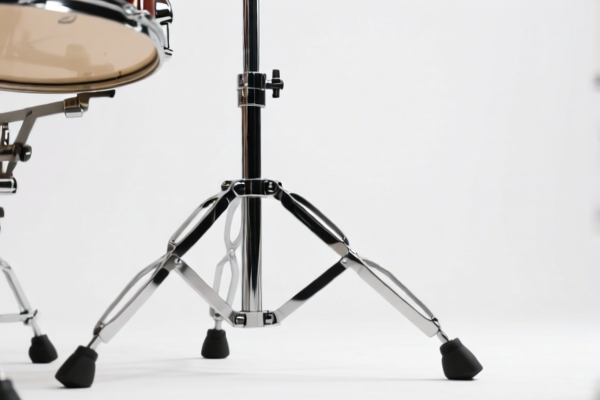
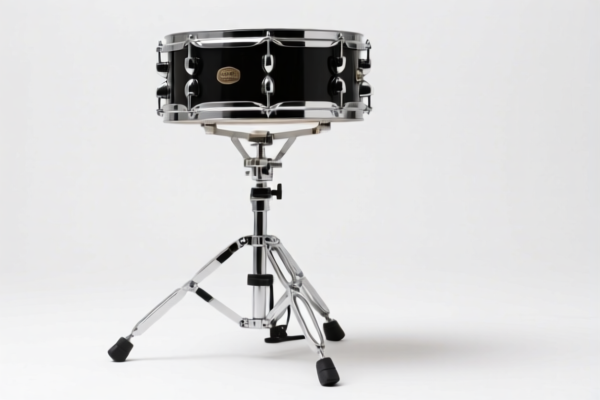
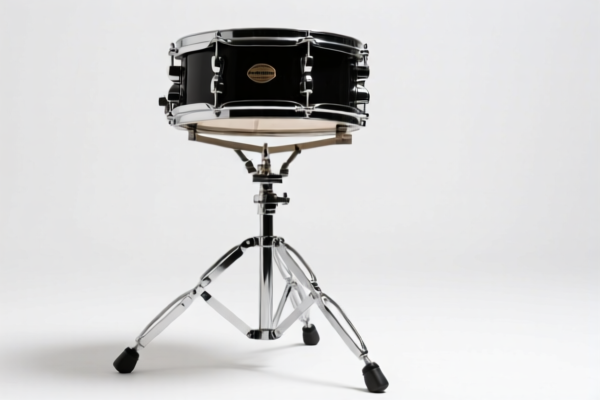
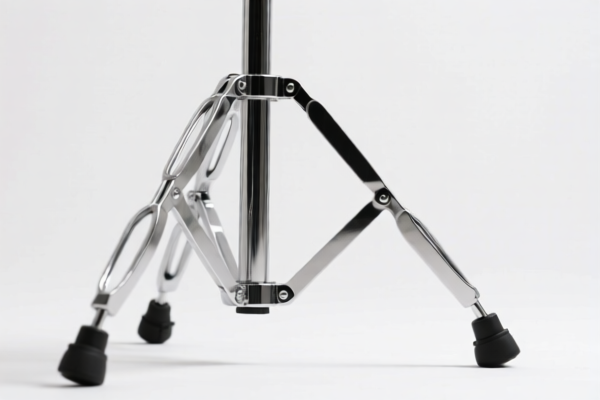
AI Analysis
🎹 Digital Piano Stand (木质数码钢琴架)
🌐 HS Code Reference & Customs Clearance Guide | 2026 Latest Tariff Analysis | Professional Clearance Strategy
📌 I. Product Definition & Classification: Do You Really Understand "Digital Piano Stands"?
A Digital Piano Stand is a supporting structure designed to hold digital pianos, keyboards, or synthesizers. While it serves a functional purpose for musical instruments, its classification in international trade depends heavily on its primary material and structural composition.
⚠️ Critical Distinction:
- If the stand is made of wood and functions primarily as furniture or a structural support → It may fall under Chapter 94 (Furniture) or Chapter 44 (Wood Products).
- If the stand is considered a specialized part of the piano system (e.g., integrated electronic mounting or specific to the instrument's function) → It may fall under Chapter 92 (Musical Instruments).
- Key Risk: Misclassification leads to drastically different tax rates (from 21.7% to 38.2%), plus potential penalties for incorrect declaration.
📦 II. HS Code Classification Details (2026 Latest Tariff Authority Comparison)
Based on the provided data for "Wooden Digital Piano Stand", here are the five possible HS Code classifications with their corresponding tax implications.
| HS Code | Product Description | Primary Category | Total Tax Rate |
|---|---|---|---|
9403.60.80.93 |
Other Wooden Furniture | Furniture (Wooden) | 35.0% |
9403.91.00.80 |
Parts of Other Furniture | Furniture Parts (Wooden) | 35.0% |
4418.99.91.95 |
Other Wood Products for Construction | Wood Products (Building Materials) | 38.2% |
9209.91.80.00 |
Parts and Accessories of Pianos | Musical Instrument Parts | 21.7% |
9209.99.80.00 |
Other Accessories of Musical Instruments | Musical Instrument Accessories | 22.8% |
🔍 Key Insight:
- Furniture Classification (9403): Treats the stand as a generic piece of furniture. High risk if the stand is not clearly identifiable as standalone furniture.
- Construction Wood (4418): Often used if the stand is viewed as a wooden structural component. Highest tax rate (38.2%).
- Instrument Parts (9209): Lowest tax rate (21.7% - 22.8%). Recommended if the stand is specifically designed for, and exclusively used with, digital pianos, and considered an integral part of the instrument system.
💰 III. 2026 Latest Tariff Rate Breakdown (Including Additional Taxes & Policy Surcharges)
✅ Applicable Country: United States (US)
✅ Origin: China (CN)
✅ Effective Date: From November 10, 2025 (inclusive of subsequent imports)
🎯 1. 9403.60.80.93 & 9403.91.00.80 —— Classified as Wooden Furniture or Parts
| Item | Details |
|---|---|
| Base Tariff | 0.0% (ad valorem) |
| Section 301 Surcharge | +25.0% (Added duty under USITC Footnote 9903.88.01) |
| IEEPA Surcharge (122 Clause) | +10.0% (Targeted duty on Chinese products, effective Nov 10, 2025) |
| Total Tax Rate | 35.0% |
| Tax Calculation | CIF Value × 35% |
| De Minimis Exemption | ❌ Not Eligible (deny_de_minimis) |
| Legal Basis Path | IEEPA:9903.01.25 → IEEPA:9903.01.24 → USITC:9403 → FOOTNOTE:9903.88.01 |
📌 Explanation:
- The 25% Section 301 duty applies to most Chinese-made furniture and wood products.
- The 10% IEEPA duty is an additional layer for specific Chinese imports.
- Combined 35% is a high-cost scenario for importers.
🎯 2. 4418.99.91.95 —— Classified as Other Wood Products for Construction
| Item | Details |
|---|---|
| Base Tariff | 3.2% |
| Section 301 Surcharge | +25.0% |
| IEEPA Surcharge (122 Clause) | +10.0% |
| Total Tax Rate | 38.2% |
| Tax Calculation | CIF Value × 38.2% |
| De Minimis Exemption | ❌ Not Eligible (deny_de_minimis) |
| Legal Basis Path | IEEPA:9903.01.25 → IEEPA:9903.01.24 → USITC:4418 → FOOTNOTE:9903.88.01 |
📌 Warning:
- This is the most expensive classification.
- Avoid declaring wooden stands as "construction wood" unless they are explicitly building materials (e.g., shelving units installed as part of a structure).
🎯 3. 9209.91.80.00 & 9209.99.80.00 —— Classified as Piano Parts/Accessories
| Item | Details |
|---|---|
| Base Tariff | 4.2% (9209.91) / 5.3% (9209.99) |
| Section 301 Surcharge | +7.5% (Lower rate for musical instruments) |
| IEEPA Surcharge (122 Clause) | +10.0% |
| Total Tax Rate | 21.7% (9209.91) / 22.8% (9209.99) |
| Tax Calculation | CIF Value × 21.7% / 22.8% |
| De Minimis Exemption | ❌ Not Eligible (deny_de_minimis) |
| Legal Basis Path | IEEPA:9901.25 → IEEPA:9903.01.24 → USITC:9209 → FOOTNOTE:9903.88.01 |
📌 Advantage:
- Significantly lower tax burden compared to furniture classification.
- 7.5% Section 301 duty is much lower than the 25% applied to furniture.
- Recommendation: If the stand is exclusive to digital pianos and can be justified as an "instrument part/accessory," this is the optimal classification.
🛠️ IV. Customs Clearance Practical Advice (Battle-Hardened Pitfall Avoidance Guide)
✅ 1. Document Preparation Checklist (Non-Negotiable)
| Document | Required | Explanation |
|---|---|---|
| ✅ Product Specifications | ✔️ | Must specify material (wood type), dimensions, load capacity, and intended use. |
| ✅ Product Photos | ✔️ | Clear images showing the stand, branding, and how it attaches to the piano. |
| ✅ Bill of Materials (BOM) | ✔️ | Detailed list of wood, hardware, and components to prove "wooden" construction. |
| ✅ Usage Declaration | ✔️ | Explicitly state: "Stand designed exclusively for Digital Piano Model XYZ." |
| ✅ Commercial Invoice | ✔️ | Must describe item as "Digital Piano Stand" or "Piano Accessory," NOT generic "Wooden Furniture." |
| ✅ Origin Certificate | ✔️ | If not Chinese, may affect tariff eligibility. |
✅ 2. Declaration Strategy (Key Mnemonic)
🔥 "Specific Purpose, Low Rate; Generic Furniture, High Rate!"
| Scenario | Correct Declaration | Wrong Practice | Consequence |
|---|---|---|---|
| Stand specifically for Digital Pianos | 9209.91.80.00 or 9209.99.80.00 |
Declaring as "Wooden Shelf" or "Furniture" | Tax jumps from 22.8% to 35% |
| Generic Wooden Stand (any use) | 9403.60.80.93 |
Claiming it's for piano only without proof | Risk of penalty, audit, or reclassification |
| Stand made of wood but used in building | 4418.99.91.95 |
N/A | 38.2% Tax – Avoid unless true |
📌 Critical Tip:
- Use terms like "Accessory," "Mount," "Support for Musical Instrument" in your invoice description.
- Avoid terms like "Furniture," "Shelf," "Rack" unless you intend to accept the higher tax rate.
✅ 3. Special Case Handling
| Scenario | Handling Advice |
|---|---|
| Integrated Electronic Stand | If the stand has built-in speakers or electronics, it may be classified under Chapter 92 more strongly. Provide circuit diagrams. |
| Modular Stand | If the stand can be disassembled and used as general shelving, customs may force Furniture Classification (9403). Design it to be piano-specific. |
| OEM Custom Stand | Provide client design specs showing piano-specific contours or mounting points. |
| Kit vs. Assembled | If shipped as a kit, ensure parts are clearly labeled as "Piano Stand Parts" to support 9209 classification. |
🌍 V. Global Market Comparison (2026 Latest)
| Country/Region | Recommended HS Code | Tariff | Certification | Notes |
|---|---|---|---|---|
| 🇺🇸 USA | 9209.91.80.00 |
21.7% | N/A | Best Option if justified. Avoid 9403 (35%) or 4418 (38.2%). |
| 🇨🇳 China | 9403.60.80.93 |
~5-10% | N/A | Lower import duty, but domestic sales may vary. |
| 🇪🇺 EU | 9403.60.80.93 |
0% (if CE) | CE | No additional surcharges like US. |
| 🇬🇧 UK | 9403.60.80.93 |
0-5% | UKCA | Post-Brexit rules apply. |
📌 Conclusion:
- The US market is the most challenging due to high surcharges.
- Strategic Classification is critical. Always aim for9209(Musical Instrument Parts) if the stand is exclusively for pianos.
📌 VI. Common Errors & Pitfall Guide (Lessons from Blood & Tears)
❌ Error 1: Declaring a piano-specific stand as "Wooden Furniture"
👉 Consequence: Tax increases by 12-16% (from 22.8% to 35%). Profit Margin Erosion!
❌ Error 2: Using vague descriptions like "Wooden Rack"
👉 Consequence: Customs may arbitrarily classify under 4418.99.91.95 → 38.2% Tax. Catastrophic Cost!
❌ Error 3: Failing to prove Exclusive Use for pianos
👉 Consequence: Customs rejects 9209 classification → Forced into 9403. Appeal Process is Costly and Slow.
❌ Error 4: Ignoring IEEPA 122 Clause
👉 Consequence: All classifications above include a 10% IEEPA surcharge. Failing to account for this leads to budget shortfalls.
✅ Correct Approach:
"Digital Piano Stand, Wooden, Model XYZ, Designed for Digital Pianos Only, FCC/CE Compliant"
🎯 VII. Conclusion: Professional Classification Saves Money!
🎯 Remember the Golden Rule:
🔹 "If it’s for a Piano, Classify as Part (
9209)!"
🔹 "If it’s General Furniture, Tax is 35%+!"
🔹 "Never Declare as Construction Wood (4418) Unless Necessary!"
📌 Pro Tip:
If your stand is manufactured in Vietnam, Mexico, or Thailand, you may qualify for IEEPA Exemptions or lower tariffs. Consider supply chain restructuring for US-bound goods.
📣 Immediate Action:
📞 Consult a Customs Broker + Provide Product Photos + Apply for Pre-Ruling
🚀 Clear Customs Smoothly, Maximize Profit, Avoid Surprises!
✨ Professional Customs Clearance Starts with Accurate Classification!
💼 Every Percent of Tax Matters!
Customer Reviews
About HS Code Classification
The Harmonized System (HS) is an internationally standardized nomenclature developed by the World Customs Organization (WCO) to classify traded products. Over 200 countries use the HS system as the basis for customs tariffs, trade statistics, and import/export regulations.
Each HS code follows a hierarchical structure:
- Chapter (2 digits) — Broad category of goods (e.g., Chapter 84: Machinery and Mechanical Appliances)
- Heading (4 digits) — More specific grouping within the chapter
- Subheading (6 digits) — Internationally standardized breakdown, used by all WCO member countries
- National subdivisions (8-10 digits) — Country-specific extensions for further classification, such as US HTSUS 10-digit codes
Correct HS code classification is essential for smooth customs clearance, accurate duty payment, and compliance with trade regulations. Misclassification can lead to customs delays, overpayment of duties, or penalties.
When importing from CN to US, the applicable tariff rates may include:
- Most-Favored-Nation (MFN) rate — The standard duty rate applied to WTO members
- General rate — Applied to countries without trade agreements
- Trade remedy duties — Additional tariffs such as Section 301 (anti-dumping), Section 232 (national security), or countervailing duties
The information provided on this page is for reference purposes only. For official classification, please consult with your local customs authority or a licensed customs broker.