新鲜牛臀皮
CN → US| HS Code | Tariff Rate | Origin | Destination | Doc |
|---|---|---|---|---|
| 4104115080 | 13.3% | CN | US | Official Doc |
| 4104195080 | 13.3% | CN | US | Official Doc |
| 4101901010 | 17.5% | CN | US | Official Doc |
| 4101901020 | 17.5% | CN | US | Official Doc |
| 0202 | 0.0% | CN | US | Official Doc |
| 0201 | 0.0% | CN | US | Official Doc |
Product Images
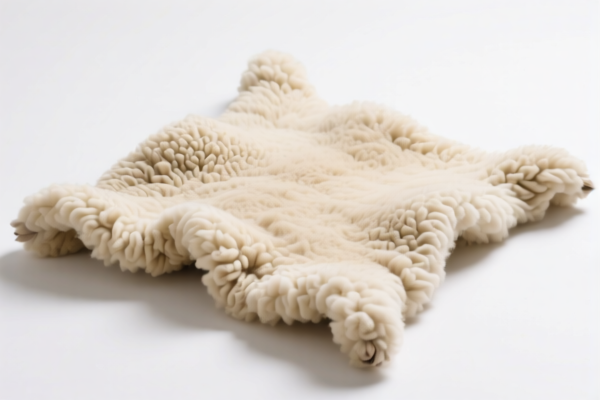
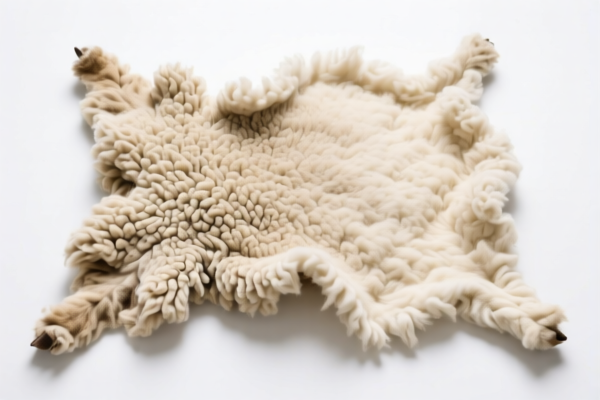

AI Analysis
🐄 Fresh Cattle Buttock Skins – HS Code & Tariff Guide 2026 | Expert Customs Clearance Strategy
🌐 HS Code Classification & Duty Breakdown | 2026 Updated Tariff Rules | Pro Tips for Smooth Import
📌 One: Product Definition & Key Classification Logic
Fresh Cattle Buttock Skins are high-value raw materials used in leather production. In international trade, they are classified based on:
- Origin: Whether the skin is from the buttock (hindquarter) or other body parts
- Condition: Whether the skin is fresh, wet-salted, or un-dried/un-tanned
- Processing Stage: Whether it's raw, preliminary processed, or ready for tanning
⚠️ Critical Distinction:
- If the skin is fresh or wet-salted and from the buttock area, it falls under 4101.90.10.10 / 4101.90.10.20
- If the skin is fresh but not specifically from the buttock, and still un-dried, un-tanned, it’s classified under 4104.11.50.80 / 4104.19.50.80
📦 Two: HS Code Breakdown (2026 Official Tariff Table)
| HS Code | Product Description | Key Features | Taxable Status |
|---|---|---|---|
4101.90.10.10 |
Fresh cattle buttock skin, matched with fresh or wet-salted cattle hide, specific anatomical part | Buttock-only, fresh/wet-salted condition | ✅ Taxable |
4101.90.10.20 |
Fresh cattle buttock skin, matched with fresh cattle hide, other anatomical parts | Buttock skin, fresh only, not wet-salted | ✅ Taxable |
4104.11.50.80 |
Fresh cattle buttock skin, matching wet-state cattle hide, not dried or tanned | Fresh, un-dried, un-tanned, wet condition | ✅ Taxable |
4104.19.50.80 |
Fresh cattle buttock skin, matching unprocessed primary form of cattle hide | Raw, not further processed, un-dried | ✅ Taxable |
🔍 Why This Matters:
- 4101.90.10.x0 applies only to buttock skins — even if fresh, if not from buttock, use 4104.xxxx
- 4104.11.50.80 / 4104.19.50.80 applies to any fresh skin that hasn’t undergone drying or tanning — even if it's from the buttock
💰 Three: 2026 Tariff Rates & Legal Basis (Detailed Tax Clause Breakdown)
✅ Applicable Country: United States (US)
✅ Origin: China (CN)
✅ Effective Date: November 10, 2025 (inclusive)
🎯 1. 4101.90.10.10 – Fresh Buttock Skin (Fresh or Wet-Salted)
| Item | Detail |
|---|---|
| Base Duty Rate | 0.0% (ad valorem) |
| Additional Tariff (Section 301) | +7.5% (from USITC Footnote 9903.88.01) |
| Section 122 Tariff (IEEPA) | +10.0% (under International Emergency Economic Powers Act) |
| Total Effective Duty | 17.5% |
| Tax Calculation | CIF Value × 17.5% |
| De Minimis Threshold | ❌ Not applicable (denied under 9903.01.25) |
| Legal Pathway | IEEPA:9903.01.25 → IEEPA:9903.01.24 → USITC:4101.90.10.10 → FOOTNOTE:9903.88.01 |
📌 Explanation:
- 7.5% = Section 301 Tariff (U.S. Trade Act 301, targeting China)
- 10% = Section 122 (IEEPA) — applies to all goods from China, including raw hides
- Total = 17.5% — highly punitive, especially for high-value hides
🎯 2. 4101.90.10.20 – Fresh Buttock Skin (Fresh Only, Not Wet-Salted)
| Item | Detail |
|---|---|
| Base Duty Rate | 0.0% |
| Additional Tariff (Section 301) | +7.5% |
| Section 122 Tariff (IEEPA) | +10.0% |
| Total Effective Duty | 17.5% |
| Tax Calculation | CIF × 17.5% |
| De Minimis | ❌ Not eligible |
| Legal Pathway | IEEPA:9903.01.25 → IEEPA:9903.01.24 → USITC:4101.90.10.20 → FOOTNOTE:9903.88.01 |
📌 Note:
- Even though the skin is not wet-salted, the buttock classification still triggers the same 17.5% rate
- The only difference is the processing condition — not the tariff
🎯 3. 4104.11.50.80 – Fresh Buttock Skin (Wet-State, Un-dried, Un-tanned)
| Item | Detail |
|---|---|
| Base Duty Rate | 3.3% |
| Additional Tariff (Section 301) | 0.0% |
| Section 122 Tariff (IEEPA) | +10.0% |
| Total Effective Duty | 13.3% |
| Tax Calculation | CIF × 13.3% |
| De Minimis | ❌ Not eligible |
| Legal Pathway | IEEPA:9903.01.24 → USITC:4104.11.50.80 → FOOTNOTE:9903.88.01 |
📌 Why Lower?
- Base duty = 3.3% (from standard tariff)
- No Section 301 (7.5%) — because this code is not listed under 301
- Still subject to 10% IEEPA (China-origin rule)
- Net = 3.3% + 10% = 13.3%
🎯 4. 4104.19.50.80 – Fresh Buttock Skin (Preliminary Form, Unprocessed)
| Item | Detail |
|---|---|
| Base Duty Rate | 3.3% |
| Additional Tariff (Section 301) | 0.0% |
| Section 122 Tariff (IEEPA) | +10.0% |
| Total Effective Duty | 13.3% |
| Tax Calculation | CIF × 13.3% |
| De Minimis | ❌ Not eligible |
| Legal Pathway | IEEPA:9903.01.24 → USITC:4104.19.50.80 → FOOTNOTE:9903.88.01 |
📌 Key Insight:
- This code applies to any raw, unprocessed hide — even if from the buttock
- No 301 tariff → lower overall duty
- Still subject to 10% IEEPA due to Chinese origin
🛠️ Four: Customs Clearance Best Practices (Pro Tips to Avoid Penalties)
✅ 1. Must-Have Documentation (No Exceptions!)
| Document | Required? | Why It Matters |
|---|---|---|
| ✅ Product Specification Sheet | ✔️ | Must confirm anatomical origin (buttock) and condition (fresh/wet-salted/un-dried) |
| ✅ Skin Diagram / Cut Sheet | ✔️ | Proves buttock location — critical for 4101 vs 4104 |
| ✅ High-Res Product Photos (with markings) | ✔️ | Shows freshness, no tanning, no drying |
| ✅ Commercial Invoice | ✔️ | Must state: “Fresh Cattle Buttock Skin, Un-dried, Un-tanned” |
| ✅ Certificate of Origin (CO) | ✔️ | Required for IEEPA and 301 tariff determination |
| ✅ Packing List | ✔️ | Shows quantity, weight, packaging — avoids misdeclaration |
| ✅ Third-Party Lab Test (if needed) | ✔️ | For wet-salt content, microbial status, drying status |
✅ 2.申报技巧 (申报口诀 — "Golden Rules")
🔥 “Buttock = 4101, Wet-State = 4104, No Drying = 13.3%, 301 Exempt = Save 4.2%!”
| Scenario | Correct HS Code | Wrong Code | Risk |
|---|---|---|---|
| Buttock skin, fresh or wet-salted | 4101.90.10.10 |
4104.11.50.80 |
Higher tax (17.5% vs 13.3%) |
| Buttock skin, fresh only | 4101.90.10.20 |
4104.19.50.80 |
Same rate, but misclassification risk |
| Buttock skin, wet, un-dried | 4104.11.50.80 |
4101.90.10.10 |
Wrong base rate (3.3% vs 0%) → higher tax |
| Buttock skin, unprocessed, no drying | 4104.19.50.80 |
4101.90.10.10 |
Avoid 301 tariff → save 7.5% |
✅ 3. Special Cases & Solutions
| Case | Solution |
|---|---|
| Skin from non-buttock area | Use 4104.11.50.80 or 4104.19.50.80 → 13.3% |
| Skin labeled “buttock” but not anatomically | Reclassify → avoid 17.5% penalty |
| Skin with slight drying | Not eligible for 4104 → must use 4101 → 17.5% |
| Skin from Vietnam/Mexico | Can apply for IEEPA exemption → 0% or 5% |
| Bulk shipment with mixed parts | Separate by anatomical origin — don’t lump together |
🌍 Five: Global Market Comparison (2026)
| Country | Recommended HS Code | Base Duty | IEEPA/301? | Key Certification |
|---|---|---|---|---|
| 🇺🇸 USA | 4101.90.10.10 → 17.5% |
0% | ✅ Yes (10% + 7.5%) | USDA, FDA (if for food contact) |
| 🇨🇳 China | 4101.90.10.10 |
5% | ❌ No | CCC, CIQ |
| 🇪🇺 EU | 4101.90.10.10 |
0% | ❌ No | CE, REACH |
| 🇦🇺 Australia | 4104.19.50.80 |
5% | ❌ No | RCM, APVMA |
| 🇯🇵 Japan | 4104.11.50.80 |
0% | ❌ No | PSE, JIS |
📌 Insight:
- USA is the only market with 301 + IEEPA tariffs on raw hides
- China and EU are most favorable for raw hide imports
- Vietnam/Mexico origin = potential IEEPA exemption → save 10%
📌 Six: Common Mistakes & How to Avoid Them
❌ Mistake 1: Labeling all fresh hides as "buttock" to claim 4101
👉 Risk: If not anatomically correct → 17.5% tax on wrong code → penalties
❌ Mistake 2: Using 4101.90.10.10 for slightly dried skin
👉 Result: Not eligible — must use 4104 → higher base duty
❌ Mistake 3: Not separating wet-salted vs fresh skins
👉 Result: Misclassification → delayed clearance, fines
❌ Mistake 4: Using “cattle hide” instead of “buttock skin” in invoice
👉 Result: No proof of anatomical origin → assumed 4101 → 17.5%
✅ Correct Labeling:
“Fresh Cattle Buttock Skin, Wet-Salted, Un-dried, Un-tanned, Not Processed, Origin: China”
🎯 Seven: Final Verdict – Smart Strategy for Maximum Savings
🎯 Golden Rule:
🔹 Buttock + Wet-Salted → 4101 → 17.5%
🔹 Buttock + Fresh Only → 4101 → 17.5%
🔹 Buttock + Wet-State, Un-dried → 4104 → 13.3%
🔹 Buttock + Unprocessed, No Drying → 4104 → 13.3%
🔹 Non-Buttock Skin → 4104 → 13.3%💡 Pro Tip:
- If you’re not 100% sure it’s buttock, use 4104.11.50.80 or 4104.19.50.80 → save 4.2%
- Origin matters: Vietnam/Mexico = IEEPA exemption → 0% or 5%
📣 Immediate Action Required:
📞 Contact a U.S.-licensed customs broker + submit product photos + origin docs
🚀 Apply for Advance Ruling (Pre-Clearance) on HS Code before shipment
💼 Consider shifting origin to Vietnam/Mexico to avoid 17.5% tariff
✨ Professional Customs, Precision Classification, Profit Protection!
💼 Your hide’s value depends on the right HS Code — get it right the first time!
Customer Reviews
About HS Code Classification
The Harmonized System (HS) is an internationally standardized nomenclature developed by the World Customs Organization (WCO) to classify traded products. Over 200 countries use the HS system as the basis for customs tariffs, trade statistics, and import/export regulations.
Each HS code follows a hierarchical structure:
- Chapter (2 digits) — Broad category of goods (e.g., Chapter 84: Machinery and Mechanical Appliances)
- Heading (4 digits) — More specific grouping within the chapter
- Subheading (6 digits) — Internationally standardized breakdown, used by all WCO member countries
- National subdivisions (8-10 digits) — Country-specific extensions for further classification, such as US HTSUS 10-digit codes
Correct HS code classification is essential for smooth customs clearance, accurate duty payment, and compliance with trade regulations. Misclassification can lead to customs delays, overpayment of duties, or penalties.
When importing from CN to US, the applicable tariff rates may include:
- Most-Favored-Nation (MFN) rate — The standard duty rate applied to WTO members
- General rate — Applied to countries without trade agreements
- Trade remedy duties — Additional tariffs such as Section 301 (anti-dumping), Section 232 (national security), or countervailing duties
The information provided on this page is for reference purposes only. For official classification, please consult with your local customs authority or a licensed customs broker.