旅行袋
CN → US| HS Code | Tariff Rate | Origin | Destination | Doc |
|---|---|---|---|---|
| 4202122120 | 55.0% | CN | US | Official Doc |
| 3923109000 | 38.0% | CN | US | Official Doc |
| 4202122150 | 55.0% | CN | US | Official Doc |
| 3923900080 | 38.0% | CN | US | Official Doc |
| 4202329300 | 52.6% | CN | US | Official Doc |
Product Images
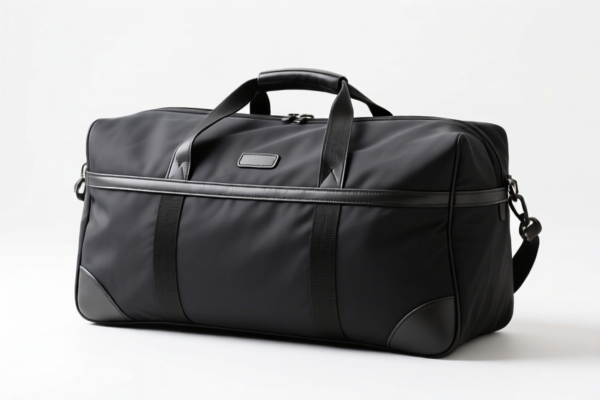
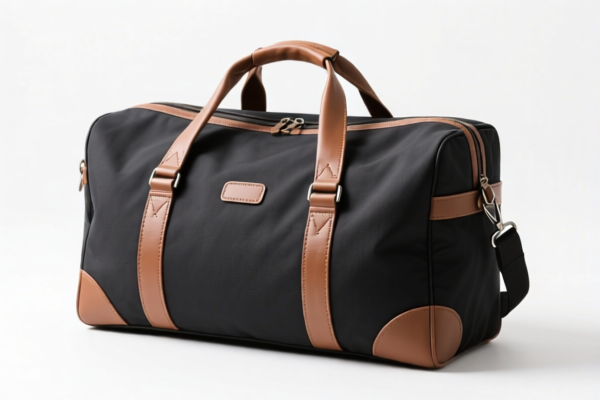
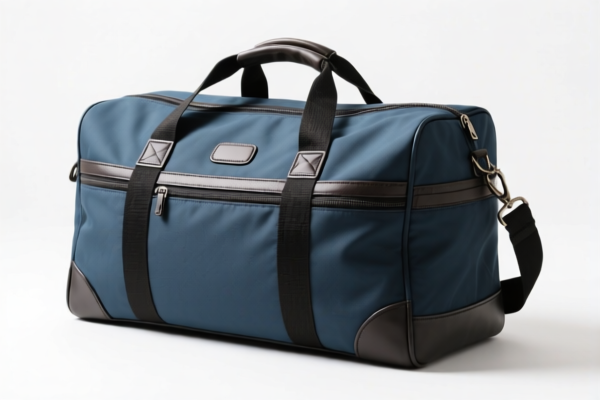
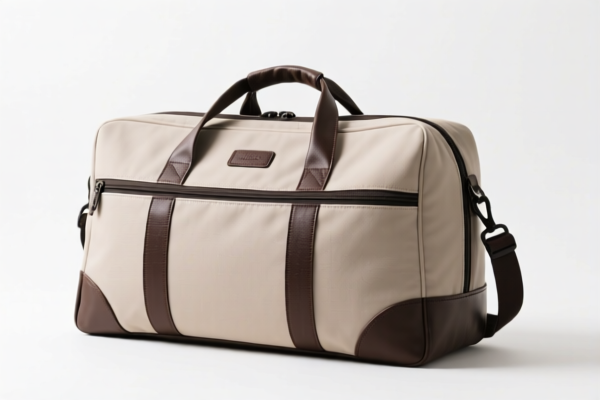
AI Analysis
👜 Travel Bags & Luggage: The Ultimate HS Code & Tariff Guide for US Customs (2026)
🌐 HS Code Reference & Customs Clearance Guide | Latest 2026 Tariff Analysis | Professional Strategy for "Travel Bags"
📌 I. Product Definition & Classification: What Exactly is a "Travel Bag"?
"Travel Bag" is a broad commercial term, not a precise customs classification. In international trade, it is strictly categorized based on Material (Plastic, Leather, Textile) and Function (Rigid Suitcase vs. Flexible Carrier). Misclassification here leads to massive tariff differences (from 3% to 20% base rate alone).
Core Distinction Logic: 1. Rigid/Structure-Heavy Bags: Suitcases with wheels, handles, and rigid frames. * Primary Category: 4202 (Articles of leather or of sheeting of plastic, of textile materials...). 2. Flexible/Packing Bags: Soft-sided bags, duffels, or containers used for transport/packaging without rigid structural components. * Primary Category: 3923 (Articles for the conveyance or packing of goods, of plastics).
⚠️ Key Classification Point:
- If the item is a Suitcase/Trunk with a rigid body, it falls under 4202.
- If the item is a Plastic Box/Crate or a Soft Plastic/Packed Bag used primarily for packaging/conveyance, it falls under 3923.
- Wallets/Small Carriers (like travel wallets) have their own specific subheadings under 4202 or 3923.
📦 II. Detailed HS Code Classification Matrix (Based on Provided Data)
Based on the provided <DATA>, here are the exact classifications for "Travel Bags" (旅行袋), sorted by material and type.
| HS Code | Product Description (Summary) | Material Type | Primary Use Case |
|---|---|---|---|
| 4202.12.21.20 | Travel Bags, matching use as Suitcases | Plastic or Leather | Rigid or semi-rigid suitcases made of plastic sheeting or leather. |
| 3923.10.90.00 | Travel Bags, matching use as Boxes/Cases | Plastic or Plastic-Coated | Plastic boxes, crates, or plastic-coated containers used for packing/conveyance. |
| 4202.12.21.50 | Travel Bags, matching use as Suitcases | Plastic, Leather, or Textile | Broad category for suitcases made of mixed materials (plastic, leather, textile). |
| 3923.90.00.80 | Travel Bags, matching use as Transport/Packing Goods | Plastic | General plastic articles for conveying or packing goods (non-suitcase specific). |
| 4202.32.93.00 | Travel Wallets (Travel Pouches) | Textile Materials | Small carry-on items, travel wallets, or small textile bags for carrying personal items. |
🔍 Critical Distinction:
- HS 4202 is generally for consumer-ready luggage (suitcases, backpacks, handbags).
- HS 3923 is often for industrial packaging or plastic containers (even if used for travel, if it's a rigid plastic box, it might be 3923).
- HS 4202.32.93.00 is specifically for small textile carriers (like travel wallets), not large suitcases.
💰 III. 2026 Latest Tariff Rate Breakdown (Including Surtaxes)
✅ Applicable Country: United States (US)
✅ Origin: China (CN)
✅ Effective Time: Current rates apply (including Section 301 and Section 122 tariffs)
🎯 1. 4202.12.21.20 & 4202.12.21.50 —— Suitcases (Plastic/Leather/Textile)
These two codes share the same total tariff rate because the additional duties are applied uniformly to luggage articles from China.
| Item | Content |
|---|---|
| Base Rate (MFN) | 20.0% (Ad Valorem) |
| Section 301 Surcharge | +25.0% |
| Section 122 Surcharge | +10.0% |
| Total Effective Rate | 55.0% |
| Tax Calculation | CIF Value × 55% |
| De Minimis Exemption? | ❌ NO (Cannot use $800 de minimis for these goods) |
| Legal Basis Path | HTSUS:4202.12 → USITC Footnote → IEEPA:9903.01.25 (Section 122/301 logic) |
📌 Explanation:
- Base 20%: Standard US import duty for leather/plastic sheeting articles.
- 25%: Section 301 tariffs on Chinese goods (List 4A/4B).
- 10%: Section 122 tariffs (often applied to specific manufacturing materials or goods, here explicitly listed in the data).
- Total 55%: This is a very high cost. Profit margins on luggage from China are severely impacted.
🎯 2. 3923.10.90.00 & 3923.90.00.80 —— Plastic Boxes/Packing Bags
These plastic-based categories have a lower base rate but the same surcharges.
| Item | Content |
|---|---|
| Base Rate (MFN) | 3.0% (Ad Valorem) |
| Section 301 Surcharge | +25.0% |
| Section 122 Surcharge | +10.0% |
| Total Effective Rate | 38.0% |
| Tax Calculation | CIF Value × 38% |
| De Minimis Exemption? | ❌ NO |
| Legal Basis Path | HTSUS:3923 → USITC Footnote → IEEPA:9903.01.25 |
📌 Explanation:
- Plastic articles often have lower base duties (3%) compared to leather/textile luggage (20%).
- However, 38% is still a significant cost.
- Warning: Do not misdeclare a "Plastic Suitcase" as a "Plastic Box" to save tax. Customs will inspect the structure. If it has wheels/handles, it must be 4202.
🎯 3. 4202.32.93.00 —— Travel Wallets (Textile)
| Item | Content |
|---|---|
| Base Rate (MFN) | 17.6% (Ad Valorem) |
| Section 301 Surcharge | +25.0% |
| Section 122 Surcharge | +10.0% |
| Total Effective Rate | 52.6% |
| Tax Calculation | CIF Value × 52.6% |
| De Minimis Exemption? | ❌ NO |
| Legal Basis Path | HTSUS:4202.32 → USITC Footnote → IEEPA:9903.01.25 |
📌 Explanation:
- Small textile bags/wallets have a base rate of 17.6%.
- Total 52.6% is slightly lower than suitcases (55%) due to the lower base rate.
🛠️ IV. Customs Clearance Practical Advice (Pitfall Avoidance Guide)
✅ 1. Documentation Checklist (Must-Haves)
| Document | Mandatory? | Description |
|---|---|---|
| ✅ Product Specification Sheet | ✔️ | Must clearly state: Material (e.g., "Polyester Textile"), Dimensions, Weight, Type (Suitcase vs. Pouch). |
| ✅ High-Res Photos | ✔️ | Show full product, wheels/handles (if any), and interior structure. Crucial for distinguishing 4202 (Suitcase) from 3923 (Packing). |
| ✅ Commercial Invoice | ✔️ | Declare accurately: "Travel Suitcase, Plastic, for Personal Use" NOT just "Travel Bag". |
| ✅ Packing List | ✔️ | Detail contents. If shipping with accessories, ensure they are included in the main HS Code. |
| ✅ Country of Origin Certificate | ✔️ | Essential for proving CN origin to apply correct surcharges. |
✅ 2. Declaration Tips (Key Mnemonics)
🔥 "Structure Determines Code! Wheels = 4202, Box = 3923!"
| Scenario | Correct HS Code | Wrong Way | Consequence |
|---|---|---|---|
| Hard Plastic Suitcase | 4202.12.21.20 |
Declare as 3923.10.90.00 |
Underpayment Penalty! (38% vs 55% is a 17% gap). Customs will reclassify and charge difference + fines. |
| Soft Duffel Bag (Textile) | 4202.12.21.50 |
Declare as 4202.32.93.00 |
Overpayment Penalty! (55% vs 52.6%). You lose 2.4% profit unnecessarily. |
| Plastic Storage Crate | 3923.10.90.00 |
Declare as 4202... |
Overpayment Penalty! (38% vs 55%). |
| Travel Wallet/Pouch | 4202.32.93.00 |
Declare as 4202.12... |
Overpayment Penalty! |
✅ 3. Special Situations
| Situation | Handling Advice |
|---|---|
| Mixed Material Suitcase | If a suitcase is 50% Leather, 50% Textile, and 50% Plastic → Use 4202.12.21.50 (Broad Plastic/Leather/Textile category). |
| "Travel Bag" as a Generic Term | Never use "Travel Bag" in the formal description. Use specific terms: "Hard-Side Suitcase," "Soft-Side Duffel," "Plastic Packing Crate." |
| OEM Custom Bags | Provide design files. If the design mimics a suitcase but is made of soft plastic, it may still be 4202. If it's a rigid box, it's 3923. |
| Sample Shipments | Even for samples, De Minimis ($800) does NOT apply to these HS codes from China. Pay the full 52-55% tax. |
🌍 V. Global Market Comparison (2026)
| Region | Recommended HS Code | Base Tariff | Additional Surcharges (CN) | Total Est. Rate | Notes |
|---|---|---|---|---|---|
| 🇺🇸 USA | 4202.12.21.20 (Suitcase) |
20% | +25% (301) +10% (122) | 55% | Highest Cost. Plan for low margins. |
| 🇺🇸 USA | 3923.10.90.00 (Plastic Box) |
3% | +25% (301) +10% (122) | 38% | Lower base, but still high. |
| 🇪🇺 EU | 4202.12.95 (Similar) |
~10-12% | None (WTO Rate) | ~12% | No Section 301/122. Much more competitive. |
| 🇨🇳 China | 4202.12 (Import) |
20% | None | 20% | China imports similar goods at 20%. |
📌 Conclusion:
- The US market is extremely costly for Chinese travel bags due to the 55% effective tariff.
- 3923 (Plastic Packing) is cheaper (38%) but structurally different.
- Consider sourcing from Vietnam, Thailand, or Mexico to avoid Section 301/122 tariffs if targeting the US.
📌 VI. Common Mistakes & Pitfalls (Lessons Learned)
❌ Mistake 1: Declaring a "Plastic Suitcase" as "Plastic Packing Bag" (3923) to save tax.
👉 Result: Customs audit reveals wheels/handles. Back taxes + 20% penalty. You pay 55% retroactively.
❌ Mistake 2: Using "Travel Bag" as the HS Code description.
👉 Result: Customs rejects for lack of specificity. Shipment detained. You must provide material composition.
❌ Mistake 3: Assuming De Minimis ($800) applies to small travel wallets.
👉 Result: 4202.32.93.00 is NOT eligible for de minimis from China. Full 52.6% tax applies.
❌ Mistake 4: Ignoring the "Section 122" 10% surcharge.
👉 Result: Underestimating Landed Cost. Your profit model fails. Total tax is Base + 25% + 10%.
✅ Correct Practice:
"Hard-Shell Suitcase, 24-inch, ABS Plastic, with Wheels and Telescopic Handle, Model XYZ"
🎯 VII. Conclusion: Professional Declaration for Cost Efficiency
🎯 Remember the Mantra:
🔹 "Wheels & Handles = 4202 (55%)"
🔹 "Plastic Boxes = 3923 (38%)"
🔹 "Textile Wallets = 4202.32 (52.6%)"
🔹 "No De Minimis! Tax is High!"
📌 Pro Tip:
If you are importing large volumes, consider Advance Rulings from CBP to confirm the HS Code before shipping. Also, explore Free Trade Agreements (FTAs) by sourcing from non-China countries to reduce the 25% Section 301 burden.
📣 Immediate Action:
📞 Verify material composition (Plastic vs. Leather vs. Textile).
📸 Take clear photos of structure (Wheels? Handles?).
📊 Calculate Landed Cost:Product Cost + Freight + 55% Tax.
🚀 Accurate HS Code = Accurate Profit!
✨ Professional Customs Clearance Starts with Precise Classification!
💼 Every Percent of Tax Saved is Pure Profit!
Customer Reviews
About HS Code Classification
The Harmonized System (HS) is an internationally standardized nomenclature developed by the World Customs Organization (WCO) to classify traded products. Over 200 countries use the HS system as the basis for customs tariffs, trade statistics, and import/export regulations.
Each HS code follows a hierarchical structure:
- Chapter (2 digits) — Broad category of goods (e.g., Chapter 84: Machinery and Mechanical Appliances)
- Heading (4 digits) — More specific grouping within the chapter
- Subheading (6 digits) — Internationally standardized breakdown, used by all WCO member countries
- National subdivisions (8-10 digits) — Country-specific extensions for further classification, such as US HTSUS 10-digit codes
Correct HS code classification is essential for smooth customs clearance, accurate duty payment, and compliance with trade regulations. Misclassification can lead to customs delays, overpayment of duties, or penalties.
When importing from CN to US, the applicable tariff rates may include:
- Most-Favored-Nation (MFN) rate — The standard duty rate applied to WTO members
- General rate — Applied to countries without trade agreements
- Trade remedy duties — Additional tariffs such as Section 301 (anti-dumping), Section 232 (national security), or countervailing duties
The information provided on this page is for reference purposes only. For official classification, please consult with your local customs authority or a licensed customs broker.