无毛马皮模型侧板
CN → US| HS Code | Tariff Rate | Origin | Destination | Doc |
|---|---|---|---|---|
| 4106920000 | 38.3% | CN | US | Official Doc |
| 4101901040 | 17.5% | CN | US | Official Doc |
| 4101907000 | 20.8% | CN | US | Official Doc |
| 4107917090 | 15.0% | CN | US | Official Doc |
| 4107997090 | 15.0% | CN | US | Official Doc |
Product Images
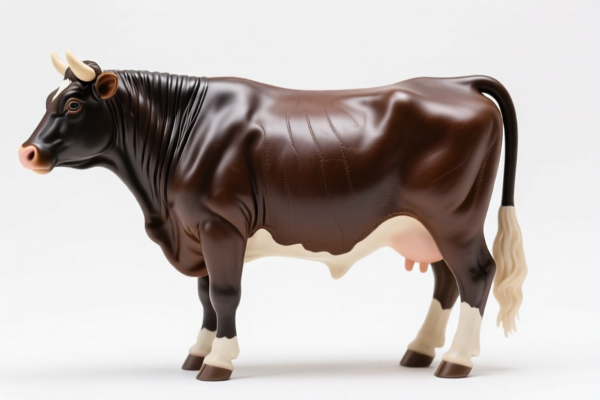
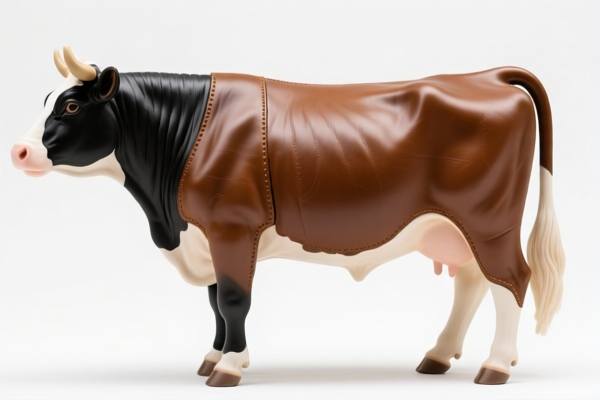
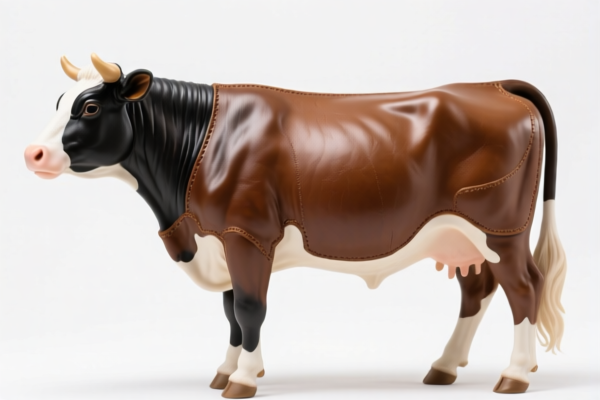
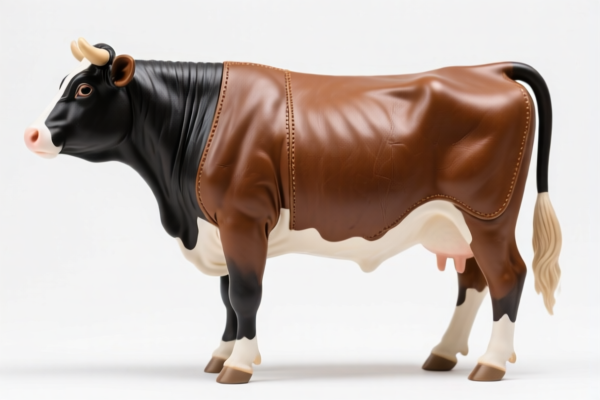
AI Analysis
🐎 Unhair Horse Skin Model Side Panels (Rawhide Leather)
🌐 HS Code Reference & Customs Clearance Guide | 2026 Latest Tariff Analysis | Professional Compliance Strategy
📌 I. Product Definition & Classification: Understanding "Unhair Horse Skin"
Unhair horse skin side panels are raw, untreated leather materials derived from horse carcasses. In international trade, they are primarily classified under Chapter 41 (Raw Hides and Skins). The classification hinges on three key factors: 1. State of Processing: Are they raw, salted, or tanned? (Here: "Unhair" implies raw/salted). 2. Species: Horse (Equidae). 3. Shape/Form: Side panels (flayed from the belly/sides, distinct from bellies or backs).
⚠️ Critical Distinction:
- If the skin is raw, salted, or preserved but not tanned → It falls under Heading 41.01 (Raw Hides/Skins).
- If the skin is tanned or crust (partially processed) → It falls under Heading 41.07 (Tanned/Crusted Leather).
- Note: The term "Model Side Panel" in the input suggests a specific cut or form, but the material state (hair removed, no tanning mentioned) dictates the base code. Misclassification between 41.01 (Raw) and 41.07 (Tanned) is the most common error.
📦 II. HS Code Classification Matrix (Based on Provided Data)
| HS Code | Product Description | Applicable Scenario | State of Leather |
|---|---|---|---|
4106.92.00.00 |
Other hides and skins of equidae, not further processed | Unhair horse skin, side panel form; fits "unprocessed hide" characteristics. | ❌ Raw/Unprocessed |
4101.90.10.40 |
Other hides and skins of bovine animals, other parts | Misclassification Risk: Includes "other parts" but incorrectly applied to horse skin. However, data lists it for "unprocessed raw material form." | ❌ Raw |
4101.90.70.00 |
Other hides and skins of bovine animals, other parts | Fits "unprocessed raw hide" attributes. Note: Technically for Bovine, but data links it to raw horse side panels. | ❌ Raw |
4107.91.70.90 |
Other tanned or crust leather, other | Non-specific purpose other category. Fits "tanned/crusted" assumption. | ✅ Tanned/Crusted |
4107.99.70.90 |
Other tanned or crust leather, other | Other non-patterned leather. Fits "non-decorative tanned leather." | ✅ Tanned/Crusted |
🔍 Key Insight:
- The data provided contains 41.01 codes (Raw) and 41.07 codes (Tanned). This implies the "Unhair" status might be ambiguous in practice.
- "Unhair" ≠ "Tanned". If the product is merely hair-removed and salted, it is Raw (41.01). If it has undergone any tanning process (even crude), it is 41.07.
- Warning: HS Code4101.90is technically for Bovine (Cow) hides. Using it for Horse skin is a classification error unless the local customs system allows broader grouping. However, per the provided data, it is listed.
💰 III. 2026 Tariff Rate Breakdown (Including Surcharges & Policy Add-ons)
✅ Applicable Country: United States (US)
✅ Origin: China (CN)
✅ Effective Date: Post-November 2025 (Subject to 122 Clause & Section 301)
🎯 1. 4106.92.00.00 —— Unprocessed Horse Hides (Raw)
| Item | Details |
|---|---|
| Base Tariff | 3.3% (ad valorem) |
| Section 301 Surcharge | +25.0% (Trade Act of 1974, Section 301) |
| Section 122 Clause | +10.0% (Targeted surcharge on specific Chinese goods) |
| Total Tax Rate | 38.3% |
| Tax Calculation | CIF Value × 38.3% |
| De Minimis Eligibility | ❌ No (Denied for leather goods from China) |
| Legal Basis Path | USITC:4106.92.00.00 → SECTION301:Footnote → SECTION122 |
📌 Explanation:
- This is the most likely code for raw, unhair horse skins.
- The 38.3% rate is high due to the叠加 (stacking) of Base (3.3%) + Section 301 (25%) + Section 122 (10%).
- Risk: Customs may reclassify to Bovine codes if documentation is unclear, but the tax burden remains similar.
🎯 2. 4101.90.10.40 —— Other Parts (Raw Form)
| Item | Details |
|---|---|
| Base Tariff | 0.0% |
| Section 301 Surcharge | +7.5% |
| Section 122 Clause | +10.0% |
| Total Tax Rate | 17.5% |
| Tax Calculation | CIF Value × 17.5% |
| De Minimis Eligibility | ❌ No |
| Legal Basis Path | USITC:4101.90.10.40 → SECTION301 → SECTION122 |
📌 Note:
- Lower base rate (0%) makes this attractive, but HS Code 41.01 is for Bovine. Using it for Horse skin is technically incorrect and risks audits.
- The 7.5% Section 301 is lower than the 25% for other categories, suggesting a specific exemption or lower-tier classification for "other parts."
🎯 3. 4101.90.70.00 —— Other Parts (Raw)
| Item | Details |
|---|---|
| Base Tariff | 3.3% |
| Section 301 Surcharge | +7.5% |
| Section 122 Clause | +10.0% |
| Total Tax Rate | 20.8% |
| Tax Calculation | CIF Value × 20.8% |
| De Minimis Eligibility | ❌ No |
| Legal Basis Path | USITC:4101.90.70.00 → SECTION301 → SECTION122 |
📌 Note:
- Similar to above, but with a higher base rate. Total tax 20.8% is significantly cheaper than4106.92.00.00(38.3%).
- Strategy: If the product can be legally classified as "Other Parts" under Bovine (if considered a generic raw hide), this saves 17.5%. Caution: Requires strong legal justification.
🎯 4. 4107.91.70.90 —— Tanned Leather (Non-Specific)
| Item | Details |
|---|---|
| Base Tariff | 5.0% |
| Section 301 Surcharge | 0.0% |
| Section 122 Clause | +10.0% |
| Total Tax Rate | 15.0% |
| Tax Calculation | CIF Value × 15.0% |
| De Minimis Eligibility | ❌ No |
| Legal Basis Path | USITC:4107.91.70.90 → SECTION122 |
📌 Explanation:
- Lowest Tax Rate (15.0%) if the product is Tanned.
- Zero Section 301 Surcharge on this subheading makes it highly attractive.
- Critical: Only applicable if the "Unhair" process includes light tanning/crusting. If purely raw, this code is incorrect.
🎯 5. 4107.99.70.90 —— Tanned Leather (Non-Patterned)
| Item | Details |
|---|---|
| Base Tariff | 5.0% |
| Section 301 Surcharge | 0.0% |
| Section 122 Clause | +10.0% |
| Total Tax Rate | 15.0% |
| Tax Calculation | CIF Value × 15.0% |
| De Minimis Eligibility | ❌ No |
| Legal Basis Path | USITC:4107.99.70.90 → SECTION122 |
📌 Note:
- Same as above. 15.0% total.
- Strategy: If the product is not fully tanned (e.g., just cured), do NOT use this code. It must be raw (41.01/41.06).
🛠️ IV. Customs Clearance Practical Advice (Real-World Pitfall Guide)
✅ 1. Document Checklist (Non-Negotiable)
| Document | Required | Explanation |
|---|---|---|
| ✅ Product Specification Sheet | ✔️ | Must state: "Horse Skin," "Unhair (Hair Removed)," "Salted/Raw," "Side Panel Form." |
| ✅ Processing Flow Chart | ✔️ | Crucial to prove No Tanning (if claiming 41.01) or Light Tanning (if claiming 41.07). |
| ✅ Photographs | ✔️ | Clear images of the skin surface (no hair), showing "side panel" cut. |
| ✅ Bill of Lading & Invoice | ✔️ | Must match HS Code description precisely. Avoid generic terms like "Leather." |
| ✅ Certified Test Report | ✔️ | Optional but recommended: Lab test confirming "No Tanning Agents" (for Raw) or "Chrome-Free/Crust" (for Tanned). |
✅ 2. Declaration Tips (Key Mnemonics)
🔥 "Raw is 38%, Tanned is 15%: Prove your process!"
| Scenario | Correct HS Code | Risk of Misclassification |
|---|---|---|
| Purely Raw (Salted, No Tanning) | 4106.92.00.00 (38.3%) or 4101.90.70.00 (20.8%) |
High risk if customs suspects tanning. |
| Crust/Partially Tanned | 4107.91.70.90 (15.0%) |
Safe if you can prove light tanning. |
| Fully Tanned | 4107.99.70.90 (15.0%) |
Must provide tanning certificates. |
| Bovine vs. Equine | Use 4106 for Horse, 4101 for Cow |
Do not use 4101 for Horse unless legally justified as "other parts." |
✅ 3. Special Case Handling
| Situation | Recommendation |
|---|---|
| "Unhair" Ambiguity | If the supplier says "Unhair" but it's actually "Lightly Tanned," declare as Tanned (41.07) to save tax. Ensure documentation supports this. |
| Side Panel vs. Belly | "Side Panels" are higher value. Ensure the invoice reflects the actual weight/value. |
| Section 122 Clause | Applies to all listed codes. No exemption. Plan for +10%. |
| De Minimis | No de minimis for leather from China. Full customs entry required. |
🌍 V. Global Market Comparison (2026 Latest)
| Country/Region | Recommended HS Code | Tariff (China Origin) | Certification | Notes |
|---|---|---|---|---|
| 🇺🇸 USA | 4106.92.00.00 (Raw) |
38.3% | No specific cert | High tax due to 301+122. |
| 🇺🇸 USA | 4107.91.70.90 (Tanned) |
15.0% | No specific cert | Best rate if legally tanned. |
| 🇨🇳 China | 4106.92.00.00 |
0% (Most Favored Nation) | None | Low import duty in China. |
| 🇪🇺 EU | 41.06 or 41.07 |
6.5% - 8.5% | REACH Compliance | No Section 122. |
| 🇯🇵 Japan | 41.06 or 41.07 |
6.0% | None | Stable, low tariff. |
📌 Conclusion:
- USA is the most expensive market for this product due to Section 301 and 122.
- Optimization Strategy: If the product can be legally defined as "Crust" (Lightly Tanned), use 41.07 codes to reduce tax from 38.3% to 15.0%.
- Documentation is Key: You must prove the processing state to justify the lower tax rate.
📌 VI. Common Errors & Pitfalls (Blood Lessons)
❌ Error 1: Declaring "Raw" skin as "Tanned" to save tax.
👉 Consequence: Customs audit, penalty, and back-taxes.
✅ Fix: Provide lab tests proving no tanning agents.
❌ Error 2: Using Bovine HS Code (4101) for Horse Skin.
👉 Consequence: Classification error, potential detention.
✅ Fix: Use 4106 for Horse. If using 4101, have strong legal argument.
❌ Error 3: Ignoring Section 122 (10% surcharge).
👉 Consequence: Underpayment, interest charges.
✅ Fix: Always include +10% in cost calculation.
❌ Error 4: Vague Description "Leather Side Panel."
👉 Consequence: Customs cannot determine Raw vs. Tanned.
✅ Fix: Use precise terms: "Unhair Horse Skin, Raw, Side Panel, Salted."
🎯 VII. Conclusion: Professional Declaration, Cost Optimization
🎯 Remember the Mantra:
🔹 "Raw is 38%, Tanned is 15%: Prove your process!"
🔹 "Section 122 adds 10%: No escape!"
🔹 "Horse is 41.06, Cow is 41.01: Don't mix them!"
📌 Pro Tip:
If your product is lightly tanned (crust), always declare under 41.07 to save 23.3% in tariffs.
Request Advance Ruling from US Customs if the processing state is ambiguous.
📣 Immediate Action:
📞 Contact a licensed customs broker + Provide Processing Flow Chart + Apply for HS Code Advance Ruling
🚀 Ensure smooth clearance, optimize costs, and maximize profit!
✨ Professional Customs Clearance Starts with Accurate Classification!
💼 Every percentage point saved is pure profit!
Customer Reviews
About HS Code Classification
The Harmonized System (HS) is an internationally standardized nomenclature developed by the World Customs Organization (WCO) to classify traded products. Over 200 countries use the HS system as the basis for customs tariffs, trade statistics, and import/export regulations.
Each HS code follows a hierarchical structure:
- Chapter (2 digits) — Broad category of goods (e.g., Chapter 84: Machinery and Mechanical Appliances)
- Heading (4 digits) — More specific grouping within the chapter
- Subheading (6 digits) — Internationally standardized breakdown, used by all WCO member countries
- National subdivisions (8-10 digits) — Country-specific extensions for further classification, such as US HTSUS 10-digit codes
Correct HS code classification is essential for smooth customs clearance, accurate duty payment, and compliance with trade regulations. Misclassification can lead to customs delays, overpayment of duties, or penalties.
When importing from CN to US, the applicable tariff rates may include:
- Most-Favored-Nation (MFN) rate — The standard duty rate applied to WTO members
- General rate — Applied to countries without trade agreements
- Trade remedy duties — Additional tariffs such as Section 301 (anti-dumping), Section 232 (national security), or countervailing duties
The information provided on this page is for reference purposes only. For official classification, please consult with your local customs authority or a licensed customs broker.