无纺布鞋套
CN → US| HS Code | Tariff Rate | Origin | Destination | Doc |
|---|---|---|---|---|
| 6115999000 | 27.4% | CN | US | Official Doc |
| 6115298040 | 26.0% | CN | US | Official Doc |
| 6307909891 | 24.5% | CN | US | Official Doc |
| 6307906090 | 17.5% | CN | US | Official Doc |
Product Images
AI Analysis
👞 Non-Woven Shoe Covers (Protective Footwear Covers)
🌐 HS Code Reference & Customs Clearance Guide | 2026 Latest Tariff Analysis | Professional Clearance Strategy
📌 Part 1: Product Definition & Classification: What Exactly Are "Non-Woven Shoe Covers"?
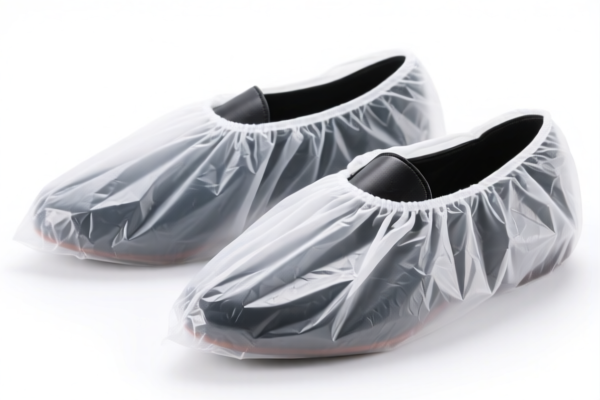
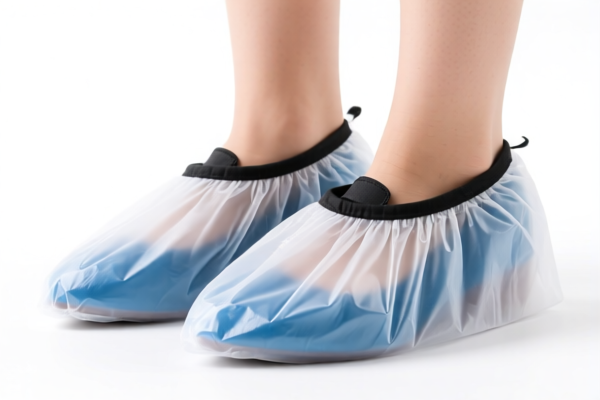
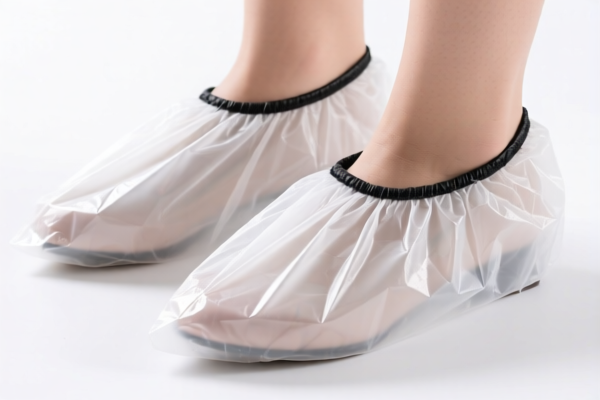
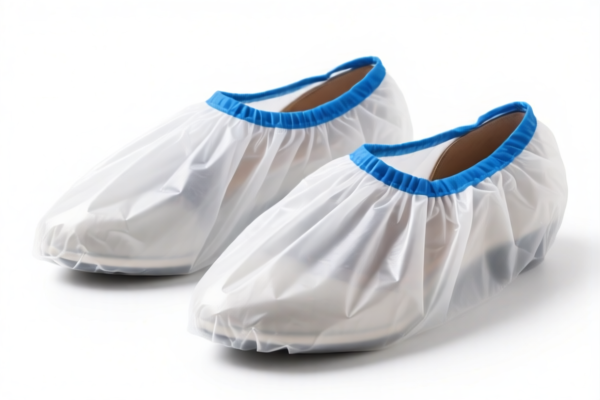
Non-woven shoe covers are single-use or reusable protective garments worn over footwear to prevent contamination, protect floors, or ensure hygiene in industrial, medical, and domestic environments. In international trade, their classification is highly controversial because "non-woven" (无纺布) can be interpreted either as a textile material or a plastic polymer product, depending on the manufacturing process and fiber composition.
This ambiguity leads to four major HS Code categories, each with significantly different tariff implications.
⚠️ Key Classification Dilemma:
- If made from textile-like fibers (polypropylene spunbond often treated as textile) →归入 Chapter 63 (Other Made-Up Textile Articles)
- If considered Plastic Products → 归入 Chapter 39 (Plastics and Articles Thereof)
- If considered Knitted/Crocheted Apparel → 归入 Chapter 61 (Articles of Apparel)
- Critical Point: The choice of HS Code determines whether you pay 17.5%, 22.8%, 24.5%, or even 27.4% in duties!
📦 Part 2: Detailed HS Code Classification (2026 Authoritative Reference)
Based on the provided data, here are the four possible classifications for Non-Woven Shoe Covers. Note that all these codes attract additional US tariffs (Section 301/122) due to China origin.
| HS Code | Product Description | Classification Logic | Total Tax Rate |
|---|---|---|---|
6307.90.60.90 |
Non-woven shoe covers, classified as other made-up textile articles | Material is non-woven textile; no conflict with textile rules. | 17.5% |
3926.90.99.89 |
Non-woven belongs to plastic fiber products; shoe covers as plastic articles | Treated as plastic polymer制品; fits "other plastic articles". | 22.8% |
6307.90.98.91 |
Non-woven shoe covers as finished products; textile non-woven material | Fits "other made-up textile articles" category. | 24.5% |
6115.99.90.00 |
Non-woven considered textile; shoe covers as footwear accessories | Classified under "Other knitted/crocheted apparel/footwear". | 27.4% |
🔍 Analysis of Tax Differences:
- The difference between the lowest (17.5%) and highest (27.4%) is 9.9% of the CIF value.
- For a $10,000 shipment, this represents a $990 difference in duty alone.
- Correct classification is critical to avoid overpayment or customs penalties for misdeclaration.
💰 Part 3: Detailed Tariff Breakdown (Including Additional Taxes & Policy Surcharges)
✅ Applicable Country: United States (US)
✅ Origin: China (CN)
✅ Effective Time: Current 2026 Tariff Schedule
🎯 1. 6307.90.60.90 —— Non-Woven Shoe Covers (Textile Category)
Recommended for Cost Efficiency
| Item | Detail |
|---|---|
| Base Duty Rate | 0.0% (ad valorem) |
| Section 301 Additional Duty | +7.5% |
| Section 122 Additional Duty | +10% |
| Total Tax Rate | 17.5% |
| Calculation Formula | CIF Value × 17.5% |
| De Minimis Exemption? | ❌ No (deny_de_minimis for Section 301/122 goods) |
| Legal Basis Path | USITC:6307.90.60.90 → Section 301: 7.5% → Section 122: 10% |
📌 Explanation:
- This code has the lowest base duty (0%), making it the most cost-effective if the customs authority accepts the "textile non-woven" interpretation.
- The total tax is driven entirely by additional tariffs (Section 301 + 122).
🎯 2. 3926.90.99.89 —— Non-Woven Shoe Covers (Plastic Category)
| Item | Detail |
|---|---|
| Base Duty Rate | 5.3% |
| Section 301 Additional Duty | +7.5% |
| Section 122 Additional Duty | +10% |
| Total Tax Rate | 22.8% |
| Calculation Formula | CIF Value × 22.8% |
| De Minimis Exemption? | ❌ No |
| Legal Basis Path | USITC:3926.90.99.89 → Section 301: 7.5% → Section 122: 10% |
📌 Note:
- If customs insists non-woven fabric is a plastic product (polymer-based), this code applies.
- The base duty is higher (5.3%), leading to a higher total cost.
🎯 3. 6307.90.98.91 —— Non-Woven Shoe Covers (Other Made-Up Textile Articles)
| Item | Detail |
|---|---|
| Base Duty Rate | 7.0% |
| Section 301 Additional Duty | +7.5% |
| Section 122 Additional Duty | +10% |
| Total Tax Rate | 24.5% |
| Calculation Formula | CIF Value × 24.5% |
| De Minimis Exemption? | ❌ No |
| Legal Basis Path | USITC:6307.90.98.91 → Section 301: 7.5% → Section 122: 10% |
📌 Note:
- This is a "catch-all" for textile articles not elsewhere specified.
- Higher base duty than6307.90.60.90, but same additional tariffs.
🎯 4. 6115.99.90.00 —— Non-Woven Shoe Covers (Knitted/Crocheted Apparel)
| Item | Detail |
|---|---|
| Base Duty Rate | 9.9% |
| Section 301 Additional Duty | +7.5% |
| Section 122 Additional Duty | +10% |
| Total Tax Rate | 27.4% |
| Calculation Formula | CIF Value × 27.4% |
| De Minimis Exemption? | ❌ No |
| Legal Basis Path | USITC:6115.99.90.00 → Section 301: 7.5% → Section 122: 10% |
📌 Note:
- Highest base duty among the four options.
- Only apply if the shoe covers are explicitly classified as knitted/crocheted footwear accessories.
🎯 5. 6115.29.80.40 —— Shoe Cover Accessories (Other Textile Materials)
| Item | Detail |
|---|---|
| Base Duty Rate | 16.0% |
| Section 301 Additional Duty | 0.0% |
| Section 122 Additional Duty | +10% |
| Total Tax Rate | 26.0% |
| Calculation Formula | CIF Value × 26.0% |
| De Minimis Exemption? | ❌ No |
| Legal Basis Path | USITC:6115.29.80.40 → Section 122: 10% |
📌 Note:
- Although the base duty is very high (16.0%), the Section 301 duty is 0%, which is unusual.
- Total tax is 26.0%, still higher than the recommended6307.90.60.90.
🛠️ Part 4: Customs Clearance Practical Advice (Real-World Pitfall Guide)
✅ 1. Preparation Checklist (No Compromises)
| Document | Required? | Explanation |
|---|---|---|
| ✅ Product Specification Sheet | ✔️ | Must specify: Material composition (e.g., 100% PP), Weight per unit, Dimensions |
| ✅ Manufacturing Process Diagram | ✔️ | Crucial to prove if it's spunbond (textile-like) or melt-blown (plastic-like) |
| ✅ Product Photos (Labeled) | ✔️ | Clear images of the packaging, labels, and the shoe cover itself |
| ✅ Commercial Invoice | ✔️ | Must explicitly state "Non-Woven Shoe Covers, Made of Textile Non-Woven Fabric" |
| ✅ Certificate of Origin (CO) | ✔️ | To verify China origin and applicable additional tariffs |
| ✅ Packing List | ✔️ | Detail unit price, quantity, total weight, and package dimensions |
✅ 2. Declaration Strategy (Key Mantra)
🔥 "Declare Textile, Not Plastic; Specify Material, Avoid Penalty!"
| Scenario | Correct Declaration | Incorrect Declaration | Risk |
|---|---|---|---|
| Standard Non-Woven (PP Spunbond) | 6307.90.60.90 - "Textile Non-Woven Shoe Covers" |
3926.90.99.89 - "Plastic Shoe Covers" |
Overpayment of 5.3% base duty |
| Medical-Grade Sterile Covers | 6307.90.60.90 - "Sterilized Non-Woven Covers" |
9018.90.90.00 - "Medical Instruments" |
Misclassification → Penalty + Delay |
| Disposable Plastic Slippers | 6401/6402 - "Rubber/Plastic Footwear" |
6307.90.60.90 - "Non-Woven" |
Misclassification → 27.4% vs 17.5% |
📌 Critical Tip:
- If your non-woven fabric is polypropylene (PP), argue for textile classification (Chapter 63) because PP non-wovens are often treated as textile equivalents in customs practice.
- Avoid using generic terms like "Shoe Covers" without specifying material. Use "Non-Woven Textile" explicitly.
✅ 3. Special Case Handling
| Scenario | Handling Advice |
|---|---|
| Customs Audits "Plastic" vs "Textile" | Provide third-party lab test reports confirming fiber type and manufacturing method (spunbond vs injection molded). |
| OEM for US Hospital Chains | Ensure invoices match the hospital’s procurement specs to avoid "commercial" misclassification. |
| High-Volume Shipments | Consider applying for Advance Ruling (US CBP) to lock in the HS Code 6307.90.60.90 and avoid retroactive penalties. |
| Combined Shipments (Shoe Covers + Gloves) | Declare separately. Do not bundle textile shoe covers with plastic gloves under one HS Code. |
🌍 Part 5: Global Market Clearance Comparison (2026 Latest)
| Country/Region | Recommended HS Code | Base Duty | Additional Tariffs | Total Tax | Notes |
|---|---|---|---|---|---|
| 🇺🇸 USA | 6307.90.60.90 |
0.0% | 17.5% (301+122) | 17.5% | Lowest US tax option |
| 🇨🇳 China | 6307.90.60.90 |
5.0% | 0% | 5.0% | No additional tariffs |
| 🇪🇺 EU | 6307.90.90 |
4.0% | 0% | 4.0% | VAT extra (19-27%) |
| 🇦🇺 Australia | 6307.90.90 |
5.0% | 0% | 5.0% | GST 10% extra |
| 🇯🇵 Japan | 6307.90.90 |
8.0% | 0% | 8.0% | Low risk of misclassification |
📌 Conclusion:
- USA is the most complex market due to Section 301 and Section 122 tariffs.
- Choosing6307.90.60.90saves up to 10% in total tax compared to plastic classification.
- EU/Japan/Australia have lower base duties and no political surcharges, making them easier to clear.
📌 Part 6: Common Mistakes & Pitfall Guide (Lessons Learned)
❌ Mistake 1: Declaring as "Plastic Products" (3926.90.99.89) without justification
👉 Consequence: Pay 22.8% instead of 17.5% → Loss of 5.3% profit margin
❌ Mistake 2: Using vague description "Shoe Covers" on the invoice
👉 Consequence: Customs may assign HS 6115.99.90.00 (27.4%) → Unexpected high tax
❌ Mistake 3: Ignoring Section 122 Tariffs (10%)
👉 Consequence: Underestimating total landed cost → Pricing error in sales quotes
❌ Mistake 4: Mixing "Non-Woven" with "Woven" in the same shipment
👉 Consequence: Separate declarations required → Increased clearance fees
✅ Correct Action:
"Non-Woven Polypropylene Shoe Covers, Disposable, Textile Grade, for Industrial Use, Model XYZ, Cert: ISO 9001"
🎯 Part 7: Conclusion: Professional Declaration, Save Cost, Ensure Smooth Clearance!
🎯 Remember the Mantra:
🔹 "Non-Woven = Textile (6307.60.90) → 17.5% Total"
🔹 "Plastic = 3926.99.89 → 22.8% Total"
🔹 "Don’t Guess, Declare Textile, Save 5.3% Base Duty!"
🔹 "Always Include 'Textile Non-Woven' in Description!"
📌 Pro Tip:
If your volume is high (> $100,000/year), apply for a US CBP Advance Ruling to officially classify your non-woven shoe covers under 6307.90.60.90. This locks in the lower tax rate and prevents future disputes.
📣 Immediate Action:
📞 Contact your customs broker + Provide Material Test Report + Apply for HS Code Advance Ruling
🚀 Ensure your shoe covers clear US customs smoothly, minimize tax, and maximize profit!
✨ Professional Customs Clearance Starts with Accurate Classification!
💼 Your every cent of cost deserves precise calculation!
Customer Reviews
About HS Code Classification
The Harmonized System (HS) is an internationally standardized nomenclature developed by the World Customs Organization (WCO) to classify traded products. Over 200 countries use the HS system as the basis for customs tariffs, trade statistics, and import/export regulations.
Each HS code follows a hierarchical structure:
- Chapter (2 digits) — Broad category of goods (e.g., Chapter 84: Machinery and Mechanical Appliances)
- Heading (4 digits) — More specific grouping within the chapter
- Subheading (6 digits) — Internationally standardized breakdown, used by all WCO member countries
- National subdivisions (8-10 digits) — Country-specific extensions for further classification, such as US HTSUS 10-digit codes
Correct HS code classification is essential for smooth customs clearance, accurate duty payment, and compliance with trade regulations. Misclassification can lead to customs delays, overpayment of duties, or penalties.
When importing from CN to US, the applicable tariff rates may include:
- Most-Favored-Nation (MFN) rate — The standard duty rate applied to WTO members
- General rate — Applied to countries without trade agreements
- Trade remedy duties — Additional tariffs such as Section 301 (anti-dumping), Section 232 (national security), or countervailing duties
The information provided on this page is for reference purposes only. For official classification, please consult with your local customs authority or a licensed customs broker.