无线接收器
CN → US| HS Code | Tariff Rate | Origin | Destination | Doc |
|---|---|---|---|---|
| 8526910020 | 35.0% | CN | US | Official Doc |
| 8527994000 | 35.0% | CN | US | Official Doc |
| 8527991500 | 35.0% | CN | US | Official Doc |
| 8517690000 | 35.0% | CN | US | Official Doc |
| 8527195025 | 10.0% | CN | US | Official Doc |
Product Images


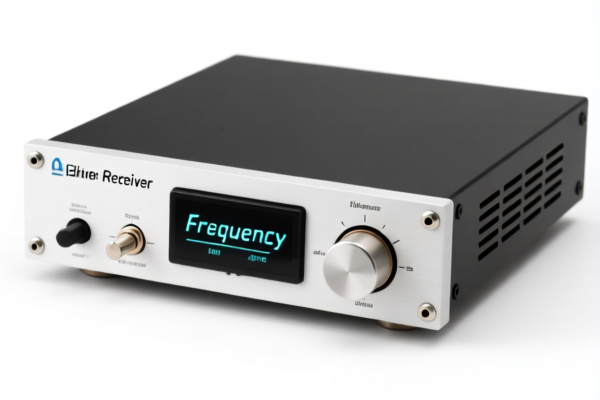
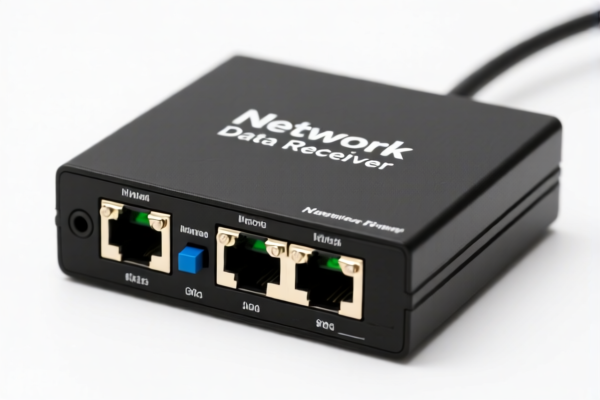
AI Analysis
📡 Wireless Receivers: Complete HS Code Guide & 2026 Customs Strategy
🌐 HS Code Reference & Clearance Guide | 2026 Tariff Breakdown | Professional Clearance Strategy
📌 I. Product Definition & Classification: What Exactly is a "Wireless Receiver"?
Wireless Receivers are the backbone of modern communication, bridging the gap between transmission and user experience. In international trade, they are not a monolith; their classification hinges entirely on their specific function, intended use, and whether they are part of a navigation or broadcasting system.
They are broadly categorized into:
- Navigation & Control Receivers (Radio Navigation): Devices specifically designed to receive signals for aircraft, ships, or vehicles (e.g., GPS, VOR, ILS receivers).
- Broadcast & General Audio Receivers: Devices used for receiving radio broadcasts, audio data, or general communication (e.g., AM/FM tuners, walkie-talkie receivers).
⚠️ Key Differentiation Point:
- If the device is primarily for navigation/positioning (even if it receives radio waves) → Look to 8526.91.00.20.
- If the device is primarily for general radio broadcasting/audio → Look to 8527.99.40.00 or 8527.99.15.00.
- If it is a data transmission receiver (voice/image/data) not strictly "broadcast" → Look to 8517.69.00.00.
📦 II. HS Code Classification Breakdown (2026 Authority Reference)
| HS Code | Product Description | Specific Function/Usage | Key Distinction |
|---|---|---|---|
| 8526.91.00.20 | Radio Navigation Receivers | Matches the function definition of "Receiving Unit Only" in navigation auxiliary devices. | Navigation Focus: Used for aircraft/ships/vehicles. Not for general listening. |
| 8527.99.40.00 | Radio Broadcast Receivers | Typical usage as a general radio broadcast receiver (AM/FM). | Broadcast Focus: Standard home/car audio equipment. |
| 8527.99.15.00 | Radio Receivers (General) | Usage perfectly consistent with general radio receiver categories. | Standard Audio: Generic radio receivers, often with multiple bands. |
| 8517.69.00.00 | Audio/Data Receivers | Receivers for voice, image, or other data transmission (Telecom/Data focus). | Data/Comms: Focuses on data packet reception, not just "listening." |
| 8527.19.50.25 | Specialized Audio Receivers | Categorized within the scope of radio broadcast equipment (specific sub-category). | Niche Audio: Specific sub-class of broadcast receivers with unique features. |
🔍 Critical Reminder:
- Navigation vs. Broadcasting: A device that can do both must be classified by its principal function. If it's for a plane's GPS, it's 8526. If it's a car stereo, it's 8527. - Data Transmission: If the receiver processes digital data packets (not just analog audio), it may fall under 8517 (Telecommunication equipment) rather than standard radio.
💰 III. 2026 Tariff Rate Breakdown (Detailed Tax Structure)
✅ Applicable Jurisdiction: Global Trade Context (Specifics reflect China-Origin Tariff Impact)
✅ Origin: China (CN)
✅ Effective Date: Current/2026 Regime
✅ Note on "Total Tax": The "Total Tax" figures below include Base Duty + Additional Duty (Section 301) + Section 122 Duty.
🎯 1. HS Code 8526.91.00.20
Category: Radio Navigation Receivers (Navigation Focus)
Total Tax Rate: 35.0%
| Tax Component | Rate | Description |
|---|---|---|
| Base Duty | 0.0% | Standard Most-Favored-Nation (MFN) rate is 0%. |
| Additional Duty (301) | +25.0% | Section 301 Tariffs: Imposed on specific Chinese tech goods. |
| Section 122 Duty | +10.0% | Section 122 Tariffs: New surcharge targeting Chinese electronics. |
| Final Calculation | 35% | (0% + 25% + 10%) on CIF Value. |
📌 Explanation:
- Despite having a 0% base rate, the 301 (25%) and 122 (10%) levies make this item expensive for importers. - This classification is critical for aviation/maritime sectors; misclassification here can lead to heavy penalties.
🎯 2. HS Code 8527.99.40.00 & 8527.99.15.00
Category: General Radio Broadcast Receivers
Total Tax Rate: 35.0%
| Tax Component | Rate | Description |
|---|---|---|
| Base Duty | 0.0% | Standard MFN rate. |
| Additional Duty (301) | +25.0% | Applies to general consumer electronics from China. |
| Section 122 Duty | +10.0% | Additional surcharge on electronics. |
| Final Calculation | 35% | (0% + 25% + 10%) on CIF Value. |
📌 Explanation:
- Standard consumer radios, car stereos, and portable receivers fall here. - The 35% total is a significant cost barrier; consider if the end-user market can absorb this or if you need to ship from a non-China origin hub (e.g., Vietnam).
🎯 3. HS Code 8517.69.00.00
Category: Data/Voice/Image Receivers (Telecom)
Total Tax Rate: 35.0%
| Tax Component | Rate | Description |
|---|---|---|
| Base Duty | 0.0% | Standard MFN rate. |
| Additional Duty (301) | +25.0% | Tech goods classification. |
| Section 122 Duty | +10.0% | Electronics surcharge. |
| Final Calculation | 35% | (0% + 25% + 10%) on CIF Value. |
📌 Explanation:
- This covers modern receivers that handle digital data streams, not just audio. - Even if it's "high-tech," it still attracts the full 35% penalty package.
🎯 4. HS Code 8527.19.50.25
Category: Specialized Audio Receivers (Niche Broadcast)
Total Tax Rate: 10.0%
| Tax Component | Rate | Description |
|---|---|---|
| Base Duty | 0.0% | Standard MFN rate. |
| Additional Duty (301) | 0.0% | Exempt or lower-tier classification for this specific sub-code. |
| Section 122 Duty | +10.0% | Only the Section 122 surcharge applies. |
| Final Calculation | 10% | (0% + 0% + 10%) on CIF Value. |
📌 Explanation:
- 🚨 This is the "Golden Key"! - This specific sub-code (8527.19.50.25) avoids the 301 (25%) tariff. - Why? It likely falls under a specific exemption or a category of equipment not deemed "strategic" for the 301 list, only facing the newer 122 duty. - Strategy: If your product fits this description, strictly ensure documentation proves this specific usage to save 25% in taxes.
🛠️ IV. Clearance Practical Advice (Battle-Tested Guide)
✅ 1. Preparation Checklist (Non-Negotiable)
| Document | Required? | Why? |
|---|---|---|
| Technical Datasheet | ✅ YES | Must explicitly state "Radio Navigation" vs. "Broadcast" to justify 8526 vs 8527. |
| Function Description | ✅ YES | Detail what data is received (GPS coords vs. Music). |
| Circuit Diagram | ✅ YES | Proves the signal processing path (Navigation logic vs. Audio amplifier). |
| Product Photos (Internal/External) | ✅ YES | Show antennas, ports, and labels. |
| Origin Certificate (CO) | ✅ YES | Essential for proving "Made in China" to apply 301/122 correctly. |
| Declaration Letter | ✅ YES | Explicitly state the primary purpose (e.g., "For aircraft navigation" vs. "For home audio"). |
✅ 2. Declaration Strategy (The "Name Game")
🔥 Golden Rule: "Function Over Form. Name Must Match Use."
| Scenario | Correct HS Code | Consequence of Error |
|---|---|---|
| Aircraft GPS Receiver | 8526.91.00.20 |
If misdeclared as 8527 → Still 35%, but risk of customs audit for misrepresentation. |
| Car Stereo (AM/FM) | 8527.99.40.00 |
If misdeclared as 8527.19.50.25 → 10% vs 35%. High risk of fraud penalty. |
| Data Receiver (IoT) | 8517.69.00.00 |
Must prove it handles data packets, not just audio. |
| Specialized Broadcast Device | 8527.19.50.25 |
Only use if technically verified. Saves 25% tax. |
✅ 3. Special Case Handling
| Situation | Action Plan |
|---|---|
| Multi-Function Device | If a device does both navigation and radio: Declare under the Primary Function. If equal, consult customs for binding ruling. |
| Kit vs. Assembled | Do not ship "parts" to avoid 301 if the final assembly happens abroad. If assembled in China, 35% is likely unavoidable. |
| Section 122 Exemption Check | Verify if 8527.19.50.25 truly qualifies for exemption from the 301 duty. Documentation is key. |
| Re-Export Strategy | If importing to the US, consider trans-shipment to Mexico/Vietnam before final assembly if possible (Complex, requires legal counsel). |
🌍 V. Global Market Tariff Comparison (2026)
| Destination | Recommended HS Code | Base Tariff | Additional Tax | Total Effective Rate | Notes |
|---|---|---|---|---|---|
| 🇺🇸 USA | 8526.91.00.20 | 0% | +35% (25%+10%) | 35% | Strict enforcement on Tech. |
| 🇨🇳 China | 8527.99.40.00 | 0% | 0% (Domestic) | 0% | No export tax on import. |
| 🇪🇺 EU | 8527.99.15.00 | ~0-6% | 0% | ~6% | No Section 122/301. |
| 🇦🇺 Australia | 8517.69.00.00 | 5% | 0% | 5% | Lower entry barrier. |
| 🇯🇵 Japan | 8527.19.50.25 | 0% | 0% | 0% | Best market for avoiding 301/122. |
📌 Conclusion:
- The US Market is the "Hard Mode": Every Chinese-origin wireless receiver faces the 35% wall unless you hit the specific 8527.19.50.25 sweet spot. - Diversify: For high-volume, consider setting up final assembly in a non-China hub (Vietnam/Malaysia) to avoid the "Origin of Production" rule triggering 301/122.
📌 VI. Common Mistakes & Pitfalls (Learn from Others' Pain)
❌ Mistake 1: Mislabeling "Radio" as "Telecom"
👉 Result: If you claim 8517 (Telecom) for a standard AM/FM radio, Customs will reject and reclassify to 8527 + 35%. Wasted time & fees.
❌ Mistake 2: Ignoring the "122 Clause"
👉 Result: Believing 301 is the only tax. 10% extra (Section 122) hits everyone. You must budget for 35% total, not 25%.
❌ Mistake 3: Trying to force the 10% Rate (8527.19.50.25)
👉 Result: If your product is a generic radio, forcing this code is Customs Fraud. Penalties can be 3x the tax owed. Only use if specs match perfectly.
❌ Mistake 4: Mixing Navigation and Audio in one box
👉 Result: If a device has a radio tuner AND GPS, and you only declare "Radio," you may be flagged. Declare the primary function.
🎯 VII. Final Verdict: Action Plan for Success
🎯 Summary:
🔹 "35% is the norm" for most wireless receivers from China (Base 0% + 25% + 10%).
🔹 "10% is the exception" for8527.19.50.25(if your product strictly fits this niche).
🔹 "35% applies to ALL tech" unless you have a specific exemption.
✅ Action Steps:
1. Audit your BOM: Does your product have a GPS/Navigation module? → 8526.
2. Check the 10% Option: Does your product fit 8527.19.50.25? → Verify with technical docs.
3. Prepare for 35%: If it's a standard radio, price your product with 35% tax in mind.
4. Documentation: Ensure your Commercial Invoice and Packing List clearly state the HS Code and Function.
📌 Pro Tip:
If you are shipping to the US, get a Binding Ruling (Advance Ruling) from Customs before shipping.
Ask specifically: "Does my device fit 8527.19.50.25 to avoid Section 301?"
This saves thousands in potential back-taxes and delays.
✨ Precision Classification = Profit Protection
💼 Don't let the 35% tariff eat your margin. Know your Code, Know your Tax!
Customer Reviews
About HS Code Classification
The Harmonized System (HS) is an internationally standardized nomenclature developed by the World Customs Organization (WCO) to classify traded products. Over 200 countries use the HS system as the basis for customs tariffs, trade statistics, and import/export regulations.
Each HS code follows a hierarchical structure:
- Chapter (2 digits) — Broad category of goods (e.g., Chapter 84: Machinery and Mechanical Appliances)
- Heading (4 digits) — More specific grouping within the chapter
- Subheading (6 digits) — Internationally standardized breakdown, used by all WCO member countries
- National subdivisions (8-10 digits) — Country-specific extensions for further classification, such as US HTSUS 10-digit codes
Correct HS code classification is essential for smooth customs clearance, accurate duty payment, and compliance with trade regulations. Misclassification can lead to customs delays, overpayment of duties, or penalties.
When importing from CN to US, the applicable tariff rates may include:
- Most-Favored-Nation (MFN) rate — The standard duty rate applied to WTO members
- General rate — Applied to countries without trade agreements
- Trade remedy duties — Additional tariffs such as Section 301 (anti-dumping), Section 232 (national security), or countervailing duties
The information provided on this page is for reference purposes only. For official classification, please consult with your local customs authority or a licensed customs broker.