无肩带编织手提包
CN → US| HS Code | Tariff Rate | Origin | Destination | Doc |
|---|---|---|---|---|
| 4602112100 | 41.2% | CN | US | Official Doc |
| 4602192920 | 40.3% | CN | US | Official Doc |
| 4202224020 | 42.4% | CN | US | Official Doc |
| 4202228980 | 52.6% | CN | US | Official Doc |
| 4602112100 | 41.2% | CN | US | Official Doc |
Product Images
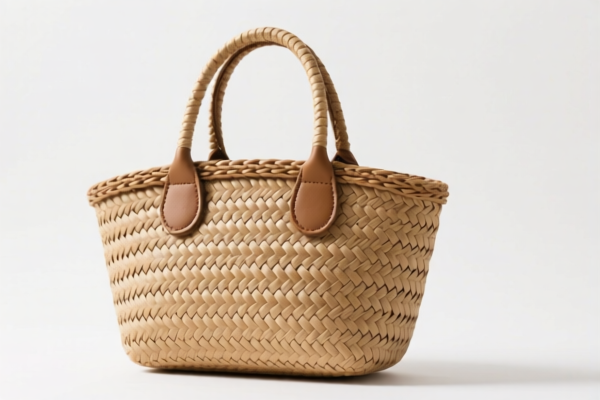
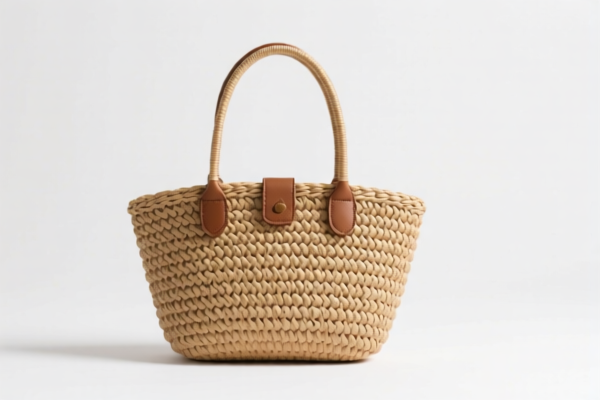
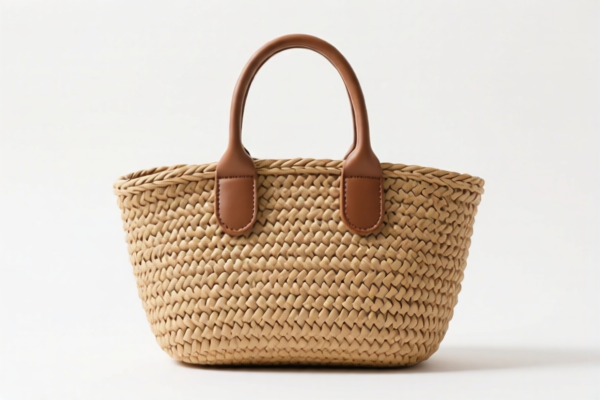
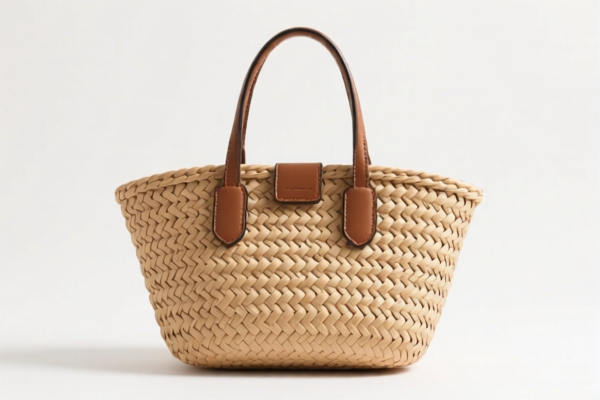
AI Analysis
👜 Strapless Woven Handbags (No-Strap Woven Bags)
🌐 HS Code Reference & Customs Clearance Guide | 2026 Latest Tariff Analysis | Professional Entry Strategy
📌 I. Product Definition & Classification: What Exactly is a "Strapless Woven Handbag"?
A Strapless Woven Handbag is a portable container made primarily from plant materials (such as bamboo, rattan, reed) or other textile weaving materials, characterized by the absence of shoulder straps or long handles. It is typically held by hand (clutch-style) or carried by a short handle attached to the rim.
In international trade, classification depends heavily on the raw material and the weaving structure:
Plant-Material Woven Products (Heading 4602):
Bags made from woven strips of bamboo, rattan, cane, or other vegetable plaiting materials. These are classified under Chapter 46 (Prepared vegetable materials; vegetable plaiting materials).
Other Textile/Material Woven Products (Heading 4202):
Bags made from woven synthetic fibers, cotton blends, or other textile materials not covered under Chapter 46. These are classified under Chapter 42 (Articles of leather; saddlery and harness).
⚠️ Key Distinction Point:
- If the material is natural plant fiber (bamboo, rattan, straw, reed) woven into strips → HS 4602.xx
- If the material is textile fabric (woven synthetic, polyester, cotton) or "other" materials → HS 4202.xx
📦 II. HS Code Classification Details (2026 Latest Tariff Authority Comparison)
| HS Code | Product Description | Applicable Scenario | Material Composition |
|---|---|---|---|
4602.11.21.00 |
Woven handbags, material: bamboo, rattan, etc. | Natural plant-based woven bags | ✅ Bamboo/Rattan |
4602.19.29.20 |
Woven handbags, material: other plant material woven products | Other vegetable plaiting materials (e.g., straw, reed) | ✅ Vegetable Plaiting |
4202.22.40.20 |
Woven handbags, material: woven materials (general) | Generic woven textile bags | ❌ Not Plant Fiber |
4202.22.89.80 |
Woven handbags, material: other textile materials | Synthetic, polyester, or mixed textile weaving | ❌ Textile/Other |
🔍 Important Reminder:
- Natural Plant Bags: Must be classified under 4602. If you mistakenly classify a bamboo bag as a textile bag (4202), you may face misclassification penalties.
- Textile/Woven Fabric Bags: Even if they look "woven," if they are made from synthetic threads or fabric, they fall under 4202.
- Strapless Design: The lack of straps does not change the chapter but confirms the item is a "handbag" (not a suitcase or backpack).
💰 III. 2026 Latest Tariff Rate Breakdown (Including Additional Duties & Policy Surcharges)
✅ Applicable Country: United States (US)
✅ Country of Origin: China (CN)
✅ Effective Date: From November 10, 2025 onwards
🎯 1. 4602.11.21.00 —— Woven Handbags (Bamboo, Rattan, etc.)
| Item | Content |
|---|---|
| Base Tariff | 6.2% |
| Section 301 Additional Tariff | +25.0% |
| Section 122 Tariff | +10.0% |
| Total Tax Rate | 41.2% |
| Tax Calculation | CIF Value × 41.2% |
| De Minimis Eligibility | ❌ No (High tariff threshold excludes low-value shipments) |
| Legal Basis Path | General Rate: 6.2% → Section 301: +25% → Section 122: +10% |
📌 Explanation:
- Base Tariff (6.2%): Standard Most Favored Nation (MFN) rate for woven vegetable material articles.
- Section 301 (+25%): Trump-era tariffs maintained under USTR, targeting Chinese goods.
- Section 122 (+10%): Additional tariff imposed under Section 232 of the Trade Expansion Act (often applied to specific imports to protect domestic industry or address national security concerns).
- Total 41.2%: This is a very high cost, significantly impacting profit margins.
🎯 2. 4602.19.29.20 —— Woven Handbags (Other Plant Materials)
| Item | Content |
|---|---|
| Base Tariff | 5.3% |
| Section 301 Additional Tariff | +25.0% |
| Section 122 Tariff | +10.0% |
| Total Tax Rate | 40.3% |
| Tax Calculation | CIF Value × 40.3% |
| De Minimis Eligibility | ❌ No |
| Legal Basis Path | General Rate: 5.3% → Section 301: +25% → Section 122: +10% |
📌 Note:
- Slightly lower than bamboo/rattan due to a marginally lower base rate (5.3% vs 6.2%).
- Applies to bags made from reeds, straw, or other non-bamboo/rattan vegetable plaiting materials.
🎯 3. 4202.22.40.20 —— Woven Handbags (Woven Materials)
| Item | Content |
|---|---|
| Base Tariff | 7.4% |
| Section 301 Additional Tariff | +25.0% |
| Section 122 Tariff | +10.0% |
| Total Tax Rate | 42.4% |
| Tax Calculation | CIF Value × 42.4% |
| De Minimis Eligibility | ❌ No |
| Legal Basis Path | General Rate: 7.4% → Section 301: +25% → Section 122: +10% |
📌 Note:
- For general "woven material" handbags that do not fit the specific "other textile" category.
- Higher base rate than plant materials, but same additional tariffs.
🎯 4. 4202.22.89.80 —— Woven Handbags (Other Textile Materials)
| Item | Content |
|---|---|
| Base Tariff | 17.6% |
| Section 301 Additional Tariff | +25.0% |
| Section 122 Tariff | +10.0% |
| Total Tax Rate | 52.6% |
| Tax Calculation | CIF Value × 52.6% |
| De Minimis Eligibility | ❌ No |
| Legal Basis Path | General Rate: 17.6% → Section 301: +25% → Section 122: +10% |
📌 Warning:
- This is the HIGHEST TAX RATE in the dataset.
- Applies to "other" textile materials (e.g., synthetic blends, non-standard weaves).
- Avoid this code if possible. If your bag is made of bamboo, ensure it is classified under 4602 to save ~11-12% in taxes.
🛠️ IV. Customs Clearance Practical Advice (Real-World Pitfall Avoidance)
✅ 1. Documentation Checklist (Mandatory)
| Document | Required | Notes |
|---|---|---|
| ✅ Product Specification Sheet | ✔️ | Must explicitly state: "No Shoulder Straps," "Handheld/Clutch," Material Type (Bamboo vs. Polyester). |
| ✅ Material Composition Label | ✔️ | Photo of interior label showing % of plant fibers vs. textiles. |
| ✅ Product Photos | ✔️ | Front, back, interior, and close-up of the weave texture. |
| ✅ Commercial Invoice | ✔️ | Description must match HS code logic (e.g., "Woven Bamboo Handbag" not just "Handbag"). |
| ✅ Packing List | ✔️ | Weight and dimensions are critical for Section 122 verification. |
| ✅ Origin Certificate | ✔️ | If claiming preferential rates from non-China origins (e.g., Vietnam, India). |
✅ 2. Declaration Strategy (Key Mantras)
🔥 "Material Defines Chapter, Weave Defines Subheading, Straps Confirm Handbag!"
| Scenario | Correct Declaration | Wrong Practice |
|---|---|---|
| Bamboo/Rattan Bag | 4602.11.21.00 |
Mislabeling as "Textile Bag" → Risk of 52.6% or audit |
| Straw/Reed Bag | 4602.19.29.20 |
Using generic "Woven Bag" → May trigger 4202 scrutiny |
| Synthetic Woven Bag | 4202.22.89.80 |
Trying to claim "Natural Fiber" → Fraud/Heavy Penalty |
| Mixed Material Bag | Analyze Primary Material | If >50% plant fiber, try 4602; otherwise 4202 |
📌 Critical Tip:
- Section 122 Tariff often triggers inspections for "woven" items because they are considered easy to substitute or originate from high-risk supply chains.
- Ensure your "Country of Origin" is clearly marked as CN if claiming these specific rates. If from other countries, rates may differ (check FTAs).
✅ 3. Special Circumstances Handling
| Situation | Handling Advice |
|---|---|
| Bag with Inner Lining | If lining is cloth but outer is bamboo, still 4602. Declare as "Woven Bamboo Bag with Cloth Lining." |
| Decorative Handles | If short handles are made of metal/leather, does not change classification unless they make it a "handbag with shoulder strap" (which would change Chapter). Strapless = Handbag. |
| OEM Private Label | Ensure invoice shows Brand/Model but clearly describes material to avoid "Generic Goods" suspicion. |
| High-Value Luxury Weaves | If price is significantly higher than market average, customs may suspect misclassification to avoid tariffs. Prepare proof of value (supplier invoices). |
🌍 V. Global Market Clearance Comparison (2026 Latest)
| Country/Region | Recommended HS Code | Tariff (China Origin) | Certification Requirements | Notes |
|---|---|---|---|---|
| 🇺🇸 USA | 4602.11.21.00 |
41.2% | None specific | High Section 301 & 122 duties. |
| 🇨🇳 China | 4602.11.21.00 |
~5-10% | CCC (if applicable) | Low import tax for domestic production. |
| 🇪🇺 EU | 4602.11.00 |
0-4% | CE (if applicable) | No Section 301/122 equivalent. |
| 🇬🇧 UK | 4602.11.00 |
0-5% | UKCA | Post-Brexit rules may vary slightly. |
| 🇯🇵 Japan | 4602.11.00 |
0% | None | Free trade agreements may apply. |
📌 Conclusion:
- USA is the most expensive market due to combined Section 301 and Section 122 tariffs.
- EU/Asia markets are significantly more cost-effective. Consider re-routing or trans-shipment (if legal and compliant) if targeting US with high-margin goods.
- Section 122 is the unique pain point for US imports of woven goods; ensure compliance to avoid seizure.
📌 VI. Common Errors & Pitfall Guide (Blood-Tears Lessons)
❌ Error 1: Classifying Bamboo Bags as 4202 (Textile)
👉 Consequence: While tax might be similar, it triggers misclassification audits. If discovered, you pay back duties + penalties.
👉 Fix: Use 4602 for natural plant fibers.
❌ Error 2: Claiming "Strapless" means it’s not a "Handbag"
👉 Consequence: Customs may classify it as "Other Articles" with higher duty or reject it for incomplete description.
👉 Fix: Explicitly state "Clutch/Handheld Woven Bag" in commercial invoice.
❌ Error 3: Ignoring Section 122 Tariff in Cost Calculation
👉 Consequence: Profit margin eaten by unexpected 10% fee.
👉 Fix: Always quote Landed Cost including 41.2%-52.6% total tax for US imports.
❌ Error 4: Vague Material Description ("Woven Bag")
👉 Consequence: Customs officer will assign the highest possible tariff (4202.22.89.80 - 52.6%) due to lack of info.
👉 Fix: Specify "100% Bamboo Weave" or "Polyester Weave."
✅ Correct Declaration Example:
"Woven Handbag, Strapless Clutch, Material: 100% Natural Bamboo Strips, With Cotton Lining, Model XYZ, Made in China."
🎯 VII. Conclusion: Precision Classification Saves Millions!
🎯 Remember the Mantra:
🔹 "Plant Fiber = 4602, Textile = 4202.
🔹 Section 301 + 122 = High Cost in USA.
🔹 Be Specific on Material to Avoid Max Tariff!"🔹 "41.2% to 52.6% is the price of precision. Be specific, save money."
📌 Pro Tip:
If your bamboo bags are originating from Vietnam, Indonesia, or Philippines, you may qualify for lower Section 301 rates or exemptions.
Recommendation: Apply for a Pre-Ruling (Isotrax/CBP) with detailed material breakdowns to lock in the correct, lower HS Code.
📣 Immediate Action:
📞 Contact a licensed customs broker + Provide Material Swatches + Request HS Code Pre-Ruling
🚀 Ensure your Supply Chain is Transparent to withstand Section 122 scrutiny.
✨ Professional Clearance Starts with Accurate Classification!
💼 Every percentage point of tax is a point of profit! Protect it!
Customer Reviews
About HS Code Classification
The Harmonized System (HS) is an internationally standardized nomenclature developed by the World Customs Organization (WCO) to classify traded products. Over 200 countries use the HS system as the basis for customs tariffs, trade statistics, and import/export regulations.
Each HS code follows a hierarchical structure:
- Chapter (2 digits) — Broad category of goods (e.g., Chapter 84: Machinery and Mechanical Appliances)
- Heading (4 digits) — More specific grouping within the chapter
- Subheading (6 digits) — Internationally standardized breakdown, used by all WCO member countries
- National subdivisions (8-10 digits) — Country-specific extensions for further classification, such as US HTSUS 10-digit codes
Correct HS code classification is essential for smooth customs clearance, accurate duty payment, and compliance with trade regulations. Misclassification can lead to customs delays, overpayment of duties, or penalties.
When importing from CN to US, the applicable tariff rates may include:
- Most-Favored-Nation (MFN) rate — The standard duty rate applied to WTO members
- General rate — Applied to countries without trade agreements
- Trade remedy duties — Additional tariffs such as Section 301 (anti-dumping), Section 232 (national security), or countervailing duties
The information provided on this page is for reference purposes only. For official classification, please consult with your local customs authority or a licensed customs broker.