普拉提器材
CN → US| HS Code | Tariff Rate | Origin | Destination | Doc |
|---|---|---|---|---|
| 9403200050 | 85.0% | CN | US | Official Doc |
| 9403708031 | 35.0% | CN | US | Official Doc |
| 9401806030 | 35.0% | CN | US | Official Doc |
| 9401790050 | 35.0% | CN | US | Official Doc |
| 9506912000 | 0.0% | CN | US | Official Doc |
| 9506910030 | 22.1% | CN | US | Official Doc |
Product Images
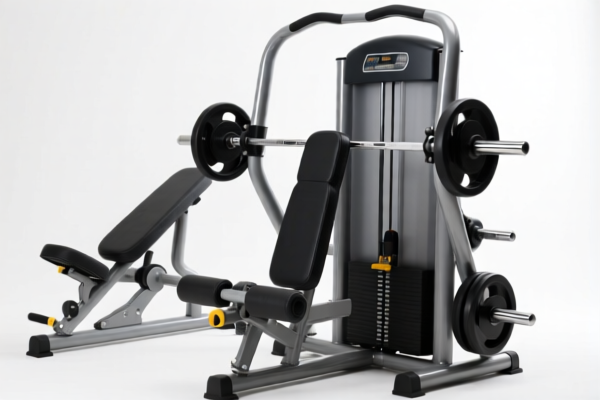
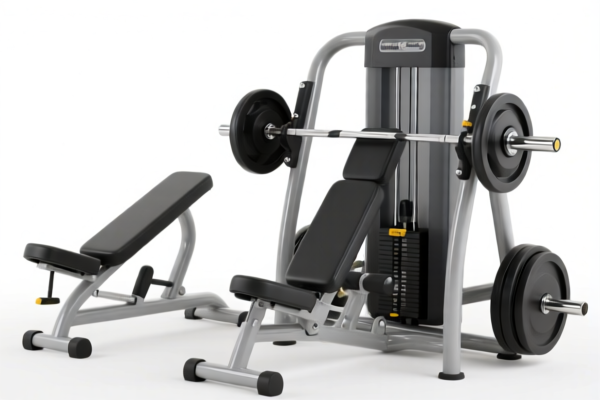
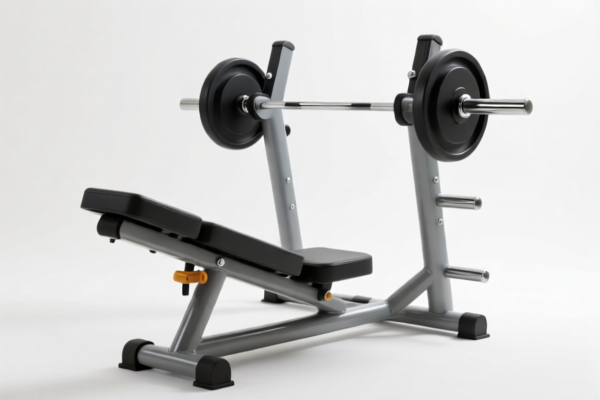
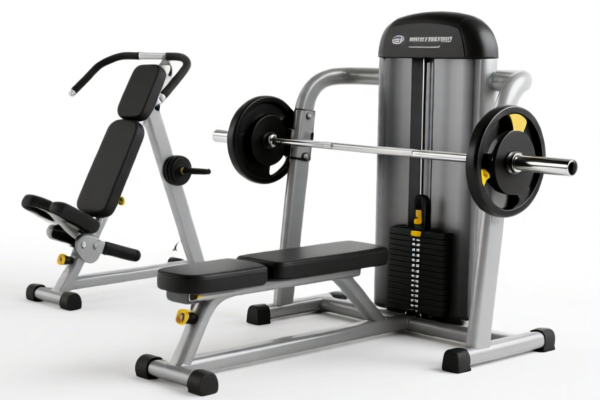
AI Analysis
🧘♀️ Pilates Equipment (普拉提器材)
🌐 HS Code Reference & Customs Clearance Guide | 2026 Latest Tariff Analysis | Professional Clearance Strategy
📌 I. Product Definition & Classification: Do You Really Know "Pilates Equipment"?
Pilates equipment is not a single standardized commodity but a diverse category of fitness gear. In international trade, the classification depends entirely on the material, structure, and specific function of the item. It is critical to distinguish between metal-frame apparatuses (like Reformer beds), plastic accessories, and general exercise articles. Misclassification here can lead to significant tariff discrepancies due to the varying "Section 301" (China tariffs) and "IEEPA" penalties.
⚠️ Key Distinction Points:
- If the item is a seat (even if convertible to a bed) with no metal frame, it may fall under 9401.80.
- If the item is a seat with a metal frame, it falls under 9401.79.
- If the item is metal furniture (household use), it faces the highest penalties (75% total).
- If the item is plastic furniture, tax retrieval may fail (Error), requiring manual verification.
- If the item is a general exercise accessory (not specific furniture), it falls under 9506.91.
📦 II. HS Code Classification Details (2026 Latest Tariff Authoritative Comparison)
Based on the provided data, Pilates equipment is classified into three distinct categories depending on its composition:
| HS Code | Product Description | Applicable Scenario | Material/Structure |
|---|---|---|---|
9401.80.60.30 |
Other seats (not of heading 9402), convertible to beds, other than those with metal frames | Pilates chairs, non-metal frames, bench seats | Non-Metal Frame |
9401.79.00.50 |
Other seats, with metal frames: Other | Pilates reformer seats, chairs with metal structures | Metal Frame |
9403.20.00.50 |
Other metal furniture: Household: Other | Metal Pilates furniture for home use (e.g., metal benches, storage units) | Household Metal Furniture |
9403.70.80.31 |
Furniture of plastics: Other | Plastic Pilates props (e.g., plastic stools, balance pads) | Plastic Furniture |
9506.91.00.00 |
Other articles/equipment for general exercise... | General exercise accessories, straps, bands, non-furniture items | Exercise Accessories |
9506.91.00.30 |
Other: Articles for general physical exercise... | Specific exercise equipment parts/accessories | Exercise Parts |
🔍 Critical Note:
- 9403.20.00.50 is the most dangerous classification due to the 75% total tax rate. This applies if the Pilates equipment is deemed "Household Metal Furniture."
- 9401.79.00.50 and 9401.80.60.30 are treated as "Seats," with a 25% total tax rate.
- 9506.91.00.30 and 9506.91.00.00 are treated as "Exercise Equipment," with lower base taxes but potential 7.5% additions.
💰 III. 2026 Latest Tariff Rate Breakdown (Including Surtaxes & Policy Add-ons)
✅ Applicable Country: United States (US)
✅ Origin: China (CN)
✅ Effective Date: From November 10, 2025 (and subsequent imports)
🎯 1. 9401.80.60.30 & 9401.79.00.50 —— Seats (Non-Metal/Metal Frame)
| Item | Content |
|---|---|
| Base Duty | 0.0% |
| USITC Surtax (Section 301) | +25.0% |
| Total Tax Rate | 25.0% |
| Tax Calculation | CIF Value × 25% |
| De Minimis Exemption | ❌ Not Applicable (High-risk category for de minimis) |
| Legal Basis | USITC Footnote related to Heading 9401 |
📌 Explanation:
- These codes classify Pilates equipment as "Seats".
- Whether metal or non-metal, if it is classified as a seat, the 25% surtax applies.
- Warning: Do not misclassify a metal Pilates chair as "Exercise Equipment" to avoid taxes. CBP (Customs and Border Protection) often reclassifies metal fitness chairs as furniture/seats.
🎯 2. 9403.20.00.50 —— Household Metal Furniture (High Risk!)
| Item | Content |
|---|---|
| Base Duty | 0.0% |
| USITC Surtax | +25.0% |
| IEEPA Surtax (Steel/Aluminum/Copper) | +50.0% |
| Total Tax Rate | 75.0% |
| Tax Calculation | CIF Value × 75% |
| De Minimis Exemption | ❌ Not Applicable |
| Legal Basis | IEEPA:9903.01.25 + USITC:9403.20.00.50 |
📌 Explanation:
- This is the most punitive classification.
- If your Pilates equipment is deemed "Household Metal Furniture" (e.g., a metal bench, a metal storage unit for Pilates gear, or a rigid metal frame not clearly a "seat"), it incurs 75% total tax.
- Key Trigger: The product must be made of Steel, Aluminum, or Copper AND be considered Household Furniture.
- Avoidance Strategy: Ensure products are described as "Exercise Equipment" or "Seats" with proper technical specifications, NOT "Furniture."
🎯 3. 9403.70.80.31 —— Plastic Furniture
| Item | Content |
|---|---|
| Base Duty | N/A |
| Total Tax Rate | Error (Failed to Retrieve) |
| Action Required | Manual Verification Required |
| Risk | High (Potential for misclassification or unexpected duties) |
📌 Explanation:
- Plastic Pilates props (e.g., plastic balance boards, plastic stools) fall here.
- System Error: The provided data shows a retrieval failure.
- Recommendation: Consult a customs broker for the exact rate. Typically, plastic furniture has base duties (~3-7%) but may also face 25% Section 301 surtax if from China. Assume 25-30% total risk until confirmed.
🎯 4. 9506.91.00.30 & 9506.91.00.00 —— Exercise Equipment/Accessories
| Item | Content |
|---|---|
| Base Duty | 4.6% (for 9506.91.00.30) |
| USITC Surtax | +7.5% |
| IEEPA Surtax (Steel/Aluminum/Copper) | +50.0% (ONLY if metal components) |
| Total Tax Rate | 12.1% (if non-metal/minor metal) or 62.1% (if metal) |
| Note: The data shows "12.1%" with a note about steel/aluminum surtax. |
📌 Explanation:
- This category is for non-furniture Pilates items: bands, straps, mats, small plastic/metal accessories.
- If the item contains significant Steel/Aluminum/Copper: The 50% IEEPA surtax applies, pushing the total to 62.1%.
- If Plastic/Fabric only: The total is likely 12.1% (4.6% base + 7.5% surtax).
- Strategic Advantage: Classifying items as 9506 (Exercise Equipment) instead of 9403 (Furniture) can save up to 60% in taxes if the product qualifies.
🛠️ IV. Customs Clearance Practical Advice (Battle-Proven Pitfall Avoidance)
✅ 1. Documentation Checklist (Non-Negotiable)
| Document | Required | Description |
|---|---|---|
| ✅ Product Specifications | ✔️ | Detailed list of materials (e.g., "Aluminum alloy frame," "PVC upholstery"). |
| ✅ Technical Drawings | ✔️ | Crucial to prove whether it is a "Seat" (9401) or "Exercise Equipment" (9506). |
| ✅ Product Photos | ✔️ | Show the item in use, highlighting any controls, straps, or adjustable parts. |
| ✅ Commercial Invoice | ✔️ | Must NOT use words like "Furniture," "Bench," or "Chair" if claiming 9506. Use "Pilates Accessory," "Exercise Strap," etc. |
| ✅ Country of Origin | ✔️ | Must state "Made in China" if applicable to trigger surtax calculations. |
✅ 2. Declaration Strategy (Key Mantra)
🔥 "Don't Call it Furniture, Call it Equipment! Metal Triggers 75%, Plastic Needs Verification, Accessories are Cheapest!"
| Scenario | Correct Declaration | Wrong Declaration |
|---|---|---|
| Pilates Reformer (Metal Frame) | 9401.79.00.50 (Seat) |
9403.20.00.50 (Furniture) → 75% Tax |
| Pilates Chair (Metal) | 9401.79.00.50 (Seat) |
9506.91.00.30 (Exercise) → Risk of Rejection |
| Resistance Bands (Fabric/Rubber) | 9506.91.00.30 (Exercise) |
9403.70.80.31 (Plastic Furniture) → High Risk |
| Balance Ball (Plastic) | 9506.91.00.00 (Exercise) |
9403.70.80.31 (Plastic Furniture) → Ambiguous |
| Metal Storage Rack for Pilates | 9403.20.00.50 (Furniture) |
No Avoidance → 75% Tax |
✅ 3. Special Cases Handling
| Scenario | Handling Advice |
|---|---|
| Mixed Materials (Metal + Plastic) | If >50% value is metal, and it's furniture, 75% applies. Try to classify as "Exercise Equipment" if possible. |
| OEM Custom Equipment | Provide design specs to prove it's "Specialized Exercise Equipment" (9506) rather than generic "Furniture" (9403). |
| Plastic Props | Be prepared for manual verification due to the "Error" in the data. Assume ~25-30% total tax to be safe. |
| Small Accessories (Bands/Straps) | Always declare under 9506 (Exercise Equipment) to benefit from the 12.1% rate (if non-metal) or 62.1% (if metal). |
🌍 V. Global Market Customs Comparison (2026 Latest)
| Country/Region | Recommended HS Code | Estimated Duty (China Origin) | Notes |
|---|---|---|---|
| 🇺🇸 USA | 9506.91.00.30 or 9401.79.00.50 |
12.1% - 25% (Seat) / 75% (Furniture) | Highest Risk Market. Avoid "Furniture" classification. |
| 🇪🇺 EU | 9401.79 or 9506.99 |
3% - 5% | No Section 301 or IEEPA surtax. |
| 🇨🇳 China | 9401.80 or 9506.91 |
7% - 10% | Base duty only. No additional punitive taxes. |
| 🇬🇧 UK | 9401.79 or 9506.99 |
3% - 5% | Post-Brexit rules apply, but generally lower than US. |
📌 Conclusion:
- The USA is the only market imposing 75% total tariffs on metal Pilates furniture and 25% on seats.
- Exporters to the US must carefully structure product descriptions to avoid "Furniture" classification.
- Non-US markets (EU, UK, Asia) are much more favorable, with duties typically under 10%.
📌 VI. Common Errors & Pitfall Guide (Lessons from the Field)
❌ Error 1: Calling a metal Pilates chair a "Furniture Bench"
👉 Consequence: 75% Total Tax instead of 25%.
👉 Fix: Describe as "Exercise Seat" or "Pilates Chair."
❌ Error 2: Declaring plastic balance balls as "Furniture"
👉 Consequence: Unclear tax rate (Error in data), potential for 25-30% if misclassified.
👉 Fix: Declare as "Exercise Equipment" (9506.91.00.00).
❌ Error 3: Ignoring IEEPA surtax on metal components
👉 Consequence: If the item contains significant steel/aluminum and is classified as exercise equipment, 50% surtax applies, making it 62.1% total.
👉 Fix: Verify material composition. If possible, use non-metal parts for accessories.
✅ Correct Declaration Example:
"Pilates Resistance Bands, Fabric and Rubber, No Metal Components, For General Physical Exercise, Model XYZ"
→ HS Code:9506.91.00.00→ Tax: ~12.1% (if base duty applies) or lower.
🎯 VII. Conclusion: Professional Declaration Saves Money!
🎯 Remember the Mantra:
🔹 "Furniture = 75% (Death), Seat = 25% (Manageable), Exercise Gear = 12% (Best)"
🔹 "Don't let metal frames turn your Pilates gear into Furniture!"
🔹 "HS Code determines survival. 60% difference is too big to ignore!"
📌 Pro Tip:
If your Pilates equipment is plastic-only or fabric-only, strive for 9506.91 classification to minimize taxes.
For metal frames, if it is clearly a seat, accept 25%. Avoid 9403.20 (Furniture) at all costs.
Consider pre-classification rulings for large shipments to avoid surprise 75% tariffs.
📣 Immediate Action:
📞 Contact a professional customs broker + Provide Product Diagrams + Apply for HS Code Advance Ruling
🚀 Ensure your Pilates equipment, smoothly clears US customs, and maximizes profit margins!
✨ Professional Customs Clearance Starts with Accurate Classification!
💼 Every cent of duty is worth precise calculation!
Customer Reviews
About HS Code Classification
The Harmonized System (HS) is an internationally standardized nomenclature developed by the World Customs Organization (WCO) to classify traded products. Over 200 countries use the HS system as the basis for customs tariffs, trade statistics, and import/export regulations.
Each HS code follows a hierarchical structure:
- Chapter (2 digits) — Broad category of goods (e.g., Chapter 84: Machinery and Mechanical Appliances)
- Heading (4 digits) — More specific grouping within the chapter
- Subheading (6 digits) — Internationally standardized breakdown, used by all WCO member countries
- National subdivisions (8-10 digits) — Country-specific extensions for further classification, such as US HTSUS 10-digit codes
Correct HS code classification is essential for smooth customs clearance, accurate duty payment, and compliance with trade regulations. Misclassification can lead to customs delays, overpayment of duties, or penalties.
When importing from CN to US, the applicable tariff rates may include:
- Most-Favored-Nation (MFN) rate — The standard duty rate applied to WTO members
- General rate — Applied to countries without trade agreements
- Trade remedy duties — Additional tariffs such as Section 301 (anti-dumping), Section 232 (national security), or countervailing duties
The information provided on this page is for reference purposes only. For official classification, please consult with your local customs authority or a licensed customs broker.