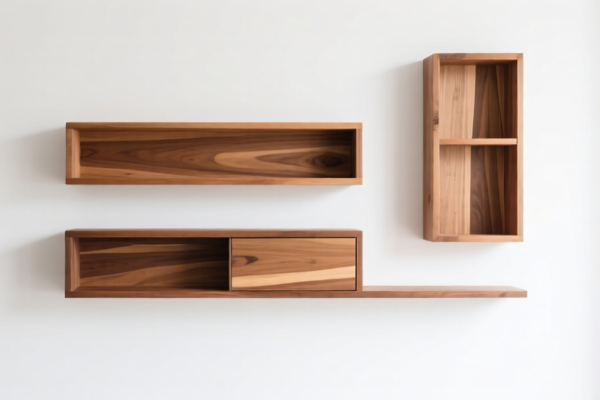
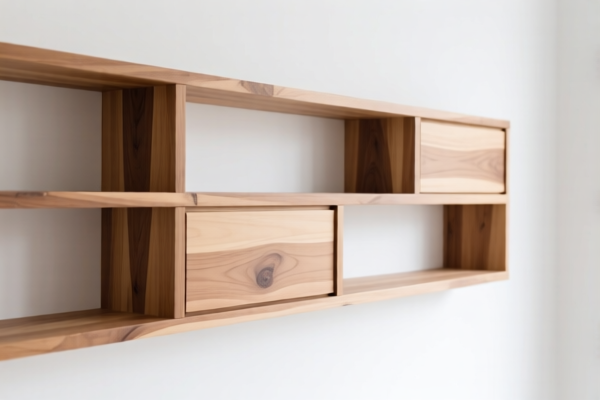
木制装饰品及家具
CN → US| HS Code | Tariff Rate | Origin | Destination | Doc |
|---|---|---|---|---|
| 4420190000 | 13.2% | CN | US | Official Doc |
| 4420908000 | 38.2% | CN | US | Official Doc |
| 9503000090 | 10.0% | CN | US | Official Doc |
| 4414900000 | 21.4% | CN | US | Official Doc |
| 4414100000 | 21.4% | CN | US | Official Doc |
| 9403604000 | 35.0% | CN | US | Official Doc |
Product Images


AI Analysis
🪵 Wooden Decorations & Furniture (Wooden Ornamentation & Furniture)
🌐 HS Code Reference & Customs Clearance Guide | 2026 Latest Tariff Analysis | Professional Clearance Strategy
📌 I. Product Definition & Classification: What Exactly Are We Talking About?
Wooden items intended for decoration and furniture span a wide range in international trade, from simple ornamental carvings to functional curved wood furniture. The key distinction lies in material specificity, intended use, and structural complexity.
In international trade, these products are primarily categorized into:
Wooden Ornaments/Decorations: Non-functional items made of wood, including carvings, frames, and decorative accessories.
Wooden Furniture: Functional items such as chairs, tables, or shelves, with a specific focus on curved wood furniture in certain contexts.
⚠️ Key Differentiation Points:
- If the item is purely ornamental (no structural function for sitting/sleeping/storage), it falls under Chapter 44 or 95 depending on similarity to toys/models.
- If the item is functional furniture (e.g., a bentwood chair), it falls under Chapter 94.
- Material matters: Specific wood types (e.g., tropical woods vs. general wood) can trigger different HS codes and tariff rates.
📦 II. HS Code Classification Details (2026 Latest Tariff Authority Comparison)
Based on the provided dataset, here are the precise HS Code mappings and their corresponding tariff structures:
| HS Code | Product Description | Summary | Total Tax Rate | Tax Detail Breakdown |
|---|---|---|---|---|
| 4420.19.00.00 | Wooden Ornaments | Matches material and usage for general wooden decorations | 13.2% | Base: 3.2%, Section 301: 0.0%, Section 122: 10% |
| 4420.90.80.00 | Wooden Ornaments | Fits general wooden decoration classification | 38.2% | Base: 3.2%, Section 301: 25.0%, Section 122: 10% |
| 9503.00.00.90 | Decorative Items | Covers toys, models, and similar decorative articles | 10.0% | Base: 0.0%, Section 301: 0.0%, Section 122: 10% |
| 4414.90.00.00 | Wooden Frames/Items | Used for decorative purposes (general wood) | 21.4% | Base: 3.9%, Section 301: 7.5%, Section 122: 10% |
| 4414.10.00.00 | Wooden Frames/Items | Made of tropical wood for decorative purposes | 21.4% | Base: 3.9%, Section 301: 7.5%, Section 122: 10% |
| 9403.60.40.00 | Wooden Furniture | Curved wood furniture category | 35.0% | Base: 0.0%, Section 301: 25.0%, Section 122: 10% |
🔍 Critical Note:
- The tariff burden varies significantly based on whether the item is classified as "ornament," "frame," "toy-like decoration," or "furniture."
- Section 301 Tariffs (25%) apply to specific wooden ornaments and furniture, dramatically increasing costs.
- Section 122 Tariffs (10%) appear to be a consistent add-on for all listed categories in this dataset.
💰 III. 2026 Latest Tariff Rate Detailed Analysis (Including Surtaxes & Policy Add-ons)
✅ Applicable Country: United States (US)
✅ Origin: China (CN) (Inferred from Section 301/122 context)
✅ Effective Date: Current 2026 Regulations
🎯 1. 4420.19.00.00 —— Wooden Ornaments (Low Section 301 Impact)
| Item | Content |
|---|---|
| Base Duty | 3.2% |
| Section 301 Surtax | +0.0% |
| Section 122 Surtax | +10.0% |
| Total Tax Rate | 13.2% |
| Tax Calculation | CIF Value × 13.2% |
| De Minimis Eligibility | ❌ No (Based on high effective rate context) |
| Legal Basis Path | Section 122 → HS Code 4420.19.00.00 |
📌 Explanation:
- This category benefits from 0% Section 301 tariff, making it the most cost-effective option for general wooden decorations if classification allows.
- The 10% Section 122 surtax remains applicable.
🎯 2. 4420.90.80.00 —— Wooden Ornaments (High Section 301 Impact)
| Item | Content |
|---|---|
| Base Duty | 3.2% |
| Section 301 Surtax | +25.0% |
| Section 122 Surtax | +10.0% |
| Total Tax Rate | 38.2% |
| Tax Calculation | CIF Value × 38.2% |
| De Minimis Eligibility | ❌ No |
| Legal Basis Path | Section 301 (USITC Footnote) → Section 122 → HS Code 4420.90.80.00 |
📌 Note:
- Despite being a "wooden ornament," this subcategory attracts the full 25% Section 301 tariff.
- Total cost is nearly 3x higher than4420.19.00.00. Misclassification here is costly.
🎯 3. 9503.00.00.90 —— Decorative Items (Toys/Models)
| Item | Content |
|---|---|
| Base Duty | 0.0% |
| Section 301 Surtax | +0.0% |
| Section 122 Surtax | +10.0% |
| Total Tax Rate | 10.0% |
| Tax Calculation | CIF Value × 10.0% |
| De Minimis Eligibility | ❌ No (High risk of scrutiny) |
| Legal Basis Path | Section 122 → HS Code 9503.00.00.90 |
📌 Strategic Insight:
- If your wooden decoration resembles a toy, model, or game item, it may qualify for this lowest tax rate (10%).
- Risk: Customs may challenge this classification if the item is purely decorative and not "toy-like."
🎯 4. 4414.90.00.00 & 4414.10.00.00 —— Wooden Frames
| Item | Content |
|---|---|
| Base Duty | 3.9% |
| Section 301 Surtax | +7.5% |
| Section 122 Surtax | +10.0% |
| Total Tax Rate | 21.4% |
| Tax Calculation | CIF Value × 21.4% |
| De Minimis Eligibility | ❌ No |
📌 Note:
- Applies to wooden frames used for decoration.
- Rate is identical for tropical wood (4414.10.00.00) and general wood (4414.90.00.00).
- Section 301 surtax is moderate (7.5%) compared to full 25%.
🎯 5. 9403.60.40.00 —— Wooden Furniture (Curved Wood)
| Item | Content |
|---|---|
| Base Duty | 0.0% |
| Section 301 Surtax | +25.0% |
| Section 122 Surtax | +10.0% |
| Total Tax Rate | 35.0% |
| Tax Calculation | CIF Value × 35.0% |
| De Minimis Eligibility | ❌ No |
| Legal Basis Path | Section 301 → Section 122 → HS Code 9403.60.40.00 |
📌 Note:
- Curved wood furniture is classified under Chapter 94.
- Attracts the highest surtax (25% Section 301) despite 0% base duty.
- Total 35% rate makes it expensive for low-margin goods.
🛠️ IV. Customs Clearance Practical Advice (Pitfall Avoidance Guide)
✅ 1. Essential Documentation Checklist (No Exceptions)
| Document | Required | Notes |
|---|---|---|
| ✅ Product Specifications | ✔️ | Must detail wood type, dimensions, finish, and intended use. |
| ✅ High-Resolution Photos | ✔️ | Show the item’s function (e.g., if it’s a frame, show it holding a picture). |
| ✅ Commercial Invoice | ✔️ | Clearly describe the item using the exact HS Code description (e.g., "Wooden Ornament," not just "Wooden Item"). |
| ✅ Certificate of Origin (CO) | ✔️ | Crucial for proving Chinese origin to apply correct Section 301/122 rates. |
| ✅ Packaging List | ✔️ | Ensure no mixing of furniture and ornaments in the same package without clear labeling. |
✅ 2. Declaration Strategy (Key Mantra)
🔥 "Classify by Function, Declare by Use, Avoid Mislabeling!"
| Scenario | Correct Declaration | Incorrect Practice |
|---|---|---|
| Decorative Carving | 4420.19.00.00 or 4420.90.80.00 |
Labeling as "Toy" → Potential audit |
| Toy-like Wooden Model | 9503.00.00.90 |
Labeling as "Furniture" → 35% tax instead of 10% |
| Wooden Picture Frame | 4414.90.00.00 |
Labeling as "Furniture" → 35% tax instead of 21.4% |
| Curved Wood Chair | 9403.60.40.00 |
Labeling as "Ornament" → Illegal Misclassification |
⚠️ Warning:
- Do not attempt to classify furniture as "ornaments" to avoid Section 301. Customs has strict rules for Chapter 94.
- Do not classify ornaments as "toys" unless they meet the legal definition of a toy (play value).
✅ 3. Special Cases Handling
| Situation | Recommendation |
|---|---|
| Mixed Package (Furniture + Ornaments) | Split the declaration. Declare each item under its correct HS Code. Do not lump them together. |
| Tropical Wood Usage | Ensure documentation proves wood type. If claimed as tropical but is not, penalties apply. |
| Curved Wood Furniture | Must be declared under 9403.60.40.00. No alternative classification available. |
| Low-Value Shipments | Even if below de minimis threshold, Section 122 and 301 tariffs may still apply. Check current de minimis rules carefully. |
🌍 V. Global Market Comparison (2026 Latest)
| Country/Region | Recommended HS Code | Tariff (China Origin) | Certification | Notes |
|---|---|---|---|---|
| 🇺🇸 USA | Varies by Type | 10% - 38.2% | None specific | Section 301 & 122 significantly increase costs. |
| 🇪🇺 EU | 4420 / 9403 | 0% - 6% (General) | CE (if applicable) | No Section 301/122. Much cheaper than US. |
| 🇨🇳 China | 4420 / 9403 | 5% - 10% | FSC (optional) | Lower base duties, no US surcharges. |
| 🇬🇧 UK | 4420 / 9403 | 0% - 6% | UKCA | Post-Brexit tariffs similar to EU. |
📌 Conclusion:
- USA is the most expensive market due to Section 301 and 122 tariffs.
- EU/UK offer significant cost advantages for wooden decorations and furniture.
- Strategy: Consider diversifying exports to non-US markets to mitigate tariff risks.
📌 VI. Common Errors & Pitfalls (Lessons Learned)
❌ Error 1: Classifying a wooden chair as a wooden ornament (4420)
👉 Consequence: 35% vs 13.2%. Underpayment leads to penalties + back taxes.
❌ Error 2: Classifying a decorative carving as a toy (9503)
👉 Consequence: Customs may reject the "toy" classification, leading to delayed clearance + 10% vs 38.2% discrepancy.
❌ Error 3: Ignoring Section 122 in tariff calculations
👉 Consequence: Underestimating total landed cost by 10% on all shipments.
❌ Error 4: Mixing furniture and ornaments in one HS Code
👉 Consequence: Audit trigger. Customs will split and reclassify, causing delays.
✅ Correct Approach:
"Decorative Wooden Carving, Non-Functional, Pine Wood, Model XYZ"
"Wooden Picture Frame, Tropical Wood, 8x10 inch, Model ABC"
"Curved Wood Lounge Chair, Walnut Finish, Model DEF"
🎯 VII. Conclusion: Precision Classification Saves Money!
🎯 Remember This Mantra:
🔹 "Ornaments: 13.2% or 38.2%?"
🔹 "Frames: 21.4% – No Surprise!"
🔹 "Furniture: 35.0% – High Cost Alert!"
🔹 "Toys: 10.0% – But Prove It’s a Toy!"🔹 "HS Code Determines Your Profit Margin. One Digit Wrong, Cost Doubles!"
📌 Pro Tip:
- If your wooden decoration resembles a toy (e.g., a wooden car, doll, or model kit), aggressively pursue 9503.00.00.90 (10% tax).
- If it’s purely decorative, use 4420.19.00.00 (13.2%) if possible, avoiding the 25% Section 301 hit.
- Always provide detailed photos and descriptions to justify your HS Code choice.
📣 Immediate Action:
📞 Consult a Customs Broker + Provide Product Photos + Apply for Advance Ruling if high value.
🚀 Optimize Your Supply Chain to avoid the US market if tariffs exceed profit margins.
✨ Professional Customs Clearance Starts with Accurate Classification!
💼 Every Percent of Tax Saved is Pure Profit!
Customer Reviews
About HS Code Classification
The Harmonized System (HS) is an internationally standardized nomenclature developed by the World Customs Organization (WCO) to classify traded products. Over 200 countries use the HS system as the basis for customs tariffs, trade statistics, and import/export regulations.
Each HS code follows a hierarchical structure:
- Chapter (2 digits) — Broad category of goods (e.g., Chapter 84: Machinery and Mechanical Appliances)
- Heading (4 digits) — More specific grouping within the chapter
- Subheading (6 digits) — Internationally standardized breakdown, used by all WCO member countries
- National subdivisions (8-10 digits) — Country-specific extensions for further classification, such as US HTSUS 10-digit codes
Correct HS code classification is essential for smooth customs clearance, accurate duty payment, and compliance with trade regulations. Misclassification can lead to customs delays, overpayment of duties, or penalties.
When importing from CN to US, the applicable tariff rates may include:
- Most-Favored-Nation (MFN) rate — The standard duty rate applied to WTO members
- General rate — Applied to countries without trade agreements
- Trade remedy duties — Additional tariffs such as Section 301 (anti-dumping), Section 232 (national security), or countervailing duties
The information provided on this page is for reference purposes only. For official classification, please consult with your local customs authority or a licensed customs broker.