木制踏脚凳
CN → US| HS Code | Tariff Rate | Origin | Destination | Doc |
|---|---|---|---|---|
| 9403608089 | 10.0% | CN | US | Official Doc |
| 9403910080 | 35.0% | CN | US | Official Doc |
| 9401696031 | 35.0% | CN | US | Official Doc |
| 9401696011 | 35.0% | CN | US | Official Doc |
| 9403896015 | 35.0% | CN | US | Official Doc |
Product Images
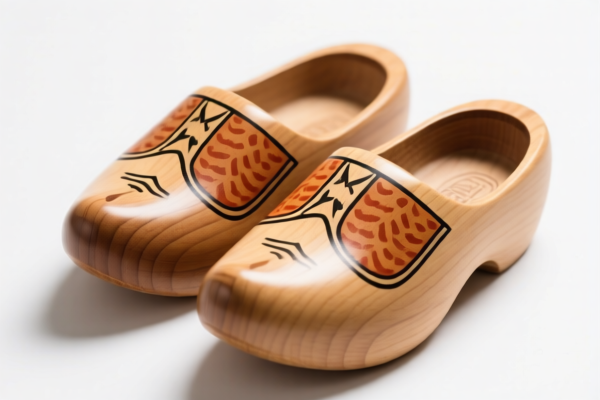
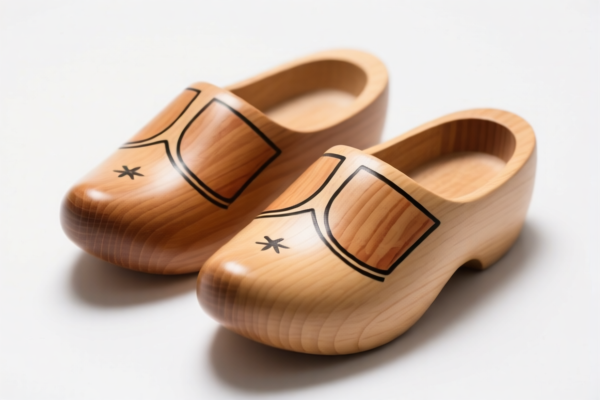
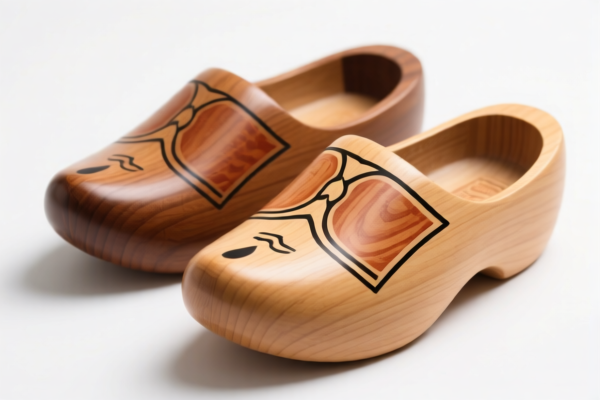
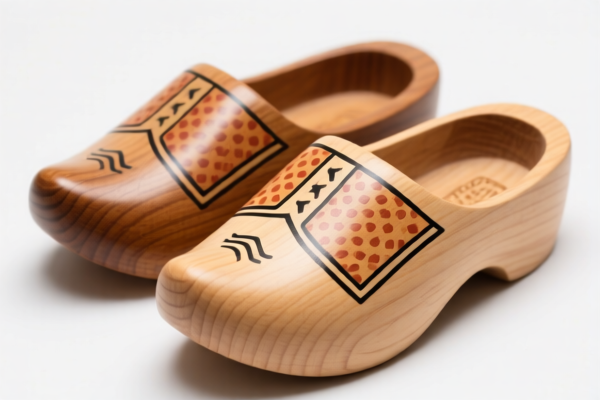
AI Analysis
🪑 Wooden Footstool (Wooden Footrest/Ottoman)
🌐 HS Code Reference & Customs Clearance Guide | 2026 Latest Tariff Analysis | Professional Clearance Strategy
📌 I. Product Definition & Classification: Do You Really Understand "Wooden Footstools"?
A Wooden Footstool is a low seat without a back or arms, used to rest the feet on. In international trade, its classification depends heavily on its specific design, construction, and intended use. Is it a standalone furniture piece, part of a chair, or a component?
Key Distinction Points:
- Standalone Furniture: Designed for general household or office use, not attached to another item. → Classified under Chapter 94 (Furniture).
- Part of a Chair/Seat: If it is an integral part of a chair (e.g., a footrest attached to an office chair). → Classified under Chapter 94 (Parts of Furniture) or associated with the main chair.
- Material Specifics: Since the input specifies "Wooden," we focus on wood-based classifications in Chapter 94.
⚠️ Critical Note:
- If the footstool has upholstery (cushioned), it may fall under 9401 (Seats).
- If it is solid wood/non-upholstered (simple rack, shelf, or plain stool), it falls under 9403 (Other Furniture).
- The data provided highlights the ambiguity between "Other Wooden Furniture" and "Wooden Frames for Seats."
📦 II. HS Code Classification Details (2026 Latest Tariff Authority Reference)
Based on the provided data, there are 5 potential HS Codes for a Wooden Footstool. Each reflects a slightly different interpretation of the product's function and structure.
| HS Code | Product Description (Summary) | Category | Tax Rate (Total) |
|---|---|---|---|
9403.60.80.89 |
Classified as Other Wooden Furniture | General Footstool | 35.0% |
9403.91.00.80 |
Classified as Parts/Accessories of Wooden Furniture | Component/Pedestal | 35.0% |
9401.69.60.31 |
Classified as Other Wooden-Framed Seats | Seat Component | 35.0% |
9401.69.60.11 |
Classified as Other Household Wooden-Framed Seats | Household Seat | 35.0% |
9403.89.60.15 |
Classified as Other Furniture (Finished Goods) | General Finished Product | 35.0% |
🔍 Key Insight:
- All listed HS Codes carry the same total tax rate of 35.0%.
- The difference lies in legal classification logic and customs scrutiny risk:
-9403.xxxxcodes treat it as general furniture.
-9401.xxxxcodes treat it as a seat/chair component.
- Customs officers may challenge9401codes if the item lacks a backrest or arms (defining it strictly as a "seat").9403is often safer for standalone footstools.
💰 III. 2026 Latest Tariff Rate Breakdown (Including Surtaxes & Policy Add-ons)
✅ Applicable Country: United States (US)
✅ Origin: China (CN)
✅ Effective Time: 2025/2026 (Current Trade Environment)
🎯 1. Universal Tariff Structure for All Listed HS Codes
Since all 5 HS Codes in the provided data have identical tax details, the breakdown is uniform:
| Item | Rate | Source / Legal Basis |
|---|---|---|
| Base Tariff | 0.0% | Standard MFN (Most Favored Nation) rate for many wooden furniture items. |
| Section 301 Surcharge | +25.0% | USITC Footnote (Section 301) on Chinese imports. |
| Section 122 Tariff | +10.0% | Additional surcharge under specific trade provisions (often linked to bilateral agreements or emergency measures). |
| Total Tax Rate | 35.0% | Sum of Base + 301 + 122 |
| Calculation Basis | CIF Value × 35% | Cost, Insurance, and Freight value. |
| De Minimis Exemption | ❌ Not Applicable | High-tax items (especially those with 301/122 surcharges) generally do not qualify for the $800 de minimis exemption for small parcels. |
📌 Explanation:
- 0% Base: Many wooden furniture items have low base duties.
- 25% (Section 301): The major punitive tariff on Chinese goods.
- 10% (Section 122): Additional layer often applied to specific Chinese-manufactured goods.
- Total 35%: This is a high-cost entry into the US market. Profit margins must account for this.
🛠️ IV. Customs Clearance Practical Advice (Battle-Tested Pitfall Avoidance)
✅ 1. Documentation Checklist (No Missing Items)
| Document | Required | Explanation |
|---|---|---|
| ✅ Product Specifications | ✔️ | Detail material (wood type, plywood, MDF), dimensions, weight, and upholstery (if any). |
| ✅ Product Photos | ✔️ | Clear images of the footstool from multiple angles, showing no backrest (if applicable) to justify 9403. |
| ✅ Commercial Invoice | ✔️ | Clearly state "Wooden Footstool" or "Wooden Footrest." Avoid vague terms like "Wooden Product." |
| ✅ Packing List | ✔️ | Show unit packaging to prove it is a finished good, not disassembled parts for assembly elsewhere. |
| ✅ Certificate of Origin (CO) | ✔️ | Essential for proving CN origin. If misdeclared, penalties apply. |
| ✅ Material Declaration | ✔️ | Specify if wood is solid, engineered, or contains treated wood (ISPM 15 compliance if applicable). |
✅ 2. Declaration Tips (Key Mnemonics)
🔥 “Don’t Call It a Chair, Call It a Rest. Don’t Split It, Declare It as a Set.”
| Scenario | Correct Declaration | Wrong Practice |
|---|---|---|
| Standalone Footstool | 9403.60.80.89 (Other Wooden Furniture) |
Declare as 9401 (Seat) → Risk of rejection if no backrest. |
| Footstool sold with a Chair | Declare as Accessories or bundled | Separate declaration of parts → Higher scrutiny. |
| Cushioned Footstool | 9401.69.60.xxxx (Wooden-Framed Seat) |
Declare as 9403 → May be corrected to 9401 by customs. |
| Raw Wooden Frame (no legs/finish) | 4421 (Wood Articles) |
Declare as 9403 → Rejected as unfinished good. |
✅ 3. Special Handling Cases
| Case | Recommendation |
|---|---|
| OEM Custom Footstools | Provide design drawings and client approval to prove it is a finished good. |
| Mixed Materials (Wood + Metal Legs) | If wood is the principal material, 9403 is still likely. If metal frame dominates, consider 7326 (Metal Furniture). |
| Small Parcel (De Minimis) | High Risk. With 35% tax, carriers will likely collect duties + high handling fees. Not recommended for DDP/DDU via postal. Use freight forwarder. |
| Wood Treatment | Ensure wood is heat-treated (HT) or fumigated (MB) to comply with ISPM 15 to avoid rejection at US ports. |
🌍 V. Global Market Comparison (2026 Latest)
| Country/Region | Recommended HS Code | Base Tariff | Surtaxes | Total Est. Rate | Notes |
|---|---|---|---|---|---|
| 🇺🇸 USA | 9403.60.80.89 |
0% | +35% (301+122) | 35% | High barrier. Use 9403 for safest classification. |
| 🇨🇳 China | 9403.60.80.89 |
5-10% | 0% | ~5-10% | Domestic trade benefits. |
| 🇪🇺 EU | 9403.30.20 / 9403.40.90 |
0-3% | 0% | ~0-3% | Low tariffs. No Section 301. |
| 🇬🇧 UK | 9403.60.00.00 |
0-4% | 0% | ~0-4% | Post-Brexit, stable rates for wood furniture. |
| 🇦🇺 Australia | 9403.60.00.90 |
5% | 0% | 5% | Low cost. |
📌 Conclusion:
- USA is the most expensive market due to the 35% combined surcharge.
- EU/UK/Australia offer significantly lower costs, making them more attractive for price-sensitive wooden furniture.
📌 VI. Common Mistakes & Pitfall Guide (Lessons from Experience)
❌ Mistake 1: Declaring a Footstool as 9401 (Seat) when it has no backrest.
👉 Consequence: Customs may reject the code, leading to reclassification, delays, and potential penalties.
✅ Fix: Use 9403 (Other Furniture) for backless stools.
❌ Mistake 2: Splitting a Footstool into "Legs + Top" for shipment.
👉 Consequence: Each part may be taxed separately, or deemed incomplete, leading to higher duties or rejection.
✅ Fix: Declare as a single finished unit.
❌ Mistake 3: Ignoring the "301 + 122" surcharge.
👉 Consequence: Underquoting CIF value leads to severe penalties and seizure.
✅ Fix: Ensure all costs (product, shipping, insurance) are included in the declared value.
❌ Mistake 4: Using "Wooden Stool" as the description without material details.
👉 Consequence: Customs may request additional proof of material, causing delays.
✅ Fix: Specify "Solid Oak Wooden Footstool" or "Bamboo Wood Footstool."
🎯 VII. Conclusion: Precise Classification Saves Money!
🎯 Remember the Mantra:
🔹 "Backless? Use 9403. Cushioned? Use 9401. Don’t Split. Don’t Hide."
🔹 "35% is the Price of Entry in the US. Plan Your Margin."
🔹 "Documentation is Your Shield. Photos are Your Proof."
📌 Pro Tip:
If your footstool is made in Vietnam, Thailand, or Malaysia, you may avoid the Section 301 and 122 surcharges, reducing the total tax to 0%~5%.
Action: Consider Supply Chain Diversification to the US if volumes are high.
📣 Immediate Action:
📞 Consult a Customs Broker + Provide Photos + Apply for Advance Ruling if unsure.
🚀 Ensure Smooth Clearance, Maximize Profits, Avoid Delays!
✨ Professional Customs Clearance Starts with Accurate Classification!
💼 Every Percent of Tax Counts in International Trade!
Customer Reviews
About HS Code Classification
The Harmonized System (HS) is an internationally standardized nomenclature developed by the World Customs Organization (WCO) to classify traded products. Over 200 countries use the HS system as the basis for customs tariffs, trade statistics, and import/export regulations.
Each HS code follows a hierarchical structure:
- Chapter (2 digits) — Broad category of goods (e.g., Chapter 84: Machinery and Mechanical Appliances)
- Heading (4 digits) — More specific grouping within the chapter
- Subheading (6 digits) — Internationally standardized breakdown, used by all WCO member countries
- National subdivisions (8-10 digits) — Country-specific extensions for further classification, such as US HTSUS 10-digit codes
Correct HS code classification is essential for smooth customs clearance, accurate duty payment, and compliance with trade regulations. Misclassification can lead to customs delays, overpayment of duties, or penalties.
When importing from CN to US, the applicable tariff rates may include:
- Most-Favored-Nation (MFN) rate — The standard duty rate applied to WTO members
- General rate — Applied to countries without trade agreements
- Trade remedy duties — Additional tariffs such as Section 301 (anti-dumping), Section 232 (national security), or countervailing duties
The information provided on this page is for reference purposes only. For official classification, please consult with your local customs authority or a licensed customs broker.