杀虫剂(小麦专用)
CN → US| HS Code | Tariff Rate | Origin | Destination | Doc |
|---|---|---|---|---|
| 3809935000 | 41.0% | CN | US | Official Doc |
| 3809925000 | 41.0% | CN | US | Official Doc |
| 3808912501 | 41.5% | CN | US | Official Doc |
| 3808915001 | 40.0% | CN | US | Official Doc |
Product Images
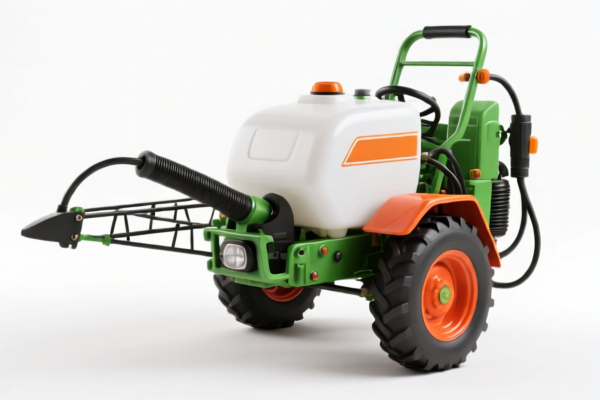

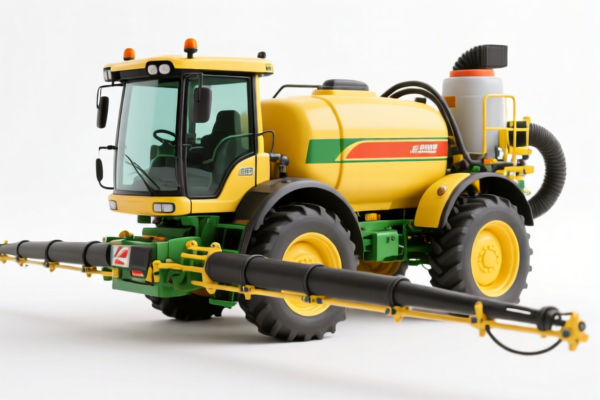
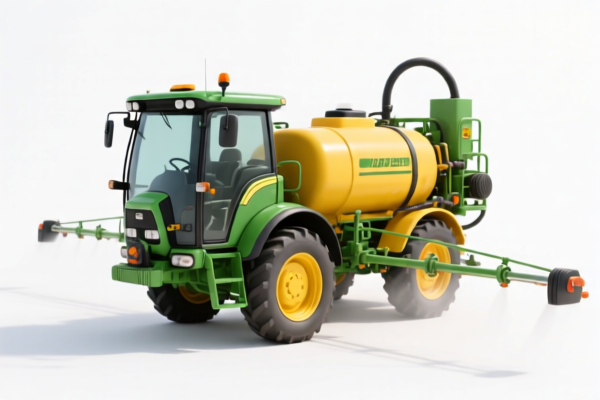
AI Analysis
🐛 Insecticides for Wheat (Specialized for Wheat)
🌐 HS Code Reference & Customs Clearance Guide | 2026 Latest Tariff Breakdown | Professional Import Strategy
📌 One: Product Definition & Classification – Do You Really Understand “Insecticides for Wheat”?
Insecticides specifically formulated for wheat are targeted pest control agents designed to protect wheat crops from insect infestations during cultivation, storage, or post-harvest stages. These products are not general-purpose insecticides but are formulated with active ingredients, carriers, and adjuvants optimized for wheat compatibility, soil interaction, and minimal residue on grain.
⚠️ Key Differentiation:
- If the insecticide contains aromatic or modified aromatic compounds (e.g., pyrethroids, organophosphates, neonicotinoids) → Must be classified under 3808.91.25.01
- If it contains non-aromatic or non-modified aromatic insecticides (e.g., some bio-based or mineral-based formulations) → May fall under 3808.91.50.01
📦 Two: HS Code Classification Details (2026 Latest Tariff Authority Match)
| HS Code | Product Description | Applicable Use Case | Contains Aromatic/Modified Aromatic? |
|---|---|---|---|
3808.91.25.01 |
Insecticides, put up for retail or as preparations, containing any aromatic or modified aromatic insecticide, used in agriculture (e.g., wheat, corn, rice) | Wheat-specific insecticide formulations with synthetic pyrethroids, neonicotinoids, or organophosphates | ✅ Yes |
3808.91.50.01 |
Insecticides, put up for retail or as preparations, not containing aromatic or modified aromatic insecticides, used in agriculture | Bio-insecticides (e.g., Bacillus thuringiensis), mineral oils, or non-synthetic formulations | ❌ No |
🔍 Critical Note:
- "Wheat-specific" labeling alone does NOT change the HS code – the chemical composition determines the classification. - Even if labeled “for wheat,” if it contains aromatic insecticides, it must be declared under 3808.91.25.01, not 3808.91.50.01.
💰 Three: 2026 Latest Tariff Rate Breakdown (Including附加 Taxes & Policy Add-ons)
✅ Applicable Country: United States (US)
✅ Origin: China (CN)
✅ Effective Date: November 10, 2025 (inclusive of future imports)
🎯 1. 3808.91.25.01 — Insecticides Containing Aromatic/Modified Aromatic Compounds
| Item | Detail |
|---|---|
| Base Duty Rate | 6.5% (ad valorem) |
| USITC Additional Duty | +25% (under Section 301 of U.S. Trade Act) |
| IEEPA Additional Duty | +10% (under International Emergency Economic Powers Act – IEEPA) |
| Total Effective Tariff | 31.5% |
| Tax Calculation | CIF Value × 31.5% |
| De Minimis Threshold | ❌ Not applicable (denied under IEEPA) |
| Legal Basis Path | IEEPA:9903.01.25 → USITC:3808.91.25.01 → FOOTNOTE:9903.88.01 |
📌 Explanation:
- The 6.5% base rate applies to all insecticides under 3808.91. - The 25% USITC附加 is triggered by the U.S. Trade Representative’s Section 301 investigation into China’s IP practices. - The 10% IEEPA附加 is applied to all goods from China, regardless of product type, under emergency economic powers. - Total = 31.5% – a high tariff that significantly increases import cost.
🎯 2. 3808.91.50.01 — Insecticides Without Aromatic/Modified Aromatic Compounds
| Item | Detail |
|---|---|
| Base Duty Rate | 5.0% (ad valorem) |
| USITC Additional Duty | +25% |
| IEEPA Additional Duty | +10% |
| Total Effective Tariff | 30.0% |
| Tax Calculation | CIF Value × 30.0% |
| De Minimis Threshold | ❌ Not applicable |
| Legal Basis Path | IEEPA:9901.25 → USITC:3808.91.50.01 → FOOTNOTE:9903.88.01 |
📌 Important Note:
- Even if the product is biological, organic, or mineral-based, if it’s from China, the 25% USITC + 10% IEEPA still apply. - No reduction for "natural" or "eco-friendly" claims. - Total = 30.0% – still very high.
🛠️ Four: Customs Clearance Best Practices (Real-World Pro Tips)
✅ 1. Required Documentation (No Exceptions)
| Document | Must Provide | Purpose |
|---|---|---|
| ✅ Product Specification Sheet | ✔️ | Lists active ingredients, formulation, application rate, safety data |
| ✅ Chemical Safety Data Sheet (SDS) | ✔️ | Proves chemical identity and hazard classification |
| ✅ Certificate of Analysis (CoA) | ✔️ | Confirms presence/absence of aromatic compounds |
| ✅ Labeling & Packaging Proof | ✔️ | Shows “for wheat” usage, but not sufficient for HS code |
| ✅ Commercial Invoice | ✔️ | Must clearly state: “Insecticide for Wheat, Formulated with [Active Ingredient]” |
| ✅ Certificate of Origin (CO) | ✔️ | Critical for tariff eligibility; if from Vietnam/Mexico, may qualify for IEEPA exemption |
| ✅ Pre-shipment Inspection Report (if required) | ✔️ | For high-value or regulated shipments |
✅ 2.申报技巧 (Key Rules to Remember)
🔥 “Chemical determines code – not label! Label says ‘wheat,’ but chemistry decides tariff!”
| Scenario | Correct HS Code | Wrong Practice |
|---|---|---|
| Wheat insecticide with cypermethrin (pyrethroid) | 3808.91.25.01 |
Claiming 3808.91.50.01 → Underpayment risk |
| Bio-insecticide with Bt (Bacillus thuringiensis) | 3808.91.50.01 |
Misdeclaring as 3808.91.25.01 → Overpaying |
| Insecticide labeled “for wheat” but contains chlorpyrifos | 3808.91.25.01 |
Failing to declare aromatic content → Penalties |
| Insecticide from Vietnam with same formula | 3808.91.25.01 |
But can apply for IEEPA exemption → 0% additional tax |
✅ 3. Special Cases Handling
| Situation | Recommended Action |
|---|---|
| Formulation contains both aromatic and non-aromatic compounds | Declare under 3808.91.25.01 – if any aromatic compound present |
| Insecticide used in storage (e.g., grain silos) | Still classified under 3808.91.25.01 or 3808.91.50.01 – use case doesn’t change HS code |
| Custom blend for wheat by a U.S. distributor | If manufactured in China, still subject to 31.5% or 30.0% |
| Requesting a Pre-Ruling (Advance Ruling) | ✅ Highly recommended – get official HS code confirmation before shipment |
🌍 Five: Global Market Customs Comparison (2026 Update)
| Country/Region | Recommended HS Code | Tariff | Certification Required | Notes |
|---|---|---|---|---|
| 🇺🇸 United States | 3808.91.25.01 or 3808.91.50.01 |
31.5% / 30.0% | EPA Registration, SDS | IEEPA/USITC apply |
| 🇨🇳 China | 3808.91.25.01 / 3808.91.50.01 |
5% | China Pesticide Registration | No附加税 |
| 🇪🇺 EU | 3808.91.25.01 / 3808.91.50.01 |
0% (if approved) | ECHA, REACH, EU Pesticide Approval | No附加税 |
| 🇦🇺 Australia | 3808.91.25.01 |
5% | APVMA Registration | No附加税 |
| 🇯🇵 Japan | 3808.91.25.01 |
0% | PMRA (Pesticide Registration) | No附加税 |
📌 Conclusion:
- The U.S. is the only market imposing 30%+附加 taxes on wheat insecticides from China. - China, EU, Japan, and Australia have much lower or zero tariffs – consider re-routing via Vietnam/Mexico to avoid U.S.附加.
📌 Six: Common Mistakes & Risk Warnings (Avoid These!)
❌ Mistake 1: Assuming “wheat-specific” means lower tariff
👉 Result: Misclassification → Customs penalty, seizure, or refund claim
❌ Mistake 2: Declaring a pyrethroid-based insecticide as “non-aromatic”
👉 Result: Underpayment of duties → Back taxes + 20% penalty
❌ Mistake 3: Not providing CoA or SDS
👉 Result: Delayed clearance, request for additional info, or refusal
❌ Mistake 4: Using generic name like “pesticide” instead of “insecticide for wheat”
👉 Result: Customs may apply default tariff → Higher tax risk
✅ Correct Declaration Example:
“Insecticide for Wheat, Formulated with Cypermethrin (Aromatic), 50g/L, EPA Reg. No. 123456, SDS & CoA Attached”
🎯 Seven: Final Verdict – Smart Import Strategy Starts Here!
🎯 Remember the Golden Rule:
🔹 “Label says ‘wheat,’ but chemistry decides the code and tariff!”
🔹 “Aromatic = 31.5%, Non-aromatic = 30.0% – both are high in the U.S.”
📌 Pro Tip:
If your insecticide is manufactured in Vietnam, Mexico, Thailand, or India, and originates from there, you may qualify for IEEPA exemption → 0% additional tax → Total tariff drops to 6.5% or 5.0%.
✅ Action Step:
📞 Contact a customs broker + Submit product data + Apply for Advance Ruling (Pre-Approval)
🚀 Reduce risk, avoid penalties, and save thousands per shipment!
📣 Act Now:
📞 Get your HS Code pre-ruling today
🌐 Avoid the 30%+ tax trap on wheat insecticides from China
💼 Your import cost depends on the first step: accurate classification!
✨ Professional Customs, Starts with Precision.
💼 One wrong code = Thousands in extra tax. One right code = Smooth, low-cost entry.
Customer Reviews
About HS Code Classification
The Harmonized System (HS) is an internationally standardized nomenclature developed by the World Customs Organization (WCO) to classify traded products. Over 200 countries use the HS system as the basis for customs tariffs, trade statistics, and import/export regulations.
Each HS code follows a hierarchical structure:
- Chapter (2 digits) — Broad category of goods (e.g., Chapter 84: Machinery and Mechanical Appliances)
- Heading (4 digits) — More specific grouping within the chapter
- Subheading (6 digits) — Internationally standardized breakdown, used by all WCO member countries
- National subdivisions (8-10 digits) — Country-specific extensions for further classification, such as US HTSUS 10-digit codes
Correct HS code classification is essential for smooth customs clearance, accurate duty payment, and compliance with trade regulations. Misclassification can lead to customs delays, overpayment of duties, or penalties.
When importing from CN to US, the applicable tariff rates may include:
- Most-Favored-Nation (MFN) rate — The standard duty rate applied to WTO members
- General rate — Applied to countries without trade agreements
- Trade remedy duties — Additional tariffs such as Section 301 (anti-dumping), Section 232 (national security), or countervailing duties
The information provided on this page is for reference purposes only. For official classification, please consult with your local customs authority or a licensed customs broker.