杜洛克猪
CN → USProduct Images


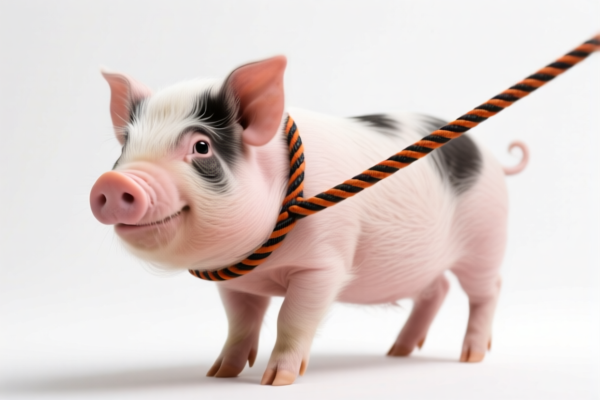

AI Analysis
🐷 Duroc Pigs & Pork Products (Live & Fresh/Chilled Meat)
🌐 HS Code Reference & Customs Clearance Guide | 2026 Latest Tariff Analysis | Professional Clearance Strategy
📌 I. Product Definition & Classification: Understanding "Duroc" in International Trade
Duroc pigs are a specific breed of domestic pig known for their distinctive red coat, rapid growth, and high-quality meat (often marbled). In international trade, they are categorized based on their state (Live vs. Slaughtered) and purpose (Breeding vs. Non-Breeding/Food).
Crucial Distinction for Duroc:
Live Duroc Pigs: If they are intended for breeding, they often fall under specific subheadings (e.g., 0203.10 in some contexts, though the provided data excludes these for the main list). However, if they are NOT for breeding (e.g., fattening pigs, meat-type), they fall under 0203.29.
Duroc Pork (Meat): The meat from these pigs, whether fresh or chilled, intended for human consumption, is classified under 0206.10.
⚠️ Key Classification Point:
- Live Pigs: Are they breeding stock? If NO → 0203.29. If YES → Excluded from this specific dataset (typically 0203.10).
- Meat: Is it fresh/chilled pork? → 0206.10.
📦 II. HS Code Classification Details (2026 Latest Tariff Reference)
Based on the provided <DATA>:
| HS Code | Product Description | Applicability | Status |
|---|---|---|---|
0203.29 |
Live Pigs, Not Breeding (e.g., Duroc pigs for fattening) | Excludes those of heading 0203.10 (breeding); Not slaughtered | ✅ Live Animal |
0206.10 |
Pork, Fresh or Chilled (of pigs, including Duroc) | Intended for human consumption; Not otherwise specified | ✅ Processed Meat |
🔍 Important Note:
- The dataset explicitly excludes breeding Duroc pigs (which might fall under 0203.10).
- 0203.29 covers "other live pigs," including non-breeding Durocs.
- 0206.10 covers the meat of these pigs. Do not confuse live animals with carcasses/meat.
💰 III. 2026 Tariff Rate Details
✅ Applicable Data Source: Provided
<DATA>
✅ Status: Tax Information Unavailable
✅ Total Tax: Error
✅ Tax Detail: "Failed to retrieve tax information"
🎯 1. 0203.29 —— Live Pigs (Non-Breeding, e.g., Duroc)
| Item | Content |
|---|---|
| Base Tariff | ❌ Error / Failed to Retrieve |
| Additional Taxes | ❌ Error |
| Total Tax Rate | Error |
| Tax Detail | "Failed to retrieve tax information" |
| Recommendation | DO NOT USE THIS DATA FOR FINAL CLEARANCE |
📌 Explanation:
- The system could not fetch the current tax rate for HS Code 0203.29.
- This is HIGH RISK for live animal imports, as tariffs vary significantly by country (e.g., US, EU, China) and origin.
- Action Required: You MUST verify the tax rate with a local customs broker or official tariff database (e.g., USITC, EU TARIC, China Customs).
🎯 2. 0206.10 —— Pork, Fresh or Chilled
| Item | Content |
|---|---|
| Base Tariff | ❌ Error / Failed to Retrieve |
| Additional Taxes | ❌ Error |
| Total Tax Rate | Error |
| Tax Detail | "Failed to retrieve tax information" |
| Recommendation | DO NOT USE THIS DATA FOR FINAL CLEARANCE |
📌 Explanation:
- The system could not fetch the current tax rate for HS Code 0206.10.
- Meat tariffs are often subject to quotas, sanctions, or seasonal adjustments.
- Action Required: Verify with official sources.
🛠️ IV. Customs Clearance Practical Advice (Real-World Pitfall Avoidance)
✅ 1. Essential Documentation Checklist
| Document | Required | Notes |
|---|---|---|
| ✅ Health Certificate | ✔️ | Critical for live animals (0203.29) and meat (0206.10). Must be issued by origin country's vet authority. |
| ✅ Veterinary Certificate | ✔️ | For live pigs: Proof of vaccination, health status, and freedom from diseases (e.g., ASF, FMD). |
| ✅ Bill of Lading / Air Waybill | ✔️ | Standard shipping document. |
| ✅ Commercial Invoice | ✔️ | Must clearly state: "Live Duroc Pigs, Non-Breeding" or "Fresh Duroc Pork, Chilled." |
| ✅ Packing List | ✔️ | For live pigs: Number of animals, weight, carrier details. For meat: Weight, packaging type. |
| ✅ Import License | ✔️ | Often required for live animal imports. |
⚠️ Warning: Live animal imports face strict biosecurity checks. Incorrect documentation can lead to quarantine, destruction, or return.
✅ 2. Classification Tips (Key Mnemonics)
🔥 "Live Non-Breed: 0203.29 | Fresh Meat: 0206.10 | Breeding: Excluded!"
| Scenario | Correct HS Code | Wrong HS Code | Consequence |
|---|---|---|---|
| Live Duroc pig for fattening | 0203.29 |
0203.10 |
Misclassification → Penalty + Delay |
| Live Duroc pig for breeding | Excluded from Data | 0203.29 |
Misclassification → May require different tax rate |
| Fresh Duroc pork | 0206.10 |
0203.29 |
Major Error → Live vs. Meat confusion |
| Frozen Duroc pork | Not in Data | 0206.10 |
Wrong Condition → Frozen is usually different code (e.g., 0206.29) |
✅ 3. Special Considerations
| Scenario | Handling Advice |
|---|---|
| Live Animal Import | Requires pre-approval from national animal health authority. Check quarantine facilities at destination port. |
| Meat Import | Ensure cold chain integrity. Temperature logs may be required. |
| Duroc Breed Proof | If claiming "Duroc," provide breed registration or supplier declaration to justify quality claims. |
| Tax Error Mitigation | Since tax data is ERROR, ALWAYS use official government tariff lookup tools before shipping. |
🌍 V. Global Market Clearance Comparison (General Guidelines)
| Country/Region | Typical HS Code (Live) | Typical HS Code (Meat) | Notes |
|---|---|---|---|
| 🇺🇸 USA | 0203.29.xx | 0206.10.xx | Requires USDA inspection. High biosecurity standards. |
| 🇪🇺 EU | 0203.29 | 0206.10 | Strict veterinary controls. Traceability required. |
| 🇨🇳 China | 0203.29 | 0206.10 | Requires CIQ inspection. Quotas may apply for pork. |
| 🇦🇺 Australia | 0203.29 | 0206.10 | Very strict quarantine. Often high tariffs for live animals. |
📌 Conclusion:
- Live animal imports are heavily regulated and tax-dependent.
- Meat imports require strict health certification.
- Tax data is unavailable in this dataset → Verify before any financial commitment.
📌 VI. Common Errors & Pitfalls (Lessons Learned)
❌ Error 1: Classifying breeding Duroc pigs as 0203.29
👉 Result: Incorrect tax rate, potential customs penalty. Breeding pigs often have different duties.
❌ Error 2: Declaring fresh pork as 0203.29
👉 Result: Major classification error. Live vs. Meat is a fundamental distinction.
❌ Error 3: Relying on Error Tax Data for cost calculation
👉 Result: Underestimating costs by thousands of dollars. Tax is "Failed to Retrieve"!
❌ Error 4: Missing Veterinary Certificate for live pigs
👉 Result: Animal quarantined or destroyed. Shipment halted.
✅ Correct Approach:
- For Live Duroc (Non-Breeding): HS 0203.29 + Health Certificate + Verify Tax
- For Fresh Duroc Pork: HS 0206.10 + Health Certificate + Verify Tax
🎯 VII. Conclusion: Professional Clearance for Live Animals & Meat
🎯 Remember the Mantra:
🔹 "Live Non-Breed: 0203.29 | Meat: 0206.10 | Breeding: Excluded!"
🔹 "Tax Error = Danger! Verify Officially!"
🔹 "No Health Cert = No Entry!"
📌 Pro Tip:
- For Live Animals: Contact the destination country’s Animal Health Authority for pre-import approval.
- For Meat: Ensure cold chain compliance and traceability.
- For Taxes: Since the data is ERROR, use USITC (for US), EU TARIC (for EU), or China Customs (for China) to get accurate rates.
📣 Immediate Action Required:
📞 Contact a Customs Broker to verify tax rates for
0203.29and0206.10.
📄 Prepare Veterinary Certificates immediately.
🚀 Ensure Cold Chain for meat shipments.
✨ Professional clearance starts with accurate classification and verified taxes!
💼 Your shipment’s success depends on precision!
Customer Reviews
About HS Code Classification
The Harmonized System (HS) is an internationally standardized nomenclature developed by the World Customs Organization (WCO) to classify traded products. Over 200 countries use the HS system as the basis for customs tariffs, trade statistics, and import/export regulations.
Each HS code follows a hierarchical structure:
- Chapter (2 digits) — Broad category of goods (e.g., Chapter 84: Machinery and Mechanical Appliances)
- Heading (4 digits) — More specific grouping within the chapter
- Subheading (6 digits) — Internationally standardized breakdown, used by all WCO member countries
- National subdivisions (8-10 digits) — Country-specific extensions for further classification, such as US HTSUS 10-digit codes
Correct HS code classification is essential for smooth customs clearance, accurate duty payment, and compliance with trade regulations. Misclassification can lead to customs delays, overpayment of duties, or penalties.
When importing from CN to US, the applicable tariff rates may include:
- Most-Favored-Nation (MFN) rate — The standard duty rate applied to WTO members
- General rate — Applied to countries without trade agreements
- Trade remedy duties — Additional tariffs such as Section 301 (anti-dumping), Section 232 (national security), or countervailing duties
The information provided on this page is for reference purposes only. For official classification, please consult with your local customs authority or a licensed customs broker.