束身衣
CN → US| HS Code | Tariff Rate | Origin | Destination | Doc |
|---|---|---|---|---|
| 3926909989 | 22.8% | CN | US | Official Doc |
| 6117909090 | 32.1% | CN | US | Official Doc |
| 6117909095 | 32.1% | CN | US | Official Doc |
| 6212300010 | 41.0% | CN | US | Official Doc |
| 6212300030 | 41.0% | CN | US | Official Doc |
Product Images
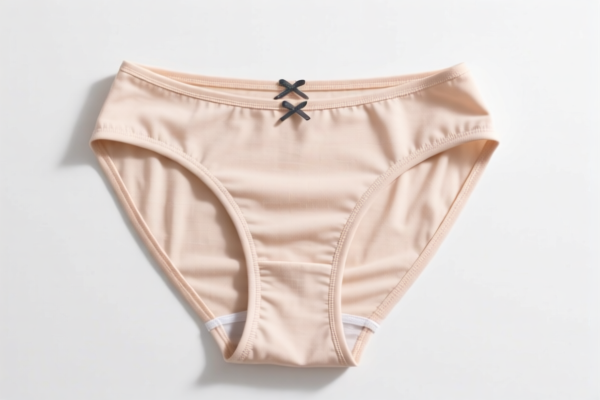

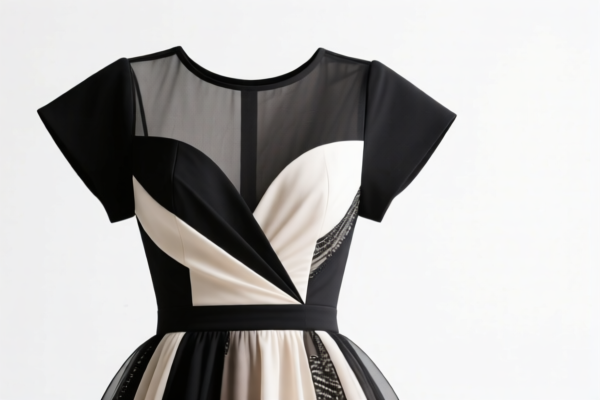

AI Analysis
🩰 Corset (Body Shaper)
🌐 HS Code Classification & Customs Clearance Guide | 2026 Latest Tariff Analysis | Pro-Level Import Strategy
📌 One, Product Definition & Classification: What Exactly Is a Corset?
A corset—also known as a body shaper, shapewear, or tight-lacing garment—is a form-fitting undergarment designed to shape the torso, typically worn for aesthetic, medical, or fashion purposes. In international trade, it's classified based on material composition, construction, and intended use.
⚠️ Key Distinction:
- If it's a tight-fitting, structured garment with boning, elastic, or rigid support → likely 6212.30.00.30 / 6212.30.00.10 (underwear/shapewear)
- If it's a non-structured, flexible piece made from synthetic fibers → may fall under 6117.90.90.95 / 6117.90.90.90 (other apparel accessories)
- If made from plastic or synthetic resin (e.g., molded plastic corsets) → could be 3926.90.99.89 (other plastic articles)
📦 Two, HS Code Classification Details (2026 Latest Tariff Authority)
| HS Code | Product Description | Typical Use Case | Material Assumption |
|---|---|---|---|
6212.30.00.30 |
Corsets, body shapers, or similar tight-fitting garments (not specified by material) | Fashion, postpartum, body contouring | Non-specific → assumed as other (not cotton, not synthetic) |
6212.30.00.10 |
Corsets or similar garments (used as brassieres or body shapers) | Daily wear, bridal, lingerie | Assumed cotton or non-conflicting fiber |
6117.90.90.95 |
Other parts and accessories of clothing, not elsewhere specified (non-structural) | Elastic bands, inserts, non-boned shapewear | Other apparel parts → generic classification |
6117.90.90.90 |
Other apparel accessories, made of man-made fibers or blends | Synthetic fiber shapewear, stretch panels | Assumed artificial or blended fibers |
3926.90.99.89 |
Other articles of plastic, not elsewhere specified | Molded plastic corsets, rigid training corsets | Plastic/synthetic resin (non-textile) |
🔍 Critical Insight:
- No material specified? → Default to 6212.30.00.30 / 6212.30.00.10 (tight-fitting garments)
- No rigid structure? → Likely 6117.90.90.95 / 6117.90.90.90 (accessories)
- Plastic-molded or hard-shell? → 3926.90.99.89 (plastic goods) — highest risk of misclassification!
💰 Three, 2026 Latest Tariff Breakdown (With Detailed Duty Clauses)
✅ Applicable Country: United States (US)
✅ Origin: China (CN)
✅ Effective Date: November 10, 2025 (and onward)
✅ Duty Calculation Basis: CIF Value
🎯 1. 6212.30.00.30 — Corsets (Unspecified Material)
| Item | Detail |
|---|---|
| Base Tariff | 23.5% (ad valorem) |
| Section 301 Additional Duty (USITC) | +7.5% |
| Section 122 Tariff (IEEPA) | +10% |
| Total Effective Duty | 41.0% |
| Tax Calculation | CIF × 41.0% |
| De Minimis Exemption? | ❌ No (denied under 19 U.S.C. § 1304) |
| Legal Basis Path | IEEPA: 9903.01.25 → Section 301: 9903.88.01 → HS: 6212.30.00.30 |
📌 Explanation:
- 23.5% base from U.S. Harmonized Tariff Schedule (HTS)
- +7.5% from Section 301 (China-specific trade action)
- +10% from IEEPA (International Emergency Economic Powers Act) — applies to goods from China
- Total = 41% — extremely high for apparel
🎯 2. 6212.30.00.10 — Corsets (Assumed Cotton or Non-Conflict Fiber)
| Item | Detail |
|---|---|
| Base Tariff | 23.5% |
| Section 301 Duty | +7.5% |
| IEEPA Duty | +10% |
| Total Duty | 41.0% |
| Tax Calculation | CIF × 41.0% |
| De Minimis? | ❌ No |
| Legal Path | IEEPA: 9903.01.24 → Section 301: 9903.88.01 → HS: 6212.30.00.10 |
📌 Note:
- Despite "cotton" assumption, duty remains 41% — no reduction for cotton
- Reason: Both Section 301 and IEEPA apply regardless of fiber type
🎯 3. 6117.90.90.95 — Other Apparel Accessories (Non-Structural)
| Item | Detail |
|---|---|
| Base Tariff | 14.6% |
| Section 301 Duty | +7.5% |
| IEEPA Duty | +10% |
| Total Duty | 32.1% |
| Tax Calculation | CIF × 32.1% |
| De Minimis? | ❌ No |
| Legal Path | IEEPA: 9903.01.25 → Section 301: 9903.88.01 → HS: 6117.90.90.95 |
📌 Insight:
- Lower base rate (14.6%) but still subject to 17.5% in附加 duties
- Used when the corset is not a full garment, e.g., elastic waistband only, shaping insert, or non-boned panel
🎯 4. 6117.90.90.90 — Man-Made Fiber Apparel Accessories
| Item | Detail |
|---|---|
| Base Tariff | 14.6% |
| Section 301 Duty | +7.5% |
| IEEPA Duty | +10% |
| Total Duty | 32.1% |
| Tax Calculation | CIF × 32.1% |
| De Minimis? | ❌ No |
| Legal Path | IEEPA: 9903.01.24 → Section 301: 9903.88.01 → HS: 6117.90.90.90 |
📌 Key Point:
- Applies to synthetic or blended fiber shapewear (e.g., polyester, spandex, nylon)
- Even if it looks like a corset, if it lacks boning and structure → accessory classification
🎯 5. 3926.90.99.89 — Other Plastic Articles (Molded Corsets)
| Item | Detail |
|---|---|
| Base Tariff | 5.3% |
| Section 301 Duty | +7.5% |
| IEEPA Duty | +10% |
| Total Duty | 22.8% |
| Tax Calculation | CIF × 22.8% |
| De Minimis? | ❌ No |
| Legal Path | IEEPA: 9903.01.25 → Section 301: 9903.88.01 → HS: 3926.90.99.89 |
📌 Critical Warning:
- Plastic corsets (e.g., rigid training corsets, molded waist trainers) are not clothing — they are plastic goods
- Even if labeled "shapewear", if made from rigid plastic, must be declared under 3926.90.99.89
- Misclassification risk: Could be flagged for anti-dumping, safety, or labeling violations
🛠️ Four, Customs Clearance Best Practices (Pro Tips to Avoid Penalties)
✅ 1. Required Documentation (Must-Have Checklist)
| Document | Required? | Notes |
|---|---|---|
| ✅ Product Specifications | ✔️ | Include material, structure (boned? elastic?), dimensions |
| ✅ Technical Drawings / Photos | ✔️ | Show seams, boning, stitching, inner lining |
| ✅ Commercial Invoice | ✔️ | Clearly state "Corset" or "Body Shaper", not "shapewear" only |
| ✅ Packing List | ✔️ | Detail quantity, weight, packaging type |
| ✅ Certificate of Origin (CO) | ✔️ | If from non-China, may qualify for lower duty |
| ✅ Material Test Report | ✔️ | Especially for synthetic fibers or plastic components |
| ✅ Safety & Compliance Certificates | ✔️ | ASTM, CPSIA, or FDA (if applicable) |
✅ 2.申报技巧(Key Rules to Remember)
🔥 "Structure Defines Class, Material Defines Duty, Plastic is Not Garment!"
| Scenario | Correct HS Code | Common Mistake |
|---|---|---|
| Full corset with boning, lace-up back | 6212.30.00.30 or 6212.30.00.10 |
Misclassified as 6117.90.90.90 → higher risk |
| Elastic waistband only, no structure | 6117.90.90.95 or 6117.90.90.90 |
Incorrectly declared as full garment |
| Molded plastic waist trainer | 3926.90.99.89 |
Mistaken as clothing → 41% duty instead of 22.8% |
| Shapewear made of 95% polyester | 6117.90.90.90 |
Not 6212.30.00.10 (assumes cotton) |
✅ 3. Special Cases & Solutions
| Situation | Recommended Action |
|---|---|
| Plastic corset with fabric lining | Declare as 3926.90.99.89 (plastic article) — not clothing |
| Custom-made corset for medical use | Apply for "non-commercial" or "medical device" exemption — requires FDA/CE documentation |
| Bulk shipment of shapewear with no structure | Use 6117.90.90.95 or 6117.90.90.90 — lower duty |
| Corset sold with bra or panty | Do NOT split — declare as complete set under 6212.30.00.30 |
| Import from Vietnam/Mexico | Apply for IEEPA exemption — duty may drop to 0%–5% |
🌍 Five, Global Market Comparison (2026)
| Country | Recommended HS Code | Tariff | Certification | Notes |
|---|---|---|---|---|
| 🇺🇸 USA | 6212.30.00.30 |
41.0% (China) | FCC, CPSIA | Highest duty |
| 🇨🇳 China | 6212.30.00.30 |
5% | CCC, GB | No extra tariffs |
| 🇪🇺 EU | 6212.30.00.30 |
0% (if CE) | CE, REACH | No 301/IEEPA |
| 🇦🇺 Australia | 6212.30.00.30 |
5% | RCM | No extra duties |
| 🇯🇵 Japan | 6212.30.00.30 |
0% | PSE | No附加税 |
📌 Conclusion:
- USA has the highest tariff burden on corsets from China
- Plastic corsets are 22.8% — 18.2% lower than textile ones
- Switching origin to Vietnam/Mexico can save 36%+ in duties
📌 Six, Common Mistakes & Pitfalls (Learn from Others’ Errors)
❌ Mistake 1: Declaring a plastic corset as 6212.30.00.30
👉 Result: Pay 41% instead of 22.8% → Overpayment, audit risk
❌ Mistake 2: Splitting a corset + bra + panty into 3 shipments
👉 Result: Each item taxed at 41% → Total 123% → Severe penalties
❌ Mistake 3: Using only "shapewear" in invoice, no photos or specs
👉 Result: Customs delays or rejects — no proof of structure
❌ Mistake 4: Assuming cotton = lower duty
👉 Result: Even cotton corsets pay 41% due to Section 301 + IEEPA
✅ Correct Declaration Example:
"Plastic Corset, Molded Waist Trainer, 100% PVC, 38cm Waist, Non-Textile, Not for Medical Use, Model XYZ, CPSIA Compliant"
🎯 Seven, Final Verdict: Precision Pays Off!
🎯 Remember the Golden Rules:
🔹 "Structure = Garment, Plastic = Plastic, No Material? Assume 6212.30.00.30"
🔹 "41% is the ceiling — unless you’re plastic, then it’s 22.8%"
🔹 "Never split a set — declare as one unit"
📌 Pro Tip:
If your corset is made in Vietnam, Mexico, or Thailand, apply for IEEPA exemption — duty can drop to 0%–5%.
Apply for Advance Ruling (Pre-Clearance) before shipping — avoid delays and penalties.
📣 Take Action Now:
📞 Contact a licensed customs broker + provide photos, specs, and material test
🚀 Get your HS Code pre-approved — save time, money, and stress!
✨ Smart Classification = Smooth Clearance = Profit Protection!
💼 Your product’s future starts with the right HS Code!
Customer Reviews
About HS Code Classification
The Harmonized System (HS) is an internationally standardized nomenclature developed by the World Customs Organization (WCO) to classify traded products. Over 200 countries use the HS system as the basis for customs tariffs, trade statistics, and import/export regulations.
Each HS code follows a hierarchical structure:
- Chapter (2 digits) — Broad category of goods (e.g., Chapter 84: Machinery and Mechanical Appliances)
- Heading (4 digits) — More specific grouping within the chapter
- Subheading (6 digits) — Internationally standardized breakdown, used by all WCO member countries
- National subdivisions (8-10 digits) — Country-specific extensions for further classification, such as US HTSUS 10-digit codes
Correct HS code classification is essential for smooth customs clearance, accurate duty payment, and compliance with trade regulations. Misclassification can lead to customs delays, overpayment of duties, or penalties.
When importing from CN to US, the applicable tariff rates may include:
- Most-Favored-Nation (MFN) rate — The standard duty rate applied to WTO members
- General rate — Applied to countries without trade agreements
- Trade remedy duties — Additional tariffs such as Section 301 (anti-dumping), Section 232 (national security), or countervailing duties
The information provided on this page is for reference purposes only. For official classification, please consult with your local customs authority or a licensed customs broker.