柳条篮
CN → US| HS Code | Tariff Rate | Origin | Destination | Doc |
|---|---|---|---|---|
| 4602110700 | 35.0% | CN | US | Official Doc |
| 4601942000 | 41.6% | CN | US | Official Doc |
| 4602191700 | 35.0% | CN | US | Official Doc |
| 4601940500 | 37.7% | CN | US | Official Doc |
| 4601920500 | 37.7% | CN | US | Official Doc |
Product Images
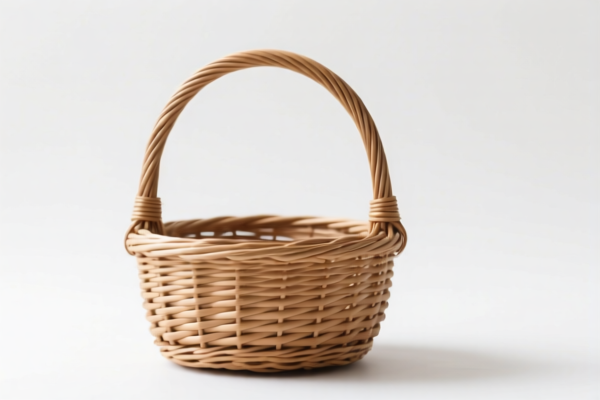
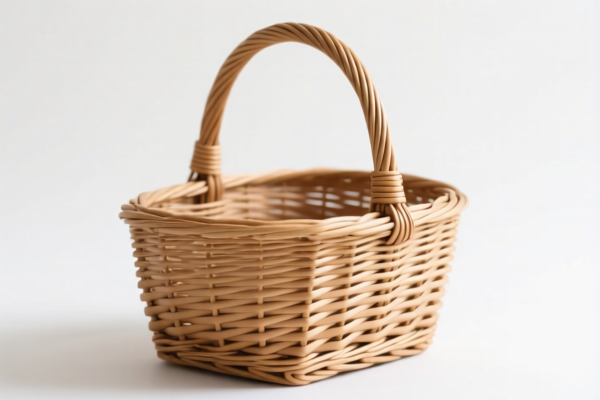
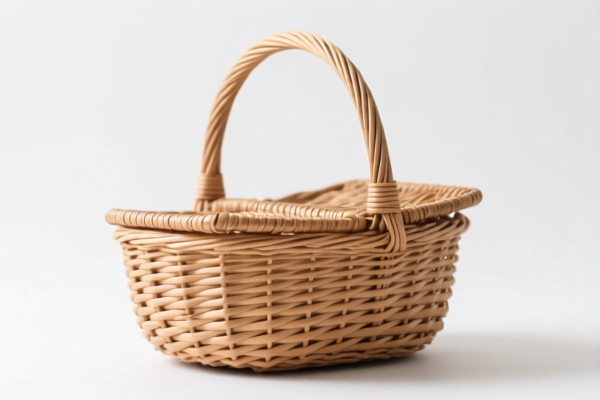
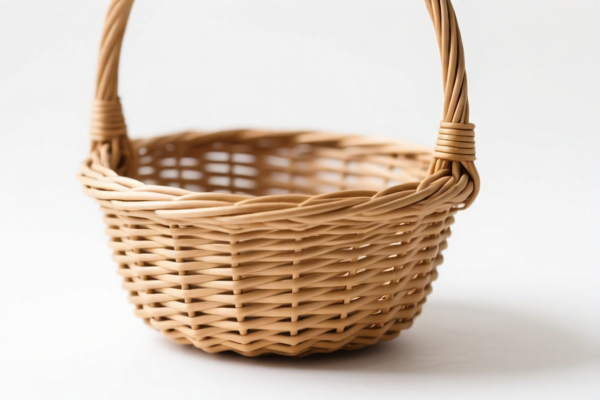
AI Analysis
🧺 Willow Baskets (柳条篮)
🌐 HS Code Reference & Customs Clearance Guide | 2026 Latest Tariff Full Analysis | Professional Clearance Strategy
📌 I. Product Definition and Classification: Do You Really Understand “Willow Baskets”?
Willow baskets, as traditional woven goods, are widely used in daily life, decoration, and agriculture. In international trade, their classification depends on the specific form, material processing, and structural characteristics.
Woven Products (Woven Articles): Flexible willow strips woven together, such as mats, mats, or non-rigid containers. → HS 4601
Basketware (Basketware): Rigid or semi-rigid containers with a defined shape, usually with handles or lids, specifically designed to hold items. → HS 4602
⚠️ Key Distinction Point:
- If it is a flat or flexible woven sheet (e.g., willow mat) → Enter 4601;
- If it has a complete basket shape (e.g., shopping basket, storage basket, laundry basket) → Enter 4602.
📦 II. HS Code Classification Details (2026 Latest Tariff Authoritative Comparison)
Based on the provided data, here are the five specific HS Codes for willow baskets:
| HS Code | Product Description | Application Scenario | Total Tax Rate |
|---|---|---|---|
4602.11.07.00 |
Willow material, Basket form, meets requirements for willow weaving and basket/bag categories | Standard shopping baskets, market baskets, rigid willow containers | 35.0% |
4601.94.20.00 |
Willow material, Woven product form, meets the application of plant material weaving | Flexible willow mats, willow weaving sheets, non-rigid woven goods | 41.6% |
4602.19.17.00 |
Willow material, Basket form, directly matches the classification of plant material baskets | Directly applicable willow baskets, decorative baskets, rigid storage baskets | 35.0% |
4601.94.05.00 |
Willow or other plant materials, Basket is finished woven product form | Complex woven finished goods, mixed plant material baskets, intricate weaves | 37.7% |
4601.92.05.00 |
Willow analogous to bamboo/rattan weaving materials, meets weaving product classification logic | Willow goods classified under bamboo/rattan logic due to similarity in processing | 37.7% |
🔍 Key Reminder:
- The core difference between4602and4601is whether it is a finished container (basket);
-4602.11.07.00and4602.19.17.00have the lowest tax rate (35%), but require the product to be clearly a basket;
- If the willow is processed as a mat or flexible weave, it falls under4601, with a higher tax rate of 41.6%.
💰 III. 2026 Latest Tariff Rate Details (Including Additional Taxes, Policy Add-ons)
✅ Applicable Country: United States (US)
✅ Country of Origin: China (CN)
✅ Effective Time: From November 10, 2025 onwards (including subsequent imports)
🎯 1. 4602.11.07.00 / 4602.19.17.00 —— Willow Baskets (Basket Form)
| Item | Content |
|---|---|
| Basic Tariff | 0% (ad valorem) |
| USITC Additional Tax | +25% (Section 301 Additional Tariff) |
| IEEPA Additional Tax | +10% (Targeting China/Hong Kong products, effective from November 10, 2025) |
| Total Tax Rate | 35.0% |
| Tax Calculation | CIF Value × 35% |
| De Minimis Eligibility | ❌ Not Eligible (deny_de_minimis) |
| Legal Basis Path | IEEPA:9903.01.25 → IEEPA:9903.01.24 → USITC:4602.11.07.00 / 4602.19.17.00 → FOOTNOTE:9903.88.01 |
📌 Explanation:
- The 25% USITC additional tax is under Section 301 of the US Trade Act;
- The 10% IEEPA additional tax is under the International Emergency Economic Powers Act (IEEPA);
- Total 35%, which is a moderate-high tariff, must be anticipated in advance!
🎯 2. 4601.94.20.00 —— Willow Woven Products (Woven Form)
| Item | Content |
|---|---|
| Basic Tariff | 6.6% |
| USITC Additional Tax | +25% |
| IEEPA Additional Tax | +10% |
| Total Tax Rate | 41.6% |
| Tax Calculation | CIF Value × 41.6% |
| De Minimis Eligibility | ❌ Not Eligible |
| Legal Basis Path | IEEPA:9901.25 → IEEPA:9903.01.24 → USITC:4601.94.20.00 → FOOTNOTE:9903.88.01 |
📌 Note:
- The basic tariff is 6.6%, which is higher than4602;
- Even if it is “willow mat” or “willow weave,” it cannot avoid the 35% additional tax (25% + 10%);
- Total 41.6% is higher than the basket category, so it is crucial to correctly classify as “basket” if possible.
🎯 3. 4601.94.05.00 / 4601.92.05.00 —— Complex Woven Finished Goods
| Item | Content |
|---|---|
| Basic Tariff | 2.7% |
| USITC Additional Tax | +25% |
| IEEPA Additional Tax | +10% |
| Total Tax Rate | 37.7% |
| Tax Calculation | CIF Value × 37.7% |
| De Minimis Eligibility | ❌ Not Eligible |
| Legal Basis Path | IEEPA:9901.25 → IEEPA:9903.01.24 → USITC:4601.94.05.00 / 4601.92.05.00 → FOOTNOTE:9903.88.01 |
📌 Note:
- The basic tariff is 2.7%, lower than4601.94.20.00, but still subject to additional taxes;
- These codes are for complex or mixed plant material woven goods, not standard baskets;
- Total 37.7% is between the basket and woven product categories.
🛠️ IV. Customs Clearance Practical Suggestions (Real-World Pitfall Avoidance Guide)
✅ 1. Preparation of Document Checklist (Missing One Will Not Pass)
| Document | Required | Description |
|---|---|---|
| ✅ Product Specification Sheet | ✔️ | Includes size, shape, weaving method, handle type, lid presence |
| ✅ Product Photos (Clear) | ✔️ | Shows overall shape, weaving details, handle structure |
| ✅ Commercial Invoice | ✔️ | Clearly state “Willow Basket” or “Woven Willow Product” |
| ✅ Packing List | ✔️ | Describe the relationship between main goods and accessories |
| ✅ Origin Certificate (CO) | ✔️ | If not China-origin, apply for preferential tariff |
| ✅ Third-Party Test Report | ✔️ | If applicable (e.g., food safety for food baskets) |
✅ 2. Declaration Skills (Key Mantra)
🔥 “Basket shape goes to 4602, Woven sheet goes to 4601, Name Accurate, Tax Rate Low!”
| Scenario | Correct Declaration | Wrong Practice |
|---|---|---|
| Standard Willow Basket | 4602.11.07.00 or 4602.19.17.00 (35%) |
Misdeclare as “Woven Mat” → 41.6% |
| Willow Mat / Woven Sheet | 4601.94.20.00 (41.6%) |
Misdeclare as “Basket” → Risk of customs audit |
| Complex Woven Finished Good | 4601.94.05.00 / 4601.92.05.00 (37.7%) |
Misdeclare as “Basket” → Classification error |
📌 Explanation:
- If the product is a rigid container with a handle, it must be declared as 4602 to avoid higher taxes;
- If it is a flexible weave, it cannot be declared as a “basket,” otherwise it will be flagged for misdeclaration.
✅ 3. Special Case Handling
| Scenario | Handling Suggestion |
|---|---|
| OEM Custom Baskets | Provide customer order + design drawings to avoid being deemed “non-standard” |
| Basket with Plastic Handle | Still classified as 4602, but declare “Willow with Plastic Accessories” |
| Food-Grade Willow Basket | Provide FDA compliance proof if intended for food contact |
| Decorative Willow Woven Art | If not functional as a container, may fall under 4601 or 9505 (festive items) |
🌍 V. Global Main Market Clearance Comparison (2026 Latest)
| Country/Region | Recommended HS Code | Tariff | Certification Requirements | Remarks |
|---|---|---|---|---|
| 🇺🇸 United States | 4602.11.07.00 / 4602.19.17.00 |
35% (China origin) | No special certification | 41.6% for woven products |
| 🇨🇳 China | 4602.11.07.00 / 4602.19.17.00 |
5% | No special certification | No additional taxes |
| 🇪🇺 European Union | 4602.11.07.00 / 4602.19.17.00 |
0% (if CE compliant) | CE + REACH | No additional taxes |
| 🇦🇺 Australia | 4602.11.07.00 / 4602.19.17.00 |
5% | No special certification | No additional taxes |
| 🇯🇵 Japan | 4602.11.07.00 / 4602.19.17.00 |
0% | No special certification | No additional taxes |
📌 Conclusion:
- The United States is the only market with high additional taxes on willow baskets;
- China-origin willow baskets have very high clearance costs in the US; it is recommended to evaluate in advance whether to transfer production or adjust the supply chain.
📌 VI. Common Mistakes & Pitfall Avoidance Guide (Blood-Teaching Lessons)
❌ Mistake 1: Declaring a “Willow Basket” as “Woven Mat”
👉 Consequence: Tax rate increases from 35% to 41.6% → Higher cost!
❌ Mistake 2: Declaring a “Willow Mat” as “Basket”
👉 Consequence: Customs audit, classification error → Delay or return!
❌ Mistake 3: Not providing product photos, only writing “Basket”
👉 Consequence: Customs cannot determine if it is a rigid container → Suspension of release
❌ Mistake 4: Using “Woven Willow Product” as the declaration name for a rigid basket
👉 Consequence: Classification error → Back tax + penalties!
✅ Correct Practice:
“Willow Shopping Basket, Handle with Lid, 12x10x8 inches, Natural Color, Model XYZ, Woven Structure”
🎯 VII. Conclusion: Professional Declaration, Save Time and Effort, Reduce Costs and Increase Efficiency!
🎯 Remember the Mantra:
🔹 “Basket goes to 4602, Woven goes to 4601, Name Accurate, Tax Low!”
🔹 “HS Code determines life, Tax rate difference 6.6 points, Declaration mistake, Back tax thousands!”
📌 Tips:
- If your willow basket is originally produced in Vietnam, Mexico, Thailand, or Malaysia, you can apply for IEEPA exemption, and the tariff is only 0%~5%;
- It is recommended to apply for an Advance Ruling in advance to avoid clearance risks.
📣 Act Now:
📞 Contact a professional customs broker + Provide product photos + Apply for HS Code Advance Ruling
🚀 Let your willow basket clear customs smoothly, export efficiently, and double profits!
✨ Professional clearance starts with accurate classification!
💼 Every penny of your cost deserves to be precisely calculated!
Customer Reviews
About HS Code Classification
The Harmonized System (HS) is an internationally standardized nomenclature developed by the World Customs Organization (WCO) to classify traded products. Over 200 countries use the HS system as the basis for customs tariffs, trade statistics, and import/export regulations.
Each HS code follows a hierarchical structure:
- Chapter (2 digits) — Broad category of goods (e.g., Chapter 84: Machinery and Mechanical Appliances)
- Heading (4 digits) — More specific grouping within the chapter
- Subheading (6 digits) — Internationally standardized breakdown, used by all WCO member countries
- National subdivisions (8-10 digits) — Country-specific extensions for further classification, such as US HTSUS 10-digit codes
Correct HS code classification is essential for smooth customs clearance, accurate duty payment, and compliance with trade regulations. Misclassification can lead to customs delays, overpayment of duties, or penalties.
When importing from CN to US, the applicable tariff rates may include:
- Most-Favored-Nation (MFN) rate — The standard duty rate applied to WTO members
- General rate — Applied to countries without trade agreements
- Trade remedy duties — Additional tariffs such as Section 301 (anti-dumping), Section 232 (national security), or countervailing duties
The information provided on this page is for reference purposes only. For official classification, please consult with your local customs authority or a licensed customs broker.