柴油颗粒过滤器
CN → US| HS Code | Tariff Rate | Origin | Destination | Doc |
|---|---|---|---|---|
| 8409999190 | 37.5% | CN | US | Official Doc |
| 8409999990 | 35.0% | CN | US | Official Doc |
| 8421320000 | 35.0% | CN | US | Official Doc |
| 8421390115 | 35.0% | CN | US | Official Doc |
| 8708927500 | 37.5% | CN | US | Official Doc |
| 8708925000 | 37.5% | CN | US | Official Doc |
Product Images
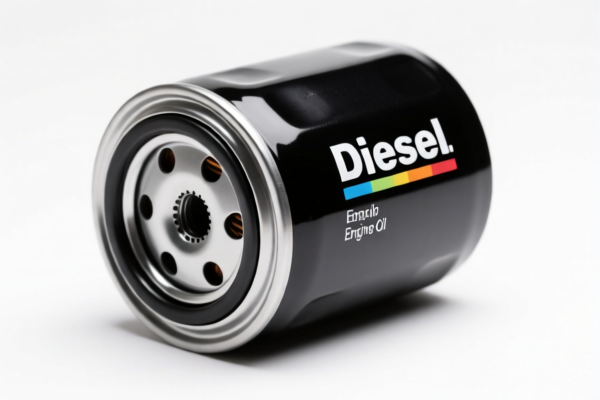
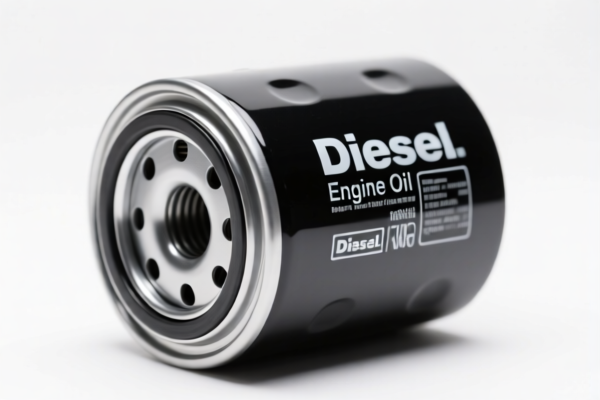
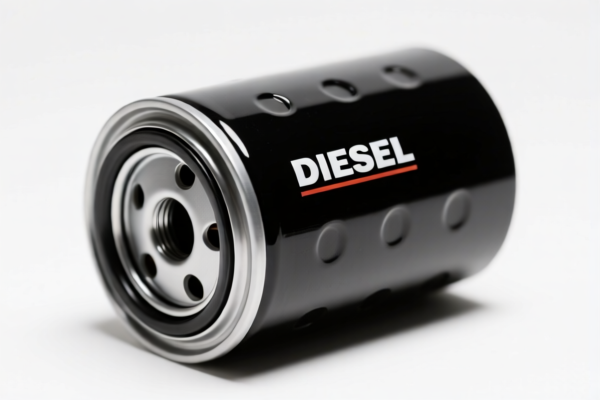
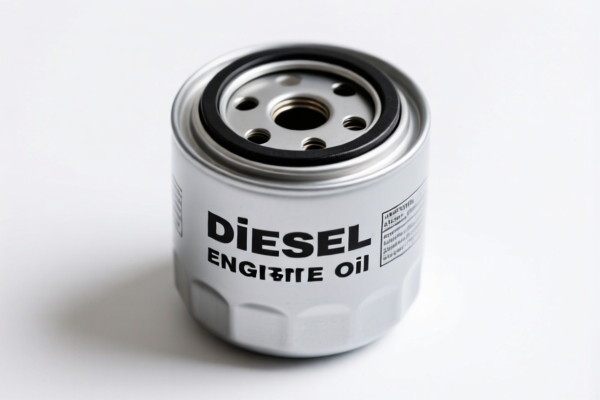
AI Analysis
🚛 Diesel Particulate Filter (DPF) – HS Code Classification & 2026 Clearance Strategy
🌐 HS Code Reference & Clearance Guide | 2026 Latest Tariff Analysis | Professional Customs Strategy
📌 I. Product Definition & Classification: Do You Really Understand the "DPF"?
The Diesel Particulate Filter (DPF) is a crucial emissions control device for diesel engines. It traps diesel soot (particulate matter) from the exhaust gas to meet strict environmental standards (e.g., Euro 6, EPA Tier 4).
In international trade, DPFs are often misclassified because they sit at the intersection of engine parts and filtration equipment. The correct HS Code depends entirely on how the product is structured and its primary intended use in the final assembly.
⚠️ Key Distinction Point:
- Is it a standalone filtration unit or a specific vehicle/engine component?
- Does it have a generic filtration function (Air/Particulate) or is it exclusively designed for an engine’s exhaust system?
- Generic Filters → Chapter 8421
- Engine/Car Parts → Chapter 8409 / 8708
📦 II. HS Code Classification Details (2026 Latest Tariff Authority Comparison)
| HS Code | Product Description | Application Scenario | Tax Rate (CN → US) |
|---|---|---|---|
8421.39.01.15 |
Gas filtering or purifying machinery/apparatus (General Particulate Filters) | Industrial dust collectors, general air purification, non-engine specific filters | 35.0% |
8409.99.91.90 |
Parts of engines; other parts | DPF as a specific part of a diesel engine exhaust system (non-specific engine type) | 37.5% |
8409.99.99.90 |
Parts of engines; specific engine parts | DPF as a core component for specific engine types (often interpreted as general engine parts) | 35.0% |
8421.39.01.90 |
Other gas filtering/purifying machinery/apparatus | General gas purification units, industrial exhaust treatment | 35.0% |
8708.92.75.00 |
Parts and accessories of motor vehicles (Exhaust pipes & mufflers) | DPF as part of the vehicle’s exhaust system assembly | 37.5% |
🔍 Critical Reminder:
- Misclassification Risk: Classifying a vehicle-specific DPF under8421(Filtration) instead of8708or8409(Parts) can lead to customs rejection or penalties, as DPFs are integral to engine emissions control, not general air cleaning.
- Tax Impact: The difference between 35% and 37.5% is significant for high-value shipments.
- Add-on Duties: All codes above include 25% Section 301 Duties and 10% Section 301 (List 122) Duties if originating from China.
💰 III. 2026 Latest Tariff Rate Breakdown (Including Add-on Taxes)
✅ Applicable Country: United States (US)
✅ Origin: China (CN)
✅ Effective Date: Current rates apply (Section 301 & 122 duties active)
🎯 1. 8421.39.01.15 & 8421.39.01.90 —— Gas Filtering Machinery (Filtration Focus)
| Item | Details |
|---|---|
| Base Tariff | 0.0% (ad valorem) |
| Section 301 Duty | +25.0% |
| Section 122 Duty | +10.0% |
| Total Tax Rate | 35.0% |
| Calculation | CIF Value × 35% |
| De Minimis Exemption | ❌ Not Eligible (DENY) |
| Legal Basis | USITC:8421.39.01.15 → FOOTNOTE:301.8421 → IEEPA:301.10 |
📌 Explanation:
- These codes are used when the DPF is treated as a general filtration device (e.g., industrial exhaust scrubbers, standalone air filters).
- Lower Base Rate (0%) but still hits the 35% total due to high add-on duties.
- Risk: If customs determines this is actually an engine part, they may reclassify it to Chapter 84/87, leading to potential duty underpayment disputes if the new rate is higher.
🎯 2. 8409.99.91.90 & 8708.92.75.00 —— Engine/Car Parts (Parts Focus)
| Item | Details |
|---|---|
| Base Tariff | 2.5% (ad valorem) |
| Section 301 Duty | +25.0% |
| Section 122 Duty | +10.0% |
| Total Tax Rate | 37.5% |
| Calculation | CIF Value × 37.5% |
| De Minimis Exemption | ❌ Not Eligible (DENY) |
| Legal Basis | USITC:8409.99.91.90 / 8708.92.75.00 → FOOTNOTE:301.8409 / 301.8708 → IEEPA:301.10 |
📌 Explanation:
- These codes classify the DPF as a specific part of an engine or vehicle.
- Higher Base Rate (2.5%) results in a 37.5% total tax.
- Why Higher? Customs authorities often view DPFs as critical engine components rather than general filters, justifying the higher base duty.
- Strategic Note: While 37.5% is higher than 35%, it is the correct classification for most automotive DPFs to avoid misdeclaration penalties.
🎯 3. 8409.99.99.90 —— Other Engine Parts
| Item | Details |
|---|---|
| Base Tariff | 0.0% (ad valorem) |
| Section 301 Duty | +25.0% |
| Section 122 Duty | +10.0% |
| Total Tax Rate | 35.0% |
| Calculation | CIF Value × 35% |
| De Minimis Exemption | ❌ Not Eligible (DENY) |
| Legal Basis | USITC:8409.99.99.90 → FOOTNOTE:301.8409 |
📌 Note:
- Similar to the 8421 codes, this has a 0% base rate.
- Often used for generic engine parts not specifically listed elsewhere.
- Caution: Ensure the part is indeed an "engine part" and not a "vehicle part" (which would be 8708) or "filtration" (8421).
🛠️ IV. Customs Clearance Practical Advice (Real-World Pitfall Guide)
✅ 1. Documentation Checklist (Essential)
| Document | Required | Notes |
|---|---|---|
| ✅ Product Specification Sheet | ✔️ | Must detail material (Cordierite/SiC), dimensions, and fitment (e.g., "For Cummins ISX Engine") |
| ✅ Circuit/Structure Diagram | ✔️ | To prove it is not a standalone industrial filter |
| ✅ Photos (Label & Housing) | ✔️ | Clear view of model number, brand, and any "Vehicle Part" markings |
| ✅ Commercial Invoice | ✔️ | Description should match HS Code rationale (e.g., "DPF for Diesel Engine") |
| ✅ Packing List | ✔️ | Ensure no separate packing of components that could be misinterpreted |
| ✅ Country of Origin Certificate | ✔️ | Essential for verifying Chinese origin (subject to duties) |
✅ 2. Declaration Strategy (Key Mnemonic)
🔥 "Fitment Dictates Code, Not Just Function!"
| Scenario | Correct HS Code | Wrong Code | Consequence |
|---|---|---|---|
| DPF for Specific Truck/Car | 8708.92.75.00 or 8409.99.91.90 |
8421.39.01.15 |
Misclassification → Penalty + Back Taxes |
| Industrial Exhaust Filter | 8421.39.01.15 |
8708.92.75.00 |
Overpayment of duties (if 2.5% base was higher) |
| Generic Engine Part | 8409.99.99.90 |
8421 |
Incorrect duty calculation |
✅ 3. Special Cases Handling
| Situation | Handling Advice |
|---|---|
| Aftermarket vs. OEM | Clearly state "Aftermarket Replacement Part" in invoice. Still classified as 8708 or 8409. |
| KIT Packaging | If DPF comes with gaskets/clamps, declare as a single unit under the DPF code. Do not split. |
| Hybrid/Diesel-Electric | If the DPF is for the diesel generator component, it may still fall under 8409 or 8421 depending on integration. |
| Origin Routing | If shipped from Vietnam/Malaysia with substantial transformation, IEEPA/301 duties may be exempted. Get proper CO. |
🌍 V. Global Market Comparison (2026 Update)
| Country/Region | Recommended HS Code | Tariff (China Origin) | Key Requirements | Note |
|---|---|---|---|---|
| 🇺🇸 USA | 8708.92.75.00 / 8409.99.91.90 |
37.5% | FCC/DOE Compliance (if applicable) | High duties due to Section 301 |
| 🇨🇳 China | 8421.39.01.15 / 8708.92.75.00 |
0-5% | CCC (if for vehicles) | No Section 301 duties |
| 🇪🇺 EU | 8708.92 / 8421.39 |
4.5% - 6% | ECE R10 (EMC), Euro 6 Compliance | No EU retaliatory duties |
| 🇯🇵 Japan | 8708.92 |
0% - 5% | JIS Certification | Competitive market |
📌 Conclusion:
- USA is the most expensive market due to 37.5% total duties.
- EU/Asia are more favorable, but require strict emissions compliance documentation (Euro 6/Euro 7 standards).
- Supply Chain Tip: Consider routing through ASEAN countries (Vietnam, Thailand) if substantial transformation can be proven to avoid US Section 301 duties.
📌 VI. Common Mistakes & Pitfalls (Lessons Learned)
❌ Mistake 1: Declaring DPF as "Air Filter" under 8421 to avoid higher parts duties.
👉 Consequence: Customs may reclassify it as 8708 or 8409 and charge back-taxes + penalties. DPFs are not general air filters.
❌ Mistake 2: Splitting the DPF into "Filter Element" and "Housing" for separate declaration.
👉 Consequence: Increases administrative burden and may trigger additional scrutiny. Declare as one assembly.
❌ Mistake 3: Ignoring Section 122 (List 122) duties.
👉 Consequence: Many importers only account for 301 duties (25%), forgetting the additional 10%. Total is 35-37.5%, not 25-27.5%.
❌ Mistake 4: Missing Product Specification details.
👉 Consequence: Customs cannot verify fitment → Delay in clearance, potential hold.
✅ Correct Practice:
"Diesel Particulate Filter (DPF), Ceramic/SiC, Model XYZ, For [Engine/Brand] Exhaust System, Certified to Euro 6 Standards"
🎯 VII. Conclusion: Precision Classification Saves Money!
🎯 Remember the Mantra:
🔹 "DPF is not a filter, it’s a part!"
🔹 "US Market: 37.5% is the norm, 35% is the exception."
🔹 "Documentation is key: Fitment details prevent reclassification."
📌 Pro Tip:
If your DPF is shipped from Vietnam, Thailand, or Malaysia and has undergone substantial transformation, you may qualify for duty-free entry under USMCA or ASEAN trade agreements.
Action: Request a Pre-Ruling from US Customs (CBP) before shipment to confirm HS Code and duty eligibility.
📣 Immediate Action:
📞 Consult a licensed customs broker.
📄 Provide OEM fitment lists and technical specs.
🚀 Ensure accurate labeling to avoid "Misdeclaration" flags.
✨ Professional Clearance Starts with Accurate Classification!
💼 Your Profit Margin Depends on Correct Duty Codes!
Customer Reviews
About HS Code Classification
The Harmonized System (HS) is an internationally standardized nomenclature developed by the World Customs Organization (WCO) to classify traded products. Over 200 countries use the HS system as the basis for customs tariffs, trade statistics, and import/export regulations.
Each HS code follows a hierarchical structure:
- Chapter (2 digits) — Broad category of goods (e.g., Chapter 84: Machinery and Mechanical Appliances)
- Heading (4 digits) — More specific grouping within the chapter
- Subheading (6 digits) — Internationally standardized breakdown, used by all WCO member countries
- National subdivisions (8-10 digits) — Country-specific extensions for further classification, such as US HTSUS 10-digit codes
Correct HS code classification is essential for smooth customs clearance, accurate duty payment, and compliance with trade regulations. Misclassification can lead to customs delays, overpayment of duties, or penalties.
When importing from CN to US, the applicable tariff rates may include:
- Most-Favored-Nation (MFN) rate — The standard duty rate applied to WTO members
- General rate — Applied to countries without trade agreements
- Trade remedy duties — Additional tariffs such as Section 301 (anti-dumping), Section 232 (national security), or countervailing duties
The information provided on this page is for reference purposes only. For official classification, please consult with your local customs authority or a licensed customs broker.