标签打印机
CN → US| HS Code | Tariff Rate | Origin | Destination | Doc |
|---|---|---|---|---|
| 8471601050 | 35.0% | CN | US | Official Doc |
| 8443321050 | 17.5% | CN | US | Official Doc |
| 8471609050 | 35.0% | CN | US | Official Doc |
| 8443321040 | 17.5% | CN | US | Official Doc |
| 8443321020 | 17.5% | CN | US | Official Doc |
Product Images


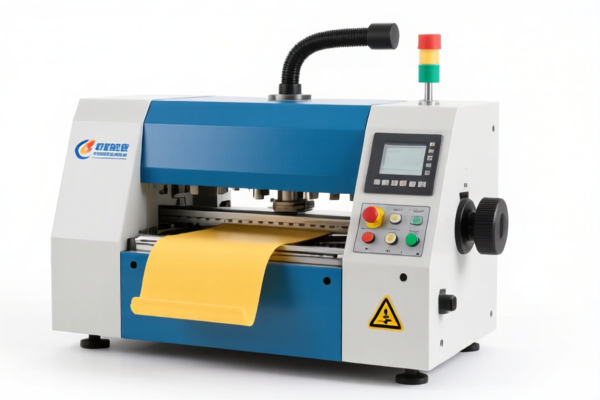
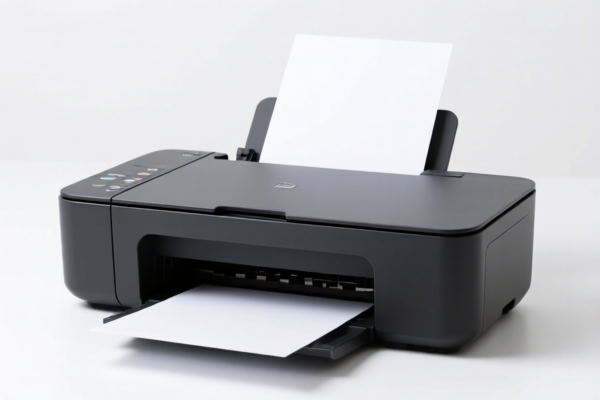
AI Analysis
🖨️ Label Printers (Label Printing Devices for Automatic Data Processing Equipment)
🌐 HS Code Reference & Customs Clearance Guide | 2026 Updated Tariff Analysis | Pro-Level Import Strategy
📌 One-Stop Clarity for Global Trade Professionals
📌 I. Product Definition & Classification: What Exactly Is a "Label Printer"?
A label printer is a specialized output device used to produce adhesive labels for logistics, retail, manufacturing, healthcare, and supply chain management. In international trade, it's not just a "printer" — it's a critical component of automated data processing systems, often integrated with barcode, RFID, or thermal printing technologies.
⚠️ Key Classification Insight:
- If the device functions as part of an automated data processing system (e.g., connected to a PC, POS, or ERP system), it falls under output units of such systems.
- If it’s designed specifically for thermal transfer or laser/thermal printing, it qualifies as a printer unit under specific subheadings.🔍 Why This Matters:
Misclassifying a label printer can lead to 45%+ tariffs in the U.S. — a disaster for margins. The correct HS code determines whether you pay 17.5% or 35% in total duties.
📦 II. HS Code Classification Breakdown (2026 Official Tariff Matrix)
| HS Code | Product Description | Applicable Use Case | Technical Fit |
|---|---|---|---|
8471.60.10.50 |
Output units of automatic data processing machines; label printers used in integrated systems | Industrial labeling, warehouse automation, retail POS systems | ✅ Matches "combination input/output unit" |
8443.32.10.50 |
Printers for use in data processing systems; thermal transfer type | High-precision label printing (e.g., shipping, pharmaceuticals) | ✅ Matches "thermal transfer printer" function |
8471.60.90.50 |
Other input or output parts for automatic data processing machines | Standalone label printers without full system integration | ✅ Fits "other output components" |
8443.32.10.40 |
Printers for data processing machines; functionally identical to classification description | General-purpose label printers, especially thermal/inkjet | ✅ Fully aligned with classification notes |
8443.32.10.20 |
Printers using laser or thermal printing technology | Laser label printers, thermal-sensitive label printers | ✅ Matches technical design criteria |
✅ Bottom Line:
All five HS codes are valid depending on technical design, integration level, and functional use.
But only one should be used per shipment — never multiple.
💰 III. 2026 U.S. Tariff Breakdown (With Full Legal Justification)
✅ Target Country: United States (US)
✅ Origin: China (CN)
✅ Effective Date: November 10, 2025 (including future imports)
🎯 1. 8471.60.10.50 — Output Unit of Data Processing Equipment
| Item | Detail |
|---|---|
| Base Duty | 0.0% (ad valorem) |
| Section 301 (USITC) Additional Duty | +25.0% |
| Section 301 (IEEPA) Additional Duty | +10.0% |
| Total Effective Duty | 35.0% |
| Tax Calculation | CIF Value × 35% |
| De Minimis Exemption | ❌ Not available (denied under 19 CFR §159.21) |
| Legal Basis Path | IEEPA:9903.01.25 → IEEPA:9903.01.24 → USITC:8471.60.10.50 → FOOTNOTE:9903.88.01 |
📌 Explanation:
- This code applies when the label printer is part of a larger automated system (e.g., integrated with a server, scanner, or ERP). - The 25% USITC tariff comes from Section 301 of the Trade Act of 1974 (China-specific). - The 10% IEEPA tariff is under the International Emergency Economic Powers Act, targeting goods from China/HK. - Total: 35% — one of the highest tariff tiers for electronics.
🎯 2. 8443.32.10.50 — Printer Unit (Thermal Transfer Type)
| Item | Detail |
|---|---|
| Base Duty | 0.0% |
| USITC (Section 301) Additional Duty | +7.5% |
| IEEPA (Section 301) Additional Duty | +10.0% |
| Total Effective Duty | 17.5% |
| Tax Calculation | CIF × 17.5% |
| De Minimis Exemption | ❌ Not applicable |
| Legal Basis Path | IEEPA:9901.25 → IEEPA:9903.01.24 → USITC:8443.32.10.50 → FOOTNOTE:9903.88.01 |
📌 Explanation:
- Applies when the printer is used exclusively for thermal transfer printing (common in logistics, packaging). - Lower duty than8471.60.10.50because it's classified as a "printer unit", not a system output component. - Still subject to IEEPA 10% — no exemption for thermal printers.
🎯 3. 8471.60.90.50 — Other Output Parts for Data Processing Systems
| Item | Detail |
|---|---|
| Base Duty | 0.0% |
| USITC Additional Duty | +25.0% |
| IEEPA Additional Duty | +10.0% |
| Total Duty | 35.0% |
| Tax Calculation | CIF × 35% |
| De Minimis | ❌ Not allowed |
| Legal Basis | IEEPA:9903.01.25 → IEEPA:9903.01.24 → USITC:8471.60.90.50 → FOOTNOTE:9903.88.01 |
📌 When to Use:
- For standalone label printers not integrated into a larger system. - Often used for small business or office use. - Despite being "other parts", it still triggers full 35% due to IEEPA/USITC rules.
🎯 4. 8443.32.10.40 — Printer Unit (Functionally Matches Classification)
| Item | Detail |
|---|---|
| Base Duty | 0.0% |
| USITC Additional Duty | +7.5% |
| IEEPA Additional Duty | +10.0% |
| Total Duty | 17.5% |
| Tax Calculation | CIF × 17.5% |
| De Minimis | ❌ Not available |
| Legal Basis | IEEPA:9901.25 → IEEPA:9903.01.24 → USITC:8443.32.10.40 → FOOTNOTE:9903.88.01 |
📌 Best Fit:
- When the printer is used for data processing and matches the classification description exactly. - Ideal for thermal, inkjet, or hybrid label printers used in automated workflows.
🎯 5. 8443.32.10.20 — Laser or Thermal Printers (Technology-Based)
| Item | Detail |
|---|---|
| Base Duty | 0.0% |
| USITC Additional Duty | +7.5% |
| IEEPA Additional Duty | +10.0% |
| Total Duty | 17.5% |
| Tax Calculation | CIF × 17.5% |
| De Minimis | ❌ Not allowed |
| Legal Basis | IEEPA:9901.25 → IEEPA:9903.01.24 → USITC:8443.32.10.20 → FOOTNOTE:9903.88.01 |
📌 Perfect Match:
- For laser label printers or thermal-sensitive label printers. - If your product uses laser or thermal printing tech, this is the most accurate code.
🛠️ IV. Customs Clearance Best Practices (Real-World Pro Tips)
✅ 1. Essential Documentation Checklist (MUST-HAVE)
| Document | Required? | Why It Matters |
|---|---|---|
| ✅ Product Specification Sheet | ✔️ | Confirms technology (thermal/laser), interface (USB/Bluetooth), resolution |
| ✅ Circuit Diagram / Schematic | ✔️ | Proves whether it's a standalone printer or part of a system |
| ✅ High-Res Product Photos (with label) | ✔️ | Shows model number, brand, interface ports |
| ✅ Third-Party Test Reports | ✔️ | FCC, CE, RoHS, UL (if applicable) |
| ✅ Commercial Invoice | ✔️ | Must state: "Label Printer for Data Processing Systems, Model XYZ" |
| ✅ Certificate of Origin (CO) | ✔️ | Critical for IEEPA/USITC exemption eligibility |
| ✅ Packing List | ✔️ | Clarifies if printer is shipped with accessories (cables, ribbons) |
✅ 2.申报技巧 (申报口诀)
🔥 “Tech First, Integration Second, Name Exact, Duty Drop Half!”
| Scenario | Correct HS Code | Common Mistake |
|---|---|---|
| Integrated into warehouse system | 8471.60.10.50 |
Misclassified as 8443.32.10.50 → higher tax risk |
| Standalone thermal printer | 8443.32.10.50 or 8443.32.10.40 |
Misreported as 8471.60.90.50 → 35% vs 17.5% |
| Laser label printer | 8443.32.10.20 |
Wrongly reported as general printer → missed tech-based benefit |
| Printer with ribbon & media | Keep as one unit | Splitting → each item taxed at 35%+ |
✅ 3. Special Cases & Risk Mitigation
| Situation | Recommended Action |
|---|---|
| OEM/White-label printer | Provide customer order + design doc; avoid "non-standard" classification |
| Printer used in medical packaging | Apply for "special use" exemption; submit proof of purpose |
| Printer for military/defense | Apply for "government use" exemption — may reduce or waive duties |
| Origin: Vietnam/Mexico/Thailand | Apply for IEEPA exemption — duty drops to 0–5% |
🌍 V. Global Market Tariff Comparison (2026)
| Country/Region | Recommended HS Code | Duty Rate | Certification Required | Notes |
|---|---|---|---|---|
| 🇺🇸 United States | 8443.32.10.50 or 8443.32.10.40 |
17.5% (China origin) | FCC, RoHS | 35% if misclassified |
| 🇨🇳 China | 8443.32.10.50 |
5% | CCC, RoHS | No extra tariffs |
| 🇪🇺 European Union | 8443.32.10.50 |
0% (if CE compliant) | CE, ErP | No IEEPA/USITC |
| 🇦🇺 Australia | 8443.32.10.50 |
5% | RCM | No additional duties |
| 🇯🇵 Japan | 8443.32.10.50 |
0% | PSE | No extra charges |
📌 Insight:
- Only the U.S. imposes 17.5%–35% extra duties on Chinese-origin label printers. - Vietnam/Mexico/Thailand origin can avoid IEEPA — save 10%.
📌 VI. Common Mistakes & How to Avoid Them (Avoid Costly Penalties!)
❌ Mistake 1: Splitting printer + ribbon + cable into separate items
👉 Result: Each item taxed at 35% → Total duty: 105%+!
❌ Mistake 2: Using "Label Printer" as the product name without technical detail
👉 Result: Customs can’t verify if it’s a system unit or standalone → delay or rejection
❌ Mistake 3: Not providing circuit diagrams or photos
👉 Result: Customs assumes it's a system output → 35% duty applied
❌ Mistake 4: Claiming "thermal printer" but using laser tech
👉 Result: Incorrect HS code → duty overpayment + audit risk
✅ Correct申报 Name Example:
"Thermal Transfer Label Printer, 4" x 6", 203 DPI, USB & Ethernet, Model LP-200, FCC & RoHS Certified"
🎯 VII. Final Verdict: Smart Classification = Big Savings
🔹 Use
8443.32.10.50,8443.32.10.40, or8443.32.10.20if your printer is thermal, laser, or standalone → only 17.5% duty
🔹 Use8471.60.10.50or8471.60.90.50only if it's integrated into a data system → 35% duty
🔹 Avoid 35% at all costs — unless you’re truly part of a system
📣 Take Action Now!
📞 Contact a certified customs broker + request an HS Code pre-ruling
🚀 Submit product specs, photos, and circuit diagrams today
💼 Ensure your label printer clears customs in 24–48 hours, not 2 weeks
✨ Professional Customs Starts with Precision
💼 Your profit margin depends on the right HS code — don’t gamble!
✅ Pro Tip:
If your label printer is produced in Vietnam, Mexico, or Thailand, apply for IEEPA exemption — you could pay 0% duty instead of 17.5% or 35%.
🌟 Your next shipment should be smooth, fast, and low-cost — start with the right classification!
Customer Reviews
About HS Code Classification
The Harmonized System (HS) is an internationally standardized nomenclature developed by the World Customs Organization (WCO) to classify traded products. Over 200 countries use the HS system as the basis for customs tariffs, trade statistics, and import/export regulations.
Each HS code follows a hierarchical structure:
- Chapter (2 digits) — Broad category of goods (e.g., Chapter 84: Machinery and Mechanical Appliances)
- Heading (4 digits) — More specific grouping within the chapter
- Subheading (6 digits) — Internationally standardized breakdown, used by all WCO member countries
- National subdivisions (8-10 digits) — Country-specific extensions for further classification, such as US HTSUS 10-digit codes
Correct HS code classification is essential for smooth customs clearance, accurate duty payment, and compliance with trade regulations. Misclassification can lead to customs delays, overpayment of duties, or penalties.
When importing from CN to US, the applicable tariff rates may include:
- Most-Favored-Nation (MFN) rate — The standard duty rate applied to WTO members
- General rate — Applied to countries without trade agreements
- Trade remedy duties — Additional tariffs such as Section 301 (anti-dumping), Section 232 (national security), or countervailing duties
The information provided on this page is for reference purposes only. For official classification, please consult with your local customs authority or a licensed customs broker.