棉制t恤
CN → US| HS Code | Tariff Rate | Origin | Destination | Doc |
|---|---|---|---|---|
| 6109100012 | 34.0% | CN | US | Official Doc |
| 6109100004 | 34.0% | CN | US | Official Doc |
| 6209205050 | 26.8% | CN | US | Official Doc |
| 6209202000 | 32.4% | CN | US | Official Doc |
| 6109100012 | 34.0% | CN | US | Official Doc |
Product Images
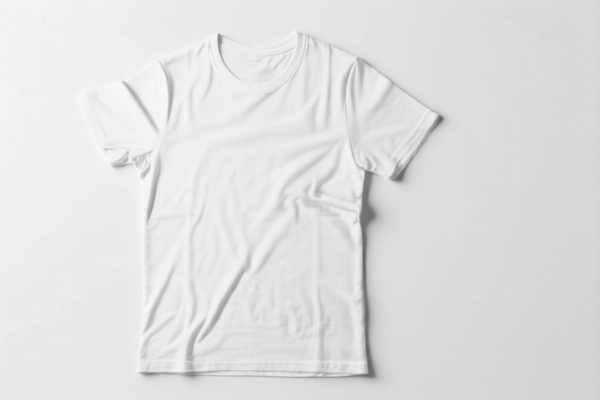
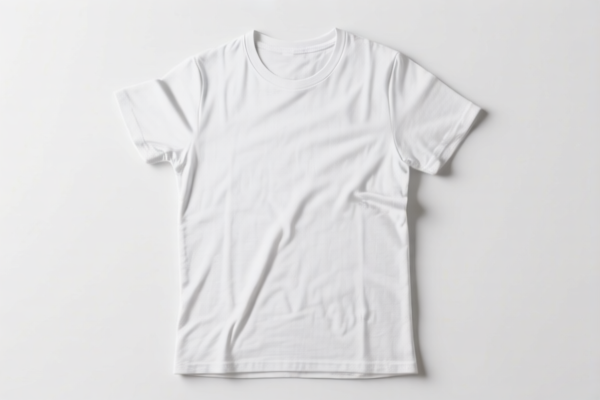
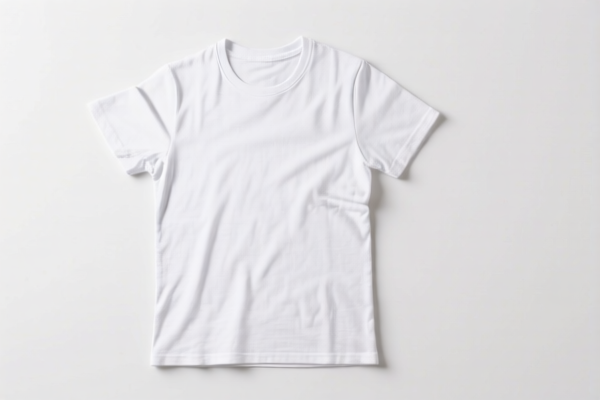
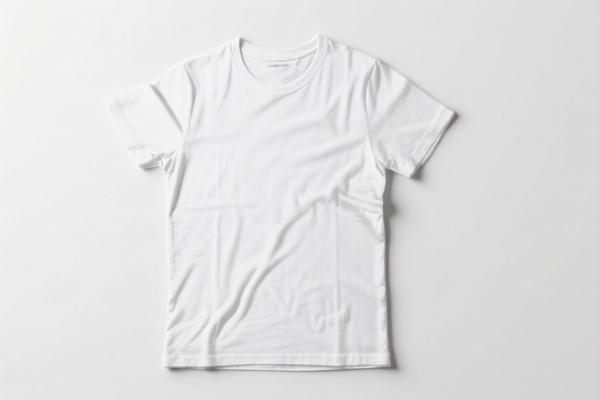
AI Analysis
🧵 Cotton T-Shirts (Knitted or Crocheted)
🌐 HS Code Reference & Customs Clearance Guide | 2026 Latest Tariff Breakdown | Pro-Level Import Strategy
📌 One, Product Definition & Classification: Do You Really Know What a Cotton T-Shirt Is?
Cotton T-shirts are among the most commonly traded apparel items globally—simple in design, yet complex in classification. In international trade, they’re divided based on material composition, construction method, age group, and intended use. Misclassification can trigger massive tariff penalties, delays, or even seizure.
⚠️ Critical Distinction: - Knitted cotton T-shirt (standard adult/children) →
6109.10.00.12or6109.10.00.04
- Infant wear (under 3 years) →6209.20.50.50
- Shirt-style cotton tops (button-front, collar, etc.) →6209.20.20.00
📦 Two, HS Code Classification Details (2026 Official Tariff Matrix)
| HS Code | Product Description | Target Market | Key Features |
|---|---|---|---|
6109.10.00.12 |
Cotton T-shirt, knitted, fully conforms to classification criteria | Adult/Youth | Full-length sleeves, crew neck, 100% cotton, standard cut |
6109.10.00.04 |
Cotton T-shirt, fully meets knitted cotton T-shirt characteristics | Adult/Youth | Seamless construction, no buttons, typical T-shirt shape |
6209.20.50.50 |
Cotton T-shirt, classified under infant clothing category | Babies (under 3 years) | Smaller size, soft fabric, safety stitching, no zippers |
6209.20.20.00 |
Cotton T-shirt, fits into shirt/top category (e.g., with collar, buttons) | Youth/Adult | Buttoned front, collar, structured fit, often styled as "tunic" or "shirt" |
🔍 Key Insight:
- If the T-shirt has no collar, no buttons, and is fully knitted, it belongs in6109.10.00. - If it has a collar, button placket, or structured fit, it may fall under6209.20.20.00— even if made of cotton. - Infant wear (under 3 years) is always classified separately under6209.20.50.50, regardless of material.
💰 Three, 2026 Latest Tariff Breakdown (With附加 Taxes Explained)
✅ Applicable Country: United States (US)
✅ Origin: China (CN)
✅ Effective Date: November 10, 2025 (including all subsequent imports)
🎯 1. 6109.10.00.12 — Cotton T-Shirt (Standard Knitted, Adult/Youth)
| Item | Detail |
|---|---|
| Base Duty Rate | 16.5% (ad valorem) |
| Section 301 Additional Tariff | +7.5% (from USITC) |
| Section 122 Tariff (IEEPA) | +10% (from International Emergency Economic Powers Act) |
| Total Effective Duty | 34.0% |
| Tax Calculation | CIF Value × 34.0% |
| De Minimis Threshold | ❌ Not applicable (denied) |
| Legal Basis Path | IEEPA:9903.01.25 → IEEPA:9903.01.24 → USITC:6109.10.00.12 → FOOTNOTE:9903.88.01 |
📌 Explanation:
- 16.5% base: Standard rate for knitted cotton T-shirts under U.S. Harmonized Tariff Schedule (HTSUS).
- +7.5% Section 301: Imposed under U.S. Trade Act of 1974 due to China’s unfair trade practices.
- +10% Section 122 (IEEPA): Triggered by national emergency declarations related to China’s economic policies.
- Total: 34.0% — one of the highest tariffs on apparel from China.
🎯 2. 6109.10.00.04 — Cotton T-Shirt (Fully Matches Knitted T-Shirt Criteria)
| Item | Detail |
|---|---|
| Base Duty Rate | 16.5% |
| Section 301 Additional Tariff | +7.5% |
| Section 122 Tariff (IEEPA) | +10% |
| Total Effective Duty | 34.0% |
| Tax Calculation | CIF × 34.0% |
| De Minimis Threshold | ❌ Not eligible |
| Legal Basis Path | IEEPA:9903.01.25 → IEEPA:9903.01.24 → USITC:6109.10.00.04 → FOOTNOTE:9903.88.01 |
📌 Note:
- This code is identical in tariff treatment to6109.10.00.12.
- Used when the T-shirt is fully knitted, no buttons, no collar, and meets all structural criteria.
🎯 3. 6209.20.50.50 — Cotton T-Shirt (Infant Wear, Under 3 Years)
| Item | Detail |
|---|---|
| Base Duty Rate | 9.3% |
| Section 301 Additional Tariff | +7.5% |
| Section 122 Tariff (IEEPA) | +10% |
| Total Effective Duty | 26.8% |
| Tax Calculation | CIF × 26.8% |
| De Minimis Threshold | ❌ Not eligible |
| Legal Basis Path | IEEPA:9903.01.25 → IEEPA:9903.01.24 → USITC:6209.20.50.50 → FOOTNOTE:9903.88.01 |
📌 Why Lower?
- Infant clothing is subject to lower base duty (9.3%) due to special classification under U.S. HTSUS. - Still subject to all附加 taxes (301 + IEEPA). - No de minimis relief — even small shipments face full 26.8%.
🎯 4. 6209.20.20.00 — Cotton T-Shirt (Shirt-Style, with Collar/Button)
| Item | Detail |
|---|---|
| Base Duty Rate | 14.9% |
| Section 301 Additional Tariff | +7.5% |
| Section 122 Tariff (IEEPA) | +10% |
| Total Effective Duty | 32.4% |
| Tax Calculation | CIF × 32.4% |
| De Minimis Threshold | ❌ Not eligible |
| Legal Basis Path | IEEPA:9903.01.25 → IEEPA:9903.01.24 → USITC:6209.20.20.00 → FOOTNOTE:9903.88.01 |
📌 Critical Point:
- Even if made of 100% cotton, if it has a collar, buttons, or structured fit, it’s not a T-shirt — it’s a shirt. - This leads to higher base duty (14.9%) and 32.4% total — lower than standard T-shirts? No!
- But: If misclassified as6109.10.00, you risk underpayment and penalties.
🛠️ Four, Customs Clearance Best Practices (Pro Tips to Avoid Fines)
✅ 1. Required Documentation (Must-Have Checklist)
| Document | Required? | Notes |
|---|---|---|
| ✅ Product Specifications | ✔️ | Include fabric content (100% cotton), construction (knitted), style (crew neck, short sleeves) |
| ✅ Product Photos (with labels) | ✔️ | Show collar, buttons, stitching, size tag |
| ✅ Commercial Invoice | ✔️ | Clearly state: “Cotton Knitted T-Shirt, Adult, Crew Neck, 100% Cotton” |
| ✅ Packing List | ✔️ | List quantity per style, size, and HS Code |
| ✅ Certificate of Origin (CO) | ✔️ | If from China, must be issued; otherwise, can claim preferential rates |
| ✅ Third-Party Test Report | ✔️ | ASTM, CPSIA (for infant wear), REACH, OEKO-TEX® (if applicable) |
| ✅ Design/Pattern Drawings | ✔️ | For complex styles (e.g., graphic tees, custom cuts) |
✅ 2.申报技巧(Critical Rules of Thumb)
🔥 “No collar, no buttons, no structure → 6109.10.00.12/04”
🔥 “Has collar or buttons → 6209.20.20.00”
🔥 “Under 3 years old → 6209.20.50.50”
🔥 “Don’t split by size or style — declare per HS Code”
| Scenario | Correct HS Code | Wrong Code | Risk |
|---|---|---|---|
| Adult cotton T-shirt, crew neck, no buttons | 6109.10.00.12 |
6209.20.20.00 |
32.4% → 34.0% (slightly higher, but still acceptable) |
| Infant T-shirt, size 12M, soft cotton | 6209.20.50.50 |
6109.10.00.12 |
34.0% → 26.8% → Underpayment! |
| Youth T-shirt with collar and button placket | 6209.20.20.00 |
6109.10.00.04 |
32.4% → 34.0% → Overpaid? No — but misclassified! |
✅ 3. Special Cases & Solutions
| Situation | Recommended Action |
|---|---|
| OEM/Custom Print T-Shirts | Provide design proof + fabric test report; avoid labeling as "apparel" only |
| Bulk Orders with Mixed Styles | Declare by HS Code group, not by style or size |
| Infant Wear with Safety Labels | Ensure CPSIA compliance; file Form 3500A if required |
| T-Shirts with Embroidery or Patches | Still fall under 6109.10.00 if no collar/buttons; do not add extra tariff |
| T-Shirts Sold in Sets (e.g., 3-pack) | Declare as one shipment, use average CIF value per unit |
🌍 Five, Global Market Comparison (2026 Tariff Snapshot)
| Country/Region | Recommended HS Code | Tariff Rate | Certification Required | Notes |
|---|---|---|---|---|
| 🇺🇸 USA | 6109.10.00.12 |
34.0% (China) | CPSIA, ASTM, REACH | No de minimis |
| 🇨🇳 China | 6109.10.00.12 |
5% | CCC, RoHS | No附加 taxes |
| 🇪🇺 EU | 6109.10.00.12 |
0% (if CE) | CE, REACH | No附加 tariffs |
| 🇦🇺 Australia | 6109.10.00.12 |
5% | RCM | No附加 taxes |
| 🇯🇵 Japan | 6109.10.00.12 |
0% | PSE | No附加 taxes |
📌 Takeaway:
- The U.S. is the only market imposing 34%+ tariffs on Chinese cotton T-shirts.
- China, EU, Australia, and Japan have low or zero tariffs — consider re-routing or local manufacturing.
📌 Six, Common Mistakes & Pitfalls (Learn from Others’ Errors)
❌ Mistake 1: Classifying infant T-shirts as 6109.10.00.12
👉 Result: Pay 34.0% instead of 26.8% → overpay by 7.2% → refund denied
❌ Mistake 2: Calling a collar-and-button shirt a “T-shirt”
👉 Result: Misclassified as 6109.10.00 → underpaid duty → penalties + interest
❌ Mistake 3: Not providing photos or specs
👉 Result: Customs delays, random inspection, or detention
❌ Mistake 4: Splitting a 100-piece order into 100 shipments
👉 Result: Each shipment triggers full 34% — no de minimis → total tax = 3400%!
✅ Correct Labeling Example:
“Cotton Knitted T-Shirt, Adult, Crew Neck, 100% Cotton, No Buttons, No Collar, Style: 12345, Size: L, CIF: $12.50”
🎯 Seven, Final Verdict: Accurate Classification = Profit Protection
🎯 Remember the Golden Rules:
🔹 No collar, no buttons, no structure → 6109.10.00.12/04 → 34.0%
🔹 Has collar/button → 6209.20.20.00 → 32.4%
🔹 Under 3 years → 6209.20.50.50 → 26.8%
🔹 Never split shipments — declare by HS Code group
🔹 Never assume “T-shirt” = same tariff — style matters!
📌 Pro Tip:
If your T-shirts are produced in Vietnam, Mexico, or Bangladesh, you may qualify for IEEPA exemption — tariff drops to 0–5%.
👉 Consider shifting production to avoid 34% U.S. tariffs.
📣 Act Now!
📞 Contact a licensed customs broker + provide product photos + specs
🚀 Apply for Advance Ruling (Pre-Approval) to lock in HS Code and tariff
💼 Your profit margin depends on one decision: accurate classification
✨ Precision in HS Code = Peace of Mind in Customs
💼 One wrong code can cost you 30%+ in hidden taxes
🚀 Get it right from the start — ship smarter, save more!
Customer Reviews
About HS Code Classification
The Harmonized System (HS) is an internationally standardized nomenclature developed by the World Customs Organization (WCO) to classify traded products. Over 200 countries use the HS system as the basis for customs tariffs, trade statistics, and import/export regulations.
Each HS code follows a hierarchical structure:
- Chapter (2 digits) — Broad category of goods (e.g., Chapter 84: Machinery and Mechanical Appliances)
- Heading (4 digits) — More specific grouping within the chapter
- Subheading (6 digits) — Internationally standardized breakdown, used by all WCO member countries
- National subdivisions (8-10 digits) — Country-specific extensions for further classification, such as US HTSUS 10-digit codes
Correct HS code classification is essential for smooth customs clearance, accurate duty payment, and compliance with trade regulations. Misclassification can lead to customs delays, overpayment of duties, or penalties.
When importing from CN to US, the applicable tariff rates may include:
- Most-Favored-Nation (MFN) rate — The standard duty rate applied to WTO members
- General rate — Applied to countries without trade agreements
- Trade remedy duties — Additional tariffs such as Section 301 (anti-dumping), Section 232 (national security), or countervailing duties
The information provided on this page is for reference purposes only. For official classification, please consult with your local customs authority or a licensed customs broker.