棉质轻便旅行包
CN → US| HS Code | Tariff Rate | Origin | Destination | Doc |
|---|---|---|---|---|
| 5311006000 | 37.7% | CN | US | Official Doc |
| 6307909891 | 24.5% | CN | US | Official Doc |
| 4202923131 | 52.6% | CN | US | Official Doc |
| 5311003090 | 10.0% | CN | US | Official Doc |
| 4202923900 | 52.6% | CN | US | Official Doc |
Product Images
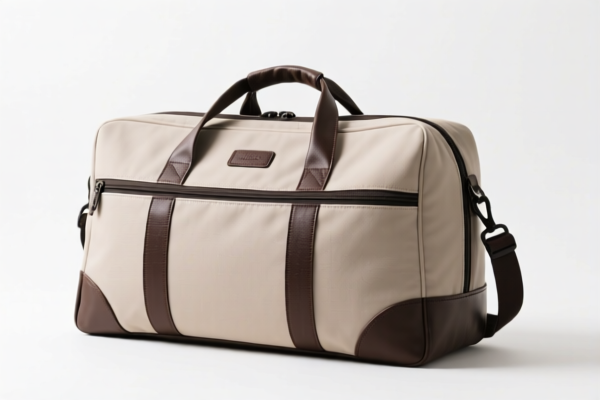
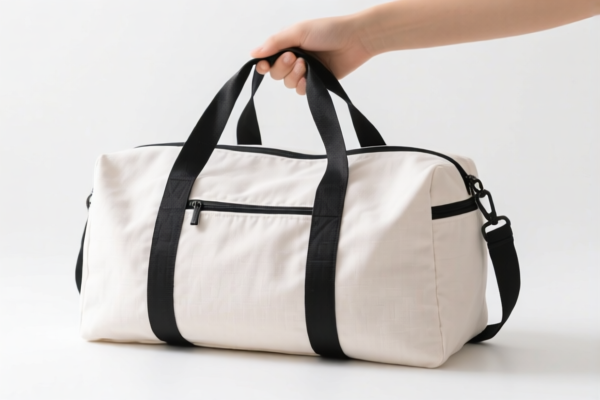
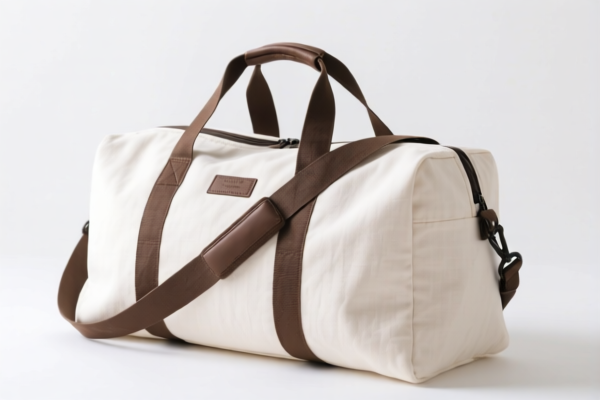

AI Analysis
🎒 Cotton Lightweight Travel Bag
🌐 HS Code Classification & Customs Clearance Guide | 2026 Updated Tariff Analysis | Expert-Level Import Strategy
📌 One Product, Multiple HS Codes — Why? What’s the Real Tax?
You’re shipping a cotton lightweight travel bag — simple on the surface, but complex in classification.
This guide breaks down why the same product can be classified under 5 different HS Codes, what each tax means, and how to avoid costly misclassification.
📦 1. HS Code Breakdown: Why So Many Options?
The same cotton travel bag may be classified differently based on material composition, form, intended use, and trade policy triggers. Here’s the full picture:
| HS Code | Product Description | Key Classification Factor | Tax Rate |
|---|---|---|---|
5311.00.60.00 |
Cotton paper yarn crossbody travel bag; made from cotton paper yarn, shaped as a crossbody bag | Material: Cotton paper yarn (a blend of cotton & paper fibers); Form: Crossbody bag | 37.7% |
6307.90.98.91 |
Cotton paper yarn crossbody travel bag; finished consumer good, non-apparel, non-textile | Use: Finished consumer product; Category: Other made-up articles | 24.5% |
5311.00.30.90 |
Cotton paper yarn travel bag; contains cotton + man-made fibers in plant fiber fabric | Composition: Cotton + synthetic fibers in plant-based fabric | 10.0% |
4202.92.31.31 |
Cotton paper yarn travel bag; used as a travel bag, outer surface made of textile | Function: Travel bag; Surface material: Textile-covered | 52.6% |
4202.92.39.00 |
Cotton paper yarn travel bag; used as a travel bag, textile material, other category | Function: Travel bag; Material: Textile; Not covered by specific subheading | 52.6% |
🔍 Key Insight:
- Same product, different HS codes, wildly different tariffs — from 10% to 52.6%! - The correct classification depends on how you describe it, what’s inside, and which trade policy applies.
💰 2. Tariff Breakdown: What’s Really in the 37.7%?
Let’s dig into the tax structure — because "37.7%" isn’t just one number.
🎯 HS Code: 5311.00.60.00 — Cotton Paper Yarn Crossbody Bag (37.7%)
| Tax Type | Rate | Legal Basis | Explanation |
|---|---|---|---|
| Basic Tariff | 2.7% | U.S. HTSUS § 5311.00.60 | Standard rate for cotton paper yarn fabric |
| Section 301 (USITC) Tariff | 25.0% | USITC Footnote 9903.88.01 | Imposed on Chinese-origin goods under Section 301 |
| Section 122 (IEEPA) Tariff | 10.0% | IEEPA: 9903.01.25 | Emergency economic powers — applies to goods from China/HK |
| Total Effective Rate | 37.7% | — | Sum of all three |
📌 Why This Applies:
- The bag is made from cotton paper yarn — a hybrid fiber that’s not pure cotton or pure paper.
- The form (crossbody bag) and material blend trigger 301 + 122 tariffs.
- No de minimis exemption — even small shipments face full tax.
🎯 HS Code: 6307.90.98.91 — Finished Consumer Product (24.5%)
| Tax Type | Rate | Legal Basis | Explanation |
|---|---|---|---|
| Basic Tariff | 7.0% | HTSUS § 6307.90.98 | For non-apparel made-up articles |
| Section 301 (USITC) Tariff | 7.5% | USITC Footnote 9903.88.01 | Partial 301 tariff on consumer goods |
| Section 122 (IEEPA) Tariff | 10.0% | IEEPA: 9903.01.25 | Applies to China-origin goods |
| Total Effective Rate | 24.5% | — | Lower than 5311 code |
📌 Why This Applies:
- The bag is finished, ready-to-use, not raw fabric.
- Classified as "other made-up articles" — not clothing, not textiles.
- Less aggressive than the 5311 code, but still high due to 301 + IEEPA.
🎯 HS Code: 5311.00.30.90 — Cotton + Man-Made Fiber Blend (10.0%)
| Tax Type | Rate | Legal Basis | Explanation |
|---|---|---|---|
| Basic Tariff | 0.0% | HTSUS § 5311.00.30 | No base tariff for this fiber blend |
| Section 301 (USITC) Tariff | 0.0% | — | Not applicable for this subheading |
| Section 122 (IEEPA) Tariff | 10.0% | IEEPA: 9903.01.25 | Applies only if the product is from China/HK |
| Total Effective Rate | 10.0% | — | Only IEEPA applies |
📌 Why This Applies:
- The material is classified as a plant fiber fabric containing cotton and man-made fibers.
- No 301 tariff because this subheading is exempt from Section 301.
- Only 10% IEEPA — lowest of all options — if origin is China.⚠️ Critical Note:
- If the bag is not from China, this code may not apply — and you may pay 0%. - Origin matters — this is a China-specific tariff.
🎯 HS Code: 4202.92.31.31 & 4202.92.39.00 — Travel Bags with Textile Outer Surface (52.6%)
| Tax Type | Rate | Legal Basis | Explanation |
|---|---|---|---|
| Basic Tariff | 17.6% | HTSUS § 4202.92.31 / 4202.92.39 | Standard rate for travel bags with textile outer surface |
| Section 301 (USITC) Tariff | 25.0% | USITC Footnote 9903.88.01 | Applies to China-origin goods |
| Section 122 (IEEPA) Tariff | 10.0% | IEEPA: 9903.01.25 | Applies to goods from China/HK |
| Total Effective Rate | 52.6% | — | Highest in the list |
📌 Why This Applies:
- The bag is used as a travel bag and has textile outer surface → fits 4202.92.31.31.
- No exemption — even if made from cotton paper yarn, if it’s shaped like a travel bag, it falls here.
- Most punitive — 52.6% is not a typo.
🛠️ 3. Customs Clearance Best Practices (Real-World Tips)
✅ 1. Documentation Checklist (Must-Have)
| Document | Required? | Why It Matters |
|---|---|---|
| ✅ Product Specification Sheet | ✔️ | Show material composition: cotton paper yarn, fiber blend, etc. |
| ✅ Bill of Lading / Packing List | ✔️ | Confirm bag shape: crossbody, tote, travel bag |
| ✅ Commercial Invoice | ✔️ | Must match HS code — don’t say “cotton bag” if it’s “cotton paper yarn” |
| ✅ Certificate of Origin (CO) | ✔️ | Critical — if from China, IEEPA/301 applies; if from Vietnam/Mexico, may be exempt |
| ✅ Test Report (if applicable) | ✔️ | For fire resistance, durability, or material safety |
| ✅ Photos (clear, front/back, label) | ✔️ | Prove form, size, material, stitching |
✅ 2.申报技巧(申报口诀)
🔥 “Material First, Form Second, Origin Last — Tax Changes with Every Word!”
| Scenario | Correct HS Code | Wrong Code | Risk |
|---|---|---|---|
| Bag made from cotton paper yarn, shaped as crossbody bag | 5311.00.60.00 |
4202.92.31.31 |
+14.9% tax |
| Bag is finished, consumer-ready, not raw fabric | 6307.90.98.91 |
5311.00.30.90 |
+14.5% tax |
| Bag is from Vietnam, not China | 5311.00.30.90 (10%) |
5311.00.60.00 (37.7%) |
Save 27.7% |
| Bag is shaped like a travel bag, textile surface | 4202.92.31.31 |
6307.90.98.91 |
+28.1% tax |
✅ 3. Special Cases & Workarounds
| Situation | Solution |
|---|---|
| Bag is made in Vietnam/Mexico | Use 5311.00.30.90 → only 10% IEEPA, no 301 |
| Bag is from China, but made from cotton paper yarn | Use 5311.00.60.00 → 37.7%, but better than 52.6% |
| Bag is not a "travel bag" but a "crossbody bag" | Use 5311.00.60.00 → lower than 4202 code |
| You want to avoid 301/IEEPA | Change origin — use free-trade agreement (FTA) countries like Mexico, Vietnam, or Thailand |
🌍 4. Global Market Comparison (2026)
| Country | Recommended HS Code | Tariff | Certification | Notes |
|---|---|---|---|---|
| 🇺🇸 USA | 5311.00.60.00 or 5311.00.30.90 |
10%–37.7% | None (if not China) | China origin = high tax |
| 🇨🇳 China | 6307.90.98.91 |
5% | CCC | No extra tariffs |
| 🇪🇺 EU | 6307.90.98.91 |
0% | CE | No 301/IEEPA |
| 🇦🇺 Australia | 6307.90.98.91 |
5% | RCM | No extra tariffs |
| 🇯🇵 Japan | 6307.90.98.91 |
0% | PSE | No extra tariffs |
📌 Key Takeaway:
- USA is the only market with 301 + IEEPA tariffs.
- China-origin goods face the highest risk.
- Vietnam/Mexico origin = lower tax — strategic shift possible.
📌 5. Common Mistakes (Don’t Be the Next Case Study!)
❌ Mistake 1: Calling it “cotton bag” when it’s “cotton paper yarn”
👉 Result: Misclassified → higher tax, delays, penalties
❌ Mistake 2: Using 4202.92.31.31 for a cotton paper yarn bag
👉 Result: 52.6% tax instead of 10% — save $27.70 per unit
❌ Mistake 3: Not declaring origin
👉 Result: Assumed China origin → full 301 + IEEPA — even if not
❌ Mistake 4: Using generic description like “travel bag”
👉 Result: No proof of material → customs may reclassify → costly re-examination
✅ Correct Description Example:
“Cotton Paper Yarn Crossbody Travel Bag, 100% Cotton Paper Yarn Fabric, 20 x 15 x 8 cm, Made in Vietnam, Non-Apparel, Ready-to-Use, for Personal Use”
🎯 6. Final Verdict: How to Minimize Tax & Maximize Profit
🔥 “Material, Form, Origin — Three Words. One Decision. 10% vs 52.6%.”
✅ Best Strategy (2026):
- Use
5311.00.30.90if material is cotton + man-made fibers in plant fiber fabric. - Origin matters: Ship from Vietnam, Mexico, Thailand to avoid 301/IEEPA.
- Avoid
4202.92.31.31unless you’re sure it’s a true travel bag with textile surface. - Never use
5311.00.60.00unless the bag is specifically shaped as a crossbody bag.
📣 Call to Action: Act Now!
📞 Contact a U.S. Customs Broker + Submit Product Photos + Material Certificate
🚀 Apply for HS Code Pre-Ruling — lock in the lowest tax rate before shipment
🌐 Shift origin to FTA country — save thousands per shipment
✨ Professional Customs, Precision Classification, Profit Protection
💼 Your product’s success starts with the right HS Code.
🚀 Don’t let tax surprises sink your margins.
"One word wrong — one tariff too high. Get it right the first time."
Customer Reviews
About HS Code Classification
The Harmonized System (HS) is an internationally standardized nomenclature developed by the World Customs Organization (WCO) to classify traded products. Over 200 countries use the HS system as the basis for customs tariffs, trade statistics, and import/export regulations.
Each HS code follows a hierarchical structure:
- Chapter (2 digits) — Broad category of goods (e.g., Chapter 84: Machinery and Mechanical Appliances)
- Heading (4 digits) — More specific grouping within the chapter
- Subheading (6 digits) — Internationally standardized breakdown, used by all WCO member countries
- National subdivisions (8-10 digits) — Country-specific extensions for further classification, such as US HTSUS 10-digit codes
Correct HS code classification is essential for smooth customs clearance, accurate duty payment, and compliance with trade regulations. Misclassification can lead to customs delays, overpayment of duties, or penalties.
When importing from CN to US, the applicable tariff rates may include:
- Most-Favored-Nation (MFN) rate — The standard duty rate applied to WTO members
- General rate — Applied to countries without trade agreements
- Trade remedy duties — Additional tariffs such as Section 301 (anti-dumping), Section 232 (national security), or countervailing duties
The information provided on this page is for reference purposes only. For official classification, please consult with your local customs authority or a licensed customs broker.