橡木栅栏桩
CN → US| HS Code | Tariff Rate | Origin | Destination | Doc |
|---|---|---|---|---|
| 4407910022 | 35.0% | CN | US | Official Doc |
| 4407910063 | 35.0% | CN | US | Official Doc |
Product Images
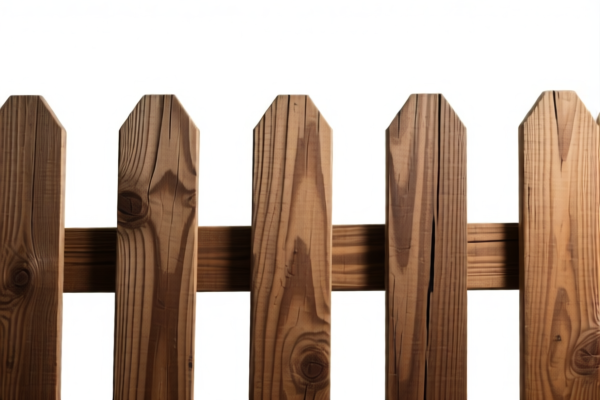
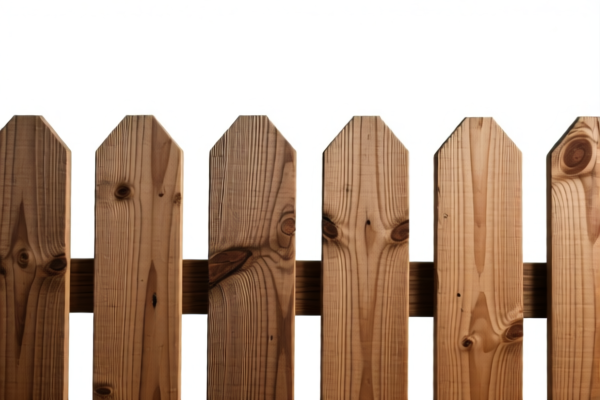
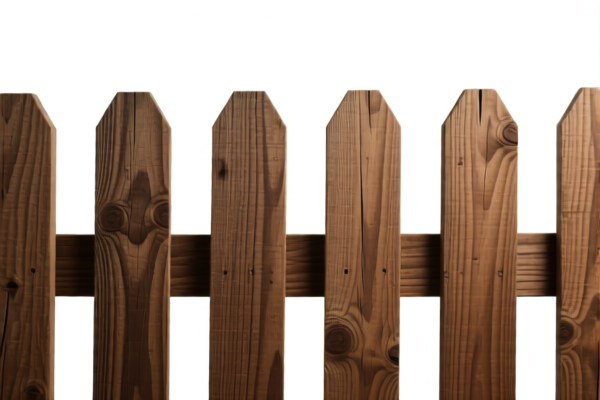

AI Analysis
🌲 Oak Fence Posts (Solid Wood Timber for Outdoor Use)
🌐 HS Code Reference & Customs Clearance Guide | 2026 Latest Tariff Analysis | Professional Compliance Strategy
📌 I. Product Definition & Classification: What Exactly Is "Oak Fence Post"?
Oak fence posts are solid wood components processed from oak timber (Quercus spp.), designed primarily for outdoor structural support in fencing, landscaping, or agricultural boundaries. In international trade, the classification depends heavily on the processing level and dimensions of the wood.
Key Distinction:
- Raw/Processed Timber (HS 4407): Wood that has been sawn, chipped, sliced, peeled, or planed. If the thickness exceeds 6 mm, it falls under Chapter 44 (Wood and articles of wood).
- Finished Goods (HS 4421): If the wood is shaped into specific posts (e.g., tapered, pointed, or drilled) and ready for immediate installation as a "post," it might be classified as "other articles of wood." However, for standard rectangular or round sawn timber exceeding 6mm thickness, it is almost always classified under 4407.
⚠️ Critical Classification Point:
- If the wood is simply cut to length and possibly planed/sanded but retains its general timber form (square, round, rectangular) with a thickness > 6mm → HS 4407.
- If it is further manufactured into specific "fence posts" with tapered ends, holes, or complex shaping → Potentially HS 4421 (Other articles of wood), but most standard sawn oak timbers for fencing are declared under 4407 to avoid misclassification penalties unless specifically requested as "finished posts."
- For this guide, we assume standard sawn/peeled oak timber used for fence posts, which is the most common import scenario.
📦 II. HS Code Classification Details (2026 Latest Tariff Alignment)
Based on the provided data, the following HS codes apply to sawn, sliced, or peeled oak wood exceeding 6mm in thickness.
| HS Code | Product Description | Application Scenario | Wood Type |
|---|---|---|---|
4407.91.00.22 |
Wood, sawn/peeled > 6mm: Other: Of Oak (Quercus spp.) Red Oak | Fencing posts made from Red Oak varieties (e.g., Northern Red, Southern Red) | 🔴 Red Oak |
4407.91.00.63 |
Wood, sawn/peeled > 6mm: Other: Of Oak (Quercus spp.) Other | Fencing posts made from White Oak or other non-Red Oak species | 🟤 White/Other Oak |
🔍 Key Reminder:
- Thickness: Must exceed 6 mm to qualify for Chapter 44. Thin veneers (< 6mm) fall under different codes.
- Species Identification: Customs may require proof of species (Red vs. White Oak) via botanical documentation. Misdeclaring White Oak as Red Oak (or vice versa) can lead to delays.
- Processing: "Sawn or chipped lengthwise, sliced or peeled" includes planed, sanded, or end-jointed wood. If the wood is merely cut into rough logs without lengthwise processing, it might fall under 4403 (Wood in the rough), but fence posts are typically processed timber.
💰 III. 2026 Latest Tariff Rate Breakdown (Including Additional Duties)
✅ Applicable Country: United States (US)
✅ Origin: China (CN)
✅ Effective Date: From November 10, 2025 (and subsequent imports)
🎯 1. 4407.91.00.22 – Red Oak Timber (> 6mm)
| Item | Content |
|---|---|
| Base Tariff | 0.0% (Ad valorem) |
| Section 301 Additional Tariff | +25.0% |
| Total Tariff Rate | 25.0% |
| Tax Calculation | CIF Value × 25% |
| De Minimis Eligibility | ❌ No (High duty rate excludes low-value shipments from exemption) |
| Legal Basis Path | USITC:4407.91.00.22 → Section 301: Footnote 9903.88.01 |
📌 Explanation:
- Although the base MFN tariff is 0%, the 25% Section 301 tariff applies to all Chinese-origin oak timber.
- This is a heavy-duty import. There are no IEEPA 10% add-ons for this specific HS code in the provided data, so the total is strictly 25%.
- Cost Impact: For a $10,000 shipment, expect $2,500 in duties alone.
🎯 2. 4407.91.00.63 – Other Oak Timber (e.g., White Oak, > 6mm)
| Item | Content |
|---|---|
| Base Tariff | 0.0% (Ad valorem) |
| Section 301 Additional Tariff | +25.0% |
| Total Tariff Rate | 25.0% |
| Tax Calculation | CIF Value × 25% |
| De Minimis Eligibility | ❌ No |
| Legal Basis Path | USITC:4407.91.00.63 → Section 301: Footnote 9903.88.01 |
📌 Note:
- Same tariff structure as Red Oak.
- White oak is often preferred for outdoor use due to better decay resistance. Ensure your supplier specifies "White Oak" if this code is used, to avoid customs disputes.
🛠️ IV. Customs Clearance Practical Advice (Pitfall Avoidance Guide)
✅ 1. Documentation Checklist (Non-Negotiable)
| Document | Required | Purpose |
|---|---|---|
| ✅ Commercial Invoice | ✔️ | Must clearly state: "Oak Wood Timber, Sawn/Pealed, Thickness > 6mm, Origin: China" |
| ✅ Packing List | ✔️ | Detail dimensions, weight, and number of pieces. Specify if wood is "Green" or "Kiln-Dried." |
| ✅ Phytosanitary Certificate | ✔️ | Mandatory for all raw wood imports. Confirms wood is free from pests and diseases (ISPM 15 compliant). |
| ✅ Species Declaration | ✔️ | Explicitly state if it is Red Oak or White Oak to match the HS Code. |
| ✅ Bill of Lading | ✔️ | Consistency between invoice and B/L is critical. |
| ✅ Fumigation Certificate | ✔️ | Proof of treatment (if not already stated in Phytosanitary Cert). |
✅ 2. Declaration Tips (Golden Rules)
🔥 "Accurate Species, Clean Phytosanitary, No Hidden Pests!"
| Scenario | Correct Declaration | Wrong Practice |
|---|---|---|
| Red Oak Fence Posts | 4407.91.00.22 |
Misdeclaring as "Other Wood" → Higher scrutiny |
| White Oak Fence Posts | 4407.91.00.63 |
Declaring as "Red Oak" → Audit & Penalties |
| Wood < 6mm Thickness | ❌ Not applicable (Use HS 4408/4409) | Declaring as 4407 → Rejection |
| Treated vs. Untreated | Specify if chemically treated | Hiding treatment status → Violation of environmental laws |
✅ 3. Special Cases & Handling
| Scenario | Handling Advice |
|---|---|
| Kiln-Dried vs. Green | Kiln-dried wood is preferred for customs. Green wood may require additional moisture control declarations. |
| End-Jointed Wood | If wood is end-jointed, it still falls under 4407 if it remains a general timber form. |
| Fence Posts with Tapered Ends | If significantly shaped, consult a customs broker to see if 4421 (Other articles of wood) applies, but be prepared for potential 25% duty anyway. |
| Origin Fraud | Ensure wood is genuinely from China. Transshipment via third countries without substantial transformation will still trigger US tariffs. |
🌍 V. Global Market Comparison (2026 Latest)
| Country/Region | Recommended HS Code | Tariff (China Origin) | Certification Requirements | Notes |
|---|---|---|---|---|
| 🇺🇸 USA | 4407.91.00.22 / .63 |
25% (Section 301) | Phytosanitary Cert + ISPM 15 | High duty; strict phytosanitary checks. |
| 🇨🇳 China | 4407.91.00.22 / .63 |
0% - 5% (Export Duty may apply) | N/A | China is a major exporter; export controls may exist. |
| 🇪🇺 EU | 4407.91 |
0% - 5% (depending on treatment) | EUDR (Deforestation Regulation) | New: Must prove wood is deforestation-free by 2025. |
| 🇬🇧 UK | 4407.91 |
0% - 5% | UK Timber Regulation (UKTR) | Similar to EU EUDR requirements. |
📌 Conclusion:
- The US market is the most tariff-heavy for Chinese oak timber.
- Phytosanitary compliance is critical in all markets, but especially the US and EU.
- EUDR (EU Deforestation Regulation) adds a new layer of complexity for EU exports; ensure supply chain traceability.
📌 VI. Common Mistakes & Pitfalls (Lessons Learned)
❌ Mistake 1: Using "Fence Post" as the only description without specifying wood type or thickness.
👉 Consequence: Customs may reclassify or demand additional info, causing delays.
❌ Mistake 2: Confusing Red Oak and White Oak.
👉 Consequence: If declared as Red Oak but White Oak is found, it may trigger audits or penalties for misdeclaration.
❌ Mistake 3: Ignoring Phytosanitary Requirements.
👉 Consequence: Shipment seizure or destruction. Wood is a high-risk category for pests.
❌ Mistake 4: Under-declaring thickness (< 6mm) to avoid higher duties.
👉 Consequence: If found to be > 6mm, heavy penalties and back-tariffs.
✅ Correct Practice:
"Oak Timber, Sawn, Thickness 100mm, Origin: China, Species: White Oak (Quercus alba), Phytosanitary Cert: #12345, ISPM 15 Compliant"
🎯 VII. Conclusion: Smart Declaration, Safe Clearance, Cost Control!
🎯 Remember the Mantra:
🔹 "Specify Species, Declare Thickness, Verify Phytosanitary!"
🔹 "HS Code 4407, 25% Duty, No Excuses!"
🔹 "Red vs. White Matters, Don't Guess, Just Ask!"
📌 Pro Tip:
- If your oak fence posts are treated with preservatives, ensure the chemical composition is declared. Some treatments may have additional regulatory requirements (EPA in the US).
- Consider pre-clearance rulings if shipping large volumes regularly. This provides certainty on HS code and duty rate.
📣 Immediate Action:
📞 Engage a licensed customs broker.
📄 Prepare Phytosanitary Certificates in advance.
🚀 Ensure your oak fence posts cross borders smoothly and legally!
✨ Professional Customs Compliance Starts with Precision!
💼 Your profit margin depends on accurate classification!
Customer Reviews
About HS Code Classification
The Harmonized System (HS) is an internationally standardized nomenclature developed by the World Customs Organization (WCO) to classify traded products. Over 200 countries use the HS system as the basis for customs tariffs, trade statistics, and import/export regulations.
Each HS code follows a hierarchical structure:
- Chapter (2 digits) — Broad category of goods (e.g., Chapter 84: Machinery and Mechanical Appliances)
- Heading (4 digits) — More specific grouping within the chapter
- Subheading (6 digits) — Internationally standardized breakdown, used by all WCO member countries
- National subdivisions (8-10 digits) — Country-specific extensions for further classification, such as US HTSUS 10-digit codes
Correct HS code classification is essential for smooth customs clearance, accurate duty payment, and compliance with trade regulations. Misclassification can lead to customs delays, overpayment of duties, or penalties.
When importing from CN to US, the applicable tariff rates may include:
- Most-Favored-Nation (MFN) rate — The standard duty rate applied to WTO members
- General rate — Applied to countries without trade agreements
- Trade remedy duties — Additional tariffs such as Section 301 (anti-dumping), Section 232 (national security), or countervailing duties
The information provided on this page is for reference purposes only. For official classification, please consult with your local customs authority or a licensed customs broker.