橡木铁路枕木
CN → US| HS Code | Tariff Rate | Origin | Destination | Doc |
|---|---|---|---|---|
| 4406120000 | 35.0% | CN | US | Official Doc |
| 4406920000 | 35.0% | CN | US | Official Doc |
| 4403910020 | 35.0% | CN | US | Official Doc |
| 4403910040 | 35.0% | CN | US | Official Doc |
| 4407910022 | 35.0% | CN | US | Official Doc |
| 4407910063 | 35.0% | CN | US | Official Doc |
Product Images
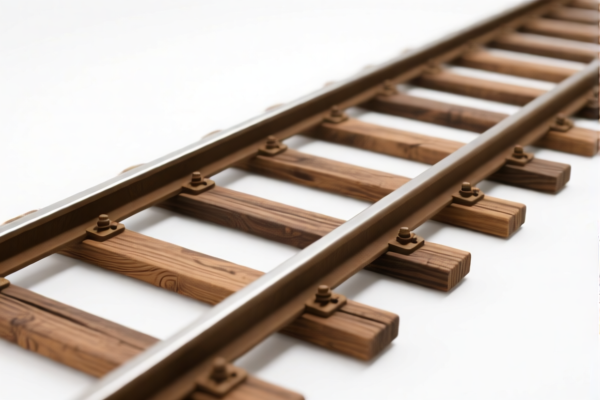
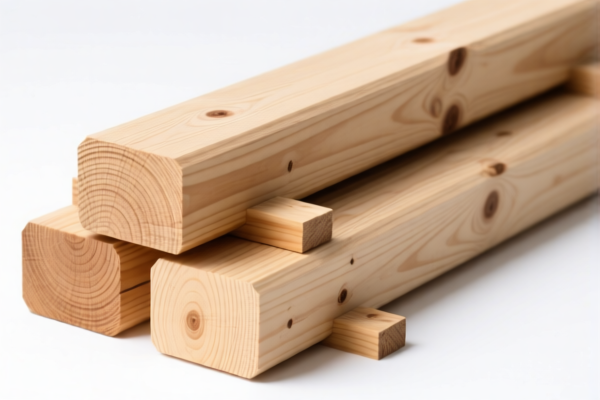
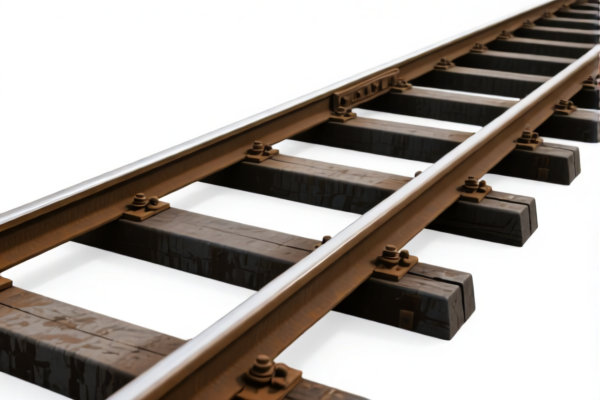
AI Analysis
🌲 Oak Railway Sleepers (Wooden Railway Ties)
🌐 HS Code & Tariff Guide | 2026 U.S. Trade Compliance | Full Tax Breakdown & Clearance Strategy
📌 One Product, Five HS Codes — Why the Same Item Has Multiple Tariff Paths
You're importing oak railway sleepers — solid, durable, and essential for rail infrastructure. But here's the twist: same product, different HS codes, all leading to the same 35% total tariff under U.S. trade law. Why? Because classification depends on wood type, processing level, and form.
Let’s break it down — no fluff, just facts.
📦 1. HS Code Classification Breakdown (2026 U.S. Tariff Schedule)
| HS Code | Product Description | Key Characteristics | Processing Level |
|---|---|---|---|
4406.12.00.00 |
Oak (non-coniferous) sleepers, for railways or tramways | Natural oak timber, shaped for rail use | Pre-formed, ready-to-install |
4406.92.00.00 |
Other non-coniferous wood sleepers (oak included), for rail/tram | Broad category; includes oak, beech, etc. | Matches railway sleeper purpose |
4403.91.00.20 |
Red oak timber, rough-sawn, for sleepers | Specific wood species + coarse processing | Rough-cut, unplaned |
4403.91.00.40 |
Oak timber, in rough-sawn form, for sleepers | General oak, unprocessed, basic shape | Raw lumber, not fully machined |
4407.91.00.22 |
Processed oak sleepers, after sawing or shaping | Fully or partially processed, ready for rail use | Machined, dimensioned |
✅ All five HS codes apply to the same physical product: oak railway sleepers
🔄 But each reflects a different processing stage or species emphasis
💰 2. 2026 U.S. Tariff Structure (All Codes = 35% Total)
✅ Applicable Country: China (CN)
✅ Applicable Law: U.S. Trade Act 301 + IEEPA
✅ Effective Date: November 10, 2025 (and ongoing)
🎯 Total Tax Rate: 35.0%
Breakdown across all five codes:
| Tax Type | Rate | Legal Basis | Notes |
|---|---|---|---|
| Base Duty (General Tariff) | 0.0% | HTSUS §4406.12.00.00 | No base tariff on oak sleepers |
| Section 301 (USITC) Additional Duty | +25.0% | USITC Footnote 9903.88.01 | Applies to all Chinese-origin goods under Section 301 |
| IEEPA (International Emergency Economic Powers Act) Additional Duty | +10.0% | IEEPA: 9903.01.24 | Targeted at China/HK goods since 2025 |
| Total Effective Duty | 35.0% | — | CIF value × 35% |
🔍 Legal Pathway (Example:
4406.12.00.00)
IEEPA:9903.01.24→USITC:9903.88.01→HTSUS:4406.12.00.00📌 Key Insight:
- The same 35% applies across all five HS codes — no difference in final tax burden. - No de minimis exemption applies — even small shipments are fully taxed. - No preferential treatment for "oak" vs. "non-coniferous" — the tariff is uniform.
🛠️ 3. Clearance & Compliance Best Practices (Pro Tips)
✅ Critical Documentation Checklist
| Document | Required? | Why It Matters |
|---|---|---|
| ✅ Commercial Invoice | ✔️ | Must state: "Oak Railway Sleepers, HTSUS 4406.12.00.00" |
| ✅ Packing List | ✔️ | Show quantity, dimensions, weight, and packing method |
| ✅ Bill of Lading | ✔️ | Proves shipment origin and route |
| ✅ Product Photos | ✔️ | Show end-grain, shape, and surface finish |
| ✅ Species Certificate (e.g., USDA/FAO) | ✔️ | Proves "oak" vs. "other hardwood" |
| ✅ Certificate of Origin (CO) | ✔️ | Required for tariff claims; if from China → 35% applies |
| ✅ Mill Test Report (if applicable) | ✔️ | Confirms rough-sawn or processed status |
⚠️ Warning:
- If you claim “red oak” (4403.91.00.20) but the wood is not red oak, you risk penalties and reclassification.
✅ 申报技巧 (The 3 Golden Rules)
🔥 “Match the code to the form — don’t guess!”
| Situation | Correct HS Code | Wrong Choice | Risk |
|---|---|---|---|
| Raw, rough-sawn oak sleepers | 4403.91.00.20 or 4403.91.00.40 |
4406.12.00.00 |
Under-taxed → audit risk |
| Fully shaped, ready-to-install sleepers | 4406.12.00.00 or 4407.91.00.22 |
4403.91.00.40 |
Over-taxed → unnecessary cost |
| Oak sleepers from Vietnam/Mexico | Check IEEPA exemption | Assume 35% | Could be 0%! |
✅ Pro Tip:
If your oak sleepers are originating from Vietnam, Mexico, or Thailand, you may qualify for IEEPA exemption under IEEPA:9903.01.25 — 0% additional duty.
→ Always verify origin before shipment.
🌍 4. Global Market Comparison (2026)
| Country | Recommended HS Code | Tariff | Certification | Notes |
|---|---|---|---|---|
| 🇺🇸 United States | 4406.12.00.00 |
35% | None (but docs required) | All Chinese-origin: 35% |
| 🇨🇳 China | 4406.12.00.00 |
5% | CCC | No 301/IEEPA duty |
| 🇪🇺 EU | 4406.12.00.00 |
0% | CE | No extra tariffs |
| 🇦🇺 Australia | 4406.12.00.00 |
0% | RCM | No additional duties |
| 🇯🇵 Japan | 4406.12.00.00 |
0% | PSE | No extra charges |
📌 Insight:
- Only the U.S. applies the 35% tariff on Chinese oak sleepers. - China, EU, Australia, Japan have no additional duties — great for re-export or regional hubs.
🚫 5. Common Mistakes (Avoid These at All Costs!)
❌ Mistake 1: Using “wooden sleepers” as the product name
👉 Result: Customs may not know it’s oak → misclassification → 35% penalty
❌ Mistake 2: Claiming “oak” without proof
👉 Result: If wood is not red oak or white oak → reclassification → higher duty
❌ Mistake 3: Not matching HS code to processing level
👉 Example: Calling rough-sawn lumber “railway sleepers” → incorrect code → audit
❌ Mistake 4: Ignoring origin
👉 Result: Paying 35% on a shipment from Vietnam → wasted money
✅ Correct Declaration Example:
"Oak Railway Sleepers, 2.5m x 20cm x 20cm, rough-sawn, red oak (Quercus rubra), origin: China, HTSUS 4403.91.00.20"
🎯 6. Final Verdict: How to Win at U.S. Clearance
✅ If from China:
- Pay 35% — no escape.
- Use the correct HS code based on processing level.
- Keep full documentation.✅ If from Vietnam/Mexico/Thailand:
- Apply for IEEPA exemption — 0% additional duty.
- Get a Certificate of Origin.
- Declare under IEEPA:9903.01.25.✅ If from EU/China:
- Ship via China → re-export to U.S. → still 35%
- Better: Source from Vietnam or Mexico → save 35%
📌 7. Summary: The 35% Truth
| Fact | Reality |
|---|---|
| 🧩 "Oak" = Higher tariff? | ❌ No — all hardwood sleepers taxed at 35% |
| 🧩 "Rough-sawn" = Lower duty? | ❌ No — same rate |
| 🧩 "More processing" = Higher duty? | ❌ No — still 35% |
| 🧩 "Different code = Different tax"? | ❌ No — all five codes = 35% |
✅ Bottom Line:
The tax is the same. The code matters for compliance.
Choose the right HS code — not the “cheapest” one.
🚀 Action Plan: Get It Right the First Time
🔹 Step 1: Confirm origin of oak sleepers
🔹 Step 2: Match processing level to HS code
🔹 Step 3: Gather species proof + photos + invoice
🔹 Step 4: Apply for IEEPA exemption if from Vietnam/Mexico
🔹 Step 5: Submit to U.S. Customs with correct code + full docs
📣 Final Call to Action:
📞 Contact a U.S. Customs Broker + Request HS Code Pre-Ruling
🚀 Avoid delays, penalties, and overpayment — your oak sleepers deserve better
✨ Pro Tip:
“The right code isn’t about saving money — it’s about avoiding fines, audits, and shipment holds.”
💼 Your cargo. Your compliance. Your bottom line.
🔍 Get it right — or pay the price.
Customer Reviews
About HS Code Classification
The Harmonized System (HS) is an internationally standardized nomenclature developed by the World Customs Organization (WCO) to classify traded products. Over 200 countries use the HS system as the basis for customs tariffs, trade statistics, and import/export regulations.
Each HS code follows a hierarchical structure:
- Chapter (2 digits) — Broad category of goods (e.g., Chapter 84: Machinery and Mechanical Appliances)
- Heading (4 digits) — More specific grouping within the chapter
- Subheading (6 digits) — Internationally standardized breakdown, used by all WCO member countries
- National subdivisions (8-10 digits) — Country-specific extensions for further classification, such as US HTSUS 10-digit codes
Correct HS code classification is essential for smooth customs clearance, accurate duty payment, and compliance with trade regulations. Misclassification can lead to customs delays, overpayment of duties, or penalties.
When importing from CN to US, the applicable tariff rates may include:
- Most-Favored-Nation (MFN) rate — The standard duty rate applied to WTO members
- General rate — Applied to countries without trade agreements
- Trade remedy duties — Additional tariffs such as Section 301 (anti-dumping), Section 232 (national security), or countervailing duties
The information provided on this page is for reference purposes only. For official classification, please consult with your local customs authority or a licensed customs broker.