橡胶轮胎
CN → US| HS Code | Tariff Rate | Origin | Destination | Doc |
|---|---|---|---|---|
| 4012118000 | 38.4% | CN | US | Official Doc |
| 4012124035 | 39.0% | CN | US | Official Doc |
| 4013100010 | 38.7% | CN | US | Official Doc |
| 4011802010 | 39.0% | CN | US | Official Doc |
| 4011801010 | 35.0% | CN | US | Official Doc |
Product Images
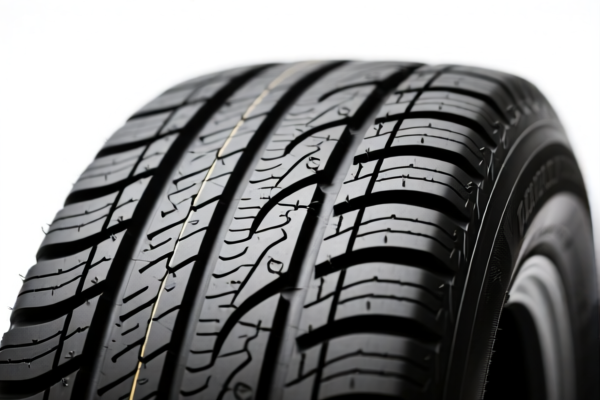
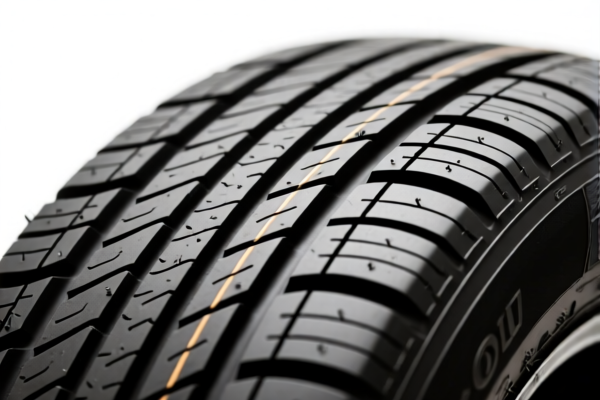
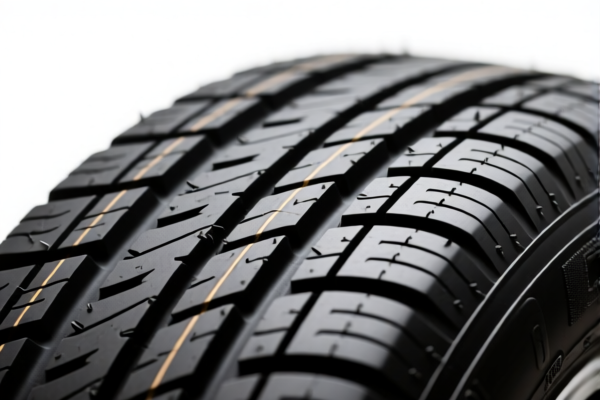
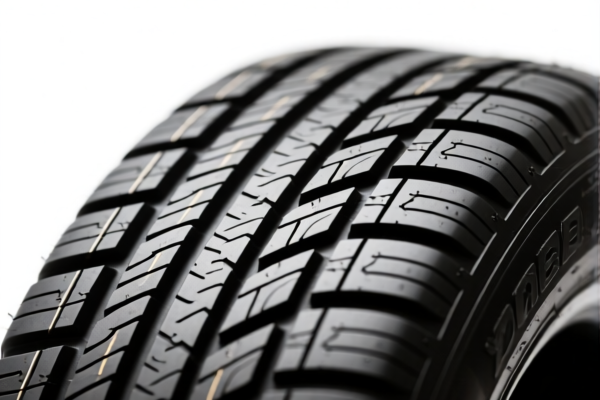
AI Analysis
🛞 Rubber Tires: The Backbone of Global Logistics
🌐 HS Code Reference & Customs Clearance Guide | 2026 Latest Tariff Analysis | Professional-Level Strategy
📌 I. Product Definition & Classification: Do You Really Understand "Rubber Tires"?
Rubber tires are critical components in automotive, industrial, and construction sectors. In international trade, they are classified based on material composition, structure, and intended use.
⚠️ Key Classification Logic:
- If the tire is for passenger vehicles or general radial tires → Usually falls under Chapter 4011 or 4012.
- If it is an engineering/industrial tire (for construction, heavy machinery) → Often classified under specific subheadings in 4011 or 4012 depending on exact design.
- Misclassification Risk: Confusing "tread" with "whole tire" or misidentifying "engineering tires" can lead to massive duty differences.
📦 II. HS Code Classification Details (2026 Latest Tariff Authority Match)
Based on the provided data, here are the potential HS Code classifications for Rubber Tires, along with their specific tax implications under US import rules (including Section 301 and IEEPA surcharges).
| HS Code | Product Description | Tax Detail Breakdown | Total Tax Rate | Key Characteristics |
|---|---|---|---|---|
4012.11.80.00 |
Rubber tires, generic category, fallback rule | Base: 3.4% + Sec 301: 25% + IEEPA: 10% | 38.4% | Fits general "other" rubber tire categories; fallback classification for non-specific types. |
4012.12.40.35 |
Rubber tires, specific other category match | Base: 4.0% + Sec 301: 25% + IEEPA: 10% | 39.0% | Matches specific subcategory rules for certain non-standard or specialty tires. |
4013.10.00.10 |
Rubber tires, material/use similar to core reference | Base: 3.7% + Sec 301: 25% + IEEPA: 10% | 38.7% | High similarity to core reference items; often used for standardized radial tires. |
4011.80.20.10 |
Rubber Engineering Tires (Radial) | Base: 4.0% + Sec 301: 25% + IEEPA: 10% | 39.0% | Specifically for construction/industrial vehicles; radial structure. |
4011.80.10.10 |
Rubber Engineering Tires (Non-Radial/Special) | Base: 0.0% + Sec 301: 25% + IEEPA: 10% | 35.0% | For construction/industrial vehicles; lowest base tariff; requires strict eligibility proof. |
🔍 Critical Insight:
- Engineering Tires (4011.80.x0.x0) generally have higher base duties except for4011.80.10.10, which has a 0% base rate.
- General/Passenger Tires (4012.x1.x0or4013.x0) usually have base rates between 3.4% – 4.0%.
- All categories are subject to 25% Section 301 and 10% IEEPA surcharges for Chinese-origin goods, resulting in a total tax burden of 35.0% – 39.0%.
💰 III. 2026 Tariff Rate Breakdown (Including Surcharges)
✅ Applicable Country: USA (US)
✅ Country of Origin: China (CN)
✅ Effective Date: From Nov 10, 2025, onwards
🎯 1. General Category: 4012.11.80.00 / 4012.12.40.35 / 4013.10.00.10
| Item | Content |
|---|---|
| Base Duty Rate | 3.4% – 4.0% (ad valorem) |
| USITC Surcharge (Sec 301) | +25% (Footnote 9903.88.01) |
| IEEPA Surcharge | +10% (For China/HK products, effective Nov 10, 2025) |
| Total Effective Tax Rate | 38.4% – 39.0% |
| Calculation Basis | CIF Value × Total Tax Rate |
| De Minimis Exemption | ❌ Not Eligible (deny_de_minimis applies) |
| Legal Basis Path | IEEPA:9903.01.25 → USITC:4012.11.80.00 / 4013.10.00.10 |
📌 Explanation:
- These codes represent standard rubber tires.
- The 38.4%–39.0% total rate is extremely high and must be factored into landed cost calculations.
- Even small differences in base rate (3.4% vs 4.0%) result in slight variations in total tax, but the surcharge structure remains identical.
🎯 2. Engineering Tires: 4011.80.20.10 (Radial)
| Item | Content |
|---|---|
| Base Duty Rate | 4.0% |
| USITC Surcharge (Sec 301) | +25% |
| IEEPA Surcharge | +10% |
| Total Effective Tax Rate | 39.0% |
| Application Scenario | Radial tires for construction, mining, or heavy industrial vehicles. |
📌 Note:
- Despite being "engineering" tires, the base rate is 4.0%, leading to the highest total tax rate (39.0%) in this dataset.
- Precision in declaring "radial" vs "non-radial" is crucial to avoid misclassification penalties.
🎯 3. Engineering Tires: 4011.80.10.10 (Special/Non-Standard)
| Item | Content |
|---|---|
| Base Duty Rate | 0.0% |
| USITC Surcharge (Sec 301) | +25% |
| IEEPA Surcharge | +10% |
| Total Effective Tax Rate | 35.0% |
| Application Scenario | Non-radial or specific industrial tires; lowest total tax in the list. |
📌 Opportunity:
- This code offers a 4.0 percentage point saving compared to other engineering tires.
- However, it requires strict documentation to prove it fits the specific "non-radial" or "special purpose" criteria under 4011.80.10.10.
- Warning: Misclassifying a radial tire as this code can lead to severe penalties and back taxes.
🛠️ IV. Customs Clearance Operational Advice (Practical Pitfall Avoidance)
✅ 1. Required Documentation Checklist
| Document | Mandatory? | Description |
|---|---|---|
| ✅ Product Specification Sheet | ✔️ | Must include tire size, tread pattern, radial/non-radial status, load index, speed rating. |
| ✅ Structure Diagram | ✔️ | To clearly demonstrate if it is radial or non-radial; critical for 4011 vs 4012 distinction. |
| ✅ Product Photos | ✔️ | Clear images of sidewall markings (DOT, size, ply rating) and overall shape. |
| ✅ Commercial Invoice | ✔️ | Must accurately state "Rubber Tire" with specific HS Code and Chinese origin. |
| ✅ Packing List | ✔️ | Show individual packaging to confirm no accessories are incorrectly included. |
✅ 2. Declaration Strategy (Key Tips)
🔥 "Structure Defines Code, Base Rate Drives Cost!"
| Scenario | Correct Declaration | Incorrect Declaration |
|---|---|---|
| Standard Passenger Tire | 4012.11.80.00 or 4013.10.00.10 |
Misclassifying as engineering tire → Overpay or underpay. |
| Radial Engineering Tire | 4011.80.20.10 |
Declaring as 4011.80.10.10 → Penalty & Back Taxes. |
| Non-Radial/Special Engineering Tire | 4011.80.10.10 |
Declaring as 4012.x.x.x → Higher tax (39.0% vs 35.0%). |
| Tire with Wheel Assembly | Separate Declaration | Combining tire + rim → Complex classification, higher risk. |
📌 Key Distinction:
- Radial vs. Non-Radial: This is the most common point of failure.
- Radial: Cords run perpendicular to direction of travel → Higher likelihood of4011.80.20.10.
- Non-Radial: Bias-ply or other structures → May qualify for4011.80.10.10(0% base).
- Use Case: Industrial/Construction vs. Passenger. Mislabeling a construction tire as a passenger tire can lead to detention.
✅ 3. Special Cases
| Situation | Handling Advice |
|---|---|
| OEM Tires | Provide customer PO and technical drawings to prove specific design. |
| Tire Retreading | Different HS code (4012.12.10.00 etc.); do not declare as new tires. |
| Sample Imports | Clearly mark "Sample – Not for Sale"; still subject to duties but may avoid full commercial scrutiny. |
| Origin Manipulation | Do NOT attempt to re-label as "Made in Vietnam" if made in China; fraud risk. |
🌍 V. Global Market Comparison (2026 Latest)
| Country/Region | Recommended HS Code | Duty Rate (China Origin) | Certification Requirements | Notes |
|---|---|---|---|---|
| 🇺🇸 USA | 4011.80.10.10 (Best) |
35.0% | DOT (Safety), ISO | Highest total tax burden globally due to 301+IEEPA. |
| 🇨🇳 China | 4011.80.10.10 |
5% – 15% | CCC | Lower base rates; no surcharges. |
| 🇪🇺 EU | 4011.80.10.10 |
0% – 4.5% | ECE R54 (Industrial) | No US-style surcharges; lower barrier. |
| 🇯🇵 Japan | 4011.80.10.10 |
0% – 6% | JIS Standard | Strict safety standards; no surcharges. |
| 🇮🇳 India | 4011.80.10.10 |
10% – 20% | ISI Mark | High protective tariffs. |
📌 Conclusion:
- USA is the most expensive market for Chinese rubber tires due to 35%–39% total tax rates.
- Strategic Recommendation:
1. Verify Structure: Ensure you can prove non-radial status for4011.80.10.10to save 4% in duties.
2. Pre-Ruling: Apply for Binding Tariff Information (BTI) or US CBP Ruling before shipping to avoid clearance delays.
3. Supply Chain Diversification: Consider sourcing from non-China origins if possible to mitigate IEEPA surcharges.
📌 VI. Common Mistakes & Pitfalls (Lessons Learned)
❌ Mistake 1: Assuming all engineering tires are 0% base duty.
👉 Result: Only 4011.80.10.10 is 0% base. Radial engineering tires (4011.80.20.10) are 4.0% base. Error leads to underpayment.
❌ Mistake 2: Confusing "Tire" with "Tread" or "Rubber Parts".
👉 Result: Misclassification under Chapter 4012 vs 4011. High risk of customs audit.
❌ Mistake 3: Ignoring IEEPA 10% Surcharge.
👉 Result: Calculating cost without IEEPA leads to unexpected 10% additional cost on top of 25% Sec 301.
❌ Mistake 4: Declaring "Mixed" shipments without detailed breakdown.
👉 Result: Customs may apply the highest duty rate to the entire shipment.
✅ Correct Practice:
"Radial Rubber Tire for Mining Loader, Size 23.5-25, DOT Certified, Chinese Origin, HS Code: 4011.80.20.10"
🎯 VII. Conclusion: Precision Classification, Cost Optimization!
🎯 Remember the Rules:
🔹 "Radial vs Bias: Check the cords!"
🔹 "Engineering: 0% base for 4011.80.10.10 only!"
🔹 "USA: 35%–39% total duty is unavoidable for CN origin."
📌 Pro Tip:
- If your tires are radial, you are stuck with 39.0% total tax.
- If they are non-radial/special, fight for 4011.80.10.10 to achieve 35.0% total tax.
- Always provide structural diagrams to customs brokers to support your classification.
📣 Immediate Action:
📞 Contact your customs broker with detailed tire specifications.
📄 Request a Pre-Ruling from US CBP if the shipment value is significant.
🚀 Optimize landed cost by ensuring accurate HS code classification!
✨ Professional clearance starts with precise classification!
💼 Every 1% of duty saved is pure profit gained!
Customer Reviews
About HS Code Classification
The Harmonized System (HS) is an internationally standardized nomenclature developed by the World Customs Organization (WCO) to classify traded products. Over 200 countries use the HS system as the basis for customs tariffs, trade statistics, and import/export regulations.
Each HS code follows a hierarchical structure:
- Chapter (2 digits) — Broad category of goods (e.g., Chapter 84: Machinery and Mechanical Appliances)
- Heading (4 digits) — More specific grouping within the chapter
- Subheading (6 digits) — Internationally standardized breakdown, used by all WCO member countries
- National subdivisions (8-10 digits) — Country-specific extensions for further classification, such as US HTSUS 10-digit codes
Correct HS code classification is essential for smooth customs clearance, accurate duty payment, and compliance with trade regulations. Misclassification can lead to customs delays, overpayment of duties, or penalties.
When importing from CN to US, the applicable tariff rates may include:
- Most-Favored-Nation (MFN) rate — The standard duty rate applied to WTO members
- General rate — Applied to countries without trade agreements
- Trade remedy duties — Additional tariffs such as Section 301 (anti-dumping), Section 232 (national security), or countervailing duties
The information provided on this page is for reference purposes only. For official classification, please consult with your local customs authority or a licensed customs broker.