橱柜
CN → US| HS Code | Tariff Rate | Origin | Destination | Doc |
|---|---|---|---|---|
| 9403409060 | 35.0% | CN | US | Official Doc |
| 9403200078 | 85.0% | CN | US | Official Doc |
| 9403509080 | 35.0% | CN | US | Official Doc |
| 9403608093 | 35.0% | CN | US | Official Doc |
| 9403200050 | 85.0% | CN | US | Official Doc |
Product Images
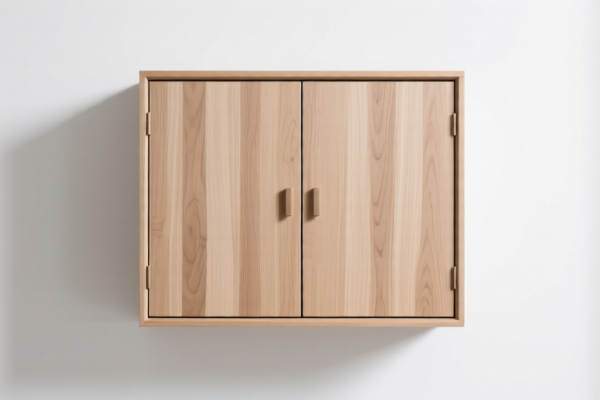
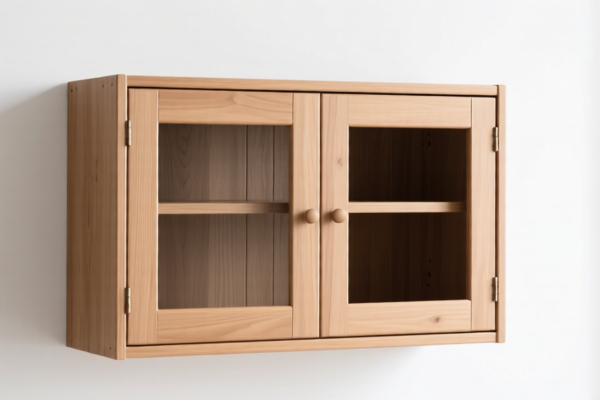
AI Analysis
🏠 橱柜 & 卧室家具 (Cabinets & Bedroom Furniture)
🌐 HS Code Reference & Customs Clearance Guide | 2026 Latest Tariff Analysis | Professional Clearance Strategy
📌 I. Product Definition & Classification: Do You Truly Understand "Cabinets"?
In international trade, "Cabinets" (橱柜) are not a monolithic category. They are strictly classified based on Material and Intended Use. The Harmonized System (HS) distinguishes between:
- Wooden Furniture: Including kitchen cabinets, bedroom wardrobes, and general storage units made primarily of wood.
- Metal Furniture: Including steel, aluminum, or copper-based cabinets, often used in industrial, commercial, or modern residential settings.
⚠️ Critical Distinction Point: * If the cabinet is wooden and fits into specific categories (kitchen, bedroom, other), it falls under 9403.40, 9403.50, or 9403.60. * If the cabinet is metal, it typically falls under 9403.20. * Mistake Alert: Misidentifying material leads to drastic tariff differences (e.g., 35% vs. 85%).
📦 II. HS Code Classification Details (2026 Latest Tariff Authority)
Based on the provided data, here are the specific HS codes and their corresponding logic for "Cabinets":
| HS Code | Product Description | Material Inference | Key Classification Logic |
|---|---|---|---|
9403.40.90.60 |
Kitchen Cabinets | Wood | Designed for permanent installation in kitchens; inferred as wooden furniture. |
9403.20.00.78 |
Other Metal Furniture | Metal | "Cabinets" classified as metal furniture (Steel, Aluminum, Copper). |
9403.50.90.80 |
Bedroom Furniture (Wardrobes) | Wood | Wardrobes belong to bedroom furniture; inferred as wooden. |
9403.60.80.93 |
Other Wooden Furniture | Wood | General wooden storage cabinets; excludes children's playpens, dining tables, or specific teak categories. |
9403.20.00.50 |
TV Stands / Media Cabinets | Metal (or Wood) | Classified under the residual category of "Other Metal Furniture" for metal variants. |
🔍 Key Reminder: * Wooden Cabinets: Generally attract a lower total tax rate (35.0%). * Metal Cabinets: Attract a significantly higher total tax rate (85.0%) due to additional steel/aluminum/copper levies. * Do Not Mix: A wooden cabinet declared as metal will face severe penalties; a metal cabinet declared as wood will result in duty underpayment and fines.
💰 III. 2026 Latest Tariff Rate Breakdown (Including Surcharges & Policy Add-ons)
✅ Applicable Country: United States (US)
✅ Origin: China (CN)
✅ Effective Date: From Nov 10, 2025 (and subsequent imports)
🎯 1. 9403.40.90.60 / 9403.50.90.80 / 9403.60.80.93 —— Wooden Cabinets & Furniture
| Item | Content |
|---|---|
| Base Duty Rate | 0.0% (ad valorem) |
| Section 301 Surcharge | +25.0% |
| Section 122 Surcharge | +10.0% |
| Total Tax Rate | 35.0% |
| Tax Calculation | CIF Value × 35% |
| De Minimis Eligibility | ❌ Not Eligible (High tariff items usually excluded) |
| Legal Basis Path | Section 301: Footnote 9903.88.01 → Section 122 → USITC:9403.xxxx |
📌 Explanation: * Section 301 (25%): Standard additional tariff on Chinese goods under Trade Act Section 301. * Section 122 (10%): Specific surcharge applied to certain imported goods. * Total: 35%. This is the standard high-cost bracket for Chinese wooden furniture entering the US.
🎯 2. 9403.20.00.78 / 9403.20.00.50 —— Metal Cabinets (Steel, Aluminum, Copper)
| Item | Content |
|---|---|
| Base Duty Rate | 0.0% (ad valorem) |
| Section 301 Surcharge | +25.0% |
| Section 122 Surcharge | +10.0% |
| Steel/Aluminum/Copper Surcharge | +50.0% |
| Total Tax Rate | 85.0% |
| Tax Calculation | CIF Value × 85% |
| De Minimis Eligibility | ❌ Not Eligible |
| Legal Basis Path | Section 301 → Section 122 → Section 232 (Steel/Aluminum) → USITC:9403.20 |
📌 Explanation: * Section 232 (50%): The critical differentiator. Metal cabinets (steel, aluminum, copper) are subject to an additional 50% tariff due to national security trade measures. * Total: 85%. This is an extremely high tariff, making metal furniture imports from China highly cost-prohibitive without specific exemptions or supply chain adjustments.
🛠️ IV. Customs Clearance Practical Advice (Avoiding Pitfalls)
✅ 1. Documentation Checklist (Mandatory)
| Document | Required? | Explanation |
|---|---|---|
| ✅ Product Specifications | ✔️ | Must clearly state Material (Wood vs. Metal) and Construction (Permanent vs. Portable). |
| ✅ Material Declaration | ✔️ | Specifically declare if the product contains steel, aluminum, or copper alloys. |
| ✅ Product Photos | ✔️ | Clear images showing joints, finishes, and labels to prove material type. |
| ✅ Commercial Invoice | ✔️ | Must describe goods accurately (e.g., "Wooden Kitchen Cabinet" vs. "Steel Storage Cabinet"). |
| ✅ Packing List | ✔️ | Ensure weight and dimensions match the declared HS code. |
✅ 2. Classification Strategy (Key Tips)
🔥 "Material is King, Form Follows Function"
| Scenario | Correct Declaration | Wrong Action | Consequence |
|---|---|---|---|
| Kitchen Cabinets (Wood) | 9403.40.90.60 |
Declare as "Metal" | 85% Duty instead of 35% → Overpayment |
| Kitchen Cabinets (Wood) | 9403.40.90.60 |
Declare as "Other" | Risk of audit if "Permanent Installation" is not proven |
| TV Stand (Metal) | 9403.20.00.50 |
Declare as "Wood" | 85% Duty if caught as metal → Penalties |
| Wardrobe (Wood) | 9403.50.90.80 |
Declare as "Metal" | 85% Duty → Overpayment |
✅ 3. Special Cases Handling
| Scenario | Handling Advice |
|---|---|
| Hybrid Materials (Wood + Metal Legs) | Generally classified based on essential character. If metal legs are minor, it may still be wood (35%). If metal frame is dominant, it could be metal (85%). Consult a broker! |
| OEM Custom Cabinets | Provide design blueprints to prove "Permanent Installation" for kitchen cabinets (9403.40). |
| Teak or Specific Wood Types | Some specific woods have different sub-codes. Ensure it’s not excluded from 9403.60. |
🌍 V. Global Market Comparison (2026 Update)
| Country/Region | Recommended HS Code | Tariff (China Origin) | Certification | Notes |
|---|---|---|---|---|
| 🇺🇸 USA | 9403.40.90.60 (Wood) |
35% | None specific | High tariff due to Sec 301 + 122 |
| 🇺🇸 USA | 9403.20.00.78 (Metal) |
85% | None specific | Extremely high due to Steel/Aluminum levy |
| 🇨🇳 China | 9403.40 (Wood) |
~5-10% | CCC (if applicable) | Lower import duty |
| 🇪🇺 EU | 9403.40 (Wood) |
0% (if GSP/EBA) | CE (if applicable) | Often duty-free or low |
| 🇯🇵 Japan | 9403.40 (Wood) |
0-3.2% | PSE (if electrical) | Generally favorable |
📌 Conclusion: * USA is the most expensive market for Chinese furniture due to the 25%+10% (Wood) and 25%+10%+50% (Metal) structure. * Metal Furniture is a "Red Zone" for imports into the US due to the 50% additional levy. * Wooden Cabinets are the safer, more common route, but still carry a significant 35% cost.
📌 VI. Common Errors & Pitfall Avoidance (Lessons Learned)
❌ Error 1: Declaring a Metal TV Stand as "Wooden Furniture" 👉 Consequence: Customs inspection reveals metal construction. 85% Duty applied retroactively + Penalties.
❌ Error 2: Ignoring the Section 122 Surcharge 👉 Consequence: Budgeting only for 301 (25%) leads to a 10% shortfall in landed cost.
❌ Error 3: Not specifying "Permanent Installation" for Kitchen Cabinets
👉 Consequence: Risk of misclassification if the cabinet is freestanding vs. built-in. 9403.40 requires specific design intent.
✅ Correct Action:
"Wooden Kitchen Cabinet, Designed for Permanent Installation, Particle Board Core with Veneer Finish, Model XYZ."
🎯 VII. Conclusion: Professional Classification Saves Money!
🎯 Remember the Mantra:
🔹 "Wood is 35%, Metal is 85%. Don't guess the material!" 🔹 "Check for Steel/Aluminum/Copper. If present, tax jumps 50%."
📌 Pro Tip:
If your metal furniture components are sourced from non-Chinese countries (e.g., Vietnam, Mexico), you may avoid the Section 232 (50%) steel/aluminum surcharge and potentially the Section 301 (25%) tariff, depending on free trade agreements.
Recommendation: 1. Pre-Ruling: Apply for an Advance Ruling from US Customs to confirm the HS code and total duty rate. 2. Supply Chain Audit: Verify the origin of metal components to ensure they are not Chinese-made if you wish to avoid the 85% rate.
📣 Immediate Action Required:
📞 Contact a Licensed Customs Broker + Provide Product Photos + Verify Material Composition 🚀 Ensure Accurate Classification, Avoid Surprise Duties, and Maximize Profit Margins!
✨ Professional Clearance Starts with Accurate Classification! 💼 Every Percent Matters in Landed Cost Calculation!
Customer Reviews
About HS Code Classification
The Harmonized System (HS) is an internationally standardized nomenclature developed by the World Customs Organization (WCO) to classify traded products. Over 200 countries use the HS system as the basis for customs tariffs, trade statistics, and import/export regulations.
Each HS code follows a hierarchical structure:
- Chapter (2 digits) — Broad category of goods (e.g., Chapter 84: Machinery and Mechanical Appliances)
- Heading (4 digits) — More specific grouping within the chapter
- Subheading (6 digits) — Internationally standardized breakdown, used by all WCO member countries
- National subdivisions (8-10 digits) — Country-specific extensions for further classification, such as US HTSUS 10-digit codes
Correct HS code classification is essential for smooth customs clearance, accurate duty payment, and compliance with trade regulations. Misclassification can lead to customs delays, overpayment of duties, or penalties.
When importing from CN to US, the applicable tariff rates may include:
- Most-Favored-Nation (MFN) rate — The standard duty rate applied to WTO members
- General rate — Applied to countries without trade agreements
- Trade remedy duties — Additional tariffs such as Section 301 (anti-dumping), Section 232 (national security), or countervailing duties
The information provided on this page is for reference purposes only. For official classification, please consult with your local customs authority or a licensed customs broker.