毛皮户外兜帽
CN → US| HS Code | Tariff Rate | Origin | Destination | Doc |
|---|---|---|---|---|
| 6117809520 | 24.6% | CN | US | Official Doc |
| 6117809570 | 32.1% | CN | US | Official Doc |
| 4303100060 | 39.0% | CN | US | Official Doc |
| 4303100030 | 39.0% | CN | US | Official Doc |
Product Images

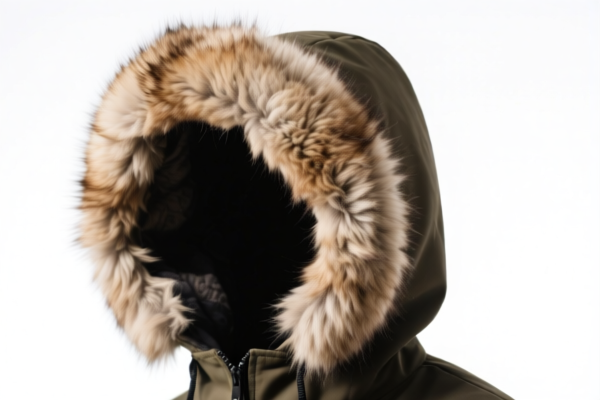
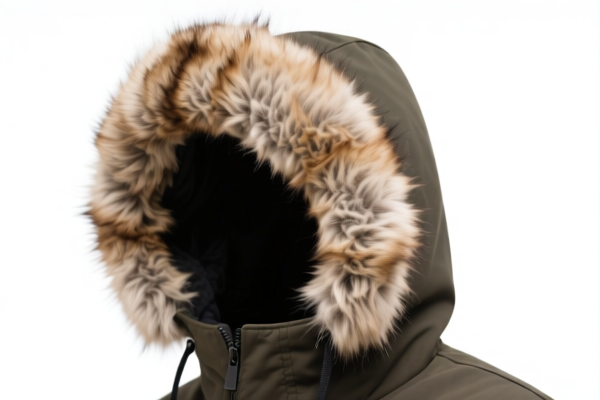

AI Analysis
🧥 Fur Outdoor Hoods (毛皮户外兜帽)
🌐 HS Code Reference & Customs Clearance Guide | 2026 Latest Tariff Analysis | Professional Entry Strategy
📌 I. Product Definition & Classification: Are You Sure You Know "Fur Hoods"?
Outdoor fur hoods are essential accessories for winter apparel, designed to provide warmth and protection against harsh weather conditions. In international trade, they are classified based on material composition and manufacturing method. The distinction between "Fur" (Chapter 43) and "Textile/Fabric" (Chapter 61) is critical, as it dictates a massive difference in tax liability due to US-China trade policies.
Key Distinction Points:
Real Fur/Natural Hair: If the hood is made primarily of animal fur or hair, it falls under Chapter 43. This category is subject to the highest additional tariffs.
Textile/Other Materials: If the hood is made of wool, synthetic fibers, knitted materials, or other non-fur textiles, it falls under Chapter 61 (Clothing Accessories). This category enjoys slightly lower additional tariffs but remains subject to Section 301 and IEEPA duties.
⚠️ Critical Warning:
Misclassifying a "Fur Hood" as a "Textile Hood" to save taxes is a high-risk audit target. US Customs and Border Protection (CBP) strictly enforces material definitions.
- Fur/Natural Hair → Chapter 43 (High Tax)
- Knitted/Other Textiles → Chapter 61 (Moderate Tax)
📦 II. HS Code Classification Details (2026 Latest Tariff Authority)
Based on the provided data, here are the precise HS Codes for Fur Outdoor Hoods, categorized by material and structure.
| HS Code | Product Description | Material/Type | Summary from Data | Total Tax Rate |
|---|---|---|---|---|
4303.10.00.60 |
Fur Accessories (Hoods) | Fur/Natural Hair | Fur material, apparel accessories (hoods), fits classification for fur-made apparel & accessories | 39.0% |
4303.10.00.30 |
Fur Accessories (Hoods) | Fur/Natural Hair | Fur material, apparel accessories (hoods), meets definition for fur-made apparel & accessories | 39.0% |
6117.80.95.20 |
Apparel Accessories (Hoods) | Wool/Fine Animal Hair | Hood accessories, material inferred as wool or fine animal hair, no obvious conflict | 32.1% |
6117.80.95.70 |
Apparel Accessories (Hoods) | Non-Typical Fiber | Hood accessories, knitted or crocheted accessory category, material is non-typical fiber | 32.1% |
6117.90.90.55 |
Apparel Accessories (Hoods) | Other/Mixed | Hood accessories, material is fur-like (context: other category), no material conflict noted in text | 32.1% |
🔍 Key Insight:
- Codes4303.10.00.60and4303.10.00.30are for Real Fur/Natural Hair hoods. They carry a 39.0% total tax rate.
- Codes6117.80.95.20,6117.80.95.70, and6117.90.90.55are for Textile/Wool/Other hoods. They carry a 32.1% total tax rate.
- Note on6117.90.90.55: Although the summary mentions "fur-like," it is classified under Chapter 61 (Textile Accessories) with a lower tax rate. However, physical inspection by CBP will verify if the material actually qualifies as "Fur" (Ch. 43). If it is real fur, misclassification here could lead to penalties.
💰 III. 2026 Latest Tariff Rate Breakdown (Including Additional Taxes)
✅ Applicable Country: United States (US)
✅ Origin: China (CN)
✅ Effective Date: November 10, 2025 onwards (including subsequent imports)
🎯 1. 4303.10.00.60 & 4303.10.00.30 —— Real Fur Hoods
| Item | Details |
|---|---|
| Base Tariff | 4.0% (Ad Valorem) |
| Section 301 Additional Tariff | +25.0% (USITC Footnote 9903.88.01) |
| IEEPA Additional Tariff | +10.0% (For China/HK products, effective Nov 10, 2025) |
| Total Effective Rate | 39.0% |
| Tax Calculation | CIF Value × 39.0% |
| De Minimis Exemption | ❌ Not Eligible (Deny De Minimis) |
| Legal Basis Path | IEEPA:9903.01.25 → IEEPA:9903.01.24 → USITC:4303.10.00.60 → FOOTNOTE:9903.88.01 |
📌 Explanation:
- The 4.0% base rate is for fur articles.
- The 25.0% is the standard Section 301 duty for most Chinese goods.
- The 10.0% is the new IEEPA tariff specifically targeting China-origin goods.
- Total: 39.0%. This is a very high duty rate. Importers must budget accordingly.
🎯 2. 6117.80.95.20 & 6117.80.95.70 & 6117.90.90.55 —— Textile/Wool Hoods
| Item | Details |
|---|---|
| Base Tariff | 14.6% (Ad Valorem) |
| Section 301 Additional Tariff | +7.5% (USITC Footnote 9903.88.01) |
| IEEPA Additional Tariff | +10.0% (For China/HK products, effective Nov 10, 2025) |
| Total Effective Rate | 32.1% |
| Tax Calculation | CIF Value × 32.1% |
| De Minimis Exemption | ❌ Not Eligible (Deny De Minimis) |
| Legal Basis Path | IEEPA:9901.25 → IEEPA:9903.01.24 → USITC:6117.80.95.20 → FOOTNOTE:9903.88.01 |
📌 Note:
- Even though the base rate is higher (14.6%) compared to fur (4.0%), the Section 301 duty is lower (7.5% vs 25.0%).
- The IEEPA 10% applies uniformly.
- Total: 32.1%. This is still a significant cost but 6.9 percentage points lower than real fur hoods.
🛠️ IV. Customs Clearance Practical Advice (Real-World Pitfall Guide)
✅ 1. Required Documentation Checklist (Mandatory)
| Document | Must Provide | Notes |
|---|---|---|
| ✅ Product Specification Sheet | ✔️ | Must clearly state material composition (e.g., "100% Rabbit Fur" vs. "100% Acrylic"). |
| ✅ Material Test Report | ✔️ | Third-party lab report confirming fiber content is crucial for distinguishing Ch. 43 vs. Ch. 61. |
| ✅ Product Photos (Clear Label) | ✔️ | Show the lining, outer shell, and any labels indicating material. |
| ✅ Commercial Invoice | ✔️ | Must describe the item as "Outdoor Hood" and specify "Fur" or "Textile." |
| ✅ Packing List | ✔️ | Ensure quantities match the invoice. |
| ✅ Country of Origin Certificate | ✔️ | Required to confirm China origin for IEEPA/301 duties. |
✅ 2. Declaration Tips (Key Mantras)
🔥 "Material is King, Description is Queen!"
| Scenario | Correct Declaration | Wrong Practice |
|---|---|---|
| Real Fur Hood | 4303.10.00.60 |
Declare as "Textile Hood" → High Risk of Audit & Penalty |
| Wool/Acrylic Hood | 6117.80.95.20 |
Declare as "Fur Hood" → Overpay Taxes |
| Mixed Material Hood | 6117.90.90.55 (if dominant) |
Vague description "Fashion Hood" → Delays |
| Knitted Fur-Trim Hood | 6117.80.95.70 |
Declare as "Fur Coat" → Wrong Chapter |
✅ 3. Special Cases Handling
| Situation | Handling Advice |
|---|---|
| Faux Fur (Synthetic) | Must declare as Chapter 61 (e.g., 6117.80.95.20). Do NOT use Chapter 43 codes. Misusing Ch. 43 for faux fur is fraud. |
| Fur Trim on Hood | If the hood is textile with a fur trim, it may still be classified under Chapter 61 depending on the trim's value. Consult a customs broker. |
| OEM/Custom Hoods | Provide design files and material specs. CBP may require physical samples for classification ruling. |
| CITES Permits | If the fur is from protected species (e.g., Chinchilla, Fox), CITES permits are mandatory, even if the duty is already high. |
🌍 V. Global Market Clearance Comparison (2026 Latest)
| Country/Region | Recommended HS Code | Tariff | Certification | Notes |
|---|---|---|---|---|
| 🇺🇸 USA | 4303.10.00.60 (Fur) 6117.80.95.20 (Textile) |
39.0% (Fur) 32.1% (Textile) |
No specific cert required for fur/textile, but material proof needed. | High tariffs due to 301 + IEEPA. |
| 🇨🇳 China | 4303.10.00.60 6117.80.95.20 |
~4-14% | CCC (if applicable) | Lower base duties, no 301/IEEPA. |
| 🇪🇺 EU | 4303.10 6117.90 |
Varies (0-4%) | CE (if functional gear) | No Section 301. Check CITES for protected species. |
| 🇬🇧 UK | 4303.10 6117.90 |
Varies (0-4%) | UKCA | Post-Brexit rules apply. |
📌 Conclusion:
- The US is the most expensive market for fur/textile accessories due to cumulative tariffs.
- Fur (Ch. 43) is taxed higher than textile (Ch. 61) in the US due to the 25% Section 301 duty.
- Textile/Faux Fur is a more cost-effective option for the US market.
📌 VI. Common Mistakes & Pitfalls (Lessons Learned)
❌ Mistake 1: Declaring a Faux Fur hood as Real Fur (4303.10.00.60)
👉 Consequence: Higher tax (39% vs 32.1%) and potential fraud allegations.
✅ Fix: Use accurate material tests. If it's acrylic/聚酯纤维, use Chapter 61.
❌ Mistake 2: Declaring a Real Fur hood as Textile (6117.80.95.20)
👉 Consequence: Under-declaration of duty. CBP will reclassify, charge back taxes, and impose penalties.
✅ Fix: Always use Chapter 43 for real fur/hair.
❌ Mistake 3: Vague Description: "Winter Hood"
👉 Consequence: CBP will ask for RFP (Request for Further Information), causing delays.
✅ Fix: Be specific: "Women's Outdoor Hood, 100% Rabbit Fur, Lined with Silk."
❌ Mistake 4: Ignoring CITES for exotic furs
👉 Consequence: Seizure and destruction of goods.
✅ Fix: Verify species. If protected, obtain CITES permits before shipping.
🎯 VII. Conclusion: Precise Classification Saves Money!
🎯 Remember the Mantra:
🔹 "Real Fur is Chapter 43 (39%), Textile is Chapter 61 (32.1%)."
🔹 "Faux Fur is NOT Real Fur! Use Ch. 61 to save 6.9%."
🔹 "Material Test Report is Your Best Friend!"
📌 Pro Tip:
If your hoods are originating from Vietnam, Mexico, or Thailand, you may be eligible for IEEPA Exemptions, reducing the total tax to 0%~10%.
Recommendation:
📞 Contact a professional customs broker + Provide Material Test + Apply for Advance Ruling
🚀 Let your hoods clear customs smoothly, minimize costs, and maximize profits!
✨ Professional Clearance Starts with Accurate Classification!
💼 Every cent of cost deserves precise calculation!
Customer Reviews
About HS Code Classification
The Harmonized System (HS) is an internationally standardized nomenclature developed by the World Customs Organization (WCO) to classify traded products. Over 200 countries use the HS system as the basis for customs tariffs, trade statistics, and import/export regulations.
Each HS code follows a hierarchical structure:
- Chapter (2 digits) — Broad category of goods (e.g., Chapter 84: Machinery and Mechanical Appliances)
- Heading (4 digits) — More specific grouping within the chapter
- Subheading (6 digits) — Internationally standardized breakdown, used by all WCO member countries
- National subdivisions (8-10 digits) — Country-specific extensions for further classification, such as US HTSUS 10-digit codes
Correct HS code classification is essential for smooth customs clearance, accurate duty payment, and compliance with trade regulations. Misclassification can lead to customs delays, overpayment of duties, or penalties.
When importing from CN to US, the applicable tariff rates may include:
- Most-Favored-Nation (MFN) rate — The standard duty rate applied to WTO members
- General rate — Applied to countries without trade agreements
- Trade remedy duties — Additional tariffs such as Section 301 (anti-dumping), Section 232 (national security), or countervailing duties
The information provided on this page is for reference purposes only. For official classification, please consult with your local customs authority or a licensed customs broker.