氯丁橡胶内胎
CN → US| HS Code | Tariff Rate | Origin | Destination | Doc |
|---|---|---|---|---|
| 4013905050 | 38.7% | CN | US | Official Doc |
| 4013905010 | 38.7% | CN | US | Official Doc |
| 4014905000 | 14.2% | CN | US | Official Doc |
| 4014901000 | 10.0% | CN | US | Official Doc |
| 4016996050 | 37.5% | CN | US | Official Doc |
| 4016100000 | 35.0% | CN | US | Official Doc |
Product Images
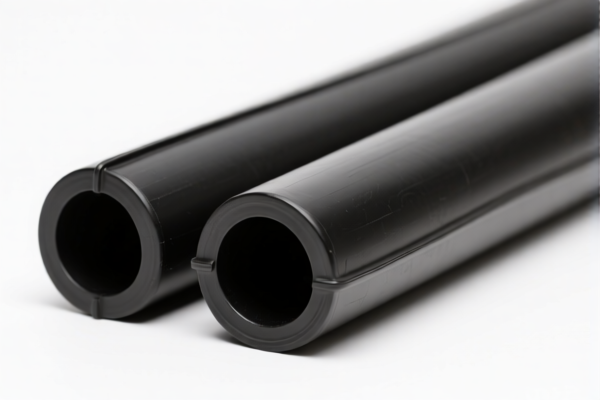
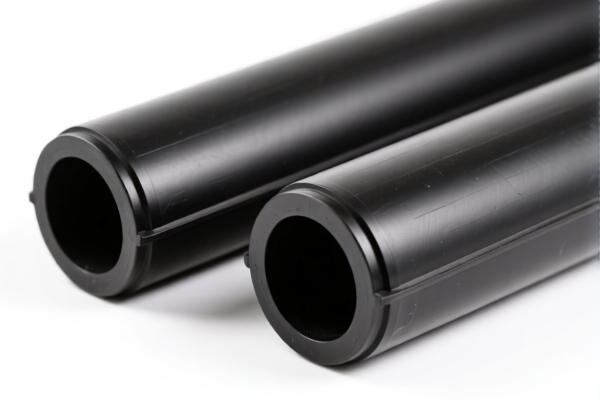
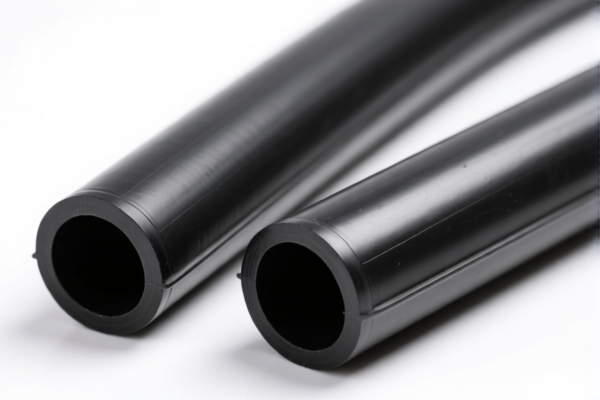
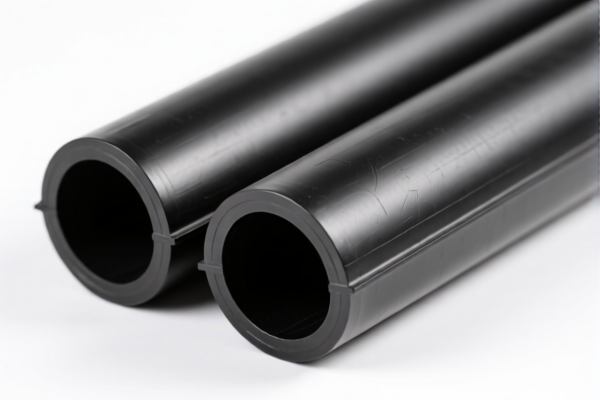
AI Analysis
🚲 Inner Tubes of Neoprene (Chloroprene Rubber)
🌐 HS Code Reference & Customs Clearance Guide | 2026 Latest Tariff Analysis | Professional-Level Clearance Strategy
📌 I. Product Definition & Classification: Do You Really Understand "Neoprene Inner Tubes"?
Neoprene (Chloroprene Rubber) Inner Tubes are specialized pneumatic components used primarily in high-performance bicycles, motorcycles, industrial machinery, or harsh-environment vehicles. Unlike standard natural rubber inner tubes, neoprene tubes offer superior: - Temperature resistance (extreme heat/cold) - Ozone and weather resistance - Chemical resistance - Air retention performance
In international trade, classification depends on material composition, physical form, and specific use case. The key distinction lies in whether the product is classified as a "Tire/Tube" (Chapter 4013) or a "Rubber Article" (Chapter 4016), which drastically impacts tariff rates.
⚠️ Critical Distinction Point:
- If the product is specifically identified as an "Inner Tube" for tires → Generally falls under 4013.
- If classified as a general "Rubber Product" (e.g., generic rubber seals, mats, or non-tire specific items) → May fall under 4016.
- Clarity in description is vital: Misclassification can lead to tariff shocks (from 14.2% to 38.7%).
📦 II. HS Code Classification Details (2026 Latest Tariff Authority Comparison)
| HS Code | Product Description | Application Scenario | Material/Form | Tax Rate |
|---|---|---|---|---|
4014.90.50.00 |
Inner Tubes, of vulcanized rubber other than hard rubber | Bicycles, motorcycles, general pneumatic applications | Vulcanized Rubber, Inner Tube Form | 14.2% |
4013.90.50.10 |
Other inner tubes of rubber | Specific rubber inner tubes, other categories | Rubber, Inner Tube Form | 38.7% |
4016.99.60.50 |
Other made articles of rubber, n.e.s. (Neoprene rubber inner tube, non-vehicular specific) | Non-vehicular rubber products, specialized rubber articles | Vulcanized Rubber, Rubber Product | 37.5% |
4016.10.00.00 |
Other cellular rubber articles (not honeycomb) | Non-honeycomb cellular rubber products | Vulcanized Rubber, Rubber Product | 35.0% |
4013.90.50.50 |
Other inner tubes of rubber, meeting requirements for rubber inner tubes | General rubber inner tubes, compliant with standard inner tube definitions | Rubber, Inner Tube Form | 38.7% |
🔍 Key Reminder:
-4014.90.50.00is the lowest tariff option, but only applies if the product is clearly defined as an "Inner Tube" made of vulcanized rubber.
-4013.90.50.10and4013.90.50.50carry higher tariffs (38.7%) due to additional duties (Section 301/122).
-4016codes classify the item as a "Rubber Article" rather than a "Tube", which may apply if the product is not strictly a tire inner tube but a general rubber component.
💰 III. 2026 Latest Tariff Rate Breakdown (Including Additional Duties & Policy Surcharges)
✅ Applicable Country: United States (US)
✅ Origin: China (CN)
✅ Effective Date: From November 10, 2025 onwards
🎯 1. 4014.90.50.00 —— Inner Tubes, of Vulcanized Rubber (Other Than Hard Rubber)
| Item | Details |
|---|---|
| Base Tariff | 4.2% (ad valorem) |
| Section 301 Additional Duty | +25% |
| Section 122 Duty | +10% |
| Total Tariff | 14.2% |
| Tax Calculation | CIF Value × 14.2% |
| De Minimis Exemption | ❌ Not Applicable |
| Legal Basis Path | USITC:4014.90.50.00 → Section 301:25% → Section 122:10% |
📌 Explanation:
- This is the most favorable tariff among the listed options.
- The Section 301 duty (25%) and Section 122 duty (10%) are already included in the total 14.2% calculation.
- Caution: Ensure the product description explicitly states "Inner Tube" to justify this classification.
🎯 2. 4013.90.50.10 & 4013.90.50.50 —— Other Inner Tubes of Rubber
| Item | Details |
|---|---|
| Base Tariff | 3.7% |
| Section 301 Additional Duty | +25% |
| Section 122 Duty | +10% |
| Total Tariff | 38.7% |
| Tax Calculation | CIF Value × 38.7% |
| De Minimis Exemption | ❌ Not Applicable |
| Legal Basis Path | USITC:4013.90.50.x0 → Section 301:25% → Section 122:10% |
📌 Note:
- These two HS codes have identical tax structures.
- The difference lies in the sub-heading specificity (e.g.,50.10vs.50.50), but both attract the high 38.7% tariff.
- This classification is likely used when the product is explicitly identified as an "Inner Tube" but falls under a different sub-category due to material or design specifics.
🎯 3. 4016.99.60.50 —— Other Made Articles of Rubber, Not Elsewhere Specified
| Item | Details |
|---|---|
| Base Tariff | 2.5% |
| Section 301 Additional Duty | +25% |
| Section 122 Duty | +10% |
| Total Tariff | 37.5% |
| Tax Calculation | CIF Value × 37.5% |
| De Minimis Exemption | ❌ Not Applicable |
| Legal Basis Path | USITC:4016.99.60.50 → Section 301:25% → Section 122:10% |
📌 Note:
- Classified as a "Rubber Product" rather than a "Tube".
- Useful if the product is not strictly a tire inner tube but a general rubber component (e.g., specialized seals, gaskets, or non-vehicular rubber parts).
🎯 4. 4016.10.00.00 —— Other Cellular Rubber Articles (Not Honeycomb)
| Item | Details |
|---|---|
| Base Tariff | 0.0% |
| Section 301 Additional Duty | +25% |
| Section 122 Duty | +10% |
| Total Tariff | 35.0% |
| Tax Calculation | CIF Value × 35.0% |
| De Minimis Exemption | ❌ Not Applicable |
| Legal Basis Path | USITC:4016.10.00.00 → Section 301:25% → Section 122:10% |
📌 Note:
- Applies only if the neoprene inner tube is cellular rubber (foamed structure) and not honeycomb.
- Base tariff is 0%, but additional duties push the total to 35.0%.
🛠️ IV. Customs Clearance Practical Advice (Battle-Tested Pitfall Guide)
✅ 1. Required Documentation Checklist (All Essential)
| Document | Required? | Explanation |
|---|---|---|
| ✅ Product Specification Sheet | ✔️ | Must include material (Neoprene/Chloroprene), dimensions, pressure rating, and application (e.g., "Bicycle Inner Tube"). |
| ✅ Material Safety Data Sheet (MSDS) | ✔️ | Proves chemical composition and confirms vulcanized rubber nature. |
| ✅ Product Photos (Including Label) | ✔️ | Clear images showing the tube shape, valve type, and any branding. |
| ✅ Commercial Invoice | ✔️ | Must clearly state "Neoprene Rubber Inner Tube" and not just "Rubber Part." |
| ✅ Packing List | ✔️ | Detail quantity, weight, and dimensions. |
| ✅ Certificate of Origin (CO) | ✔️ | If applicable, to verify origin for duty calculations. |
✅ 2. Declaration Tips (Key Mnemonic)
🔥 "Specify 'Inner Tube', Avoid 'Rubber Product', Tariff Drops!"
| Scenario | Correct Declaration | Incorrect Practice |
|---|---|---|
| Standard Neoprene Inner Tube | 4014.90.50.00 (14.2%) |
Misdeclare as "Rubber Seal" → 37.5% |
| Specific Rubber Inner Tube Category | 4013.90.50.10/50 (38.7%) |
N/A |
| Non-Tire Rubber Component | 4016.99.60.50 (37.5%) |
Use "Inner Tube" in name → Misclassification |
| Cellular Rubber Product | 4016.10.00.00 (35.0%) |
Not applicable for standard solid rubber tubes |
✅ 3. Special Case Handling
| Scenario | Handling Advice |
|---|---|
| OEM Custom Inner Tubes | Provide customer order + design specs to justify specific HS code. |
| Mixed Shipments (Inner Tubes + Accessories) | Declare inner tubes separately. Do not bundle with tubes as "accessories" to avoid misclassification. |
| Neoprene vs. Natural Rubber | Explicitly state "Neoprene" or "Chloroprene" in description. Natural rubber may have different classification. |
| Used vs. New | Ensure declaration specifies "New". Used rubber articles may have additional restrictions. |
🌍 V. Global Market Comparison (2026 Latest)
| Country/Region | Recommended HS Code | Tariff | Certification Required | Notes |
|---|---|---|---|---|
| 🇺🇸 USA | 4014.90.50.00 |
14.2% | None | Lowest US duty if classified as "Inner Tube". |
| 🇨🇳 China | 4014.90.50.00 |
~5-8% | CCC (if applicable) | No additional Section 301/122 duties. |
| 🇪🇺 EU | 4013.90.00.00 |
0-6% | CE (if applicable) | No additional duties. |
| 🇯🇵 Japan | 4013.90.00.00 |
0-8% | JIS | No additional duties. |
📌 Conclusion:
- USA is the most challenging market due to Section 301 & 122 duties.
- Proper classification as4014.90.50.00is critical to minimize US tariffs to 14.2% instead of 38.7%.
- Other markets (China, EU, Japan) have significantly lower or no additional duties.
📌 VI. Common Errors & Pitfalls (Blood & Tears Lessons)
❌ Error 1: Declaring as "Rubber Article" when it is clearly an "Inner Tube"
👉 Consequence: Tariff jumps from 14.2% to 37.5%+ → Profit Margin Erosion!
❌ Error 2: Vague description like "Rubber Tube" without specifying "Inner"
👉 Consequence: Customs may classify under general rubber articles → Higher Duty + Delays!
❌ Error 3: Ignoring Section 301 & 122 in cost calculation
👉 Consequence: Unexpected costs at customs → Cash Flow Disruption!
❌ Error 4: Confusing Neoprene with Natural Rubber
👉 Consequence: Misclassification → Potential Penalties & Retention!
✅ Correct Approach:
"Neoprene (Chloroprene) Rubber Inner Tube, Vulcanized, for Bicycle/Motorcycle, New, Model XYZ"
🎯 VII. Conclusion: Professional Declaration, Time & Cost Saving!
🎯 Remember the Mnemonic:
🔹 "Inner Tube = 14.2%, Rubber Article = 37.5%, Vague Description = Pain!"
🔹 "HS Code Determines Fate, 25% Difference Can Make or Break Your Deal!"
📌 Pro Tip:
If your neoprene inner tubes are originating from Vietnam, Malaysia, or Thailand, you may be eligible for IEEPA Exemptions or FTZ Benefits, reducing US tariffs to 0-5%.
It is highly recommended to apply for an Advance Ruling from US Customs and Border Protection (CBP) to secure the 14.2% classification.
📣 Immediate Action:
📞 Contact a Professional Customs Broker + Provide Product Specs + Apply for HS Code Advance Ruling
🚀 Ensure Smooth Customs Clearance, Efficient Global Trade, and Maximized Profit!
✨ Professional Customs Clearance Starts with Accurate Classification!
💼 Every Penny Saved is Pure Profit!
Customer Reviews
About HS Code Classification
The Harmonized System (HS) is an internationally standardized nomenclature developed by the World Customs Organization (WCO) to classify traded products. Over 200 countries use the HS system as the basis for customs tariffs, trade statistics, and import/export regulations.
Each HS code follows a hierarchical structure:
- Chapter (2 digits) — Broad category of goods (e.g., Chapter 84: Machinery and Mechanical Appliances)
- Heading (4 digits) — More specific grouping within the chapter
- Subheading (6 digits) — Internationally standardized breakdown, used by all WCO member countries
- National subdivisions (8-10 digits) — Country-specific extensions for further classification, such as US HTSUS 10-digit codes
Correct HS code classification is essential for smooth customs clearance, accurate duty payment, and compliance with trade regulations. Misclassification can lead to customs delays, overpayment of duties, or penalties.
When importing from CN to US, the applicable tariff rates may include:
- Most-Favored-Nation (MFN) rate — The standard duty rate applied to WTO members
- General rate — Applied to countries without trade agreements
- Trade remedy duties — Additional tariffs such as Section 301 (anti-dumping), Section 232 (national security), or countervailing duties
The information provided on this page is for reference purposes only. For official classification, please consult with your local customs authority or a licensed customs broker.