水处理滤纸
CN → US| HS Code | Tariff Rate | Origin | Destination | Doc |
|---|---|---|---|---|
| 4823209000 | 35.0% | CN | US | Official Doc |
| 4823201000 | 35.0% | CN | US | Official Doc |
| 8421290065 | 35.0% | CN | US | Official Doc |
| 8421990180 | 35.0% | CN | US | Official Doc |
Product Images
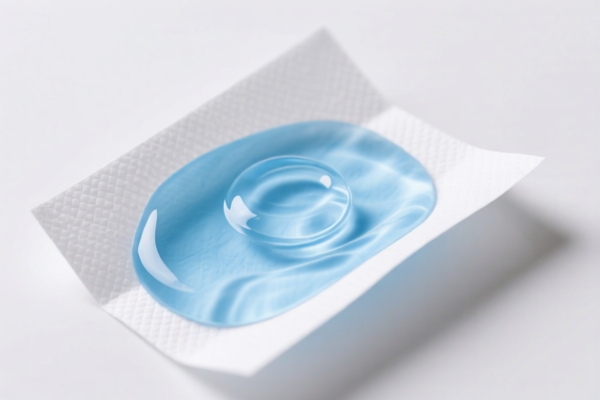
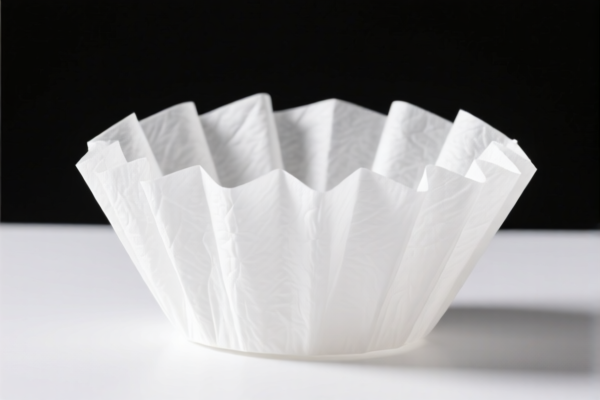
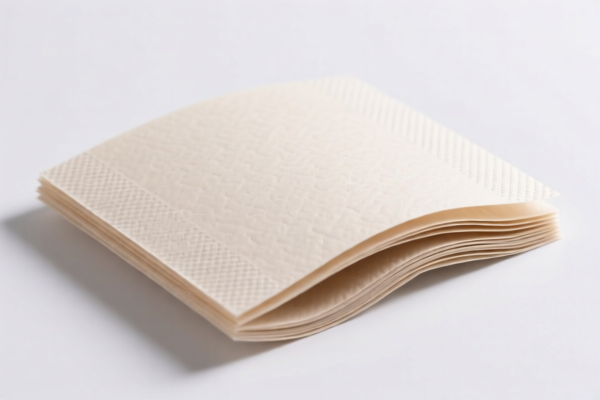
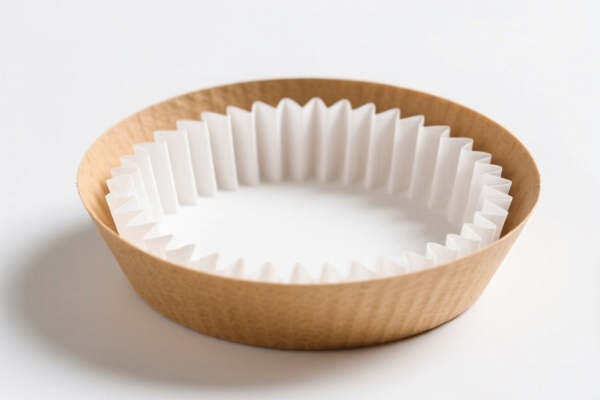
AI Analysis
🌊 Water Treatment Filter Paper
🌐 HS Code Classification & Customs Clearance Guide | 2026 Latest Tariff Breakdown | Pro-Level Import Strategy
📌 One, Product Definition & Classification: What Exactly Is “Water Treatment Filter Paper”?
Water treatment filter paper is a non-woven or paper-based consumable filter medium used to remove suspended solids, particulates, and impurities from liquids in industrial, municipal, or laboratory water purification systems. It is not a permanent filter housing, but a replaceable filtration element designed for liquid clarification, pre-filtration, or final polishing.
⚠️ Key Distinction:
- If the product is purely paper/fiber-based, no mechanical housing, and used only for filtering liquids (e.g., water, oil, chemicals) → classified under paper-based filter codes.
- If it's part of a mechanical filter housing, cartridge, or system with metal/plastic components → may fall under mechanical filtration equipment.
📦 Two, HS Code Classification Details (2026 Latest Tariff Authority)
| HS Code | Product Description | Applicable Use Case | Material Type | Has Housing? |
|---|---|---|---|---|
4823.20.90.00 |
Filter paper and paperboard for filtration, not otherwise specified | General-purpose water treatment filter paper, lab filters, industrial pre-filters | Pure paper/fiber | ❌ No |
4823.20.10.00 |
Filter paper specifically for paint or liquid filtration (e.g., paint filters) | Used in paint, chemical, or water treatment systems for liquid filtration | Paper/fiber | ❌ No |
8421.29.00.65 |
Liquid filtration media, including consumable filter paper used in liquid purification systems | Water purification systems, industrial fluid filtration, reverse osmosis pre-filters | Paper/fiber (consumable) | ❌ No |
8421.99.01.80 |
Other parts for filtration machinery (e.g., filter media, consumables) | Non-metallic filter elements used in liquid filtration equipment | Paper/fiber | ❌ No |
🔍 Critical Insight:
- All four codes apply only to consumable, paper-based filtration media used for liquid filtration.
- If the product includes plastic housing, metal frame, or mechanical components, it must not be declared under these codes — risk of misclassification penalties.
💰 Three, 2026 Latest Tariff Breakdown (With Detailed Tax Clauses)
✅ Applicable Country: United States (US)
✅ Origin: China (CN)
✅ Effective Date: November 10, 2025 (including all subsequent imports)
🎯 1. 4823.20.90.00 — Filter Paper for Filtration (General Use)
| Item | Detail |
|---|---|
| Base Duty | 0% (ad valorem) |
| USITC Section 301 Tariff | +25% (from USITC Footnote 9903.88.01) |
| IEEPA Section 301 Tariff | +10% (under International Emergency Economic Powers Act, applies to goods from China/HK) |
| Total Duty Rate | 35.0% |
| Tax Calculation | CIF Value × 35% |
| De Minimis Exemption? | ❌ No (denied under US law) |
| Legal Basis Path | IEEPA:9903.01.25 → IEEPA:9903.01.24 → USITC:4823.20.90.00 → FOOTNOTE:9903.88.01 |
📌 Explanation:
- The 25% USITC tariff comes from Section 301 of the Trade Act of 1974, targeting unfair trade practices by China.
- The 10% IEEPA tariff is imposed under emergency economic powers, used to restrict imports from China.
- Total: 35% — high but manageable if properly classified.
🎯 2. 4823.20.10.00 — Filter Paper for Paint or Liquid Filtration
| Item | Detail |
|---|---|
| Base Duty | 0% |
| USITC Section 301 Tariff | +25% |
| IEEPA Section 301 Tariff | +10% |
| Total Duty Rate | 35.0% |
| Tax Calculation | CIF × 35% |
| De Minimis Exemption? | ❌ No |
| Legal Basis Path | IEEPA:9901.25 → IEEPA:9903.01.24 → USITC:4823.20.10.00 → FOOTNOTE:9903.88.01 |
📌 Why This Applies:
- The product name contains “paint” or “filter paper” → clearly matches “paint filter” in the classification notes.
- Even if used for water, if it’s designed for paint filtration, this code applies.
- No conflict with material (paper) or function (liquid filtration).
🎯 3. 8421.29.00.65 — Liquid Filtration Media (Consumable)
| Item | Detail |
|---|---|
| Base Duty | 0% |
| USITC Section 301 Tariff | +25% |
| IEEPA Section 301 Tariff | +10% |
| Total Duty Rate | 35.0% |
| Tax Calculation | CIF × 35% |
| De Minimis Exemption? | ❌ No |
| Legal Basis Path | IEEPA:9903.01.25 → IEEPA:9903.01.24 → USITC:8421.29.00.65 → FOOTNOTE:9903.88.01 |
📌 Why This Applies:
- The product is a consumable liquid filtration medium used in water purification systems.
- Matches the "liquid filtration" definition in the classification notes.
- No material conflict — paper/fiber is acceptable under this code.
- Even if used in water treatment, if it’s a filter media, this code applies.
🎯 4. 8421.99.01.80 — Other Parts for Filtration Machinery (Filter Media)
| Item | Detail |
|---|---|
| Base Duty | 0% |
| USITC Section 301 Tariff | +25% |
| IEEPA Section 301 Tariff | +10% |
| Total Duty Rate | 35.0% |
| Tax Calculation | CIF × 35% |
| De Minimis Exemption? | ❌ No |
| Legal Basis Path | IEEPA:9903.01.25 → IEEPA:9903.01.24 → USITC:8421.99.01.80 → FOOTNOTE:9903.88.01 |
📌 Why This Applies:
- The product is non-metallic, paper-based, and used in filtration systems.
- Falls under “other filter parts” when not covered by more specific codes.
- No conflict with water treatment use or material type.
- Best fallback code if the exact filter type isn’t clearly defined.
🛠️ Four, Customs Clearance Best Practices (Pro Tips to Avoid Delays)
✅ 1. Required Documentation (Must-Have List)
| Document | Required? | Notes |
|---|---|---|
| ✅ Product Specification Sheet | ✔️ | Include material (paper/fiber), pore size, filtration efficiency, intended use |
| ✅ Product Photos (with label) | ✔️ | Show brand, model, packaging, and “filter paper” labeling |
| ✅ Commercial Invoice | ✔️ | Clearly state: “Water Treatment Filter Paper, Consumable, Non-Metallic” |
| ✅ Certificate of Origin (CO) | ✔️ | If from China, must be issued; can be used for future claims |
| ✅ Third-Party Test Report | ✔️ | FDA, ISO 13485, or EN 12734 (if used in medical/laboratory settings) |
| ✅ Packing List | ✔️ | Specify quantity per unit, total weight, and packaging type |
✅ 2.申报技巧(Key Rules to Remember)
🔥 “Paper Only, No Housing, Name Matters, Tax is 35%!”
| Scenario | Correct HS Code | Wrong Approach |
|---|---|---|
| Pure paper filter, no housing, used for water | 4823.20.90.00 or 4823.20.10.00 |
Misclassify as 8421.29.00.65 → no penalty, but same tax |
| Used in paint system, but also for water | 4823.20.10.00 |
Use 4823.20.90.00 → risk of audit |
| Part of a cartridge with plastic housing | ❌ Do NOT use any of these codes | Use 8421.29.00.65 or 8421.99.01.80 only if non-metallic and consumable |
| Sold as “filter media” or “filtration paper” | 8421.29.00.65 |
Use 4823.20.90.00 → same tax, but less precise |
✅ 3. Special Cases & Handling
| Situation | Recommended Action |
|---|---|
| OEM/Custom Filter Paper | Provide design specs and usage notes to avoid “non-standard” classification |
| Used in Lab Water Purification | Use 4823.20.90.00 or 8421.29.00.65 — both acceptable |
| Used in Municipal Water Plants | Use 8421.29.00.65 — best fit for industrial liquid filtration |
| Filter Paper with Additives (e.g., activated carbon) | Still falls under 4823.20.90.00 or 8421.29.00.65 — not a chemical compound |
🌍 Five, Global Customs Comparison (2026)
| Country/Region | Recommended HS Code | Duty Rate | Certification | Notes |
|---|---|---|---|---|
| 🇺🇸 USA | 4823.20.90.00 / 8421.29.00.65 |
35% (China origin) | None required | No de minimis |
| 🇨🇳 China | 4823.20.90.00 |
5% | CCC | No extra tariffs |
| 🇪🇺 EU | 4823.20.90.00 |
0% (if CE) | CE | No additional tariffs |
| 🇦🇺 Australia | 4823.20.90.00 |
5% | RCM | No extra tariffs |
| 🇯🇵 Japan | 4823.20.90.00 |
0% | PSE | No extra tariffs |
📌 Conclusion:
- The U.S. is the only market imposing 35% on water treatment filter paper from China.
- China, EU, Australia, and Japan have much lower or zero tariffs — ideal for export diversification.
📌 Six, Common Mistakes & Risk Warnings (Learn from Others’ Failures)
❌ Mistake 1: Misclassifying paper filter as “filter cartridge” with housing
👉 Result: Incorrect code → 45%+ tax, penalties, delayed release
❌ Mistake 2: Using “filter paper” as product name without specifying use
👉 Result: Customs may assume it’s for paint → use 4823.20.10.00 → same tax, but risk of audit
❌ Mistake 3: Not including “consumable” or “non-metallic” in description
👉 Result: Customs may suspect mechanical part → misclassification risk
✅ Correct Declaration Example:
“Water Treatment Filter Paper, Non-Metallic, Consumable, 100mm Diameter, 100 Sheets, for Industrial Water Purification, Paper-Based, Not in Housing”
🎯 Seven, Final Verdict: Precision Pays Off!
🎯 Remember the Golden Rule:
🔹 “Paper, No Housing, Liquid Use, 35% Tax — Choose the Right HS Code, Avoid Fines!”
🔹 “One wrong code = 35% extra cost, 100% audit risk!”
📌 Pro Tip:
If your filter paper is originating from Vietnam, Mexico, Thailand, or Malaysia, you may qualify for IEEPA exemption — 0% tariff.
✅ Apply for Advance Ruling (Pre-Approval) before shipment to lock in the correct HS Code.
📣 Take Action Now:
📞 Contact a licensed U.S. customs broker + provide product specs + request HS Code pre-ruling
🚀 Ensure smooth clearance, avoid penalties, and save thousands in duty!
✨ Professional Customs Starts with Accurate Classification!
💼 Your profit margin depends on the right HS Code — don’t gamble!
Customer Reviews
About HS Code Classification
The Harmonized System (HS) is an internationally standardized nomenclature developed by the World Customs Organization (WCO) to classify traded products. Over 200 countries use the HS system as the basis for customs tariffs, trade statistics, and import/export regulations.
Each HS code follows a hierarchical structure:
- Chapter (2 digits) — Broad category of goods (e.g., Chapter 84: Machinery and Mechanical Appliances)
- Heading (4 digits) — More specific grouping within the chapter
- Subheading (6 digits) — Internationally standardized breakdown, used by all WCO member countries
- National subdivisions (8-10 digits) — Country-specific extensions for further classification, such as US HTSUS 10-digit codes
Correct HS code classification is essential for smooth customs clearance, accurate duty payment, and compliance with trade regulations. Misclassification can lead to customs delays, overpayment of duties, or penalties.
When importing from CN to US, the applicable tariff rates may include:
- Most-Favored-Nation (MFN) rate — The standard duty rate applied to WTO members
- General rate — Applied to countries without trade agreements
- Trade remedy duties — Additional tariffs such as Section 301 (anti-dumping), Section 232 (national security), or countervailing duties
The information provided on this page is for reference purposes only. For official classification, please consult with your local customs authority or a licensed customs broker.