水袋背包
CN → US| HS Code | Tariff Rate | Origin | Destination | Doc |
|---|---|---|---|---|
| 7310290065 | 85.0% | CN | US | Official Doc |
| 3923290000 | 38.0% | CN | US | Official Doc |
| 3923210095 | 38.0% | CN | US | Official Doc |
| 6307909891 | 24.5% | CN | US | Official Doc |
| 6307908995 | 17.0% | CN | US | Official Doc |
Product Images
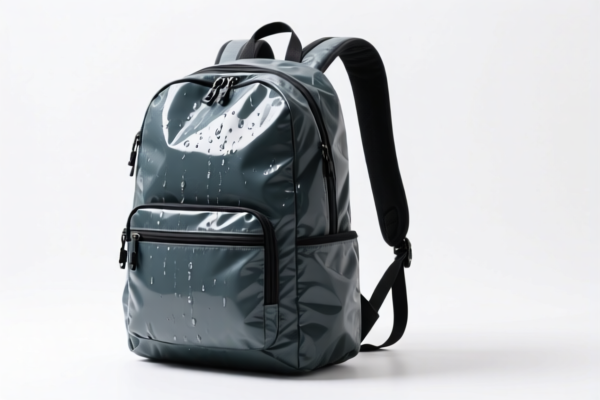
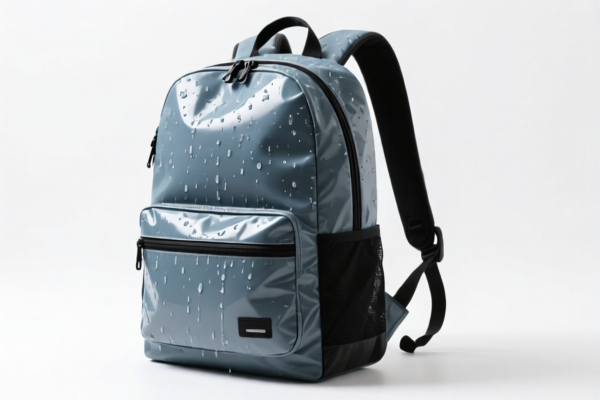
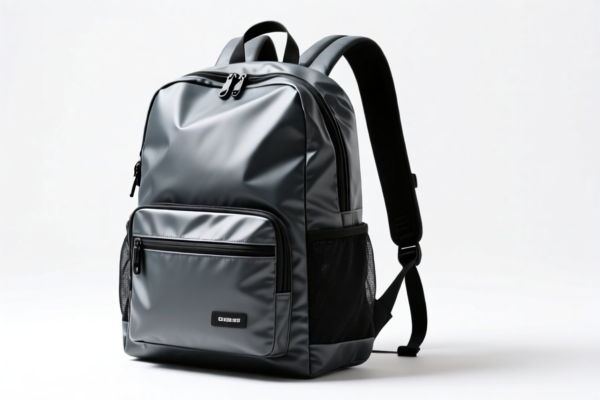

AI Analysis
💧 Hydration Bladder Backpacks: The Ultimate Customs Classification & Duty Guide (2026 Update)
🌐 HS Code Reference & Customs Clearance Strategy | 2026 Latest Tariff Analysis | Professional-Level Compliance Guide
📌 I. Product Definition & Classification: Do You Really Know What a "Hydration Bladder Backpack" Is?
A hydration bladder backpack is a composite product combining liquid storage functionality with carrying accessories. In international trade, its classification depends entirely on the primary material and the dominant function. It is rarely classified as a single item but rather split based on how it is declared and constructed.
Core Components: 1. Hydration Bladder (The "Bag"): The flexible reservoir holding water. Usually made of PVC, TPU, or EVA. 2. Backpack Carrier (The "Container"): The fabric structure holding the bladder, bottles, and gear. Made of nylon, polyester, or canvas.
⚠️ Critical Distinction Point:
- If the product is declared as a complete set (backpack + bladder), customs often look at the backpack's material for the main classification, treating the bladder as an accessory.
- If declared separately or if the bladder material dominates the value/nature, it falls under plastic packaging/rubber articles.
- Steel/Aluminum variants are rare but exist for insulated rigid systems, falling under metal containers.
📦 II. HS Code Classification Details (2026 Latest Tariff Authority)
Based on the provided data, here are the four primary classification paths for Hydration Bladder Backpacks.
| HS Code | Product Description | Applicable Scenario | Primary Material |
|---|---|---|---|
3923.21.00.95 |
Sacks and bags, incl. cones, of polymers of ethylene (Plastic) | Standalone Hydration Bladders or soft plastic pouches; EVA/PE materials | ✅ Plastic (Ethylene Polymer) |
3923.29.00.00 |
Sacks and bags of other plastics | Bladders made of PVC, TPU, or non-ethylene plastics; general plastic fluid containers | ✅ Plastic (Other) |
6307.90.98.91 |
Other made-up articles (e.g., Backpack Carriers) | The fabric backpack part itself; made of nylon/polyester; fits "make-up articles" catch-all | ✅ Textile/Fabric |
7310.21.00.75 |
Tanks, cans, drums... of iron or steel, closed by welding/seaming | Metal Hydration Systems (rare); insulated steel bladders or metal canteens | ✅ Iron/Steel |
7310.29.00.65 |
Other containers of iron or steel, < 50L, unspecified shape | Metal Storage Containers; generic steel water tanks or non-welded metal packs | ✅ Iron/Steel |
🔍 Key Insight:
- Most standard nylon backpacks with plastic bladders should ideally be declared as Textile Bags (6307.90) if the backpack structure is the primary value, OR Plastic Sacks (3923.29) if the bladder is the main commodity.
- Do not mix materials in one HS code. If you ship a full kit, you may need to split the invoice or declare the dominant good.
- Metal versions (7310) are niche (e.g., military-grade insulated cans) and carry significantly higher tariffs.
💰 III. 2026 Latest Tariff Rate Breakdown (Including Surcharges & Policies)
✅ Applicable Country: USA (US)
✅ Origin: China (CN)
✅ Effective Date: 2025/2026 (Current Trade Environment)
🎯 1. 3923.21.00.95 & 3923.29.00.00 —— Plastic Hydration Bladders/Sacks
| Item | Content |
|---|---|
| Base Tariff | 3.0% (for 3923.21); Varies for 3923.29 (Assumed ~3-7% base) |
| USITC Surcharge (Section 301) | +25% |
| 122 Clause Tariff | +10% (Specific to plastic products under Section 122) |
| Total Tax Rate | 38.0% (as per data for 3923.29); 38.0% (for 3923.21) |
| Tax Detail | Base: 3.0% + Surcharge: 25.0% + 122 Clause: 10% |
| Legal Basis Path | USITC:3923.29.00.00 → FOOTNOTE:122 |
📌 Explanation:
- Plastic bladders are heavily scrutinized. The 25% Section 301 tariff is standard for Chinese plastic goods.
- The 122 Clause adds an additional 10% for specific plastic articles.
- Total Burden: Nearly 40% of the CIF value is tax. This is a high-cost item for importers.
🎯 2. 6307.90.98.91 —— Fabric Backpacks (The Carrier)
| Item | Content |
|---|---|
| Base Tariff | 7.0% (Standard for other made-up textile articles) |
| USITC Surcharge (Section 301) | +7.5% (Partial reduction or specific rate for certain textiles) |
| 122 Clause Tariff | +10% |
| Total Tax Rate | 24.5% |
| Tax Detail | Base: 7.0% + Surcharge: 7.5% + 122 Clause: 10% |
| Legal Basis Path | USITC:6307.90.98.91 → FOOTNOTE:122 |
📌 Explanation:
- This is the most tax-efficient route if you can legally declare the backpack as the primary good.
- However, if the bladder is considered integral, customs may reclassify the entire set to the higher plastic rate.
🎯 3. 7310.21.00.75 & 7310.29.00.65 —— Metal Containers/Cans
| Item | Content |
|---|---|
| Base Tariff | 0.0% |
| USITC Surcharge (Section 301) | +25% |
| 122 Clause / 122 Steel-Al-Cu | +10% (Standard) + 50% (Steel/Aluminum/Copper Surcharge) |
| Total Tax Rate | 85.0% |
| Tax Detail | Base: 0.0% + Surcharge: 25.0% + 122 Clause: 10% + Steel/Al/Cu Surcharge: 50% |
| Legal Basis Path | USITC:7310.21.00.75 → FOOTNOTE:Steel_Al_Cu_Surcharge |
📌 Warning:
- Avoid this classification unless necessary!
- The 50% Steel/Aluminum/Copper surcharge is punitive.
- Even if the base tariff is 0%, the total 85% makes metal hydration systems economically unviable for most consumer markets.
🛠️ IV. Customs Clearance Practical Advice (Battle-Tested Pitfall Guide)
✅ 1. Preparation Checklist (Non-Negotiable)
| Document | Required | Explanation |
|---|---|---|
| ✅ Product Specs | ✔️ | Specify material: EVA/TPU/PVC for bladder; Nylon/Polyester for pack. |
| ✅ Material Composition Sheet | ✔️ | Proof of % composition. Crucial for distinguishing between 3923 (Plastic) and 6307 (Textile). |
| ✅ Product Photos | ✔️ | Clear shots of the bladder, the backpack, and the assembly. Show seams and valves. |
| ✅ Commercial Invoice | ✔️ | Must clearly state: "Hydration Bladder Backpack Set". Do not use vague terms like "Sports Bag". |
| ✅ HS Code Pre-Ruling | ✔️ | Highly Recommended. Apply for an Advance Ruling to confirm if the set is classified as plastic or textile. |
✅ 2. Declaration Strategy (Key Mantras)
🔥 "Material Defines the Code, Not the Function!"
| Scenario | Correct Declaration | Incorrect Declaration | Risk |
|---|---|---|---|
| Standard Nylon Pack + Plastic Bladder | Declare as 6307.90.98.91 (Textile Bag) if pack is dominant; OR split invoice. |
Declare as single HS code without specifying components. | Customs may audit and reclassify to 3923 (Plastic) → 38% Tax. |
| Standalone Plastic Bladder | Declare as 3923.29.00.00 or 3923.21.00.95. |
Declare as "Water Bottle" or "Container". | Misclassification → Penalty. |
| Metal Insulated Canister | Declare as 7310.21.00.75 or 7310.29.00.65. |
Declare as "Plastic Bottle". | High scrutiny for metal content. |
✅ 3. Special Case Handling
| Situation | Handling Advice |
|---|---|
| OEM Custom Backpacks | Provide design specs. If the bladder is sewn-in, argue for Textile Classification (6307) as the "essential character." |
| Soft-Sided Metal Packs | If the outer shell is steel but flexible (like a canteen cover), ensure it doesn't fall under rigid 7310. |
| Kit Separation | Best Practice: Ship backpacks and bladders in separate shipments or on separate invoices to allow different HS codes (6307 vs 3923). |
| Origin Labeling | Ensure "Made in China" labels are clear. This triggers the 301 Tariffs and 122 Clauses. |
🌍 V. Global Market Comparison (2026 Update)
| Country/Region | Recommended HS Code | Tariff (China Origin) | Notes |
|---|---|---|---|
| 🇺🇸 USA | 3923.29 / 6307.90 |
38.0% (Plastic) / 24.5% (Textile) | High surcharges apply. Splitting shipment is key. |
| 🇨🇳 China | 3923.29 / 6307.90 |
~3-7% | Low import tax. No 301/122 clauses. |
| 🇪🇺 EU | 3923.29 / 6307.90 |
0-4% (if under €150 de minimis) | CE marking required for plastic parts touching water. |
| 🇬🇧 UK | 3923.29 / 6307.90 |
0-4% | Post-Brexit rules similar to EU for low-value goods. |
📌 Conclusion:
- The USA is the most challenging market due to the 38% effective tax rate on plastic bladders and 85% on metal containers.
- Splitting the shipment (Backpack vs. Bladder) can save you ~13.5% in taxes if the backpack is correctly classified as textile.
📌 VI. Common Errors & Pitfall Guide (Lessons Learned)
❌ Mistake 1: Declaring the entire set under one HS code (3923.29) without justification.
👉 Consequence: If the backpack is mostly textile, customs may allow a lower rate, BUT if they stick to the plastic rate, you pay 38% on the whole value.
Fix: Provide a Bill of Materials (BOM) to argue for primary character.
❌ Mistake 2: Using vague terms like "Water Pack" or "Canteen Bag".
👉 Consequence: Customs cannot determine material → Delays, audits, or default to highest duty rate.
Fix: Use precise terms: "Nylon Hydration Backpack with TPU Bladder".
❌ Mistake 3: Ignoring the 122 Clause.
👉 Consequence: Underpaying taxes by 10-15%.
Fix: Always check for Section 122 applicability on plastic and textile imports from China.
❌ Mistake 4: Misclassifying metal parts as plastic.
👉 Consequence: If a metal clasp or frame causes the whole item to be classified under 7310, you face 85% tax.
Fix: Ensure metal content is minor/non-structural, or declare metal parts separately.
✅ Correct Practice:
"Nylon Hydration Backpack, Model XYZ, 2L TPU Bladder Included. FCC/CE Certified. Origin: China."
🎯 VII. Conclusion: Professional Classification Saves Thousands!
🎯 Remember the Mantra:
🔹 "Plastic Bladder = 38% Tax"
🔹 "Textile Backpack = 24.5% Tax"
🔹 "Metal Container = 85% Tax (Avoid!)"
🔹 "Split Shipment = Maximize Savings!"
📌 Pro Tip:
If your product contains more than 50% textile by weight and value, argue for 6307.90.98.91. If the bladder is the main value driver, accept the 3923.29.00.00 rate.
Apply for a Pre-Ruling before shipping large volumes to the USA.
📣 Immediate Action:
📞 Consult a licensed customs broker.
📦 Prepare detailed BOM (Bill of Materials).
🚀 Optimize your supply chain to split shipments if possible!
✨ Precision in Classification, Profit in Clearance!
💼 Every percent of duty saved is pure profit!
Customer Reviews
About HS Code Classification
The Harmonized System (HS) is an internationally standardized nomenclature developed by the World Customs Organization (WCO) to classify traded products. Over 200 countries use the HS system as the basis for customs tariffs, trade statistics, and import/export regulations.
Each HS code follows a hierarchical structure:
- Chapter (2 digits) — Broad category of goods (e.g., Chapter 84: Machinery and Mechanical Appliances)
- Heading (4 digits) — More specific grouping within the chapter
- Subheading (6 digits) — Internationally standardized breakdown, used by all WCO member countries
- National subdivisions (8-10 digits) — Country-specific extensions for further classification, such as US HTSUS 10-digit codes
Correct HS code classification is essential for smooth customs clearance, accurate duty payment, and compliance with trade regulations. Misclassification can lead to customs delays, overpayment of duties, or penalties.
When importing from CN to US, the applicable tariff rates may include:
- Most-Favored-Nation (MFN) rate — The standard duty rate applied to WTO members
- General rate — Applied to countries without trade agreements
- Trade remedy duties — Additional tariffs such as Section 301 (anti-dumping), Section 232 (national security), or countervailing duties
The information provided on this page is for reference purposes only. For official classification, please consult with your local customs authority or a licensed customs broker.