汽车保护条
CN → US| HS Code | Tariff Rate | Origin | Destination | Doc |
|---|---|---|---|---|
| 4016996050 | 37.5% | CN | US | Official Doc |
| 8708295160 | 0.0% | CN | US | Official Doc |
| 8708295110 | 0.0% | CN | US | Official Doc |
| 4016996010 | 37.5% | CN | US | Official Doc |
| 3926305000 | 22.8% | CN | US | Official Doc |
Product Images
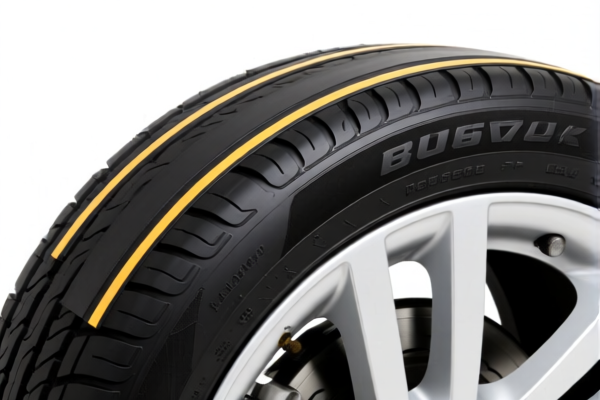
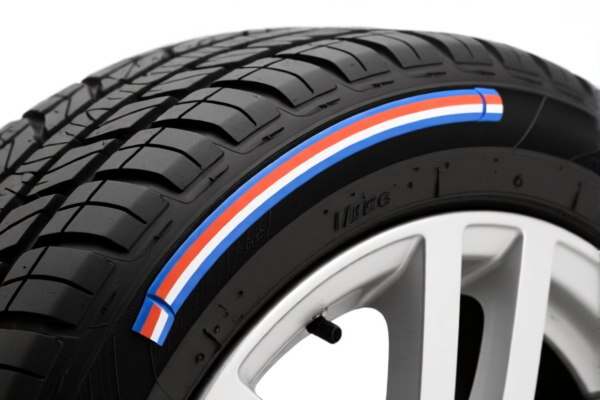
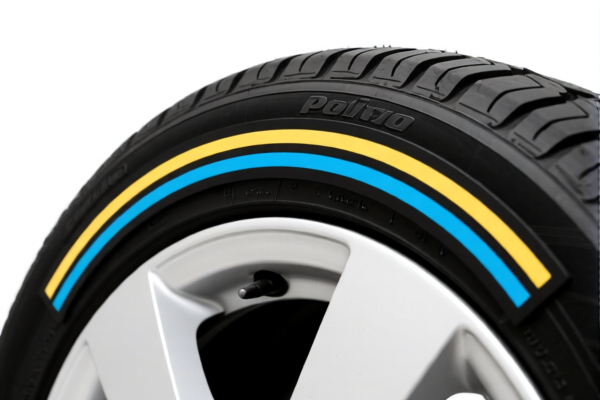
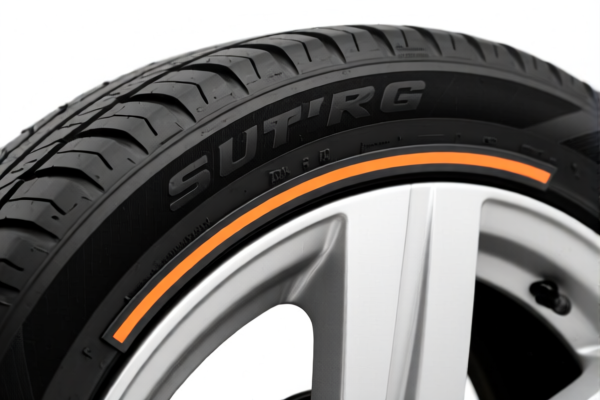
AI Analysis
🚗 Automotive Protection Strips / Trim Bars (Car Decoration Bars)
🌐 HS Code Reference & Customs Clearance Guide | 2026 Latest Tariff Analysis | Professional Clearance Strategy
📌 I. Product Definition & Classification: What exactly are "Automotive Protection Strips"?
Automotive Protection Strips (often referred to as side skirts, door protectors, or decorative trim bars) are external components attached to a vehicle's body. Their primary functions are aesthetic enhancement (adding style/luster) and protection (preventing minor scrapes, stone chips, or rust).
In international trade, these items are ambiguous. They can be classified as: 1. Vehicle Parts: If they are specific body attachments/necessities for car assembly or repair. 2. Plastic Products: If they are generic plastic decorations not specific to a car model. 3. Metal Products: If they are chrome, steel, or aluminum bars primarily for decoration.
⚠️ Critical Distinction:
- If the strip is specifically designed to attach to a car's body (e.g., door molding, bumper trim) → Often归类 under Chapter 87 (Vehicles).
- If the strip is a generic plastic ornament or decorative artifact → Often归类 under Chapter 39 (Plastics) or Chapter 73 (Iron/Steel).
- Material matters: Metal strips often attract higher "Section 301" or specific metal tariffs.
📦 II. HS Code Classification Details (Based on Provided Data)
| HS Code | Product Description | Material/Form | Key Classification Logic |
|---|---|---|---|
3926.40.00.90 |
Other ornaments and articles for furnishing | Mostly Plastic | Classified as a decorative item (ornament) rather than a functional vehicle part. |
8708.29.51.10 |
Other parts and accessories for bodies | Metal or Plastic | Classified as a vehicle body accessory/attachment. Recognized as a specific component for cars. |
3926.90.99.89 |
Other plastic articles | Mostly Plastic | Classified as a generic plastic product when not specific enough for "ornaments" or "parts". |
8708.29.51.60 |
Other parts and accessories for bodies | Metal or Plastic | Classified as a vehicle body part/accessory. Similar to ...11.10 but potentially different sub-category for metal/plastic mix. |
7326.90.86.88 |
Other articles of iron or steel | Metal (Iron/Steel) | Inferred as metal. Classified under general iron/steel articles because it's not a specific vehicle part under Ch 87 or a specific tool. |
🔍 Key Insight:
- HS8708(Vehicle Parts) generally offers the lowest base tariff (2.5%), but adds significant punitive tariffs. - HS3926(Plastics) has a higher base tariff (5.3%) but may have lower additional tariffs depending on the specific sub-code. - HS7326(Metal) is the highest risk due to heavy metal-specific add-ons (50% steel/aluminum tariff).
💰 III. 2026 Latest Tariff Rate Breakdown (Detailed)
✅ Applicable Country: United States (US)
✅ Origin: China (CN)
✅ Effective Date: 2025/2026 Tariff Schedule
🎯 1. 3926.40.00.90 – Other Ornaments/Decorations (Plastic)
| Item | Details |
|---|---|
| Base Tariff | 5.3% |
| Additional Tariff (Section 301) | 0.0% |
| 122-Clause Tariff (IEEPA) | +10% |
| Total Tariff Rate | 15.3% |
| Tax Calculation | CIF Value × 15.3% |
| Legal Basis | Base duty + IEEPA surcharge for Chinese goods. |
📌 Explanation:
This is a moderate-cost classification. By classifying the product as a generic "decoration/ornament" rather than a car part, you avoid the high Section 301 tariffs applied to vehicle parts. However, the base duty (5.3%) is higher than the vehicle part base (2.5%).
🎯 2. 8708.29.51.10 – Vehicle Body Parts/Accessories (Metal/Plastic)
| Item | Details |
|---|---|
| Base Tariff | 2.5% |
| Additional Tariff (Section 301) | +25.0% |
| 122-Clause Tariff (IEEPA) | +10% |
| Total Tariff Rate | 37.5% (Written as 2.5% + 35.0%) |
| Tax Calculation | CIF Value × 37.5% |
| Legal Basis | Base duty + Section 301 (25%) + IEEPA (10%). |
📌 Explanation:
Although the base tariff is very low (2.5%), the Section 301 tariff (25%) makes this significantly more expensive than the plastic ornament classification. This is a common trap: "Vehicle Parts" are heavily penalized.
🎯 3. 3926.90.99.89 – Other Plastic Articles (Generic Plastic)
| Item | Details |
|---|---|
| Base Tariff | 5.3% |
| Additional Tariff (Section 301) | +7.5% |
| 122-Clause Tariff (IEEPA) | +10% |
| Total Tariff Rate | 22.8% |
| Tax Calculation | CIF Value × 22.8% |
| Legal Basis | Base duty + Partial Section 301 (7.5%) + IEEPA (10%). |
📌 Explanation:
A middle-ground option. If the plastic strip is generic and not a "furnishing ornament," it falls here. The Section 301 rate is lower (7.5%) than for vehicle parts, making it cheaper than8708but more expensive than3926.40.
🎯 4. 8708.29.51.60 – Vehicle Body Parts/Accessories (Metal/Plastic)
| Item | Details |
|---|---|
| Base Tariff | 2.5% |
| Additional Tariff (Section 301) | +25.0% |
| 122-Clause Tariff (IEEPA) | +10% |
| Steel/Aluminum Surcharge | +50% (Specific to Steel/Aluminum/Copper products) |
| Total Tariff Rate | 87.5% (Written as 2.5% + 85.0%) |
| Tax Calculation | CIF Value × 87.5% |
| Legal Basis | Base + Sec 301 + IEEPA + Heavy Metal Surcharge. |
⚠️ WARNING:
If your protection strip contains steel, aluminum, or copper, this tariff applies. The 50% metal surcharge is devastating. Avoid this code for metal strips if possible.
🎯 5. 7326.90.86.88 – Other Iron/Steel Articles (Metal)
| Item | Details |
|---|---|
| Base Tariff | 2.9% |
| Additional Tariff (Section 301) | +25.0% |
| 122-Clause Tariff (IEEPA) | +10% |
| Steel/Aluminum Surcharge | +50% |
| Total Tariff Rate | 87.9% |
| Tax Calculation | CIF Value × 87.9% |
| Legal Basis | Base + Sec 301 + IEEPA + Heavy Metal Surcharge. |
⚠️ WARNING:
Same as above. Any metal-based protection strip classified under iron/steel articles faces the 87.9% rate. Do not use this for metal parts.
🛠️ IV. Customs Clearance Practical Advice (Risk Mitigation)
✅ 1. Material Declaration is Key
| Material | Recommended HS Code | Total Tariff | Strategy |
|---|---|---|---|
| Plastic Only | 3926.40.00.90 |
15.3% | BEST OPTION. Declare as "Plastic Decorative Trim" or "Plastic Ornament." Avoid claiming it as a "Vehicle Part" to skip Section 301. |
| Plastic Only (Generic) | 3926.90.99.89 |
22.8% | Acceptable if 3926.40 is disputed. |
| Metal (Steel/Aluminum) | High Risk | 87.5% - 87.9% | AVOID. If metal is unavoidable, try to argue it is a "Plastic-coated decoration" (if applicable) to fit 3926. |
| Mixed/Metal-Plastic | 8708.29.51.10 |
37.5% | Risky. Higher than plastic-only, but lower than pure metal. Only use if clearly a vehicle part AND you accept the cost. |
✅ 2. Cleared Clearance Tips (Crucial!)
🔥 "Plastic is Good, Metal is Bad, Vehicle Parts are Expensive!"
| Scenario | Correct Declaration | Wrong Declaration | Result |
|---|---|---|---|
| Plastic Side Skirt | "Plastic Decorative Trim, Non-Vehicle Part" (3926.40.00.90) |
"Car Bumper Protector, Vehicle Part" (8708) |
Save ~22% (15.3% vs 37.5%) |
| Chrome Metal Bar | "Do Not Ship Directly" or find duty-free alternative country. | Declare as "Vehicle Part" (8708) |
Pay 87.5%! |
| Aluminum Trim | Same as Chrome. Avoid. | Declare as "Plastic" (False) | Fraud Risk |
✅ 3. Documentation Requirements
To support the 3926.40.00.90 (Plastic Ornament) classification and avoid the 8708 (Vehicle Part) high tariff:
| Document | Purpose |
|---|---|
| Product Photo | Show the product without specific car models (generic look). Avoid images showing it installed on a specific car brand. |
| Material Certificate | Explicitly state 100% Plastic (ABS, PP, etc.). No metal cores. |
| Invoice Description | Use words: "Decorative Plastic Trim," "Plastic Ornament," "Interior/Exterior Decoration". Avoid words: "Vehicle Part," "Car Accessory," "Auto Component." |
| Function Statement | State: "For aesthetic decoration only. Not essential for vehicle operation. Can be used on multiple vehicle types or as home decor." |
✅ 4. Special Case: Metal Strips
If you must ship metal protection strips: 1. Check for Exclusions: Are there any metal exclusions for your specific product type? (Rare for auto parts). 2. Consider Third-Country Origin: Ship from Vietnam, Mexico, or Malaysia (if rules of origin allow) to avoid US Section 301/IEEPA tariffs. 3. Absorb Cost: If metal is essential, budget for ~87% tariff.
🌍 V. Global Market Comparison (2026)
| Market | Recommended HS Code | Tariff (China Origin) | Note |
|---|---|---|---|
| 🇺🇸 USA | 3926.40.00.90 |
15.3% | Optimal. Avoid 8708 (37.5%) and 7326 (87.9%). |
| 🇨🇳 China | 3926.40.00.90 |
5.3% | Low base tariff. No Section 301. |
| 🇪🇺 EU | 3926.40.00.90 |
3.7% | Generally low tariffs for plastics. |
| 🇬🇧 UK | 3926.40.00.90 |
3.7% | Similar to EU. |
| 🇯🇵 Japan | 3926.40.00.90 |
3.9% | Low tariff. |
📌 Conclusion:
The US market is the most challenging due to Section 301 and IEEPA tariffs.
Plastic classification (3926) is the cheapest pathway for car accessories.
Metal/Vehicle Part classification (8708/7326) is the most expensive.
📌 VI. Common Mistakes & Pitfalls
❌ Mistake 1: Declaring a plastic strip as a "Vehicle Part" (8708)
👉 Consequence: You pay 37.5% instead of 15.3%. Unnecessary 22% cost increase!
❌ Mistake 2: Declaring a metal strip as "Plastic" (3926)
👉 Consequence: Customs Seizure & Fraud Penalties. Metal content must be declared accurately.
❌ Mistake 3: Using "Car Accessory" in the description for a plastic item
👉 Consequence: Customs may reclassify to 8708 based on "intended use," triggering higher tariffs.
✅ Correct Action:
"Plastic Decorative Strip, Material: ABS, Purpose: Aesthetic Decoration, Not a Mechanical Vehicle Part."
🎯 VII. Conclusion: Smart Classification Saves Money!
🎯 Key Takeaway:
🔹 For Plastic Strips: Use
3926.40.00.90(15.3%). It’s the sweet spot.
🔹 For Metal Strips: Avoid US direct shipping. Use8708only if you accept 37.5%, or find a duty-free route.
🔹 Never declare metal as plastic, and never declare plastic as a vehicle part if you want to minimize costs.
📌 Pro Tip:
If your products are plastic, ensure your supplier provides a Material Safety Data Sheet (MSDS) or Material Certificate stating 100% plastic content. This supports your 3926 classification and prevents customs from suspecting hidden metal components.
📣 Immediate Action:
📞 Review your Bill of Materials (BOM).
🚀 If plastic, declare as "Decorative Plastic Ornament".
📦 If metal, calculate the 87.5%+ cost and consider supply chain alternatives.
✨ Professional Clearance Starts with Precise Classification!
💼 Don’t let HS Codes cost you your profit margin!
Customer Reviews
About HS Code Classification
The Harmonized System (HS) is an internationally standardized nomenclature developed by the World Customs Organization (WCO) to classify traded products. Over 200 countries use the HS system as the basis for customs tariffs, trade statistics, and import/export regulations.
Each HS code follows a hierarchical structure:
- Chapter (2 digits) — Broad category of goods (e.g., Chapter 84: Machinery and Mechanical Appliances)
- Heading (4 digits) — More specific grouping within the chapter
- Subheading (6 digits) — Internationally standardized breakdown, used by all WCO member countries
- National subdivisions (8-10 digits) — Country-specific extensions for further classification, such as US HTSUS 10-digit codes
Correct HS code classification is essential for smooth customs clearance, accurate duty payment, and compliance with trade regulations. Misclassification can lead to customs delays, overpayment of duties, or penalties.
When importing from CN to US, the applicable tariff rates may include:
- Most-Favored-Nation (MFN) rate — The standard duty rate applied to WTO members
- General rate — Applied to countries without trade agreements
- Trade remedy duties — Additional tariffs such as Section 301 (anti-dumping), Section 232 (national security), or countervailing duties
The information provided on this page is for reference purposes only. For official classification, please consult with your local customs authority or a licensed customs broker.