汽车修复工具
CN → US| HS Code | Tariff Rate | Origin | Destination | Doc |
|---|---|---|---|---|
| 8467891000 | 17.5% | CN | US | Official Doc |
| 8467290040 | 17.5% | CN | US | Official Doc |
| 8205593080 | 35.0% | CN | US | Official Doc |
| 8205595560 | 40.3% | CN | US | Official Doc |
| 8206000000 | 0.0% | CN | US | Official Doc |
| 8205000000 | 0.0% | CN | US | Official Doc |
Product Images
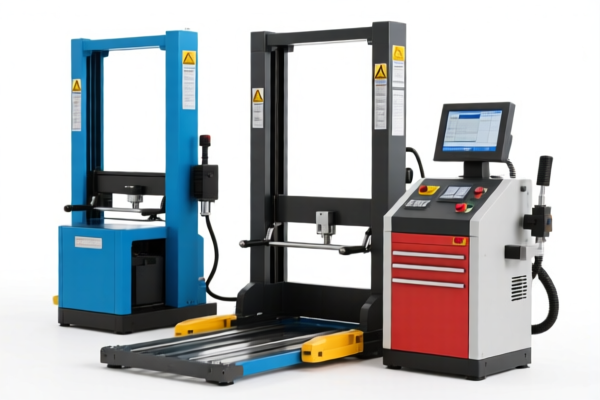
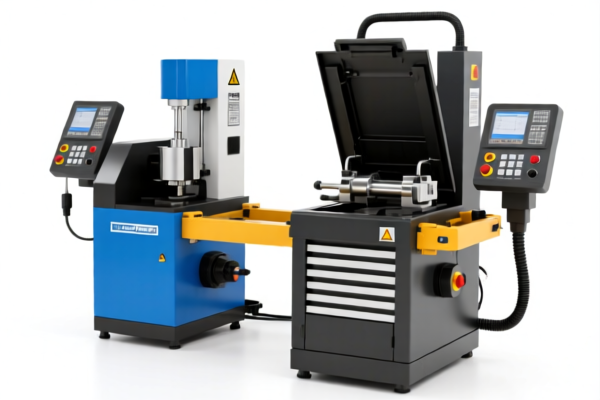
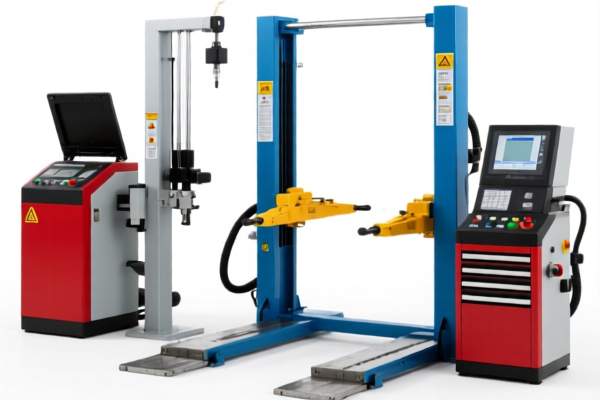
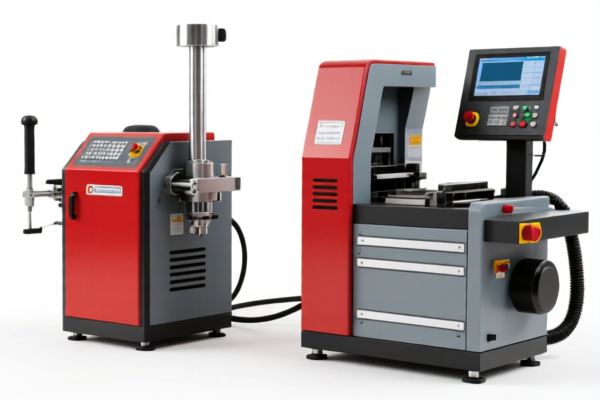
AI Analysis
🛠️ Auto Repair Tools (Automotive Hand Tools)
🌐 HS Code Reference & Customs Clearance Guide | 2026 Latest Tariff Analysis | Professional Clearance Strategy
📌 I. Product Definition & Classification: Do You Really Understand "Auto Repair Tools"?
Auto Repair Tools refer to instruments used for the maintenance, diagnosis, and repair of motor vehicles. In international trade, these are primarily classified as Hand Tools or Power Tools depending on their power source and composition.
Since the product name "Auto Repair Tools" is generic, the exact HS Code depends on: 1. Power Source: Manual (hand-powered) vs. Pneumatic/Hydraulic/Electric. 2. Composition: Single item vs. Retail sets containing multiple tools. 3. Material: Primarily iron, steel, or other metals.
⚠️ Key Classification Points:
- Manual Tools: Fall under Chapter 82 (Tools, Implements, Spoons, Forks, of Base Metal).
- Power/Other Tools: Fall under Chapter 84 (Machinery, Mechanical Appliances) if they are pneumatic, hydraulic, or self-contained motorized.
- Sets: If multiple tools are packaged for retail sale as a set, they are classified based on the essential character of the set or the specific tool if no single character exists.
📦 II. HS Code Classification Details (2026 Latest Tariff Authority Reference)
Based on the provided data, there are four potential HS Code classifications for "Auto Repair Tools." The choice depends on the specific nature of the tools (manual vs. power, set vs. single).
| HS Code | Product Description | Applicability Scenario | Key Matching Logic |
|---|---|---|---|
8206.00.00.00 |
Sets of Hand Tools | A retail set containing multiple types of tools (e.g., wrenches, screwdrivers, pliers) for auto repair. | Matches "Tools" for repair; inferred as a multi-tool retail set. |
8467.89.10.00 |
Hand-Powered, Pneumatic, Hydraulic, or Self-Contained Motorized Tools | Tools that are pneumatic (air-powered), hydraulic, or battery/electric motor-driven. | Fits the category of "non-electric motor tools" for metalworking/mechanical operation. |
8205.59.30.80 |
Other Hand Tools | General manual hand tools for auto repair (e.g., standard wrenches, hammers) not specified by material/edge. | Fits "Other hand tools" as a catch-all for manual automotive repair tools. |
8205.59.55.60 |
Other Hand Tools (Metal/Ferro) | Manual tools inferred to be made of iron or steel (common for auto tools) under the "Other" category. | Based on common sense inference: Auto tools are typically metal (steel/iron). |
🔍 Critical Reminder:
- Sets vs. Singles: If the product is a kit/set,8206.00.00.00is the most accurate fit.
- Power Source: If the tools are pneumatic or electric,8467.89.10.00is the correct classification.
- Material Inference: If manual and not further specified,8205.59.30.80or8205.59.55.60are used based on material assumptions (Iron/Steel vs. Other).
💰 III. 2026 Latest Tariff Rate Details (Including Surtaxes, Policy Surcharges)
✅ Applicable Country: United States (US)
✅ Country of Origin: China (CN)
✅ Effective Time: 2025/2026 (Current Trade Policies)
🎯 1. 8206.00.00.00 —— Sets of Hand Tools (Retail Sets)
| Item | Content |
|---|---|
| Base Tariff | The rate of duty applicable to that article in the set subject to additional duties. |
| Section 301 Surcharge (25%) | ✅ Yes (25.0% added tariff) |
| Section 122 Surcharge (10%) | ✅ Yes (10% additional tariff) |
| Total Effective Rate | Approx. 35%+ (Base + 25% + 10%) |
| Tax Detail | Base Rate: Varies (often 0-5% for tools), +25% (Section 301), +10% (Section 122) |
| De Minimis Exemption | ❌ Not Eligible (High tariff rates exceed de minimis thresholds for China) |
📌 Explanation:
- "Section 301 (25%)": Applies to most tools of base metal from China.
- "Section 122 (10%)": Specific surcharge applicable to this classification period.
- Total Tax: The text specifies "35.0%" as the total tax, implying a base rate of 0% or a specific calculation resulting in 35%. Note: If the base rate is higher, the total will exceed 35%.
🎯 2. 8467.89.10.00 —— Hand-Powered, Pneumatic, Hydraulic, or Self-Contained Motorized Tools
| Item | Content |
|---|---|
| Base Tariff | 0.0% |
| Section 301 Surcharge (7.5%) | ✅ Yes (7.5% added tariff) |
| Section 122 Surcharge (10%) | ✅ Yes (10% additional tariff) |
| Total Effective Rate | 17.5% |
| Tax Detail | Base Rate: 0.0%, +7.5% (Section 301), +10% (Section 122) |
| De Minimis Exemption | ❌ Not Eligible |
📌 Explanation:
- This category has a lower base tariff (0%) compared to manual hand tools.
- However, it still incurs 7.5% (Section 301) and 10% (Section 122) surcharges.
- Total Rate: 17.5%, which is significantly lower than the manual tool classifications.
🎯 3. 8205.59.30.80 —— Other Hand Tools
| Item | Content |
|---|---|
| Base Tariff | 0.0% |
| Section 301 Surcharge (25%) | ✅ Yes (25.0% added tariff) |
| Section 122 Surcharge (10%) | ✅ Yes (10% additional tariff) |
| Total Effective Rate | 35.0% |
| Tax Detail | Base Rate: 0.0%, +25% (Section 301), +10% (Section 122) |
| De Minimis Exemption | ❌ Not Eligible |
📌 Explanation:
- Similar to8206.00.00.00, this classification attracts the full 25% Section 301 tariff.
- Total Rate: 35.0%. High duty burden for manual tools.
🎯 4. 8205.59.55.60 —— Other Hand Tools (Metal/Steel Inferred)
| Item | Content |
|---|---|
| Base Tariff | 5.3% |
| Section 301 Surcharge (25%) | ✅ Yes (25.0% added tariff) |
| Section 122 Surcharge (10%) | ✅ Yes (10% additional tariff) |
| Total Effective Rate | 40.3% |
| Tax Detail | Base Rate: 5.3%, +25% (Section 301), +10% (Section 122) |
| De Minimis Exemption | ❌ Not Eligible |
📌 Explanation:
- This classification assumes the tools are made of iron or steel (common for auto tools).
- The base tariff is 5.3%, higher than the 0% base for8205.59.30.80.
- Total Rate: 40.3%, the highest among the four options due to the base rate + surcharges.
🛠️ IV. Customs Clearance Practical Advice (Avoid Pitfalls Guide)
✅ 1. Preparation Checklist (All Required)
| Material | Must Provide | Notes |
|---|---|---|
| ✅ Product Specification Sheet | ✔️ | Must specify: Manual vs. Power, Material (Iron/Steel/Other), Set vs. Single. |
| ✅ Product Photos | ✔️ | Clear images of the tools, packaging, and any branding. |
| ✅ Commercial Invoice | ✔️ | Must accurately describe the goods as "Auto Repair Tools" or "Hand Tools." |
| ✅ Packing List | ✔️ | Detail contents, especially if it's a set. |
| ✅ Country of Origin Certificate | ✔️ | Required for Section 301/122 duty assessment. |
✅ 2. Declaration Tips (Key Mantra)
🔥 "Power vs. Manual, Set vs. Single, Material Matters, Tax Rate Changes!"
| Scenario | Correct Declaration | Wrong Practice | Consequence |
|---|---|---|---|
| Pneumatic/Electric Wrench | 8467.89.10.00 |
Misdeclare as "Hand Wrench" | Risk of misclassification, higher tax (35% vs 17.5%) |
| Full Tool Set (Retail) | 8206.00.00.00 |
Declare as single tools | Risk of separate duty assessment, higher total tax |
| Manual Wrench (Iron/Steel) | 8205.59.55.60 |
Vague description "Tool" | High tax (40.3%), delay in clearance |
| Manual Tool (Unspecified Material) | 8205.59.30.80 |
Assume metal without proof | Risk of 35% tax, but if material is other, may be incorrect |
✅ 3. Special Considerations
| Scenario | Handling Advice |
|---|---|
| OEM Auto Tool Kits | Provide customer order + design drawings. Ensure packaging clearly indicates "Set of Tools." |
| Mixed Power & Manual | If a set contains both, classify based on the essential character. If power tools dominate, 8467 may apply. |
| High-Value Precision Tools | Provide detailed specs to justify specific HS Codes. Avoid vague terms like "Repair Equipment." |
| Material Declaration | If possible, specify the material (e.g., "Chrome Vanadium Steel") to reduce ambiguity between 8205.59.30.80 and 8205.59.55.60. |
🌍 V. Global Market Clearance Comparison (2026 Latest)
| Country/Region | Recommended HS Code | Estimated Duty (China Origin) | Certification Requirements | Notes |
|---|---|---|---|---|
| 🇺🇸 USA | 8467.89.10.00 (Best Rate) |
17.5% | None (for basic tools) | Lowest duty for power tools. Manual tools face 35-40%. |
| 🇨🇳 China | 8205.59.30.80 |
5-10% | CCC (if applicable) | No Section 301/122 surcharges. |
| 🇪🇺 EU | 8205.59.30.80 |
0-2.7% | CE (for power tools) | Low tariffs, strict safety standards for power tools. |
| 🇦🇺 Australia | 8205.59.30.80 |
5% | RCM (for power tools) | Moderate tariffs. |
| 🇯🇵 Japan | 8205.59.30.80 |
0-3% | PSE (for power tools) | Low tariffs, high quality standards. |
📌 Conclusion:
- USA is the most expensive market due to Section 301 (25%) and Section 122 (10%) surcharges.
- Power Tools (8467.89.10.00) have the lowest effective rate (17.5%) in the US compared to manual tools (35-40.3%).
- Strategy: If possible, classify as pneumatic/hydraulic/motorized tools to save 17.5%-22.8% in duties.
📌 VI. Common Mistakes & Pitfalls (Blood Lessons)
❌ Mistake 1: Declaring a Power Wrench as a Manual Wrench (8205.59.30.80)
👉 Consequence: Overpayment of duty (35% vs 17.5%) + Risk of penalty for misclassification.
❌ Mistake 2: Declaring a Tool Set as Single Items
👉 Consequence: Each item may be assessed separately, potentially leading to higher total tax or complex clearance delays.
❌ Mistake 3: Vague Description: "Auto Repair Tool"
👉 Consequence: Customs may assign a default high-rate code (e.g., 8205.59.55.60 at 40.3%) due to lack of detail.
❌ Mistake 4: Ignoring Material Specification
👉 Consequence: Unclear material leads to higher duty assumptions (e.g., 5.3% base vs 0% base).
✅ Correct Practice:
"Pneumatic Impact Wrench, 1/2 Inch Drive, 1500 RPM, with Case, Model XYZ, Origin China"
→ Classify under8467.89.10.00(17.5% Total Duty)
🎯 VII. Conclusion: Professional Declaration, Time & Cost Saving!
🎯 Remember the Mantra:
🔹 "Power Tools Pay Less, Manual Tools Cost More!"
🔹 "Set vs. Single Matters, Material Changes the Rate!"
🔹 "17.5% for Power, 35-40% for Manual, Choose Wisely!"
📌 Pro Tip:
If your tools are pneumatic, hydraulic, or battery-powered, always aim for 8467.89.10.00 to save ~20% in US duties.
If they are manual, ensure the description is precise to avoid being taxed at the highest bracket (8205.59.55.60).
Consider applying for an Advance Ruling to confirm the correct HS Code before shipment.
📣 Immediate Action:
📞 Contact a professional customs broker + Provide product specs + Apply for HS Code Advance Ruling
🚀 Let your auto repair tools clear customs smoothly, save costs, and boost profits!
✨ Professional clearance starts with accurate classification!
💼 Every dollar of duty saved is pure profit!
Customer Reviews
About HS Code Classification
The Harmonized System (HS) is an internationally standardized nomenclature developed by the World Customs Organization (WCO) to classify traded products. Over 200 countries use the HS system as the basis for customs tariffs, trade statistics, and import/export regulations.
Each HS code follows a hierarchical structure:
- Chapter (2 digits) — Broad category of goods (e.g., Chapter 84: Machinery and Mechanical Appliances)
- Heading (4 digits) — More specific grouping within the chapter
- Subheading (6 digits) — Internationally standardized breakdown, used by all WCO member countries
- National subdivisions (8-10 digits) — Country-specific extensions for further classification, such as US HTSUS 10-digit codes
Correct HS code classification is essential for smooth customs clearance, accurate duty payment, and compliance with trade regulations. Misclassification can lead to customs delays, overpayment of duties, or penalties.
When importing from CN to US, the applicable tariff rates may include:
- Most-Favored-Nation (MFN) rate — The standard duty rate applied to WTO members
- General rate — Applied to countries without trade agreements
- Trade remedy duties — Additional tariffs such as Section 301 (anti-dumping), Section 232 (national security), or countervailing duties
The information provided on this page is for reference purposes only. For official classification, please consult with your local customs authority or a licensed customs broker.