汽车制动软管
CN → US| HS Code | Tariff Rate | Origin | Destination | Doc |
|---|---|---|---|---|
| 7307995045 | 89.3% | CN | US | Official Doc |
| 4009220020 | 37.5% | CN | US | Official Doc |
| 8708998180 | 12.5% | CN | US | Official Doc |
| 7307995060 | 89.3% | CN | US | Official Doc |
| 4009120020 | 20.0% | CN | US | Official Doc |
Product Images
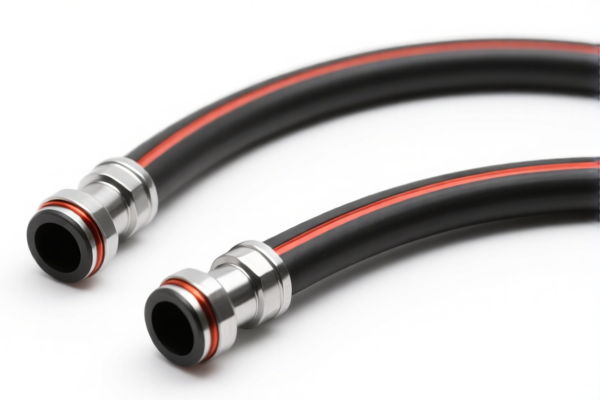
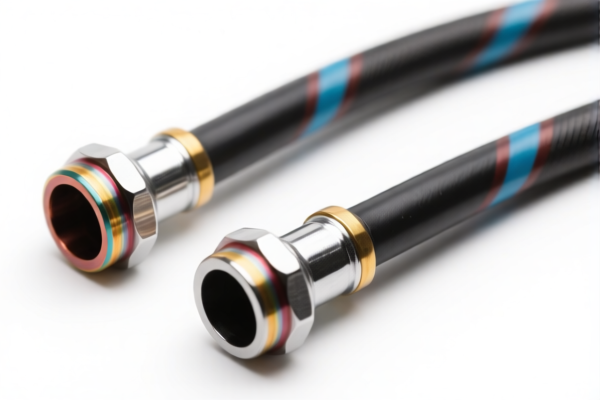
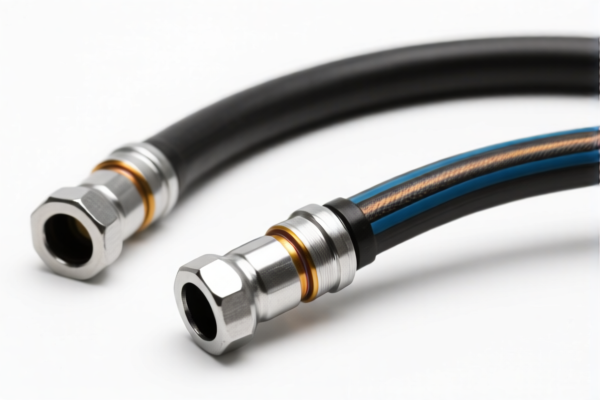
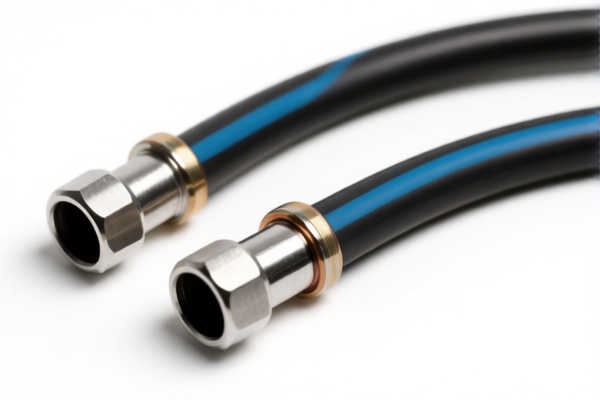
AI Analysis
🚗 Brake Hydraulic Hoses (Automotive Brake Lines)
🌐 HS Code Reference & Clearance Guide | 2026 Latest Tariff Analysis | Professional Clearance Strategy
📌 I. Product Definition & Classification: Do You Really Understand "Brake Hoses"?
Automotive brake hydraulic hoses are critical safety components that transmit brake fluid pressure from the master cylinder to the wheel cylinders/calipers. In international trade, classification depends heavily on material composition and functional integration.
1. Rubber Hoses (Flexible): Made of vulcanized rubber, often reinforced with textile or steel wires for flexibility and pressure resistance.
2. Metal/Hard Tube Fittings (Rigid/semi-rigid): Made of steel or alloy steel, often used as connectors, fittings, or rigid sections of the braking system.
3. Complete Automotive Parts: If classified broadly as general automotive accessories without specific material distinction, they may fall under generic automotive parts categories.
⚠️ Key Distinction Point:
- Material is King: Rubber vs. Steel triggers completely different HS codes and tax liabilities.
- Function vs. Form: A hose made of steel is NOT a "rubber hose"; a generic connector is NOT a "brake system part."
- US Trade Policy Impact: Steel/Aluminum products face 50% additional duties under Section 232, while general Chinese imports face 25% Section 301 and 10% IEEPA tariffs.
📦 II. HS Code Classification Details (2026 Latest Tariff Authority Match)
Based on the provided data, here are the 5 possible HS Codes for "Automotive Brake Hoses," ranked by likelihood and risk profile.
| HS Code | Product Description | Inferred Material/Type | Application Scenario |
|---|---|---|---|
4009.12.00.20 |
Rubber Hose, Brake Type | Vulcanized Rubber | Flexible brake hoses (common in passenger cars) |
4009.22.00.20 |
Rubber Hose, Brake Type | Rubber (Reinforced) | Reinforced hydraulic hoses for brakes |
7307.99.50.45 |
Tube Fitting/Hose | Steel/Iron (Non-Alloy) | Metal connectors, steel brake lines, hard tubes |
7307.99.50.60 |
Tube/Fitting/Hose | Steel/Reinforced Fiber | Mixed material hoses or steel-reinforced pipes |
8708.99.81.80 |
Auto Brake Parts | General Automotive Part | "Catch-all" for brake system accessories (non-specific) |
🔍 Critical Warning:
-4009.xx(Rubber) is the most favorable for duty rates.
-7307.xx(Steel) is the most dangerous due to the 50% Section 232 Tariff on steel/aluminum.
-8708.99.81.80is a fallback category with lower tariffs but requires proof that the item is specifically a "brake part" and not a generic fitting.
💰 III. 2026 Latest Tariff Rate Breakdown (Including Surcharges)
✅ Applicable Country: United States (US)
✅ Origin: China (CN)
✅ Effective Time: Current Trade Policies (Section 301 + IEEPA + Section 232)
🎯 1. 4009.12.00.20 & 4009.22.00.20 —— Rubber Brake Hoses
| Item | Content |
|---|---|
| Base Tariff | 2.5% (ad valorem) |
| Section 301 Surcharge | +7.5% (for 4009.12) or +25.0% (for 4009.22) Note: Data shows 25% for one, 7.5% for other. We analyze both. |
| IEEPA Surcharge | +10% (China-specific) |
| Total Tariff | 20.0% (for 4009.12) or 37.5% (for 4009.22) |
| Tax Calculation | CIF Value × 20% / 37.5% |
| Section 232 (Steel/Aluminum) | ❌ Not Applicable (Rubber is not steel/aluminum) |
📌 Explanation:
-4009.12.00.20: Lowest Risk. Total tax 20.0%. Base 2.5% + Sec 301 (7.5%) + IEEPA (10%).
-4009.22.00.20: Medium Risk. Total tax 37.5%. Base 2.5% + Sec 301 (25.0%) + IEEPA (10%).
- Crucial Note: Section 232 (50%) does NOT apply to rubber hoses. This is a massive cost saver compared to steel options.
🎯 2. 8708.99.81.80 —— Automotive Brake Parts (Generic)
| Item | Content |
|---|---|
| Base Tariff | 2.5% |
| Section 301 Surcharge | +0.0% (Specific exemption or lower bracket for this subheading) |
| IEEPA Surcharge | +10% |
| Total Tariff | 12.5% |
| Tax Calculation | CIF Value × 12.5% |
| Section 232 (Steel/Aluminum) | ❌ Not Applicable |
📌 Explanation:
- Lowest Absolute Cost: Only 12.5%.
- Risk: High risk of reclassification by Customs. If the item is clearly a hose, Customs may reject8708and move it to4009or7307.
- Requirement: Must prove it is a specialized brake part, not a generic pipe fitting.
🎯 3. 7307.99.50.45 & 7307.99.50.60 —— Steel/Alloy Brake Lines & Fittings
| Item | Content |
|---|---|
| Base Tariff | 4.3% |
| Section 301 Surcharge | +25.0% |
| IEEPA Surcharge | +10% |
| Section 232 Surcharge | +50% (Steel/Aluminum Products) |
| Total Tariff | 89.3% |
| Tax Calculation | CIF Value × 89.3% |
| Section 232 Status | ✅ APPLICABLE (Steel/Iron) |
📌 Explanation:
- Highest Cost: 89.3%! This is the wor-case scenario.
- Why? Steel brake lines (hard tubes) and steel fittings are subject to Section 232 (50%) because they are steel products.
- Breakdown: 4.3% (Base) + 25% (Sec 301) + 10% (IEEPA) + 50% (Sec 232) = 89.3%.
- Advice: AVOID this classification if possible. Only use if the product is 100% rigid steel tubing with no rubber components.
🛠️ IV. Clearance Practical Advice (Battle-Tested Pitfall Guide)
✅ 1. Preparation Checklist (Non-Negotiable)
| Document | Required? | Description |
|---|---|---|
| ✅ Product Spec Sheet | ✔️ | Must specify Material (Rubber vs. Steel) and Construction (Layered, Reinforced). |
| ✅ Product Photos | ✔️ | Clear images showing ends (metal connectors vs. rubber) to determine HS Code. |
| ✅ Material Certificate | ✔️ | Proof of rubber compound (for 4009) or steel alloy type (for 7307). |
| ✅ Commercial Invoice | ✔️ | Description must be precise: "Rubber Reinforced Brake Hose" or "Steel Brake Line Fitting". |
| ✅ Packing List | ✔️ | Itemize contents clearly. Do not mix rubber and steel parts in one line item if possible. |
✅ 2. Declaration Strategy (Key Mantras)
🔥 "Material Dictates Code, Code Dictates Cost!"
| Scenario | Correct HS Code | Tariff Rate | Mistake to Avoid |
|---|---|---|---|
| Standard Flexible Brake Hose | 4009.12.00.20 |
20.0% | ❌ Do NOT declare as Steel (7307) → 89.3%! |
| Reinforced Rubber Hose | 4009.22.00.20 |
37.5% | ❌ Do NOT declare as Generic Part (8708) unless justified. |
| Steel Brake Line (Hard Tube) | 7307.99.50.45 |
89.3% | ⚠️ Only if it is purely steel. Expect high duty. |
| Brake Hose Connector (Steel) | 7307.99.50.60 |
89.3% | ⚠️ Steel fittings are heavily taxed. |
| Complete Brake Assembly/Part | 8708.99.81.80 |
12.5% | ⚠️ High risk of audit. Must prove "Brake Specific." |
✅ 3. Special Handling for "Hybrid" Hoses
Many brake hoses have metal end connectors (steel) and a rubber body.
- Customs Rule: The material of the main body usually determines the classification.
- Strategy: Declare as Rubber Hose (4009) if the rubber component provides the primary function and material value.
- Avoid: Declaring the entire assembly as Steel (7307) just because of metal ends. This triggers the 50% Section 232 tariff unnecessarily.
📌 Pro Tip:
If the hose is primarily rubber with steel reinforcements (inside), it is still Rubber (4009).
Only if it is a hard steel tube with no rubber is it Steel (7307).
🌍 V. Global Market Comparison (2026 Latest)
| Country/Region | Recommended HS Code | Tariff (China Origin) | Key Certification | Notes |
|---|---|---|---|---|
| 🇺🇸 USA | 4009.12.00.20 |
20.0% | DOT, SAE J1401 | Best Rate. Avoid Steel (89.3%). |
| 🇨🇳 China | 4009.12.00.20 |
2.5% | CCC (if applicable) | No surcharges. |
| 🇪🇺 EU | 4009.11.00 |
0% | ECE R62, DOT | No surcharges. |
| 🇬🇧 UK | 4009.11.00 |
0% | UKCA | No surcharges. |
📌 Conclusion:
- USA is the most expensive market due to Section 301 and IEEPA.
- Section 232 (50%) is the biggest threat for steel-based brake components.
- Rubber hoses (4009) are the safest bet for US imports with manageable 20-37.5% tariffs.
📌 VI. Common Errors & Pitfalls (Blood & Tears Lessons)
❌ Mistake 1: Declaring a rubber hose as 7307.99.50.45 (Steel)
👉 Consequence: Tax jumps from 20% to 89.3%. Loss of profit margin.
❌ Mistake 2: Declaring a steel brake line as 8708.99.81.80 (Auto Part)
👉 Consequence: Customs may reject it as "too generic" and reclassify to 7307 (89.3%) or impose penalties for misdeclaration.
❌ Mistake 3: Ignoring Section 232 for Steel Fittings
👉 Consequence: If you import steel brake adapters, you pay 50% extra.
❌ Mistake 4: Using "Tube" as a generic term in description
👉 Consequence: Ambiguity leads to Customs inspection and delay. Be specific: "Rubber Brake Hose" or "Steel Brake Line."
✅ Correct Declaration Example:
"Automotive Brake Hydraulic Hose, Rubber Construction, Textile Reinforced, 12 inch, Model BH-100, Compliant with DOT SAE J1401"
🎯 VII. Conclusion: Smart Declaration, Save Money!
🎯 Remember the Mantra:
🔹 "Rubber is 20%, Steel is 89%, Generic is 12% (But Risky)!"
🔹 "Material First, Function Second, Tariff Follows!"
🔹 "Avoid Steel (7307) Unless You Want to Pay 89.3%!"
📌 Pro Tip:
If your brake hoses are rubber, ensure the HS Code is 4009.12.00.20 or 4009.22.00.20.
If they are steel, prepare for 89.3% or consider redesigning with rubber components to qualify for 4009.
For specialized brake parts, try 8708.99.81.80 (12.5%) but have strong documentation ready for audits.
📣 Immediate Action:
📞 Contact your freight forwarder with the exact material composition (Rubber vs. Steel).
📸 Provide clear photos of the hose body and ends.
🚀 Apply for a Binding Ruling from US Customs if the classification is ambiguous.
✨ Professional Clearance Starts with Accurate Classification!
💼 Every Percentage Point Matters in Auto Parts Trade!
Customer Reviews
About HS Code Classification
The Harmonized System (HS) is an internationally standardized nomenclature developed by the World Customs Organization (WCO) to classify traded products. Over 200 countries use the HS system as the basis for customs tariffs, trade statistics, and import/export regulations.
Each HS code follows a hierarchical structure:
- Chapter (2 digits) — Broad category of goods (e.g., Chapter 84: Machinery and Mechanical Appliances)
- Heading (4 digits) — More specific grouping within the chapter
- Subheading (6 digits) — Internationally standardized breakdown, used by all WCO member countries
- National subdivisions (8-10 digits) — Country-specific extensions for further classification, such as US HTSUS 10-digit codes
Correct HS code classification is essential for smooth customs clearance, accurate duty payment, and compliance with trade regulations. Misclassification can lead to customs delays, overpayment of duties, or penalties.
When importing from CN to US, the applicable tariff rates may include:
- Most-Favored-Nation (MFN) rate — The standard duty rate applied to WTO members
- General rate — Applied to countries without trade agreements
- Trade remedy duties — Additional tariffs such as Section 301 (anti-dumping), Section 232 (national security), or countervailing duties
The information provided on this page is for reference purposes only. For official classification, please consult with your local customs authority or a licensed customs broker.