汽车外部零件
CN → US| HS Code | Tariff Rate | Origin | Destination | Doc |
|---|---|---|---|---|
| 8708106050 | 87.5% | CN | US | Official Doc |
| 8708295160 | 0.0% | CN | US | Official Doc |
| 8512202080 | 35.0% | CN | US | Official Doc |
| 8708295160 | 0.0% | CN | US | Official Doc |
| 8708106050 | 87.5% | CN | US | Official Doc |
Product Images
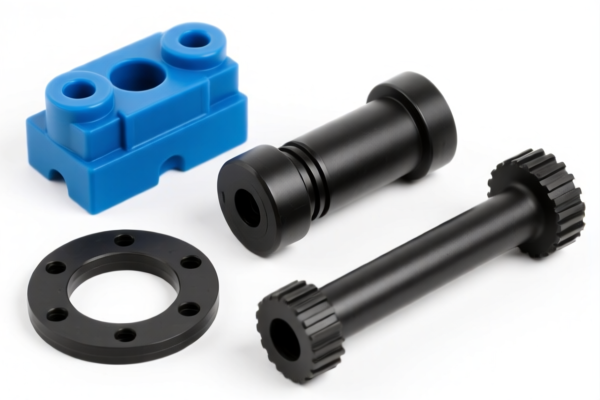
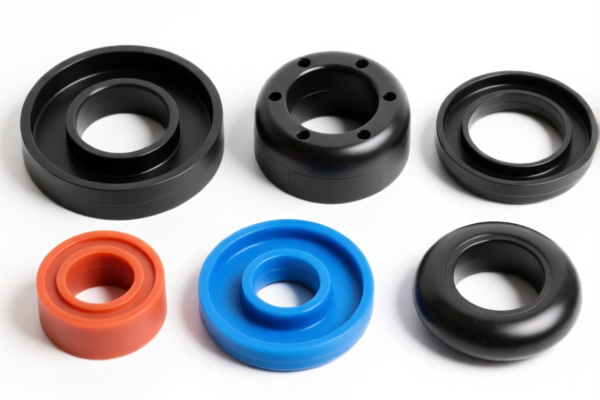
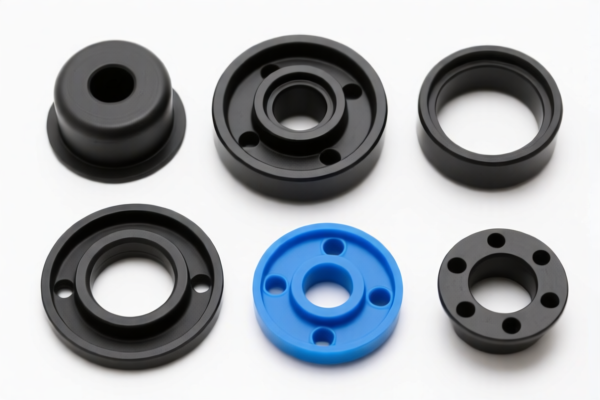
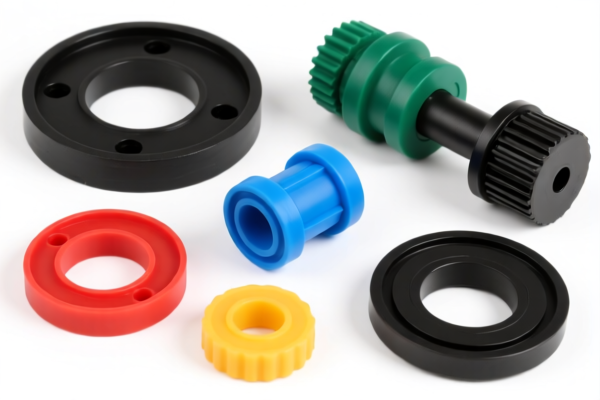
AI Analysis
🚗 Car Exterior Parts (Automotive Body Parts & Accessories)
🌐 HS Code Reference & Customs Clearance Guide | 2026 Latest Tariff Analysis | Professional Clearance Strategy
📌 I. Product Definition and Classification: What Exactly Are "Car Exterior Parts"?
Car exterior parts refer to components installed on the outside of a vehicle body, excluding the chassis and engine. They include bumpers, trim strips, door handles, side mirrors, grilles, and plastic/metal connectors. In international trade, classification depends heavily on Material (Plastic vs. Base Metal) and Function (Structural/Connective vs. Decorative/Accessorial).
⚠️ Key Classification Distinction:
- If the part is plastic and acts as a general accessory or connector → Likely Chapter 39
- If the part is base metal (steel/aluminum) and serves as an attachment or connector → Likely Chapter 83
- If the part is structural like a bumper → Likely Chapter 87
- If the part is a general accessory not specifically covered elsewhere → Likely Chapter 87 (other parts)
📦 II. HS Code Classification Details (2026 Latest Tariff Authority Comparison)
| HS Code | Product Description | Applicable Scenario | Material | Tax Logic |
|---|---|---|---|---|
8708.29.51.60 |
Other Parts and Accessories of Bodies | General exterior plastic/metal trim, non-specific accessories | Mixed/Plastic | Classified under "Other parts of bodies" |
3926.30.10.00 |
Fittings for Furniture, Floor or Wall | Plastic exterior trim, decorative strips, likely plastic material | Plastic | Classified under "Fittings for furniture/walls" (often used for plastic auto trim) |
8302.30.60.00 |
Base Metal Fittings for Vehicles | Exterior metal accessories, brackets, heavy-duty mounts | Base Metal | Classified under "Base metal fittings for vehicles" |
8708.10.60.50 |
Bumpers and Parts Thereof | Vehicle bumpers, front/rear crash beams | Steel/Aluminum | Specifically for bumpers |
3926.30.50.00 |
Other Plastic Fittings | Plastic connectors, clips, fasteners for the car body | Plastic | Classified under "Other plastic fittings" |
🔍 Key Reminder:
- Plastic parts (trim, clips, connectors) are often misclassified. If they don't fit specific auto parts chapters, they may fall under 3926 (Plastic articles). - Bumpers have a specific heading (8708.10), but bumper accessories might fall under 8708.29. - Metal fittings that are essentially connectors or hinges often fall under 8302 (Base metal fittings).
💰 III. 2026 Latest Tariff Rate Breakdown (Including Surcharges & Policy Add-ons)
✅ Applicable Country: United States (US)
✅ Origin: China (CN)
✅ Effective Date: Includes imports after November 10, 2025
🎯 1. 8708.29.51.60 —— Other Parts and Accessories of Bodies
| Item | Content |
|---|---|
| Base Tariff | 2.5% (ad valorem) |
| Section 301 Surcharge | +25.0% |
| Section 232 Surcharge (Steel/Aluminum) | +50% (If made of steel, aluminum, or copper) |
| IEEPA Surcharge (China) | +10% (New 122-Clause tariff) |
| Total Tax Rate | 87.5% (if steel/aluminum) 37.5% (if plastic/non-metal) |
| Tax Calculation | CIF Value × Total Rate |
| De Minimis Exemption | ❌ Not Eligible (deny_de_minimis) |
| Legal Path | IEEPA:9903.01.25 → USITC:8708.29.51.60 → FOOTNOTE:232.250 |
📌 Explanation:
- This code is a "catch-all" for body parts.
- Crucial: If the part is made of steel or aluminum, the 50% Section 232 tariff applies on top of the 2.5% base and 25% Section 301.
- Plastic parts do not incur the 50% steel/aluminum surcharge, lowering the total to 37.5% (2.5% + 25% + 10%).
🎯 2. 3926.30.10.00 —— Plastic Fittings (Inferred)
| Item | Content |
|---|---|
| Base Tariff | 6.5% |
| Section 301 Surcharge | +7.5% |
| IEEPA Surcharge (China) | +10% |
| Total Tax Rate | 24.0% |
| Tax Calculation | CIF Value × 24% |
| De Minimis Exemption | ❌ Not Eligible (deny_de_minimis) |
| Legal Path | IEEPA:9903.01.24 → USITC:3926.30.10.00 |
📌 Note:
- If your plastic part can be classified as "Fittings for furniture/door locks" under 3926, this might be a lower tariff option (24%) compared to general auto parts (37.5%+).
- Risk: CBP may challenge this if the part is exclusively for automotive use and has a specific auto HS code.
🎯 3. 8302.30.60.00 —— Base Metal Vehicle Fittings
| Item | Content |
|---|---|
| Base Tariff | 3.5% |
| Section 301 Surcharge | +25.0% |
| IEEPA Surcharge (China) | +10% |
| Total Tax Rate | 38.5% |
| Tax Calculation | CIF Value × 38.5% |
| De Minimis Exemption | ❌ Not Eligible (deny_de_minimis) |
| Legal Path | IEEPA:9903.01.24 → USITC:8302.30.60.00 |
📌 Note:
- This is for base metal (brass, bronze, other base metals) fittings.
- Does not include the 50% steel/aluminum surcharge (Section 232) if it's classified under 8302 (which often covers decorative fittings). However, verify material: if it's steel/aluminum structural fittings, it might revert to 8708 with the 50% surcharge.
🎯 4. 8708.10.60.50 —— Bumpers and Parts Thereof
| Item | Content |
|---|---|
| Base Tariff | 2.5% |
| Section 301 Surcharge | +25.0% |
| Section 232 Surcharge (Steel/Aluminum) | +50% (If steel/aluminum) |
| IEEPA Surcharge (China) | +10% |
| Total Tax Rate | 87.5% (if steel/aluminum) |
| Tax Calculation | CIF Value × 87.5% |
| De Minimis Exemption | ❌ Not Eligible (deny_de_minimis) |
| Legal Path | IEEPA:9903.01.25 → USITC:8708.10.60.50 → FOOTNOTE:232.250 |
📌 Critical Warning:
- Bumpers are heavily taxed. If made of steel or aluminum, the 87.5% rate is extremely high.
- Plastic bumpers would fall under a different sub-heading or be classified as plastic parts (potentially lower tax), but structural metal bumpers are subject to the full surcharge.
🎯 5. 3926.30.50.00 —— Other Plastic Fittings (Connectors)
| Item | Content |
|---|---|
| Base Tariff | 5.3% |
| Section 301 Surcharge | +7.5% |
| IEEPA Surcharge (China) | +10% |
| Total Tax Rate | 22.8% |
| Tax Calculation | CIF Value × 22.8% |
| De Minimis Exemption | ❌ Not Eligible (deny_de_minimis) |
| Legal Path | IEEPA:9903.01.24 → USITC:3926.30.50.00 |
📌 Note:
- This is for plastic connectors (clips, fasteners, retainers).
- Lowest Tax Option for small plastic hardware (22.8%).
- Risk: Must prove it's a "fitting" and not a general "part of a body" under 8708.
🛠️ IV. Customs Clearance Practical Advice (Battle-Tested Pitfall Avoidance)
✅ 1. Essential Documentation Checklist
| Document | Required? | Description |
|---|---|---|
| ✅ Product Specification Sheet | ✔️ | Material composition (Plastic vs. Steel/Aluminum), dimensions, function |
| ✅ Material Certificate | ✔️ | Critical for determining Section 232 (Steel/Aluminum) vs. 301 applicability |
| ✅ Product Photos | ✔️ | Clear view of the part, showing if it's a bumper, trim, or connector |
| ✅ Commercial Invoice | ✔️ | Must accurately describe the part (e.g., "Plastic Bumper Trim" vs. "Steel Bumper Bracket") |
| ✅ Packing List | ✔️ | Itemized list to avoid consolidation errors |
✅ 2. Declaration Strategy (Key Mnemonics)
🔥 “Material Matters: Steel Gets Stuck, Plastic Flows Low!”
| Scenario | Correct Declaration | Wrong Action |
|---|---|---|
| Plastic Trim/Clips | 3926.30.50.00 (22.8%) or 3926.30.10.00 (24%) |
Misdeclare as 8708.29 → 37.5%+ |
| Steel/Aluminum Bumper | 8708.10.60.50 (87.5%) |
Try to misdeclare as plastic → High risk of penalty |
| Base Metal Fittings | 8302.30.60.00 (38.5%) |
Misdeclare as 8708 → May attract 50% steel surcharge |
| General Body Part | 8708.29.51.60 (37.5% plastic / 87.5% metal) |
Split shipment incorrectly |
✅ 3. Special Case Handling
| Scenario | Handling Advice |
|---|---|
| Mixed Material Parts (e.g., Plastic trim with Metal brackets) | Declare the essential character material. If >50% weight/value is metal, it may trigger steel surcharges. |
| OEM vs. Aftermarket | Aftermarket parts are more likely to be scrutinized for correct HS classification. Provide OEM part numbers for reference. |
| Bumpers | If plastic, try to classify under 8708.29 (non-metal) or 3926 if possible. If metal, expect 87.5%. |
| Small Clips/Connectors | Use 3926.30.50.00 (22.8%) for plastic. Do not declare as "Auto Parts" if they fit "Fittings" better. |
🌍 V. Global Market Clearance Comparison (2026 Latest)
| Country/Region | Recommended HS Code | Tariff (China Origin) | Certification | Note |
|---|---|---|---|---|
| 🇺🇸 USA | 8708.29.51.60 (Plastic) |
37.5% | - | Steel/Aluminum: 87.5% |
| 🇺🇸 USA | 3926.30.50.00 (Plastic Clips) |
22.8% | - | Lowest for small hardware |
| 🇨🇳 China | 8708.99.00.00 |
5% - 10% | CCC (if applicable) | Lower base tariffs |
| 🇪🇺 EU | 8708.99.00.00 |
4.5% | - | No Section 301/232 |
| 🇨🇦 Canada | 8708.99.00.00 |
0% (If under CUSMA) | - | Check origin rules |
📌 Conclusion:
- USA is the most challenging market due to Section 301 (25%) and Section 232 (50%).
- Material Declaration is Critical: Misdeclaring steel as plastic can lead to severe penalties.
- Plastic Hardware (3926) offers the lowest tax burden (22.8%-24%) for small parts.
📌 VI. Common Errors & Pitfalls (Lessons Learned)
❌ Error 1: Declaring a Steel Bumper as "Plastic Trim"
👉 Consequence: 87.5% vs 24%. Risk of customs audit, fines, and seizure.
❌ Error 2: Misclassifying Plastic Connectors as "Auto Parts" (8708)
👉 Consequence: Paying 37.5% instead of 22.8%. Overpaying by ~15% unnecessarily.
❌ Error 3: Ignoring Section 232 (Steel/Aluminum) for Bumpers
👉 Consequence: Unexpected 50% surcharge on top of 25% Section 301. Total 87.5%.
❌ Error 4: Splitting a Bumper Assembly into parts
👉 Consequence: If components are declared separately, they may be taxed at higher accessory rates or rejected as incomplete.
✅ Correct Action:
"Plastic Exterior Trim, Model XYZ, 100% Polymer, For Automotive Use"
"Steel Bumper Bracket, Part ABC, Zinc-Plated Steel, For Automotive Use"
🎯 VII. Conclusion: Precise Classification Saves Millions!
🎯 Remember the Mnemonic:
🔹 "Plastic Clips: 22.8%, Plastic Trim: 24%, Metal Fittings: 38.5%, Steel Bumper: 87.5%!"
🔹 "Check Material First: Steel gets Stuck, Plastic Flows!"
📌 Pro Tip:
- For plastic hardware (clips, connectors), always argue for 3926 classification to save 15% in taxes.
- For metal parts, verify if they are structural (8708) or decorative/fittings (8302) to potentially avoid the 50% steel surcharge.
- Pre-Ruling: Apply for a Binding Tariff Information (BTI) or US CBP Ruling for high-value shipments to lock in the correct HS code and tax rate.
📣 Act Now:
📞 Consult a Customs Broker + Provide Material Safety Data Sheets (MSDS) + Apply for Pre-Ruling
🚀 Ensure Smooth Clearance, Minimize Tax, Maximize Profit!
✨ Professional Clearance Starts with Precise Classification!
💼 Every Dollar of Tax Saved is Pure Profit!
Customer Reviews
About HS Code Classification
The Harmonized System (HS) is an internationally standardized nomenclature developed by the World Customs Organization (WCO) to classify traded products. Over 200 countries use the HS system as the basis for customs tariffs, trade statistics, and import/export regulations.
Each HS code follows a hierarchical structure:
- Chapter (2 digits) — Broad category of goods (e.g., Chapter 84: Machinery and Mechanical Appliances)
- Heading (4 digits) — More specific grouping within the chapter
- Subheading (6 digits) — Internationally standardized breakdown, used by all WCO member countries
- National subdivisions (8-10 digits) — Country-specific extensions for further classification, such as US HTSUS 10-digit codes
Correct HS code classification is essential for smooth customs clearance, accurate duty payment, and compliance with trade regulations. Misclassification can lead to customs delays, overpayment of duties, or penalties.
When importing from CN to US, the applicable tariff rates may include:
- Most-Favored-Nation (MFN) rate — The standard duty rate applied to WTO members
- General rate — Applied to countries without trade agreements
- Trade remedy duties — Additional tariffs such as Section 301 (anti-dumping), Section 232 (national security), or countervailing duties
The information provided on this page is for reference purposes only. For official classification, please consult with your local customs authority or a licensed customs broker.