汽车底盘
CN → US| HS Code | Tariff Rate | Origin | Destination | Doc |
|---|---|---|---|---|
| 8708505110 | 37.5% | CN | US | Official Doc |
| 8708996805 | 37.5% | CN | US | Official Doc |
| 8716905010 | 38.1% | CN | US | Official Doc |
| 8716905060 | 38.1% | CN | US | Official Doc |
| 8706001520 | 37.5% | CN | US | Official Doc |
| 8706001540 | 37.5% | CN | US | Official Doc |
Product Images
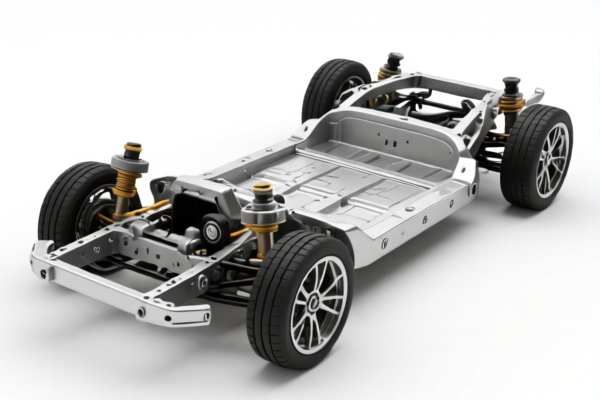
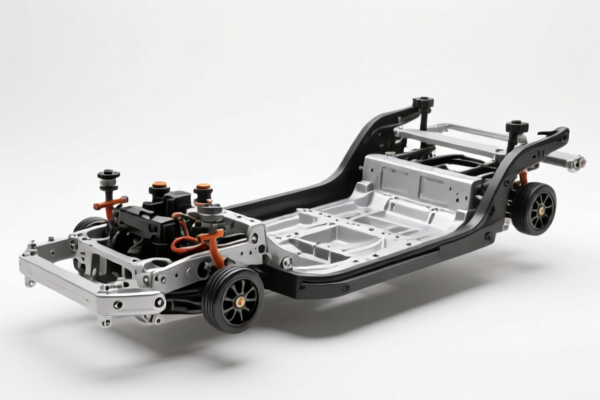
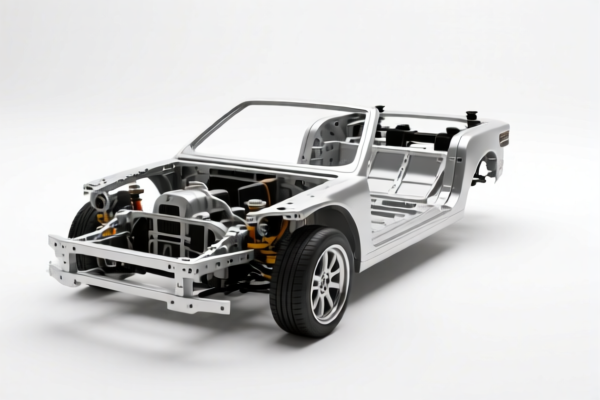
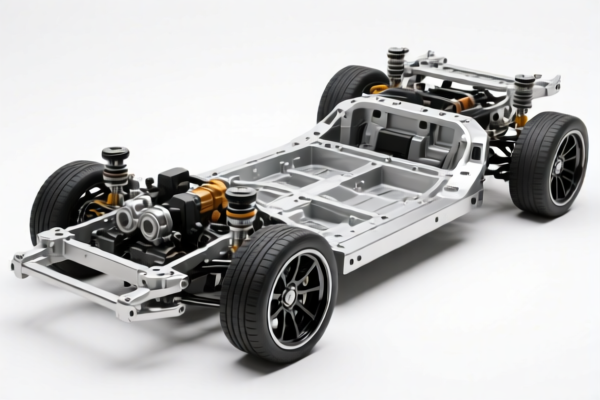
AI Analysis
🚗 汽车底盘(Chassis for Motor Vehicles)
🌐 HS Code Reference & Customs Clearance Guide | 2026 Latest Tariff Analysis | Professional Clearance Strategy
📌 I. Product Definition & Classification: What Exactly is a "Chassis"?
In international trade, the term "Chassis" (汽车底盘) is highly specific. It does not refer to a complete vehicle (which would be under HS 8703), nor does it refer to loose parts like a single suspension arm or wheel (which would be under HS 8708).
A Chassis typically refers to the complete structural frame of a motor vehicle, often including the engine, transmission, suspension, and steering systems, but excluding the body, cab, or cargo box. It is the "skeleton" upon which the rest of the vehicle is built.
⚠️ Key Distinction:
- If it is a complete vehicle (with body, interior, windows, doors) → HS 8703 (Passenger Cars) or 8704 (Trucks).
- If it is a loose part (e.g., just a shock absorber, just a brake disc) → HS 8708 (Parts & Accessories).
- If it is the structural frame + powertrain + suspension (but no body) → HS 8706 (Chassis fitted with engine).
📦 2. HS Code Classification Details (Based on Provided Data)
| HS Code | Product Description | Applicability | Key Features |
|---|---|---|---|
8706.00.15.20 |
Chassis fitted with engine, suitable for passenger cars or related motor vehicles. | Passenger cars, sedans, SUVs. | Matches the "form and use" of a passenger vehicle chassis with engine. |
8706.00.15.40 |
Chassis fitted with engine, structural component consistent with vehicles in 8703. | Vehicles consistent with HS 8703 (Passenger Cars). | Classified as a structural part of vehicles listed in 8703. |
8708.80.16.00 |
Core vehicle component, including suspension and steering systems. | Other vehicles (non-standard or specific types). | Defined as a "core part" containing suspension/steering, fitting "other vehicles" parts. |
8708.80.65.90 |
Motor vehicle component, form fits "parts and accessories" category. | General vehicle parts/accessories. | Classified under parts/accessories for other vehicles. |
🔍 Important Note:
- HS 8706 codes are for Chassis fitted with an engine. This is a higher value and more complex assembly than simple parts. - HS 8708 codes are for Parts and Accessories. These are used when the item is a sub-assembly (like a suspension system) or a component not constituting a full "chassis with engine." - The tax rates for 8706 and 8708.16 are identical in the provided data, but 8708.65.90 has a significantly higher effective tax rate due to material-specific surcharges.
💰 3. 2026 Latest Tariff Rate Breakdown (Including Surcharges)
✅ Applicable Country: United States (US)
✅ Origin: China (CN)
✅ Effective Date: Post-November 10, 2025 (Including subsequent imports)
🎯 1. HS Codes 8706.00.15.20 & 8706.00.15.40 & 8708.80.16.00
| Item | Detail |
|---|---|
| Base Tariff (MFN) | 2.5% |
| Section 301 Surcharge | +25.0% |
| Section 122 Surcharge | +10.0% |
| Total Tariff Rate | 37.5% |
| Calculation Base | CIF Value × 37.5% |
| De Minimis Exemption | ❌ Not Applicable |
| Legal Authority Path | Base: HTSUS → 301: Footnote 4 → 122: EO/Executive Order |
📌 Explanation:
- The 2.5% is the standard Most Favored Nation (MFN) duty. - The 25% is the Section 301 tariff specifically targeting Chinese-origin goods in this category. - The 10% is an additional surcharge (often referred to as Section 122 or specific trade action tariffs). - Total: 37.5% is the mandatory entry cost.
🎯 2. HS Code 8708.80.65.90 (Special Material Surcharge)
| Item | Detail |
|---|---|
| Base Tariff | 2.5% |
| Section 301 Surcharge | +25.0% |
| Section 122 Surcharge | +10.0% |
| Steel/Aluminum/Copper Surcharge | +50.0% |
| Total Effective Tariff | ~87.5% |
| Calculation Base | CIF Value × (2.5% + 25% + 10% + 50%) |
| Note | This high rate applies because this subheading likely covers parts made of steel, aluminum, or copper. |
📌 Critical Warning:
- If your "chassis part" is classified under8708.80.65.90, you must check the material composition. - If it contains significant steel/aluminum/copper, the additional 50% tariff applies on top of the 37.5%, making the total 87.5%. - This is a prohibitive tariff for many business models.
🛠️ 4. Customs Clearance Practical Advice (Real-World Pitfall Avoidance)
✅ 1. Document Checklist (Mandatory)
| Document | Required | Explanation |
|---|---|---|
| ✅ Product Specification Sheet | ✔️ | Must clearly state: Is it a "Chassis with Engine" (8706) or a "Part" (8708)? |
| ✅ Engineering Drawings | ✔️ | Show the structure: Does it include the engine? Suspension? Steering? |
| ✅ Bill of Materials (BOM) | ✔️ | Crucial for 8708.80.65.90 to determine if steel/aluminum surcharges apply. |
| ✅ Commercial Invoice | ✔️ | Description must match HS Code logic (e.g., "Chassis Fitted with Engine"). |
| ✅ Country of Origin Certificate | ✔️ | To prove China origin (triggering surcharges). |
| ✅ Photographs (Exterior & Interior) | ✔️ | Show if the engine is present. If no engine, it's NOT HS 8706. |
✅ 2. Classification Strategy (Key Tips)
🔥 "Engine Determines Code, Material Determines Cost!"
| Scenario | Correct HS Code | Risk |
|---|---|---|
| Frame + Engine + Suspension | 8706.00.15.20 / 15.40 |
Low Risk. Standard 37.5%. |
| Frame + No Engine | NOT 8706. Likely 8707 or 8708. |
High Risk. Misclassification can lead to penalties. |
| Suspension Assembly (No Engine) | 8708.80.16.00 |
Moderate Risk. Ensure it's not a "complete chassis." |
| Steel/Aluminum Frame Part | 8708.80.65.90 |
High Cost Risk. 87.5% tariff. Avoid if possible. |
✅ 3. Special Handling for "Chassis"
| Situation | Recommendation |
|---|---|
| Semi-Trailer Chassis | Verify if it falls under 8706 or 8707. 8707 is for trailers without their own propulsion. |
| Electric Vehicle Chassis | If it includes the battery and motor, it may still be 8706. Define "Engine" as "Powertrain." |
| Kit for Assembly | If shipped as a "CKD/SKD" (Completely Knocked Down/Semi-Knocked Down) kit, ensure it's declared as a single unit if possible, not individual parts. |
🌍 5. Global Market Comparison (2026)
| Country/Region | Recommended HS Code | Tariff Rate (China Origin) | Key Requirement | Note |
|---|---|---|---|---|
| 🇺🇸 USA | 8706.00.15.20 |
37.5% | FCC/SAE Compliance | Highest Cost. Steel/Al parts can reach 87.5%. |
| 🇨🇳 China | 8706.00.15.20 |
2.5% (Import Duty) | CCC Certification | No Section 301/122 surcharges domestically. |
| 🇪🇺 EU | 8706.00.15 |
0% (Most Favored) | ECE/Type Approval | Zero Duty. Best market for chassis exports. |
| 🇲🇽 Mexico | 8706.00.15 |
0% (Under USMCA) | USMCA Certificate | Best for US Market. If assembled in Mexico, duty-free to US. |
📌 Conclusion:
- USA imposes heavy tariffs (37.5% base, up to 87.5% for metals).
- EU and Mexico (under USMCA) offer significant advantages.
- If exporting to the US, consider supply chain relocation to Mexico to avoid surcharges.
📌 6. Common Errors & Pitfalls (Blood Lessons)
❌ Error 1: Declaring a Chassis without an Engine as 8706.
👉 Consequence: Customs will reject it. HS 8706 requires an engine. Misclassification leads to fines and delays.
❌ Error 2: Ignoring the Material Surcharge for 8708.80.65.90.
👉 Consequence: Budgeting for 37.5% but paying 87.5% due to steel/aluminum content. Profit margin destroyed.
❌ Error 3: Splitting a "Chassis with Engine" into "Frame," "Engine," and "Suspension" parts.
👉 Consequence: The "Engine" alone might be taxed differently (e.g., 301 tariffs on engines), and the "Frame" might be taxed as a part. Total tax may increase or cause valuation issues.
✅ Correct Approach:
"Chassis, Fitted with Engine, for Passenger Vehicle, Model XYZ, Steel Frame, Aluminum Suspension."
🎯 7. Conclusion: Professional Classification Saves Money!
🎯 Remember the Mantra:
🔹 "Engine in = 8706 (37.5%)"; "No Engine = 8708 (Check Material!)";
🔹 "Steel/Al in 8708 = 87.5% Nightmare!"
📌 Pro Tip:
- If you are exporting to the US, strongly consider shipping through or assembling in Mexico to leverage USMCA for 0% tariffs.
- Always request a Customs Ruling from US CBP if the product sits on the boundary between "Chassis" and "Part."
📣 Immediate Action:
📞 Consult a Customs Broker: Provide BOM and drawings.
📊 Calculate True Landed Cost: Include 37.5% or 87.5% in your pricing model.
🚀 Optimize Supply Chain: Look into Mexico assembly to avoid Section 301/122 tariffs.
✨ Precise Classification, Predictable Costs!
💼 Your Profit Margin Depends on These Digits!
Customer Reviews
About HS Code Classification
The Harmonized System (HS) is an internationally standardized nomenclature developed by the World Customs Organization (WCO) to classify traded products. Over 200 countries use the HS system as the basis for customs tariffs, trade statistics, and import/export regulations.
Each HS code follows a hierarchical structure:
- Chapter (2 digits) — Broad category of goods (e.g., Chapter 84: Machinery and Mechanical Appliances)
- Heading (4 digits) — More specific grouping within the chapter
- Subheading (6 digits) — Internationally standardized breakdown, used by all WCO member countries
- National subdivisions (8-10 digits) — Country-specific extensions for further classification, such as US HTSUS 10-digit codes
Correct HS code classification is essential for smooth customs clearance, accurate duty payment, and compliance with trade regulations. Misclassification can lead to customs delays, overpayment of duties, or penalties.
When importing from CN to US, the applicable tariff rates may include:
- Most-Favored-Nation (MFN) rate — The standard duty rate applied to WTO members
- General rate — Applied to countries without trade agreements
- Trade remedy duties — Additional tariffs such as Section 301 (anti-dumping), Section 232 (national security), or countervailing duties
The information provided on this page is for reference purposes only. For official classification, please consult with your local customs authority or a licensed customs broker.