汽车手套箱
CN → US| HS Code | Tariff Rate | Origin | Destination | Doc |
|---|---|---|---|---|
| 8707100020 | 37.5% | CN | US | Official Doc |
| 8707100040 | 37.5% | CN | US | Official Doc |
| 8708295110 | 0.0% | CN | US | Official Doc |
| 8708295160 | 0.0% | CN | US | Official Doc |
| 3926305000 | 22.8% | CN | US | Official Doc |
Product Images
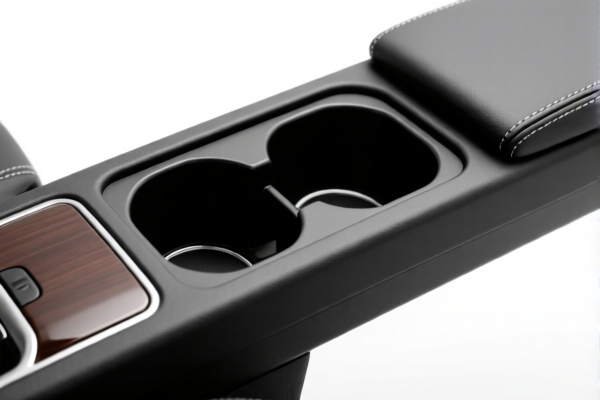
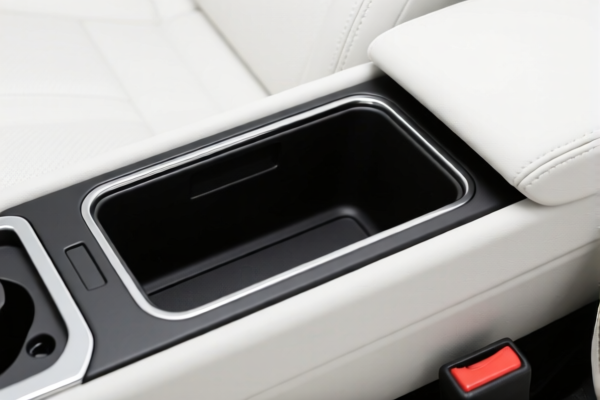
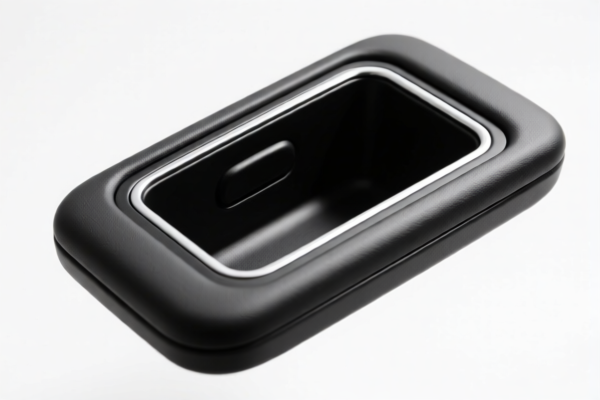
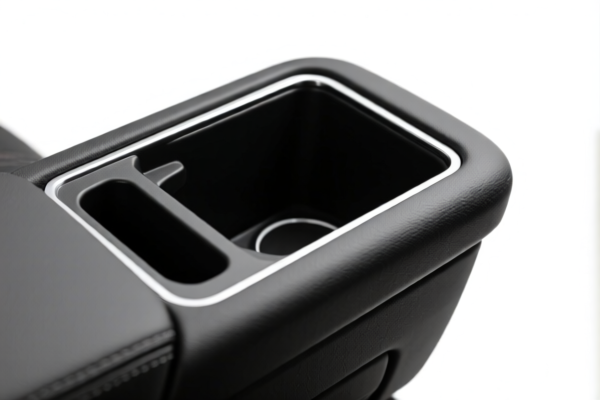
AI Analysis
🚗 Glove Box Lid/Cover (Automotive Interior Component)
🌐 HS Code Reference & Customs Clearance Guide | 2026 Latest Tariff Analysis | Professional Strategy for US Imports
📌 I. Product Definition & Classification: What Exactly is a "Glove Box"?
A glove box lid (or cover) is a critical interior component of an automotive vehicle, typically located on the dashboard in front of the front passenger seat. It serves as a storage compartment for documents, tools, and small items.
In international trade, its classification depends heavily on material composition and functional role:
- As a Vehicle Part: If it is a structural or functional part of the car's body/dashboard assembly, it generally falls under Chapter 87 (Vehicles).
- As a Plastic Accessory: If classified separately as a general plastic article (less common for installed auto parts, but possible for aftermarket/uninstalled parts), it might fall under Chapter 39 (Plastics).
⚠️ Key Distinction:
- If imported as a complete assembled unit for installation into a car body → Prioritize HS Code 8708 (Parts and accessories of vehicles).
- If imported as a generic plastic component without specific automotive integration context → May fall under 8707 or 3926, though less ideal for standard auto parts.
📦 II. HS Code Classification Details (2026 Latest Tariff Authority Mapping)
Based on the provided data, here are the four primary HS Code options for Glove Box Lids, sorted by classification logic:
| HS Code | Product Description | Classification Logic | Key Tax Implication |
|---|---|---|---|
8708.29.51.10 |
Vehicle Body Parts & Accessories | Fits as a structural part of the cabin/bodywork. | Base 2.5% + Add-on 35% (Total ~37.5%) |
8708.29.51.60 |
Other Parts & Accessories (Non-Metal Specific) | Classified under "other parts" excluding specific metal types. | Base 2.5% + Add-on 85% (Total ~87.5% due to steel/alum/copper surcharge if applicable) |
8707.10.00.20 |
Equipment Components (Shells/Covers) | Based on "parts/components rule," treated as a shell/cover component for equipment. | Base 2.5% + Add-on 35% (Total ~37.5%) |
8707.10.00.40 |
Other Machinery/Device Parts | Fallback category for mechanical or experimental device parts (shells/covers). | Base 2.5% + Add-on 35% (Total ~37.5%) |
3926.30.50.00 |
Plastic Articles (Other) | Fallback if classified as a general plastic structural component. | Base 5.3% + Add-on 17.5% (Total ~22.8%) |
🔍 Important Note:
-8708.29.51.10is often the most accurate for standard automotive glove box lids as they are integral body/accessory parts.
-3926.30.50.00is the lowest tax option but carries higher classification risk if customs determines it is unequivocally an automotive part.
-8708.29.51.60triggers a massive 50% additional surcharge for steel/aluminum/copper products, leading to an 85%+ total tariff. Avoid this unless necessary.
💰 III. 2026 Latest Tariff Rate Breakdown (Including Additional Taxes & Policy Surcharges)
✅ Applicable Country: United States (US)
✅ Origin: China (CN)
✅ Effective Time: November 10, 2025 onwards (and subsequent imports)
🎯 1. 8708.29.51.10 —— Vehicle Body Parts & Accessories (Recommended)
| Item | Content |
|---|---|
| Base Tariff | 2.5% (ad valorem) |
| Section 301 Surcharge | +25.0% (USITC Footnote for Auto Parts) |
| IEEPA Surcharge (Section 1223/122) | +10.0% (Targeting Chinese goods) |
| Total Tariff Rate | 37.5% |
| Tax Calculation | CIF Value × 37.5% |
| De Minimis Exemption | ❌ Not Eligible (Must declare formally) |
| Legal Path | IEEPA:9903.01.25 → USITC:8708.29.51.10 → FOOTNOTE:9903.88.01 |
📌 Explanation:
- This is the standard rate for most automotive interior parts.
- The 25% Section 301 tariff is standard for auto parts from China.
- The 10% IEEPA tariff is an additional layer on top of Section 301 for certain Chinese goods.
🎯 2. 8707.10.00.20 & 8707.10.00.40 —— Equipment/Machinery Components
| Item | Content |
|---|---|
| Base Tariff | 2.5% |
| Section 301 Surcharge | +25.0% |
| IEEPA Surcharge | +10.0% |
| Total Tariff Rate | 37.5% |
| Tax Calculation | CIF Value × 37.5% |
| De Minimis Exemption | ❌ Not Eligible |
📌 Note:
- These codes treat the glove box lid as a generic "shell" or "cover" for equipment rather than a specific vehicle part.
- The tax burden is identical to8708.29.51.10(37.5%), so there is no tax advantage, but potential classification disputes if customs insists it is a vehicle part.
🎯 3. 3926.30.50.00 —— Plastic Articles (Lowest Tax, Highest Risk)
| Item | Content |
|---|---|
| Base Tariff | 5.3% |
| Section 301 Surcharge | +7.5% (Note: Data shows 7.5%, likely specific to plastic category or adjusted rate) |
| IEEPA Surcharge | +10.0% |
| Total Tariff Rate | 22.8% |
| Tax Calculation | CIF Value × 22.8% |
| De Minimis Exemption | ❌ Not Eligible |
| Legal Path | IEEPA:9903.01.25 → USITC:3926.30.50.00 |
📌 Warning:
- While the tax is significantly lower (22.8% vs 37.5%), this classification is risky.
- Customs may challenge this if the product is clearly an automotive part, demanding re-classification to 8708 and back-tariffs.
- Use only if the product is not specifically designed for a car or is sold as a general plastic accessory.
🎯 4. 8708.29.51.60 —— Other Parts (High Risk, High Cost)
| Item | Content |
|---|---|
| Base Tariff | 2.5% |
| Section 301 Surcharge | +25.0% |
| IEEPA Surcharge | +10.0% |
| Material Surcharge (Steel/Alum/Copper) | +50.0% |
| Total Tariff Rate | ~87.5% |
| Tax Calculation | CIF Value × 87.5% |
📌 Critical Alert:
- AVOID THIS CODE unless the glove box lid is made of steel, aluminum, or copper AND is not covered by other specific provisions.
- The 50% additional surcharge makes this prohibitively expensive.
🛠️ IV. Customs Clearance Practical Advice (Real-World Pitfall Guide)
✅ 1. Documentation Checklist (Non-Negotiable)
| Document | Required | Description |
|---|---|---|
| ✅ Product Specification Sheet | ✔️ | Material (Plastic, Leather, Metal), Dimensions, Mounting holes, Color |
| ✅ Product Photos | ✔️ | Clear images showing the lid, hinges, and any branding/part numbers |
| ✅ Commercial Invoice | ✔️ | Must describe as "Glove Box Lid for Automotive Use" or "Interior Trim Component" |
| ✅ Packing List | ✔️ | Net weight, Gross weight, carton dimensions |
| ✅ Bill of Lading/Air Waybill | ✔️ | Standard shipping docs |
| ✅ Origin Certificate (if applicable) | ✔️ | For other countries, but for China, proof of origin is key for tariff calculation |
✅ 2. Declaration Strategy (Key Tips)
🔥 “Material Matters, Application Defines!”
| Scenario | Recommended HS Code | Reason |
|---|---|---|
| Standard Plastic Glove Box Lid | 8708.29.51.10 |
Best fit for auto parts; tax 37.5% |
| Metal (Steel/Alum) Glove Box Lid | Avoid 8708.29.51.60 |
Check if it can be classified under different material rules to avoid 50% surcharge |
| Aftermarket Plastic Lid (Not Installed) | 3926.30.50.00 |
Risky but lower tax (22.8%); use with caution and strong justification |
| Luxury Leather/Trimmed Lid | 8708.29.51.10 |
Still considered a vehicle part/accessory |
⚠️ Common Mistake:
- Declaring as "Plastic Box" →3926.30.50.00when it’s clearly an auto part → Customs Audit & Penalty.
- Declaring as "Vehicle Part" but using wrong sub-code → Delay in Customs.
✅ 3. Special Cases
| Case | Handling Advice |
|---|---|
| OEM Parts for Car Manufacturers | Provide Purchase Order and Technical Drawing from the carmaker to prove it’s a genuine auto part. |
| Aftermarket Parts for Resale | Clearly state "Aftermarket Glove Box Lid for [Car Model]" in description. |
| Mixed Shipments (Auto Parts + Other Goods) | Declare separately to avoid complex tariff calculations. |
🌍 V. Global Market Comparison (2026)
| Country/Region | Recommended HS Code | Tariff (China Origin) | Certification | Notes |
|---|---|---|---|---|
| 🇺🇸 USA | 8708.29.51.10 |
37.5% | NHTSA Compliance | High tariffs due to Section 301 & IEEPA |
| 🇨🇳 China | 8708.29.51.10 |
~2.5% - 10% | CCC (if applicable) | Lower tariffs, no Section 301 |
| 🇪🇺 EU | 8708.29.51.10 |
~4.5% | CE (if electronic) | No major surcharges like US |
| 🇲🇽 Mexico | 8708.29.51.10 |
0% (under USMCA) | N/A | If originating in USMCA region |
📌 Conclusion:
- USA is the most expensive market due to 37.5%+ tariffs.
- Consider supply chain diversification (e.g., Mexico or Vietnam) if targeting the US market heavily.
📌 VI. Common Errors & Pitfalls (Lessons Learned)
❌ Error 1: Declaring Glove Box Lid as "Plastic Container"
👉 Consequence: Customs may re-classify to 8708 and charge 37.5% instead of 22.8%, plus penalties.
❌ Error 2: Using 8708.29.51.60 for Metal Lids
👉 Consequence: 87.5% Tariff due to 50% material surcharge → Profit Margin Destroyed.
❌ Error 3: Ignoring IEEPA 10% Surcharge
👉 Consequence: Underestimating total landed cost by 10%.
✅ Best Practice:
“Glove Box Lid, Plastic, Black, for Ford F-150 2020-2023, Aftermarket, Model GBL-123”
🎯 VII. Conclusion: Precision Classification Saves Money!
🎯 Remember the Rules:
🔹 “Auto Part = 8708, Plastic = 3926, Metal = Watch Out!”
🔹 “USA Tariff = Base + 301 + IEEPA”
🔹 “37.5% is the standard, 22.8% is risky, 87.5% is deadly!”
📌 Pro Tip:
If your glove box lids are made in Vietnam, Mexico, or Thailand, you may qualify for lower or zero tariffs under trade agreements.
Always request an Advance Ruling (Ruling Letter) from US Customs for high-value shipments.
📣 Action Item:
📞 Contact a licensed customs broker.
📸 Provide clear photos and material specs.
🚀 Get pre-approved HS Code classification to avoid delays and unexpected costs!
✨ Professional Clearance Starts with Accurate Classification!
💼 Every percent of tariff saved is pure profit!
Customer Reviews
About HS Code Classification
The Harmonized System (HS) is an internationally standardized nomenclature developed by the World Customs Organization (WCO) to classify traded products. Over 200 countries use the HS system as the basis for customs tariffs, trade statistics, and import/export regulations.
Each HS code follows a hierarchical structure:
- Chapter (2 digits) — Broad category of goods (e.g., Chapter 84: Machinery and Mechanical Appliances)
- Heading (4 digits) — More specific grouping within the chapter
- Subheading (6 digits) — Internationally standardized breakdown, used by all WCO member countries
- National subdivisions (8-10 digits) — Country-specific extensions for further classification, such as US HTSUS 10-digit codes
Correct HS code classification is essential for smooth customs clearance, accurate duty payment, and compliance with trade regulations. Misclassification can lead to customs delays, overpayment of duties, or penalties.
When importing from CN to US, the applicable tariff rates may include:
- Most-Favored-Nation (MFN) rate — The standard duty rate applied to WTO members
- General rate — Applied to countries without trade agreements
- Trade remedy duties — Additional tariffs such as Section 301 (anti-dumping), Section 232 (national security), or countervailing duties
The information provided on this page is for reference purposes only. For official classification, please consult with your local customs authority or a licensed customs broker.