汽车扶手箱
CN → US| HS Code | Tariff Rate | Origin | Destination | Doc |
|---|---|---|---|---|
| 8708295160 | 0.0% | CN | US | Official Doc |
| 8708295110 | 0.0% | CN | US | Official Doc |
| 4421999880 | 38.3% | CN | US | Official Doc |
| 4421999870 | 38.3% | CN | US | Official Doc |
| 3926305000 | 22.8% | CN | US | Official Doc |
| 3926909000 | 0.0% | CN | US | Official Doc |
Product Images
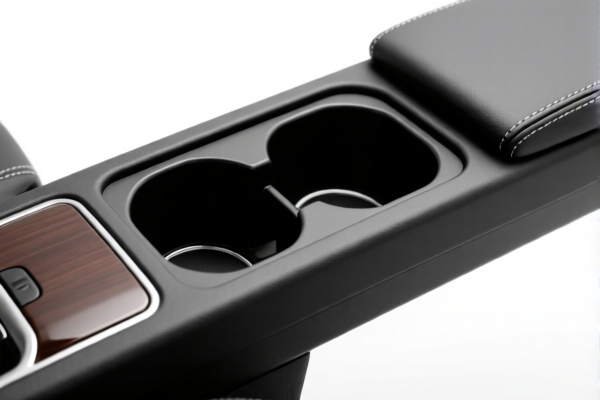
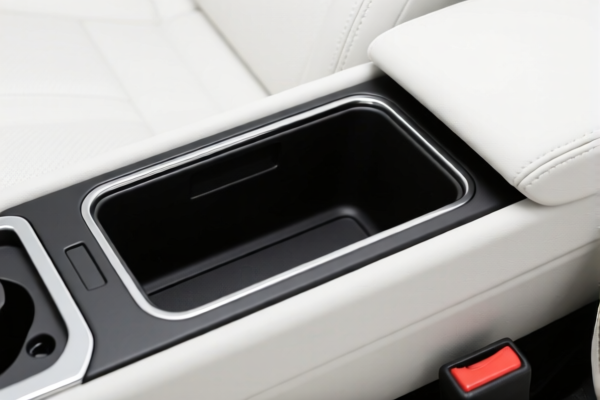
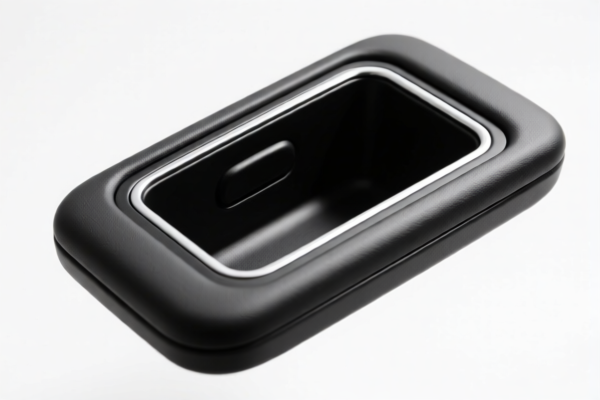
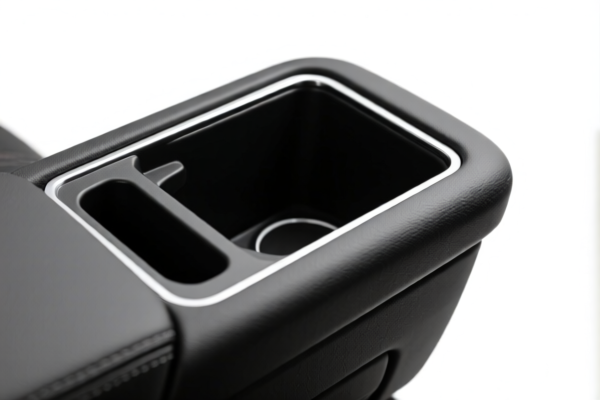
AI Analysis
🚗 Car Armrest Box (Automobile Console/Armrest)
🌐 HS Code Reference & Customs Clearance Guide | 2026 Latest Tariff Analysis | Professional Clearance Strategy
📌 I. Product Definition & Classification: What Exactly is a "Car Armrest Box"?
The Car Armrest Box is a critical interior component of modern vehicles, serving both ergonomic support and storage functions. In international trade, its classification is complex because it can be viewed through multiple lenses: as a seat accessory, a body part, or a plastic fitting.
Key Classification Dimensions: 1. Seat-Related Parts: If it is integrated into the seat cushion or backrest (e.g., center armrest of a bucket seat). 2. Body Parts/Accessories: If it is a standalone console unit attached to the body structure or dashboard. 3. Material-Based: If the primary material is plastic, it might fall under specific plastic article codes depending on its form factor.
⚠️ Critical Distinction:
- If it is a seat component (part of the seating system) → Tends toward Chapter 94.
- If it is a standalone body console (not part of the seat) → Tends toward Chapter 87.
- If it is purely a plastic fitting/handle → Tends toward Chapter 39.
📦 II. HS Code Classification Details (2026 Latest Tariff Authority Comparison)
Based on the provided data, here are the potential HS Code mappings, sorted by logical inference and tax implication:
| HS Code | Product Description | Classification Logic | Tax Implication (China-Origin to US) |
|---|---|---|---|
9401.99.10.85 |
Other Parts of Seats (Generic/Fallback) | Inferred as generic seat part. No specific material conflict. Falls under the "Other" bucket for seat accessories. | 17.5% (Base 0% + Add. 7.5% + 122 Clause 10%) |
8708.29.51.60 |
Body Parts & Accessories (Steel/Aluminum/Copper) | Classified as a car body part. High likelihood of metal content (hinges, brackets). Note: Heavy additional tariffs for metal products. | 87.5% (Base 2.5% + Add. 25% + 122 Clause 10% + Steel/Al/Cu 50%) |
8708.29.15.00 |
Body Parts & Accessories (General) | Door armrests or console units treated as general car body parts. No specific material conflict assumed. | 37.5% (Base 2.5% + Add. 25% + 122 Clause 10%) |
9401.20.00.00 |
Motor Vehicle Seats (Specific) | Viewed as an integral part of the seating system. No material conflict. | 35.0% (Base 0% + Add. 25% + 122 Clause 10%) |
3926.30.50.00 |
Other Plastic Articles (Body Fittings) | Assumed plastic material. Classified as a body fitting/handle made of plastic. | 22.8% (Base 5.3% + Add. 7.5% + 122 Clause 10%) |
3926.30.10.00 |
Plastic Articles (General Body Use) | Assumed plastic. Matches "body utensils/handles." | 24.0% (Base 6.5% + Add. 7.5% + 122 Clause 10%) |
🔍 Key Insight:
- The lowest tax rate (17.5%) comes from the generic seat part code (9401.99.10.85).
- The highest risk rate (87.5%) applies if the item contains metal components and is classified as a body part (8708.29.51.60).
- Plastic assumption (3926.xx) offers a middle ground (~22-24%) but requires strict material proof.
💰 III. 2026 Latest Tariff Rate Details (Including Additional Taxes)
✅ Applicable Country: United States (US)
✅ Origin: China (CN)
✅ Effective Date: Post-2025 policies (including 122 Clause and Section 301/IEEPA additions)
🎯 1. 9401.99.10.85 – Parts of Seats (Best Case Scenario)
| Item | Detail |
|---|---|
| Base Duty | 0.0% |
| Section 301 Add. Duty | 7.5% |
| 122 Clause Duty | 10.0% |
| Total Rate | 17.5% |
| De Minimis Exemption | ❌ Not Eligible (Standard high-value cargo rules apply) |
| Legal Basis | General "Other" category for seat parts with specific fallback logic. |
📌 Explanation:
- This code is ideal if the armrest is structurally part of the seat (e.g., a fold-down armrest on a center console that is bolted to the seat frame).
- It avoids the heavy metal surcharges and high base rates of body parts.
🎯 2. 8708.29.51.60 – Body Parts (Metal Content) – HIGH RISK
| Item | Detail |
|---|---|
| Base Duty | 2.5% |
| Section 301 Add. Duty | 25.0% |
| 122 Clause Duty | 10.0% |
| Steel/Al/Cu Surcharge | 50.0% |
| Total Rate | 87.5% |
| De Minimis Exemption | ❌ Not Eligible |
| Legal Basis | IEEPA + USITC for metal components in auto parts. |
📌 Warning:
- If your armrest box has metal hinges, brackets, or a metal skeleton, and it is declared as a "body part" (8708), this 50% surcharge will destroy your margin.
- Only use this code if you are certain about the metal content and have accepted the cost, or if the part is primarily metal.
🎯 3. 3926.30.10.00 / 3926.30.50.00 – Plastic Articles
| Item | Detail |
|---|---|
| Base Duty | 6.5% (30.10) or 5.3% (30.50) |
| Section 301 Add. Duty | 7.5% |
| 122 Clause Duty | 10.0% |
| Total Rate | 24.0% (30.10) or 22.8% (30.50) |
| De Minimis Exemption | ❌ Not Eligible |
| Legal Basis | Plastic articles for general use or body fittings. |
📌 Explanation:
- Use this if the armrest is 100% plastic (including internal foam or mechanisms if wrapped) and can be argued as a "plastic fitting" rather than a mechanical seat part.
- Risk: Customs may challenge this if the item has significant mechanical moving parts (hinges) or is clearly a seat component.
🛠️ IV. Customs Clearance Practical Advice (Avoid Pitfalls)
✅ 1. Preparation Checklist (Non-Negotiable)
| Document | Required? | Purpose |
|---|---|---|
| ✅ Product Photos (Exploded View) | Yes | To prove material composition (Plastic vs. Metal vs. Leather). |
| ✅ Bill of Materials (BOM) | Yes | Critical for proving "Plastic" content to avoid 8708 metal surcharges. |
| ✅ Technical Specification | Yes | Is it part of the seat? Or a standalone console? |
| ✅ Commercial Invoice | Yes | Clearly state "Car Armrest Box" or "Seat Armrest". Avoid vague terms like "Auto Part". |
| ✅ Packing List | Yes | Ensure no heavy metal hardware is included unless declared. |
✅ 2. Declaration Strategy (The "Golden Rule")
🔥 "Seat Part for Low Tax, Plastic for Medium, Body Part for High Risk!"
| Scenario | Recommended HS Code | Reasoning |
|---|---|---|
| Integrated Seat Armrest (Fold-down from seat cushion) | 9401.99.10.85 |
Lowest tax (17.5%). Clearly a seat accessory. |
| Standalone Console (Center console between seats) | 9401.99.10.85 OR 8708.29.15.00 |
Argue as "Seat Support Structure" for lower tax. If rejected, fallback to general body part. |
| Pure Plastic Interior Fitting (No seat function, just a cover/handle) | 3926.30.50.00 |
Good if no seat integration. Tax ~22.8%. |
| Metal/Leather Armrest with Heavy Hinges | 8708.29.15.00 |
High risk. Avoid 8708.29.51.60 if possible to avoid 50% surcharge. |
✅ 3. Critical Warnings
| Pitfall | Consequence | Solution |
|---|---|---|
Misclassifying as 8708.29.51.60 |
87.5% Tax | Proactively declare material. If >50% plastic, argue for 3926 or 9401. |
| Vague Description "Auto Part" | Seizure/Delay | Always specify "Armrest for Car Seat" or "Console". |
| Ignoring 122 Clause | Unexpected 10% Charge | Ensure all calculations include the 10% 122 Clause for China-origin goods. |
| Overlooking Metal Hardware | Reclassification Penalty | If the box has metal brackets, they may trigger the 50% surcharge if classified under 8708 metal provisions. |
🌍 V. Global Market Comparison (2026)
| Region | Recommended HS Code | Est. Total Tax (China Origin) | Notes |
|---|---|---|---|
| 🇺🇸 USA | 9401.99.10.85 |
17.5% | Best option for seat parts. Avoid 8708 metal codes. |
| 🇨🇳 China | 9401.99.90.90 |
Low (0-9%) | Domestic trade has lower duties, but VAT applies. |
| 🇪🇺 EU | 9401.99.00 |
~4-6% | No Section 301 or 122 equivalents. Standard auto parts duty. |
| 🇯🇵 Japan | 8708.29.00 |
0-5% | Generally low auto part duties. No massive surcharges like US. |
📌 Conclusion:
The USA is the most challenging market due to layered tariffs (Base + 301 + 122 + Metal Surcharge).
Strategy: Aggressively argue for Seat Part (9401) or Plastic (3926) classification to avoid the punitive 87.5% rate.
📌 VI. Common Errors & Blood-Teaching Lessons
❌ Error 1: Declaring a metal-bracketed armrest as 3926.30.10.00 (Plastic).
👉 Result: Customs inspection reveals metal. Reclassified to 8708.29.51.60 → 87.5% tax + penalties.
❌ Error 2: Declaring a standalone console as 9401 (Seat Part) without proof of seat integration.
👉 Result: Customs rejects "seat part" status. Reclassified to 8708.29.15.00 → 37.5% tax (Higher than expected 17.5%).
❌ Error 3: Ignoring the 122 Clause (10%).
👉 Result: Budget miscalculation. The 10% applies to almost all China-origin auto parts under recent executive orders.
✅ Correct Practice:
"Center Armrest Box, Model XYZ, Integrated with Vehicle Seat Frame, Primary Material: Plastic/Leather, Hardware: Steel (Non-Structural). HS Code: 9401.99.10.85."
🎯 VII. Final Recommendation
🎯 For Maximum Profit & Minimum Risk:
1. Design: If possible, design the armrest as a detachable or integral seat accessory to qualify for 9401.
2. Material: Minimize metal content. Use plastic/metal-composite brackets that can be argued as "non-structural."
3. Documentation: Provide a BOM showing >50% plastic/volume if targeting 3926, or Installation Manuals showing seat integration for 9401.
4. Avoid: Do not use 8708.29.51.60 unless the product is 100% metal and you have absorbed the cost.
📞 Action Item:
Consult a customs broker to file an Advance Ruling if the product is high-volume. The 17.5% vs 87.5% difference is life-changing for automotive parts exporters.
✨ Professional Customs Clearance: Start with Precision!
💼 Every Percent of Tax Saved is Pure Profit!
Customer Reviews
About HS Code Classification
The Harmonized System (HS) is an internationally standardized nomenclature developed by the World Customs Organization (WCO) to classify traded products. Over 200 countries use the HS system as the basis for customs tariffs, trade statistics, and import/export regulations.
Each HS code follows a hierarchical structure:
- Chapter (2 digits) — Broad category of goods (e.g., Chapter 84: Machinery and Mechanical Appliances)
- Heading (4 digits) — More specific grouping within the chapter
- Subheading (6 digits) — Internationally standardized breakdown, used by all WCO member countries
- National subdivisions (8-10 digits) — Country-specific extensions for further classification, such as US HTSUS 10-digit codes
Correct HS code classification is essential for smooth customs clearance, accurate duty payment, and compliance with trade regulations. Misclassification can lead to customs delays, overpayment of duties, or penalties.
When importing from CN to US, the applicable tariff rates may include:
- Most-Favored-Nation (MFN) rate — The standard duty rate applied to WTO members
- General rate — Applied to countries without trade agreements
- Trade remedy duties — Additional tariffs such as Section 301 (anti-dumping), Section 232 (national security), or countervailing duties
The information provided on this page is for reference purposes only. For official classification, please consult with your local customs authority or a licensed customs broker.