汽车空调零件
CN → US| HS Code | Tariff Rate | Origin | Destination | Doc |
|---|---|---|---|---|
| 8415908045 | 68.9% | CN | US | Official Doc |
| 8708994850 | 35.0% | CN | US | Official Doc |
| 8415200000 | 36.4% | CN | US | Official Doc |
| 8708998180 | 12.5% | CN | US | Official Doc |
| 8481909060 | 85.0% | CN | US | Official Doc |
Product Images
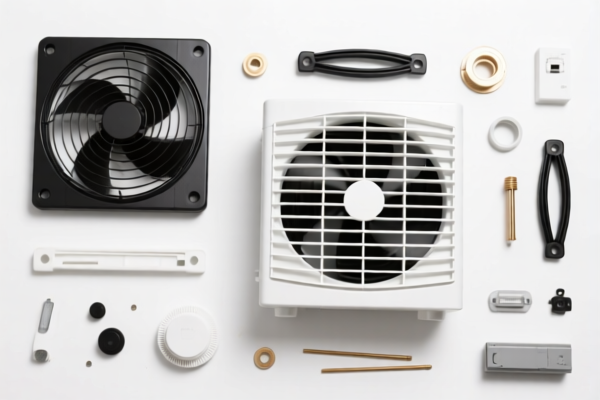
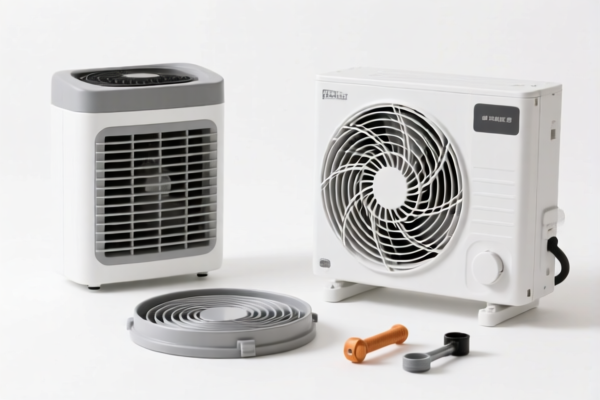
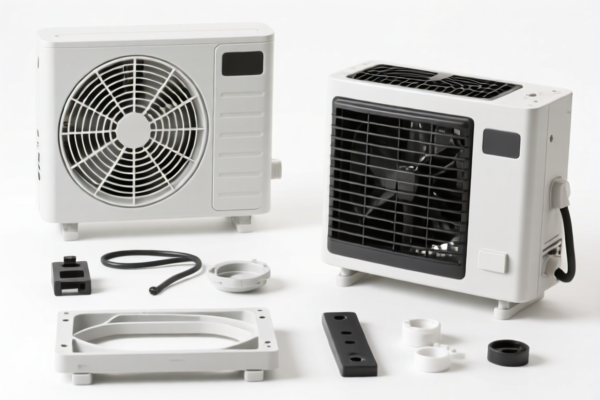
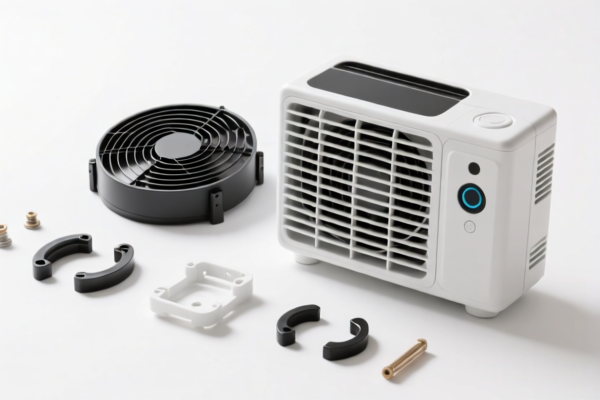
AI Analysis
❄️ Auto Air Conditioning Parts (Components for Automotive HVAC Systems)
🌐 HS Code Reference & Customs Clearance Guide | 2026 Latest Tariff Analysis | Professional Clearance Strategy
📌 1. Product Definition & Classification: What are "Auto AC Parts"?
Automotive Air Conditioning Parts refer to the components that make up the Heating, Ventilation, and Air Conditioning (HVAC) system in motor vehicles. These parts are critical for climate control in cars, trucks, and other automotive applications.
In international trade, these parts are generally classified under two main categories:
Compressor/Valve Units (8415 Series): If the part is integral to the refrigeration cycle (e.g., compressors, valves, or specific structural components of the AC unit itself). General Auto Parts (8708 Series): If the part is considered a general accessory or spare part for the vehicle, especially if it doesn't have a specific heading in Chapter 84.
⚠️ Key Distinction:
- If the part is specifically for automotive air conditioning and fits the technical description of AC components (like valves, heat exchangers, or specific structural parts), it may fall under 8415.90.
- If the part is a generic fastener, bracket, hose, or electrical connector used in the AC system but not exclusive to the refrigeration cycle, it is more likely classified under 8708 (Parts and accessories of vehicles of headings 8701 to 8705).
- Material Matters: Metals (Steel, Aluminum, Copper) often attract higher additional tariffs (Section 232/301 related duties) compared to plastics or rubber.
📦 2. HS Code Classification Details (Based on Provided Data)
| HS Code | Product Description | Application Scenario | Material/Conflict Check |
|---|---|---|---|
8415.20.00.00 |
Air Conditioning Units, Other Than Those Comprising a Motor and a Compressor (Note: Data summary suggests "Auto" use) | AC units for motor vehicle passenger use | ✅ Match: "Auto" matches purpose; "Parts" matches classification. No material conflict mentioned. |
8708.99.81.80 |
Parts and Accessories of Motor Vehicles (Other) | General auto AC components (hoses, brackets, non-compressor parts) | ✅ Match: Falls under "Other" auto parts. No material conflict identified. |
8415.90.80.45 |
Parts of Air Conditioners | Specific automotive AC components (e.g., valves, heat exchangers) | ⚠️ High Risk: Matches "Auto AC" purpose. Note: Includes "Steel, Aluminum, Copper products additional tariff: 50%". |
8708.99.48.50 |
Parts of Tractors and Other Vehicles (Other) | General parts, possibly misclassified as "Tractor parts" due to "Other" category logic | ✅ Match: Broad "Other" category. Common material (Metal/Plastic). |
8481.90.90.60 |
Parts of Tap, Cock, Valve and Similar Appliances | Parts fitting the definition of valves/taps (e.g., AC control valves) | ⚠️ High Risk: No material conflict. Note: Includes "Steel, Aluminum, Copper products additional tariff: 50%". |
🔍 Critical Warning:
- HS Code8415.90.80.45and8481.90.90.60carry a massive 50% additional tariff for Steel, Aluminum, and Copper products. This is due to Section 232 tariffs on steel/aluminum. If your part is made of these metals, the total tax rate skyrockets to 68.9% or 85.0%.
- HS Code8708.99.81.80is often the safest bet for general auto parts if they don't fit strictly into specific machinery headings, with a total tax of 37.5%.
- HS Code8415.20.00.00has a moderate tax rate of 36.4%** but requires strict justification that it is for "motor vehicle passenger use."
💰 3. 2026 Latest Tariff Rate Breakdown (Including Additional Duties & Policies)
✅ Applicable Country: United States (US)
✅ Origin: China (CN)
✅ Effective Time: From Nov 10, 2025 (and subsequent imports)
🎯 1. 8415.20.00.00 — Air Conditioning Units (Auto Use)
| Item | Content |
|---|---|
| Base Duty | 1.4% |
| Section 301 Additional Duty | +25.0% |
| IEEPA Additional Duty | +10.0% |
| Total Duty | 36.4% |
| Tax Calculation | CIF Value × 36.4% |
| De Minimis Exemption | ❌ Not Eligible (Deny De Minimis) |
| Legal Path | IEEPA:9903.01.25 → Section 301 → USITC:8415.20.00.00 |
📌 Explanation:
- The 25% is from Section 301 tariffs.
- The 10% is from IEEPA Executive Order on China.
- Total 36.4% is relatively moderate compared to other options.
🎯 2. 8708.99.81.80 — Auto Parts and Accessories (Other)
| Item | Content |
|---|---|
| Base Duty | 2.5% |
| Section 301 Additional Duty | +25.0% |
| IEEPA Additional Duty | +10.0% |
| Total Duty | 37.5% |
| Tax Calculation | CIF Value × 37.5% |
| De Minimis Exemption | ❌ Not Eligible |
| Legal Path | IEEPA:9903.01.24 → Section 301 → USITC:8708.99.81.80 |
📌 Note:
- This is a common "catch-all" for auto parts.
- Total 37.5% is similar to 8415.20.00.00.
- Safer if the part is not strictly a "refrigeration component" but a general vehicle part.
🎯 3. 8415.90.80.45 — Parts of Air Conditioners (Metal-Risk)
| Item | Content |
|---|---|
| Base Duty | 1.4% |
| Section 301 Additional Duty | +7.5% |
| IEEPA Additional Duty | +10.0% |
| Section 232 Additional Duty (Steel/Alum/Copper) | +50.0% |
| Total Duty | 68.9% |
| Tax Calculation | CIF Value × 68.9% |
| De Minimis Exemption | ❌ Not Eligible |
| Legal Path | IEEPA:9903.01.25 → Section 232 → USITC:8415.90.80.45 |
📌 CRITICAL WARNING:
- If your auto AC part is made of Steel, Aluminum, or Copper, this tariff applies.
- Total 68.9% is extremely high.
- Example: An aluminum heat exchanger or copper pipe will hit this rate.
🎯 4. 8708.99.48.50 — Parts of Tractors/Other Vehicles (Other)
| Item | Content |
|---|---|
| Base Duty | 0.0% |
| Section 301 Additional Duty | +25.0% |
| IEEPA Additional Duty | +10.0% |
| Total Duty | 35.0% |
| Tax Calculation | CIF Value × 35.0% |
| De Minimis Exemption | ❌ Not Eligible |
| Legal Path | IEEPA:9903.01.24 → Section 301 → USITC:8708.99.48.50 |
📌 Note:
- Lowest total duty (35.0%).
- However, classification as "Tractor Parts" may be challenged if the part is clearly for passenger cars. Customs may reclassify to 8708.99.81.80 (37.5%) or 8415.90 (68.9%).
🎯 5. 8481.90.90.60 — Parts of Taps/Valves (Metal-Risk)
| Item | Content |
|---|---|
| Base Duty | 0.0% |
| Section 301 Additional Duty | +25.0% |
| IEEPA Additional Duty | +10.0% |
| Section 232 Additional Duty (Steel/Alum/Copper) | +50.0% |
| Total Duty | 85.0% |
| Tax Calculation | CIF Value × 85.0% |
| De Minimis Exemption | ❌ Not Eligible |
| Legal Path | IEEPA:9903.01.25 → Section 232 → USITC:8481.90.90.60 |
📌 CRITICAL WARNING:
- Highest duty (85.0%).
- Applies if the part is considered a "valve" (e.g., AC expansion valve) AND made of Steel, Aluminum, or Copper.
- Avoid this classification unless absolutely necessary and non-metal parts are used.
🛠️ 4. Customs Clearance Practical Advice (Battle-Tested Pitfall Guide)
✅ 1. Required Documentation Checklist (No Exceptions)
| Document | Mandatory? | Description |
|---|---|---|
| ✅ Product Specification Sheet | ✔️ | Detail dimensions, material (Steel/Alum/Plastic/Rubber), function. |
| ✅ Material Composition Statement | ✔️ | Crucial! Must explicitly state if parts contain Steel, Aluminum, or Copper to avoid Section 232 surprises. |
| ✅ Product Photos (Including Labels) | ✔️ | Show model numbers, brand, and clear view of the part. |
| ✅ Commercial Invoice | ✔️ | Clearly describe as "Auto AC Parts for Passenger Vehicles" or "HVAC Components." |
| ✅ Packing List | ✔️ | Detail quantity, weight, and packaging type. |
| ✅ Certificate of Origin (CO) | ✔️ | If applicable, for potential preferential treatment (though China origin faces high duties). |
✅ 2. Declaration Tips (Key Mantras)
🔥 "Be Specific, Avoid Metal Traps, Match Purpose, Save Money!"
| Situation | Correct Declaration | Incorrect Practice |
|---|---|---|
| Plastic/ Rubber Parts | 8708.99.81.80 (37.5%) or 8708.99.48.50 (35.0%) |
Misclassifying as 8415.90 → Risk of 68.9% if misidentified as metal AC part. |
| Metal Parts (Steel/Alum/Copper) | High Risk! Prefer 8708.99.81.80 (37.5%) if possible. |
Declaring as 8415.90.80.45 or 8481.90.90.60 → 68.9% - 85.0% Duty! |
| Valves (Expansion/Relief) | Check material! If metal, consider 8708 if not strictly "AC machinery parts." |
Declaring as 8481.90.90.60 → 85.0% Duty! |
| Compressors | 8413.50 or similar (Not in data, but generally high duty). |
Misclassifying as general "Part" → Risk of reclassification. |
✅ 3. Special Case Handling
| Situation | Handling Advice |
|---|---|
| Mixed Material Parts | If a part has both plastic and metal components, Customs may apply the highest duty based on the primary material or value. Provide detailed breakdown. |
| OEM Custom Parts | Provide customer orders and design specs. Prove intended use for specific vehicle models to support 8708 classification. |
| Parts for Electric Vehicles (EVs) | Still considered "Motor Vehicles." Same classification rules apply. |
| Parts for Heavy-Duty Trucks | May fall under different headings. Ensure "Auto" vs "Truck" distinction is clear. |
🌍 5. Global Market Comparison (2026 Latest)
| Country/Region | Recommended HS Code | Duty Rate | Certification | Notes |
|---|---|---|---|---|
| 🇺🇸 USA | 8708.99.81.80 |
37.5% | FCC (if electronic), DOT (if safety-critical) | Avoid Metal-Heavy 8415.90/8481.90 due to 50% Section 232. |
| 🇨🇳 China | 8708.99.81.80 |
~10% | CCC (if required) | Lower base duty, no Section 301. |
| 🇪🇺 EU | 8708.99.81.80 |
~4.5% | ECE R12 (AC Safety), REACH | No Section 232. Focus on environmental compliance. |
| 🇯🇵 Japan | 8708.99.81.80 |
~6-8% | JIS Standards | No Section 301/232. |
| 🇦🇺 Australia | 8708.99.81.80 |
~5% | RCM | No Section 301/232. |
📌 Conclusion:
- USA is the most challenging market due to Section 301 (10-25%) and Section 232 (50% for metals).
- European Union and Asia-Pacific markets are much more favorable with lower duties and no punitive additional tariffs.
- Strategy: If exporting to the US, maximize non-metal components (plastic, rubber, electronics) and classify under8708to avoid the 50% Section 232 tariff.
📌 6. Common Errors & Pitfall Guide (Blood and Tears Lessons)
❌ Error 1: Classifying a Steel/Aluminum Heat Exchanger under 8708.99.81.80 without proper justification.
👉 Consequence: Customs may reclassify to 8415.90.80.45 → Tax jumps from 37.5% to 68.9% + Penalties!
❌ Error 2: Declaring a Copper Pipe as "Plastic Part."
👉 Consequence: Customs inspection reveals copper → 85.0% Duty + Fraud Penalties!
❌ Error 3: Using vague terms like "Auto Component."
👉 Consequence: Customs may assign a default high-rate code. Be specific: "Auto AC Evaporator Core" or "Auto AC Hose."
❌ Error 4: Ignoring Section 232 for Metal Parts.
👉 Consequence: Unexpected 50% additional duty on Steel/Aluminum/Copper parts classified under machinery headings.
✅ Correct Approach:
"Auto Air Conditioning Evaporator (Aluminum Core, Plastic Tank), Model XYZ, for Passenger Vehicle HVAC System."
Recommended HS:8708.99.81.80(37.5%) or8415.90.80.45(68.9% if deemed strictly AC machinery part).
Best Practice: Argue for8708.99.81.80if the part is replaceable and general.
🎯 7. Conclusion: Smart Classification, Lower Costs, Smoother Clearance!
🎯 Remember the Mantra:
🔹 "Metal is Money (in Taxes): Avoid 50% Section 232."
🔹 "Plastic/Rubber = Lower Risk: Aim for8708(35-37.5%)."
🔹 "Be Specific: Vague descriptions = High Duties + Delays."
📌 Pro Tip:
If your auto AC parts contain Steel, Aluminum, or Copper, consult a customs broker to explore if
8708.99.81.80is defensible. If not, prepare for the 68.9% duty. For non-metal parts,8708is the best route.
Apply for an Advance Ruling if you have high-volume shipments to ensure classification certainty.
📣 Immediate Action:
📞 Contact your customs broker + Provide Material Breakdown + Product Photos
🚀 Ensure Smooth Clearance, Minimize Costs, and Maximize Profits!
✨ Professional Classification Starts Here!
💼 Every Dollar Saved in Duties is Profit Added!
Customer Reviews
About HS Code Classification
The Harmonized System (HS) is an internationally standardized nomenclature developed by the World Customs Organization (WCO) to classify traded products. Over 200 countries use the HS system as the basis for customs tariffs, trade statistics, and import/export regulations.
Each HS code follows a hierarchical structure:
- Chapter (2 digits) — Broad category of goods (e.g., Chapter 84: Machinery and Mechanical Appliances)
- Heading (4 digits) — More specific grouping within the chapter
- Subheading (6 digits) — Internationally standardized breakdown, used by all WCO member countries
- National subdivisions (8-10 digits) — Country-specific extensions for further classification, such as US HTSUS 10-digit codes
Correct HS code classification is essential for smooth customs clearance, accurate duty payment, and compliance with trade regulations. Misclassification can lead to customs delays, overpayment of duties, or penalties.
When importing from CN to US, the applicable tariff rates may include:
- Most-Favored-Nation (MFN) rate — The standard duty rate applied to WTO members
- General rate — Applied to countries without trade agreements
- Trade remedy duties — Additional tariffs such as Section 301 (anti-dumping), Section 232 (national security), or countervailing duties
The information provided on this page is for reference purposes only. For official classification, please consult with your local customs authority or a licensed customs broker.