汽车脚垫
CN → US| HS Code | Tariff Rate | Origin | Destination | Doc |
|---|---|---|---|---|
| 4016910000 | 37.7% | CN | US | Official Doc |
| 4016993000 | 35.0% | CN | US | Official Doc |
| 5903102090 | 35.0% | CN | US | Official Doc |
| 5903102010 | 35.0% | CN | US | Official Doc |
| 7326908688 | 87.9% | CN | US | Official Doc |
Product Images
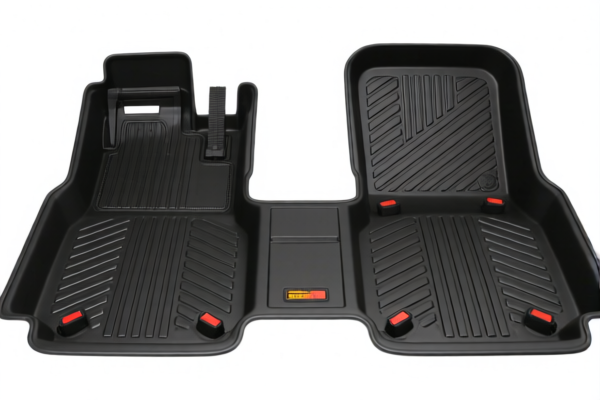
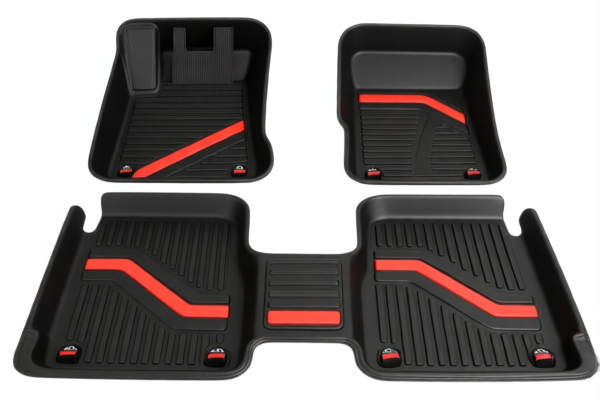
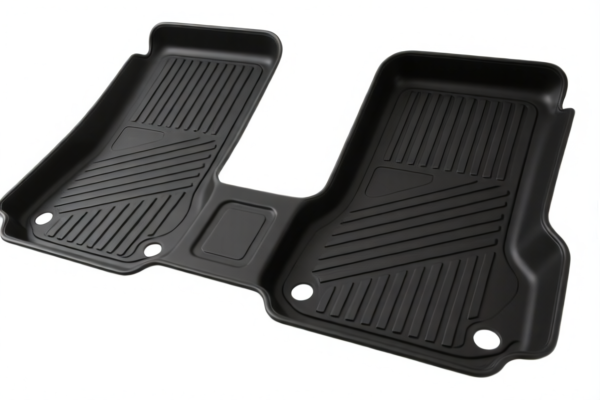
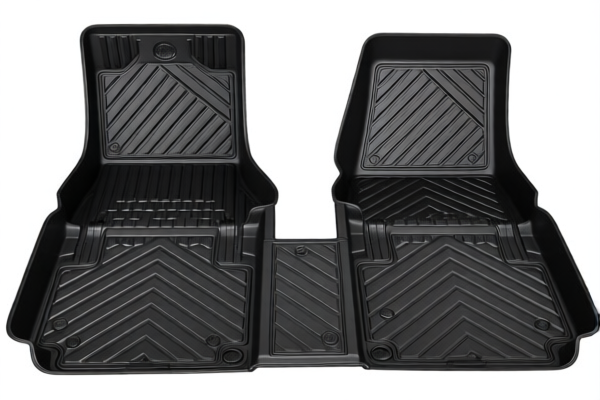
AI Analysis
🚗 Car Floor Mats (Automotive Floor Liners)
🌐 HS Code Reference & Customs Clearance Guide | 2026 Latest Tariff Analysis | Professional Clearance Strategy
📌 I. Product Definition & Classification: Do You Really Understand "Car Floor Mats"?
Car floor mats are essential accessories designed to protect vehicle interiors from dirt, mud, water, and wear. In international trade, their classification is strictly determined by material and structure, not just function. Misclassification can lead to massive tariff discrepancies (e.g., 37.7% vs. 87.9%).
Key Classification Criteria: * Rubber/Synthetic Rubber: Vulcanized rubber or similar materials used for durability and water resistance. * Textile/PVC: Fabric or woven materials impregnated/coated with Polyvinyl Chloride (PVC) for texture and waterproofing. * Metal/Support Parts: Note: The data includes "Tripod Shock Absorber Pads" (Iron/Steel). While not a "mat," this item often shares logistics channels. It is classified separately as it is a support accessory, not a floor covering.
⚠️ Critical Distinction:
- If made of Rubber/Synthetic Rubber → Go to 4016.xx
- If made of Textile + PVC Coating → Go to 5903.10
- If made of Iron/Steel (Support Pads) → Go to 7326.90
📦 II. HS Code Classification Details (2026 Latest Tariff Authority Comparison)
| HS Code | Product Description | Material/Structure | Tax Rate (Total) |
|---|---|---|---|
4016.91.00.00 |
Other vulcanized rubber articles | Rubber / Synthetic Rubber | 37.7% |
4016.99.30.00 |
Other articles of rubber (Auto Protection) | Rubber / Synthetic Materials | 35.0% |
5903.10.20.10 |
PVC-impregnated textile fabrics | Textile + PVC Coating | 35.0% |
5903.10.20.90 |
Other textile fabrics impregnated/coated with plastic | Textile + PVC Coating | 35.0% |
7326.90.86.88 |
Other articles of iron or steel (Support Pads) | Iron / Steel | 87.9% |
🔍 Key Insight:
- Rubber Mats fall under Chapter 40. Note the difference between4016.91(General Rubber) and4016.99(Specific Auto Protection).
- PVC/Textile Mats fall under Chapter 59. The specific sub-headings distinguish between "Carpet-like" (20.10) and "Other Textiles" (20.90).
- Metal Support Pads (if listed with mats) are heavily taxed at 87.9% due to steel/aluminum surcharges. Do not confuse these with rubber mats!
💰 III. 2026 Latest Tariff Rate Breakdown (Including Surcharge Policies)
✅ Applicable Country: United States (US)
✅ Origin: China (CN)
✅ Effective Date: From November 10, 2025 (Includes subsequent imports)
🎯 1. 4016.91.00.00 —— Vulcanized Rubber Floor Mats
| Item | Details |
|---|---|
| Base Tariff | 2.7% (Ad Valorem) |
| Section 301 Surcharge | +25.0% (Trade Act of 1974) |
| IEEPA Surcharge | +10.0% (China/HK Specific) |
| Total Tariff | 37.7% |
| Calculation Base | CIF Value × 37.7% |
| De Minimis Eligibility | ❌ No (Denied) |
| Legal Path | IEEPA:9903.01.25 → IEEPA:9903.01.24 → USITC:4016.91.00.00 |
📌 Explanation:
- 2.7% is the standard Most Favored Nation (MFN) rate.
- 25% is the additional tariff under USITC Footnote 9903.88.01 for Chinese rubber goods.
- 10% is the IEEPA surcharge for specific Chinese imports.
- Total: 37.7%. This is a high-cost category. Accurate material declaration is critical.
🎯 2. 4016.99.30.00 —— Rubber Automotive Protection Products
| Item | Details |
|---|---|
| Base Tariff | 0.0% |
| Section 301 Surcharge | +25.0% |
| IEEPA Surcharge | +10.0% |
| Total Tariff | 35.0% |
| Calculation Base | CIF Value × 35.0% |
| De Minimis Eligibility | ❌ No (Denied) |
| Legal Path | IEEPA:9903.01.25 → IEEPA:9903.01.24 → USITC:4016.99.30.00 |
📌 Note:
- This code applies to rubber articles specifically for shock absorption/protection in vehicles.
- Although the base rate is 0%, the 35% total is still significant.
- Difference from 4016.91:4016.99.30is often preferred if the product is strictly defined as a "protective liner" rather than a general "rubber article," saving 2.7%.
🎯 3. 5903.10.20.10 & 5903.10.20.90 —— PVC Textile Floor Mats
| Item | Details |
|---|---|
| Base Tariff | 0.0% |
| Section 301 Surcharge | +25.0% |
| IEEPA Surcharge | +10.0% |
| Total Tariff | 35.0% |
| Calculation Base | CIF Value × 35.0% |
| De Minimis Eligibility | ❌ No (Denied) |
| Legal Path | IEEPA:9903.01.25 → IEEPA:9903.01.24 → USITC:5903.10.20.x0 |
📌 Distinction:
-5903.10.20.10: For carpet-like textiles impregnated with PVC.
-5903.10.20.90: For other textile fabrics with PVC coating.
- Both carry the same 35.0% total tax.
- Key Requirement: Must prove the textile is impregnated or coated (not just layered).
🚨 4. 7326.90.86.88 —— Iron/Steel Support Pads (Tripod/Shock Absorber Pads)
| Item | Details |
|---|---|
| Base Tariff | 2.9% |
| Section 301 Surcharge | +25.0% |
| IEEPA Surcharge | +10.0% |
| Steel/Aluminum Surcharge | +50.0% |
| Total Tariff | 87.9% |
| Calculation Base | CIF Value × 87.9% |
| De Minimis Eligibility | ❌ No (Denied) |
| Legal Path | IEEPA:9903.01.25 → IEEPA:9903.01.24 → USITC:7326.90.86.88 |
📌 Warning:
- If you ship metal supports or steel-based shock pads under the same shipment, they are taxed at 87.9%.
- This is NOT a floor mat. It is a steel article.
- Do not mix rubber/textile mats with steel parts in the same HS Code declaration.
🛠️ IV. Customs Clearance Practical Advice (实战避坑指南)
✅ 1. Preparation Checklist (Essential Documents)
| Document | Required | Description |
|---|---|---|
| ✅ Product Spec Sheet | ✔️ | Must clearly state Material (e.g., "100% Vulcanized Rubber" or "PVC-coated Nylon") |
| ✅ Composition Ratio | ✔️ | For textile/PVC items: % of fabric vs. % of plastic coating |
| ✅ Product Photos | ✔️ | Clear images showing texture, cross-section (if possible), and usage |
| ✅ Commercial Invoice | ✔️ | Must specify "Car Floor Mat" or "Rubber Liner," NOT "Shoes" or "Industrial Parts" |
| ✅ Origin Certificate | ✔️ | To prove CN origin for tariff calculation |
| ✅ Packaging List | ✔️ | Separate items if mixing Rubber and Steel |
✅ 2. Declaration Strategy (Key Mantra)
🔥 “Material Defines Code, Steel is 87%, Rubber is 37%!”
| Scenario | Correct HS Code | Mistake to Avoid |
|---|---|---|
| All-Rubber Mats | 4016.91.00.00 or 4016.99.30.00 |
Declare as "Textile" → Rejected/Reclassified |
| PVC/Textile Mats | 5903.10.20.10 / .90 |
Declare as "Rubber" → Incorrect Tax |
| Steel Support Pads | 7326.90.86.88 |
Hide under "Mat" → High Risk of Audit & Penalty |
| Mixed Shipment | Separate Lines | Combine all into one line → Confusion, Delays, Higher Tax |
✅ 3. Special Cases & Risk Management
| Situation | Recommendation |
|---|---|
| Hybrid Mats (Rubber base + Textile top) | Declare based on essential character (usually Rubber → 4016) |
| OEM Custom Mats | Provide design files showing material layers to justify HS Code |
| Steel + Rubber Combo | Split Declaration: Rubber under 4016, Steel under 7326. Do NOT blend! |
| De Minimis (Section 321) | ❌ Not Eligible for China-origin rubber/textile mats. Must file formal entry. |
🌍 V. Global Market Comparison (2026)
| Country/Region | Recommended HS Code | Tariff (China Origin) | Key Requirements |
|---|---|---|---|
| 🇺🇸 USA | 4016.91.00.00 / 4016.99.30.00 / 5903.10.20.x0 |
35.0% - 37.7% | Section 301 + IEEPA Surcharges Apply |
| 🇪🇺 EU | 4016.99 / 5903.10 |
~0-6.5% | CE, REACH Compliance |
| 🇨🇳 China | 4016.99 / 5903.10 |
~0-10% | CCC (if applicable), RoHS |
| 🇬🇧 UK | 4016.99 / 5903.10 |
~0-6.5% | UKCA, Post-Brexit Rules |
📌 Conclusion:
- USA is the highest cost market due to 35-38% tariffs.
- Material declaration is critical. A $10 mat can cost $3.5-$3.8 in duties alone.
- Steel parts are exceptionally expensive to import into the US. Avoid including them unless necessary.
📌 VI. Common Mistakes & Pitfalls (Blood & Tears Lessons)
❌ Mistake 1: Declaring Steel Support Pads as "Rubber Mats"
👉 Consequence: Customs detects steel → Reclassifies to 7326.90 → Back Taxes + 87.9% Rate + Penalties!
❌ Mistake 2: Declaring PVC Textile Mats as "Rubber Products"
👉 Consequence: Misclassification risk. If deemed textile, rate is 35%; if deemed rubber, 37.7%. Minor difference, but documentation mismatch leads to delays.
❌ Mistake 3: Using vague names like "Car Accessories"
👉 Consequence: Customs cannot determine material → Holds shipment for inspection → Demurrage Fees!
❌ Mistake 4: Assuming De Minimis (Under $800) applies
👉 Consequence: Section 321 is blocked for China-origin rubber/textile items. Small shipments still require formal entry and duty payment.
✅ Correct Declaration Example:
"Car Floor Mats, Molded Rubber, Black, Model XYZ, Origin China"
OR
"PVC-Coated Textile Floor Liners, Gray, Patterned, Model ABC, Origin China"
🎯 VII. Conclusion: Professional Classification Saves Money!
🎯 Remember the Mantra:
🔹 "Rubber 37%, PVC 35%, Steel 87%!"
🔹 "Material First, Function Second!"
🔹 "Split Steel from Rubber!"
📌 Pro Tip:
- For large volume imports, apply for an Advance Ruling (Pre-classification) with US Customs (CBP).
- Consider supply chain diversification (e.g., Vietnam/Malaysia) if tariffs impact margins, but verify Rules of Origin strictly.
📣 Immediate Action:
📞 Consult a licensed Customs Broker.
📄 Prepare Material Composition Statements.
🚀 Clear Your Goods Smoothly, Avoid Delays, Protect Margins!
✨ Professional Clearance Starts with Accurate Classification!
💼 Every Dollar of Duty Matters!
Customer Reviews
About HS Code Classification
The Harmonized System (HS) is an internationally standardized nomenclature developed by the World Customs Organization (WCO) to classify traded products. Over 200 countries use the HS system as the basis for customs tariffs, trade statistics, and import/export regulations.
Each HS code follows a hierarchical structure:
- Chapter (2 digits) — Broad category of goods (e.g., Chapter 84: Machinery and Mechanical Appliances)
- Heading (4 digits) — More specific grouping within the chapter
- Subheading (6 digits) — Internationally standardized breakdown, used by all WCO member countries
- National subdivisions (8-10 digits) — Country-specific extensions for further classification, such as US HTSUS 10-digit codes
Correct HS code classification is essential for smooth customs clearance, accurate duty payment, and compliance with trade regulations. Misclassification can lead to customs delays, overpayment of duties, or penalties.
When importing from CN to US, the applicable tariff rates may include:
- Most-Favored-Nation (MFN) rate — The standard duty rate applied to WTO members
- General rate — Applied to countries without trade agreements
- Trade remedy duties — Additional tariffs such as Section 301 (anti-dumping), Section 232 (national security), or countervailing duties
The information provided on this page is for reference purposes only. For official classification, please consult with your local customs authority or a licensed customs broker.