汽车钥匙套
CN → US| HS Code | Tariff Rate | Origin | Destination | Doc |
|---|---|---|---|---|
| 4202313000 | 38.7% | CN | US | Official Doc |
| 3926909989 | 22.8% | CN | US | Official Doc |
| 4202316000 | 43.0% | CN | US | Official Doc |
| 4205008000 | 35.0% | CN | US | Official Doc |
| 4205001000 | 35.0% | CN | US | Official Doc |
Product Images
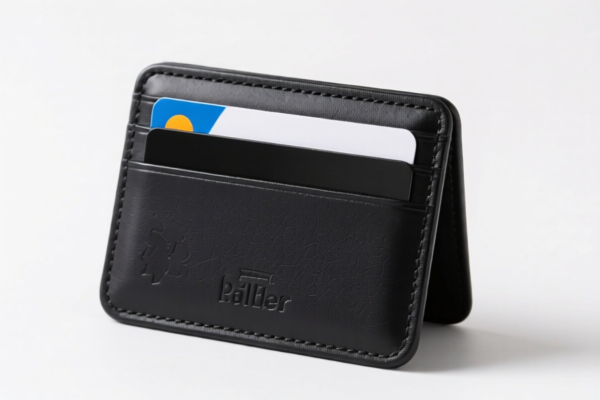
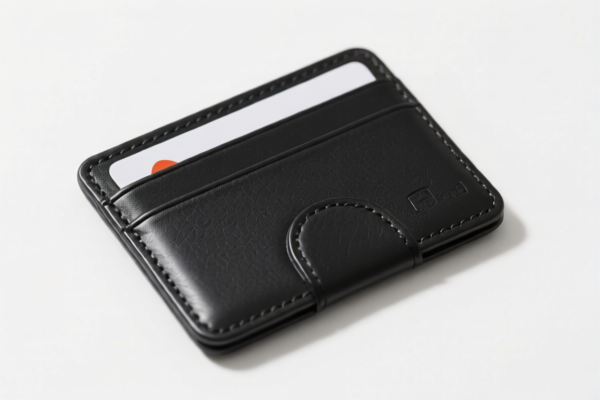
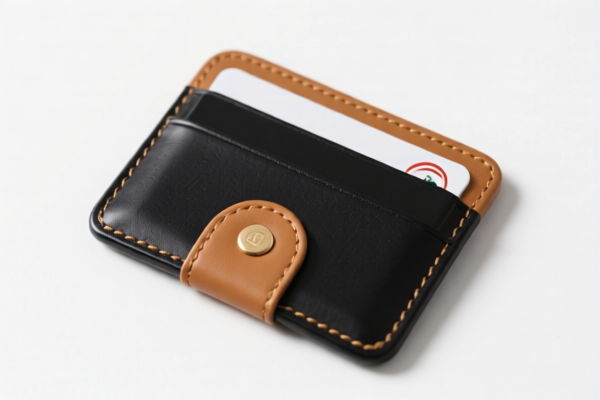
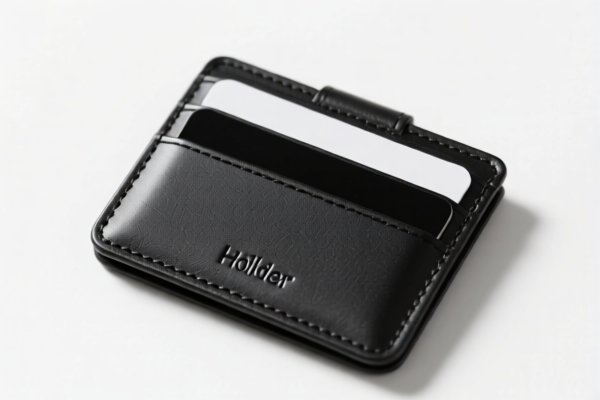
AI Analysis
🗝️ Car Key Cases / Covers (Automotive Key Fob Accessories)
🌐 HS Code Reference & Customs Clearance Guide | 2026 Latest Tariff Breakdown | Professional Clearance Strategy
📌 I. Product Definition & Classification: What Exactly is a "Car Key Case"?
A car key case is an accessory designed to protect, store, or carry vehicle key fobs or traditional metal keys. In international trade, its classification depends heavily on material composition and functionality.
Leather Key Cases: Made primarily from natural or synthetic leather. These are classified under Chapter 42 (Articles of Leather; Saddle and Harness Trade Goods). They are often viewed as extensions of handbags or small leather goods.
Non-Leather Key Cases (Plastic/Synthetic/Other Materials): Made from PVC, TPU, silicone, or hard plastic. If the material is not specifically defined as leather, it often falls under Chapter 39 (Plastics) or other miscellaneous manufactured articles.
⚠️ Key Distinction Point:
- If made of leather → Usually falls under HS 4202 or 4205; subject to higher specific duties but may have different base rates.
- If made of plastic/synthetic without specific leather characteristics → Falls under HS 3926 (Other plastic articles) or residual categories.
📦 II. HS Code Classification Details (2026 Latest Tariff Authority Comparison)
| HS Code | Product Description | Material | Application Scenario | Tax Efficiency |
|---|---|---|---|---|
4202.31.30.00 |
Leather car key case, shaped as a key pouch. An extended use of bags/pockets. | Leather | Standard leather key holders, slim card cases | ⚖️ Moderate (High total due to Trump tariffs) |
3926.90.99.89 |
Car key case of unspecified/unspecified material (inferred plastic/synthetic). A non-specific article. | Plastic/Synthetic | Hard plastic shells, silicone covers, TPU cases | ✅ Lowest Total Tax Rate (Best for Cost Saving) |
4202.31.60.00 |
Leather car key case, shaped as a cover/pouch. Considered a similar container/small accessory. | Leather | Protective leather sleeves for key fobs | ❌ Highest Total Tax Rate (Avoid if possible) |
4205.00.80.00 |
Leather car key case, explicitly containing leather. Other leather/synthetic leather articles. | Leather | General leather accessories not specifically "bags" | ⚖️ Moderate (0% Base + High Add-ons) |
4205.00.10.00 |
Leather car key case, meets leather material requirements. Catch-all for other leather articles. | Leather | Basic leather key wraps, generic leather goods | ⚖️ Moderate (0% Base + High Add-ons) |
🔍 Important Reminder:
- Leather items (4202,4205) generally attract higher additional tariffs (25% Section 301 + 10% Section 122/IEEPA) on top of their base duty.
- Plastic items (3926) often have a lower total effective tax rate because the base duty is lower (5.3%) and the additional tariffs are also lower (7.5% + 10%).
- Do NOT misclassify a plastic case as leather to claim a "lower base duty" if it is actually plastic; this leads to severe penalties.
💰 III. 2026 Latest Tariff Rate Breakdown (Including Add-ons & Policy Surcharges)
✅ Applicable Country: United States (US)
✅ Origin: China (CN)
✅ Effective Date: Ongoing (including subsequent imports)
🎯 1. 3926.90.99.89 —— Non-Leather/Plastic Key Case (🏆 Lowest Cost Option)
| Item | Content |
|---|---|
| Base Duty Rate | 5.3% (ad valorem) |
| Section 301 Add-on | +7.5% (USITC Footnote specific to this subheading) |
| Section 122/IEEPA Add-on | +10% (Targeting China products) |
| Total Effective Tax Rate | 22.8% |
| Tax Calculation | CIF Value × 22.8% |
| De Minimis Eligibility | ❌ No (Deny De Minimis for China-origin goods under current enforcement) |
| Legal Basis Path | USITC:3926.90.99.89 → SECTION301:7.5% → SECTION122:10% |
📌 Explanation:
- This is the most cost-effective classification for non-leather key cases.
- The base duty is low (5.3%), and the Section 301 rate is significantly lower than the 25% applied to many leather goods.
- Strategy: If your product is plastic/silicone, ensure it is clearly described as such to qualify for this lower rate.
🎯 2. 4202.31.30.00 —— Leather Key Case (Pouch Type)
| Item | Content |
|---|---|
| Base Duty Rate | 3.7% |
| Section 301 Add-on | +25.0% (High Section 301 rate for leather articles) |
| Section 122/IEEPA Add-on | +10% |
| Total Effective Tax Rate | 38.7% |
| Tax Calculation | CIF Value × 38.7% |
| De Minimis Eligibility | ❌ No |
| Legal Basis Path | USITC:4202.31.30.00 → SECTION301:25% → SECTION122:10% |
📌 Explanation:
- Although the base duty (3.7%) is lower than the plastic category (5.3%), the 25% Section 301 surcharge drives the total up significantly.
- Leather goods are heavily targeted in US-China trade disputes.
🎯 3. 4202.31.60.00 —— Leather Key Case (Cover/Pouch Type)
| Item | Content |
|---|---|
| Base Duty Rate | 8.0% |
| Section 301 Add-on | +25.0% |
| Section 122/IEEPA Add-on | +10% |
| Total Effective Tax Rate | 43.0% |
| Tax Calculation | CIF Value × 43.0% |
| De Minimis Eligibility | ❌ No |
| Legal Basis Path | USITC:4202.31.60.00 → SECTION301:25% → SECTION122:10% |
📌 Explanation:
- This is the most expensive classification among the provided options.
- The high base duty (8.0%) combined with the standard 25% Section 301 rate makes this the worst-case scenario for profit margins.
- Avoid this classification unless the product strictly fits this specific "container/small accessory" definition and cannot be classified elsewhere.
🎯 4. 4205.00.80.00 & 4205.00.10.00 —— Other Leather Articles
| Item | Content |
|---|---|
| Base Duty Rate | 0.0% |
| Section 301 Add-on | +25.0% |
| Section 122/IEEPA Add-on | +10% |
| Total Effective Tax Rate | 35.0% |
| Tax Calculation | CIF Value × 35.0% |
| De Minimis Eligibility | ❌ No |
| Legal Basis Path | USITC:4205.00.xx.00 → SECTION301:25% → SECTION122:10% |
📌 Explanation:
- These are "catch-all" categories for leather goods that don't fit neatly into bags or specific containers.
- The 0% base duty is attractive, but the 25% + 10% = 35% total is still higher than the plastic option (22.8%).
- Useful if the leather product is small, irregular, or not a standard "pouch."
🛠️ IV. Customs Clearance Practical Advice (Battle-Tested Pitfall Guide)
✅ 1. Documentation Checklist (Non-Negotiable)
| Document | Required? | Description |
|---|---|---|
| ✅ Product Specification Sheet | ✔️ | Must explicitly state MATERIAL (e.g., "100% Genuine Leather" vs. "TPU Plastic"). |
| ✅ Product Photos | ✔️ | Clear images showing texture (leather grain vs. smooth plastic) and construction. |
| ✅ Commercial Invoice | ✔️ | Description must match HS Code. E.g., "Leather Key Case" for 4202 or "Plastic Key Cover" for 3926. |
| ✅ Packing List | ✔️ | Item weight, quantity, packaging type. |
| ✅ Proof of Origin | ✔️ | Certificate of Origin (if applicable for preferential treatment, though unlikely for China in this context). |
✅ 2. Classification Strategy (Key Mantra)
🔥 "Material Defines HS, Plastic Saves Tax, Leather Pays More!"
| Scenario | Correct HS Code | Tax Rate | Error Consequence |
|---|---|---|---|
| Plastic/Silicone/TPU Case | 3926.90.99.89 |
22.8% | Misclassifying as leather (4202) → Pay 35-43% unnecessarily. |
| Genuine Leather Case | 4202.31.30.00 or 4205.00.80.00 |
35-38.7% | Misclassifying as plastic → Customs audit, fines, potential fraud charges. |
| Synthetic Leather (PU/PVC) | 3926.90.99.89 |
22.8% | Claiming as "Leather" (4202) → Incorrect declaration. PU is plastic, not animal hide. |
| Mixed Material (Leather + Plastic) | Depends on "Essential Character" | Varies | Must determine which material gives the item its essential character. Usually, if leather is predominant, it may go to 4202. |
📌 Critical Advice:
- PU Leather (Polyurethane) is NOT leather. It is a plastic material. It should be classified under3926.90.99.89(22.8%) to save significant costs compared to genuine leather (35%+).
- Always verify with your supplier if "vegan leather" or "faux leather" is used. If so, declare as Plastic/Synthetic.
✅ 3. Special Cases Handling
| Case | Handling Advice |
|---|---|
| Key Case with Electronic Chip (Remote) | If the case contains the actual key fob electronics, it may be classified as a car part or electronic accessory, potentially under 8708 or 8517, not a leather/plastic accessory. |
| Gift Sets (Key Case + Key + Chain) | If sold as a set, classify based on the component that gives it its essential character. Usually, the key fob itself dictates the HS code (e.g., 8306 for metal keys), not the case. |
| OEM Custom Leather Cases | Provide design blueprints and material samples to CBP (Customs and Border Protection) for an Advance Ruling if shipment volume is high. |
🌍 V. Global Market Comparison (2026 Latest)
| Country/Region | Recommended HS Code | Estimated Tax (China Origin) | Notes |
|---|---|---|---|
| 🇺🇸 USA | 3926.90.99.89 (Plastic) |
22.8% | Best option. Leather cases face 35%+. |
| 🇺🇸 USA | 4202.31.30.00 (Leather) |
38.7% | Higher cost due to Section 301. |
| 🇪🇺 EU | 4202.31 (Leather) |
~4.5% + VAT | No Section 301/122 tariffs. Much cheaper in Europe. |
| 🇨🇳 China | 4202.31 (Leather) |
~8% - 20% | Varies by specific subheading and trade agreement. |
| 🇬🇧 UK | 4202.31 (Leather) |
~4.5% + VAT | Post-Brexit tariff regime similar to EU. |
📌 Conclusion:
- USA: Plastic/Synthetic is significantly cheaper than Leather due to punitive tariffs on Chinese leather goods.
- EU/UK: Leather cases are more competitive due to lower overall tariffs and no Section 301/122 surcharges.
📌 VI. Common Mistakes & Pitfalls (Lessons Learned)
❌ Mistake 1: Declaring PU Leather (Vegan Leather) as "Leather" (4202).
👉 Consequence: Customs may reclassify as plastic (3926) anyway, or penalize for false declaration. Correct: Declare as Plastic/Synthetic to save tax and stay compliant.
❌ Mistake 2: Using HS Code 4202.31.60.00 for a simple pouch when 4202.31.30.00 is more appropriate.
👉 Consequence: Paying 43% instead of 38.7%. Overpaying ~4.3% on CIF value for no reason.
❌ Mistake 3: Misidentifying Metal Key Fobs with a leather cover as "Leather Articles".
👉 Consequence: If the metal key fob is the essential component, it might be 8306.29.00.00 (other metal articles). Declaring it as leather hides the true nature.
✅ Correct Practice:
"TPU Car Key Case, Waterproof, Shockproof, Black, Model XYZ" →
3926.90.99.89(22.8%)
"Genuine Leather Car Key Fob Cover, Brown" →4202.31.30.00(38.7%)
🎯 VII. Conclusion: Professional Declaration, Smart Tax Planning
🎯 Key Takeaways:
🔹 "Material Matters: Plastic Wins in the USA, Leather Wins in Europe."
🔹 "PU Leather is Plastic: Use HS 3926 to Save 13% in Taxes."
🔹 "Check the Tariff: 22.8% vs 43% is a Huge Margin Difference."
📌 Pro Tip:
For high-volume shipments, consider:
1. Product Design: Use TPU/Plastic or Synthetic Materials if selling to the US to maximize profit margins.
2. Pre-Ruling: If your product is unique (e.g., mixed materials), apply for a Customs Ruling from CBP to confirm the HS Code.
3. Supply Chain: If you must sell genuine leather, factor in the 35-43% tax in your pricing strategy.
📣 Immediate Action:
📞 Consult a Customs Broker with material specs.
🚀 Optimize HS Code based on actual material (Plastic vs. Leather) to minimize duties and ensure compliance!
✨ Precise Classification Starts the Profit Journey!
💼 Every Percent of Tax Saved is Pure Profit!
Customer Reviews
About HS Code Classification
The Harmonized System (HS) is an internationally standardized nomenclature developed by the World Customs Organization (WCO) to classify traded products. Over 200 countries use the HS system as the basis for customs tariffs, trade statistics, and import/export regulations.
Each HS code follows a hierarchical structure:
- Chapter (2 digits) — Broad category of goods (e.g., Chapter 84: Machinery and Mechanical Appliances)
- Heading (4 digits) — More specific grouping within the chapter
- Subheading (6 digits) — Internationally standardized breakdown, used by all WCO member countries
- National subdivisions (8-10 digits) — Country-specific extensions for further classification, such as US HTSUS 10-digit codes
Correct HS code classification is essential for smooth customs clearance, accurate duty payment, and compliance with trade regulations. Misclassification can lead to customs delays, overpayment of duties, or penalties.
When importing from CN to US, the applicable tariff rates may include:
- Most-Favored-Nation (MFN) rate — The standard duty rate applied to WTO members
- General rate — Applied to countries without trade agreements
- Trade remedy duties — Additional tariffs such as Section 301 (anti-dumping), Section 232 (national security), or countervailing duties
The information provided on this page is for reference purposes only. For official classification, please consult with your local customs authority or a licensed customs broker.