汽车门把手
CN → US| HS Code | Tariff Rate | Origin | Destination | Doc |
|---|---|---|---|---|
| 7616995170 | 37.5% | CN | US | Official Doc |
| 3926305000 | 22.8% | CN | US | Official Doc |
| 3926301000 | 24.0% | CN | US | Official Doc |
| 8708291500 | 0.0% | CN | US | Official Doc |
| 8708295160 | 0.0% | CN | US | Official Doc |
Product Images
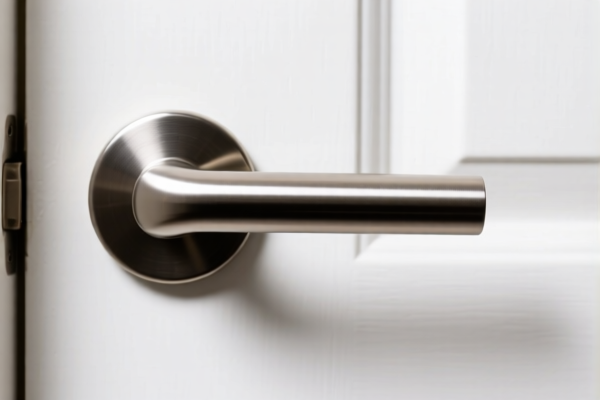
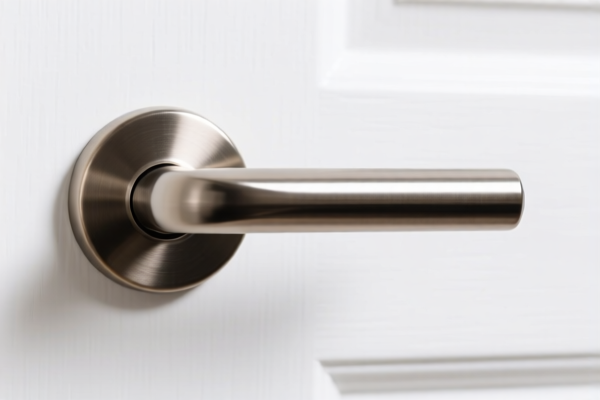

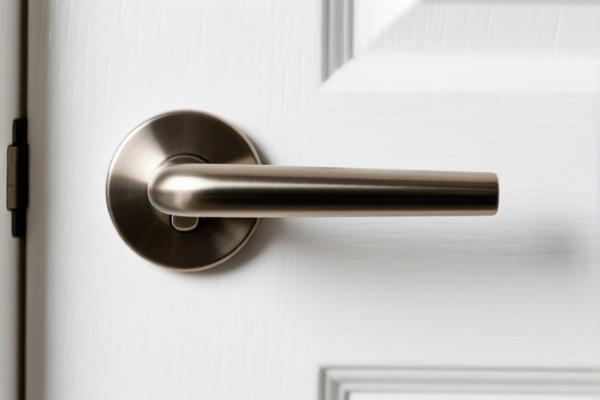
AI Analysis
🚗 Car Door Handles (Automotive Interior/Exterior Trim)
🌐 HS Code Reference & Customs Clearance Guide | 2026 Latest Tariff Analysis | Professional Clearance Strategy
📌 I. Product Definition & Classification: Do You Really Understand "Car Door Handles"?
Car door handles are critical components in automotive interior and exterior trim, serving both functional (opening/closing) and aesthetic purposes. In international trade, they are classified based on material composition and functional specificity. There is no single HS code for "door handles"; the classification depends entirely on what they are made of and how they are described in customs declarations.
⚠️ Key Classification Points:
- Material Matters: Aluminum, Plastic, or Unspecified/Mixed?
- Specificity Matters: Are they specifically for car bodies ("Body Parts") or generic accessories?
- Process Matters: Forged/Machined vs. Molded?
📦 II. HS Code Classification Details (2026 Latest Tariff Authority Comparison)
Based on the provided data, here are the specific HS codes for car door handles, categorized by material and function:
| HS Code | Product Description | Material/Scenario | Key Distinction |
|---|---|---|---|
| 7616.99.51.70 | Other articles of aluminum | Forged Aluminum door handles | Specifically for forged aluminum parts used as door handles |
| 3926.30.50.00 | Other articles of plastics and articles of other materials of heading 39.01 to 39.14 | Plastic door handles (General) | Generic plastic door handles not specified as body parts |
| 3926.30.10.00 | Other articles of plastics and articles of other materials of heading 39.01 to 39.14 | Plastic door handles (Car Body Parts) | Specifically classified as body parts/accessories for cars |
| 8708.29.15.00 | Parts and accessories of bodies (including cabs) | Car Door Handles (General) | Classified as a body part/accessory, regardless of material (if not specified otherwise) |
| 8708.29.51.60 | Parts and accessories of bodies (including cabs) | Unspecified Material Door Handles | For handles where material is not explicitly defined as just plastic/aluminum in the context of "other categories" |
🔍 Important Reminder:
- 8708.29.15.00 is often the most direct classification if the product is clearly identified as a "Car Door Handle" for automotive bodies.
- 3926 series applies if the handle is considered a general plastic article. Note the difference between generic plastic (30.50) and specific car body plastic parts (10.00).
- 7616 series applies strictly to aluminum handles, specifically forged ones.
💰 III. 2026 Latest Tariff Rate Breakdown (Including Surtaxes & Policy Add-ons)
✅ Applicable Country: United States (US)
✅ Country of Origin: China (CN)
✅ Effective Time: As per current tariff schedules (including Section 301 and Section 232 implications)
🎯 1. 7616.99.51.70 – Forged Aluminum Articles (Aluminum Door Handles)
| Item | Content |
|---|---|
| Base Tariff | 2.5% |
| Section 301 Surtax | 25.0% |
| Section 122 Tariff | 10.0% |
| Total Tax Rate | 37.5% |
| Calculation | CIF Value × 37.5% |
| Legal Basis | Aluminum products are subject to higher surcharges under specific trade actions. |
📌 Explanation:
- Aluminum products face significant tariffs due to trade measures.
- The combination of base tariff (2.5%) + Section 301 (25%) + Section 122 (10%) results in a high effective rate of 37.5%.
🎯 2. 3926.30.50.00 – Other Plastic Articles (General Plastic Door Handles)
| Item | Content |
|---|---|
| Base Tariff | 5.3% |
| Section 301 Surtax | 7.5% |
| Section 122 Tariff | 10.0% |
| Total Tax Rate | 22.8% |
| Calculation | CIF Value × 22.8% |
📌 Note:
- General plastic articles have a lower base tariff (5.3%) compared to automotive-specific parts or metals.
- Section 301 surcharge is only 7.5% for this category.
🎯 3. 3926.30.10.00 – Plastic Body Parts (Plastic Car Door Handles)
| Item | Content |
|---|---|
| Base Tariff | 6.5% |
| Section 301 Surtax | 7.5% |
| Section 122 Tariff | 10.0% |
| Total Tax Rate | 24.0% |
| Calculation | CIF Value × 24.0% |
📌 Note:
- Classification as a "Body Part" increases the base tariff slightly to 6.5%.
- Still significantly cheaper than aluminum handles.
🎯 4. 8708.29.15.00 – Body Parts & Accessories (Car Door Handles)
| Item | Content |
|---|---|
| Base Tariff | 2.5% |
| Section 301 Surtax | 25.0% |
| Section 122 Tariff | 10.0% |
| Total Tax Rate | 2.5% + 35.0% = 37.5% |
| Calculation | CIF Value × 37.5% |
| Legal Basis | Automotive parts are subject to full Section 301 and Section 122 tariffs. |
📌 Explanation:
- This is the most common classification for complete car door handles.
- Despite a low base tariff (2.5%), the surtaxes push the total to 37.5%.
- Warning: This applies to most "standard" door handles imported as automotive parts.
🎯 5. 8708.29.51.60 – Other Body Parts (Unspecified Material Door Handles)
| Item | Content |
|---|---|
| Base Tariff | 2.5% |
| Section 301 Surtax | 25.0% |
| Section 122 Tariff | 10.0% |
| Steel/Aluminum/Copper Surtax | 50.0% |
| Total Tax Rate | 2.5% + 85.0% = 87.5% |
| Calculation | CIF Value × 85.0% (additional) + Base |
| Legal Basis | If classified under this "catch-all" for body parts and made of steel/aluminum, the 50% steel/aluminum surcharge applies. |
📌 Critical Warning:
- This is the highest risk classification.
- If your door handle is made of Steel or Aluminum and is misclassified or falls into this "other" category, you face an additional 50% tariff on top of the standard surtaxes.
- Total effective burden can reach 85%+ on the CIF value alone.
🛠️ IV. Customs Clearance Practical Advice (Battle-Tested Pitfall Avoidance)
✅ 1. Preparation Checklist (Essential Documents)
| Document | Mandatory? | Purpose |
|---|---|---|
| ✅ Product Specification Sheet | ✔️ | Must clearly state Material (Aluminum, Plastic, Mixed) and Application (Car Model/Brand). |
| ✅ Photos | ✔️ | Show the handle, including any branding, mounting points, and material texture. |
| ✅ Commercial Invoice | ✔️ | Must use precise language: "Car Door Handle, [Material], for [Vehicle Make]". Avoid vague terms like "Hardware". |
| ✅ Proof of Material | ✔️ | For aluminum/plastic, provide mill certificates or material safety data sheets (MSDS) if requested. |
| ✅ Packing List | ✔️ | Detail quantity, weight, and dimensions. |
✅ 2. Declaration Strategy (Key Mantra)
🔥 “Material First, Function Clear, HS Precision Saves Money!”
| Scenario | Correct Classification | Incorrect Classification | Risk |
|---|---|---|---|
| Aluminum Forged Handle | 7616.99.51.70 (37.5%) |
8708.29.51.60 |
Risk of 85%+ tax if misclassified as "Other Body Parts" with steel/aluminum surcharge |
| Plastic Handle (General) | 3926.30.50.00 (22.8%) |
8708.29.15.00 (37.5%) |
Overpaying 14.7% by using auto parts code |
| Plastic Handle (Auto Body Part) | 3926.30.10.00 (24.0%) |
3926.30.50.00 (22.8%) |
Minor difference, but specific is better for audit |
| Unknown Material Handle | 8708.29.15.00 (37.5%) |
8708.29.51.60 |
Avoid 8708.29.51.60 unless necessary; it carries the 50% steel/aluminum surcharge trap |
📌 Recommendation:
- Always declare the specific material (e.g., "Aluminum Alloy", "Polypropylene Plastic").
- Avoid vague terms like "Metal Handle" which may trigger the steel/aluminum surcharge under8708.29.51.60.
✅ 3. Special Cases
| Scenario | Handling Advice |
|---|---|
| OEM Handles for Specific Car Models | Provide the car model (e.g., "For BMW 3 Series"). This supports classification under 8708.29 (Auto Parts). |
| Mixed Material Handles | Declare the principal material. If aluminum is dominant, consider 7616. If plastic, 3926. If unsure, consult a broker to avoid the 50% surcharge trap. |
| Handles with Integrated Electronics | If the handle has sensors/heating elements, it may be classified as an electrical part (Chapter 85), not a body part. Seek professional advice. |
🌍 V. Global Market Comparison (2026 Latest)
| Country/Region | Recommended HS Code | Tariff Rate (China Origin) | Certification Requirements | Notes |
|---|---|---|---|---|
| 🇺🇸 USA | 8708.29.15.00 |
37.5% | No specific cert required for parts, but must meet US safety standards if installed | High tariff due to Section 301 & 122 |
| 🇨🇳 China | 8708.29.15.00 |
2.5% - 10% | CCC (if applicable) | Lower tariffs, no surtaxes |
| 🇪🇺 EU | 8708.29.95 |
0% - 4.5% | CE (if electrical), ECE R121 (safety) | No Section 301 tariffs |
| 🇬🇧 UK | 8708.29.95 |
0% - 4.5% | UKCA Marking | Post-Brexit rules apply |
📌 Conclusion:
- USA is the most expensive market due to heavy surtaxes.
- Europe/UK/China have significantly lower barriers.
- For US imports, accurate material declaration is critical to avoid the 50% steel/aluminum surcharge trap.
📌 VI. Common Errors & Pitfalls (Lessons Learned)
❌ Error 1: Declaring Aluminum Handles as "Other Body Parts" (8708.29.51.60)
👉 Consequence: Triggers the 50% steel/aluminum surcharge → Total tax >85%.
✅ Fix: Use 7616.99.51.70 for forged aluminum.
❌ Error 2: Declaring Plastic Handles as "Auto Parts" (8708.29.15.00)
👉 Consequence: Overpaying 14.7% compared to 3926.30.50.00.
✅ Fix: Use 3926.30.50.00 for general plastic handles.
❌ Error 3: Vague Declaration "Door Handle"
👉 Consequence: Customs may classify under the highest possible rate or request additional info → Delays.
✅ Fix: Declare "Car Door Handle, Aluminum, Forged, for SUV".
🎯 VII. Conclusion: Professional Declaration, Cost Optimization!
🎯 Remember the Mantra:
🔹 "Material Defines Tax: Aluminum 37.5%, Plastic 22.8%, Auto Parts 37.5%, Avoid the 85% Trap!"
🔹 "Clear Material Description, Avoid 'Other' Codes, Save Thousands on Tariffs!"
📌 Pro Tip:
If your door handles are sourced from Vietnam, Mexico, or Thailand, you may qualify for IEEPA Exemptions or lower tariffs.
Always apply for a Pre-Ruling (Binding Ruling) from US Customs (CBP) before shipping to ensure correct classification and avoid surprise bills.
📣 Immediate Action:
📞 Contact Your Broker + Provide Product Photos + Specify Exact Material
🚀 Ensure Smooth Customs Clearance, Minimize Tariff Burden, Maximize Profit!
✨ Professional Clearance Starts with Accurate Classification!
💼 Every Dollar Saved on Tariffs is Pure Profit!
Customer Reviews
About HS Code Classification
The Harmonized System (HS) is an internationally standardized nomenclature developed by the World Customs Organization (WCO) to classify traded products. Over 200 countries use the HS system as the basis for customs tariffs, trade statistics, and import/export regulations.
Each HS code follows a hierarchical structure:
- Chapter (2 digits) — Broad category of goods (e.g., Chapter 84: Machinery and Mechanical Appliances)
- Heading (4 digits) — More specific grouping within the chapter
- Subheading (6 digits) — Internationally standardized breakdown, used by all WCO member countries
- National subdivisions (8-10 digits) — Country-specific extensions for further classification, such as US HTSUS 10-digit codes
Correct HS code classification is essential for smooth customs clearance, accurate duty payment, and compliance with trade regulations. Misclassification can lead to customs delays, overpayment of duties, or penalties.
When importing from CN to US, the applicable tariff rates may include:
- Most-Favored-Nation (MFN) rate — The standard duty rate applied to WTO members
- General rate — Applied to countries without trade agreements
- Trade remedy duties — Additional tariffs such as Section 301 (anti-dumping), Section 232 (national security), or countervailing duties
The information provided on this page is for reference purposes only. For official classification, please consult with your local customs authority or a licensed customs broker.