汽车风扇
CN → US| HS Code | Tariff Rate | Origin | Destination | Doc |
|---|---|---|---|---|
| 8414519060 | 14.7% | CN | US | Official Doc |
| 8509805095 | 14.2% | CN | US | Official Doc |
| 8509805080 | 14.2% | CN | US | Official Doc |
| 8414519090 | 14.7% | CN | US | Official Doc |
| 8509801000 | 10.0% | CN | US | Official Doc |
Product Images
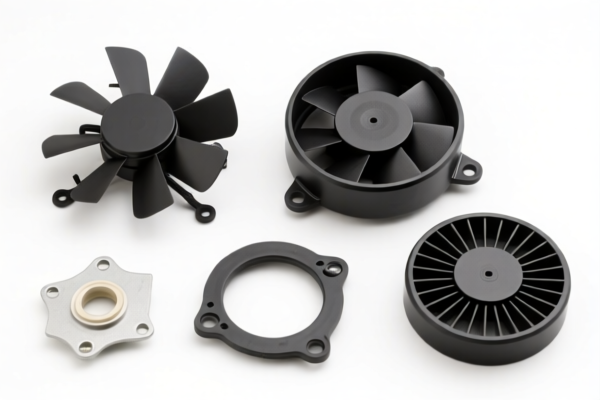
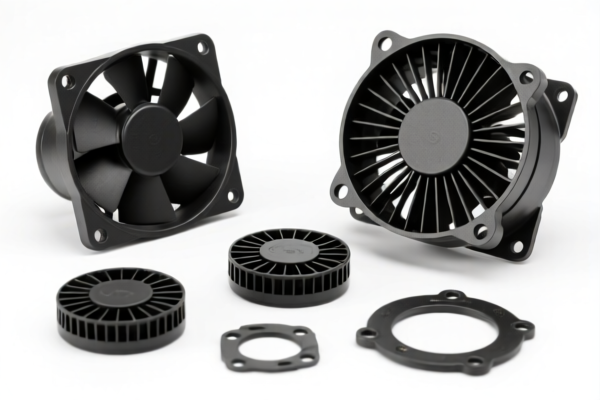
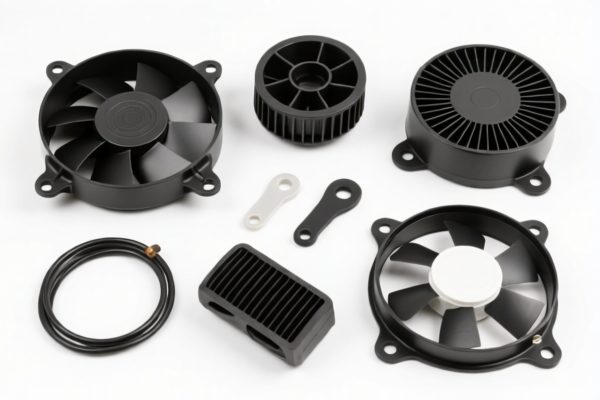
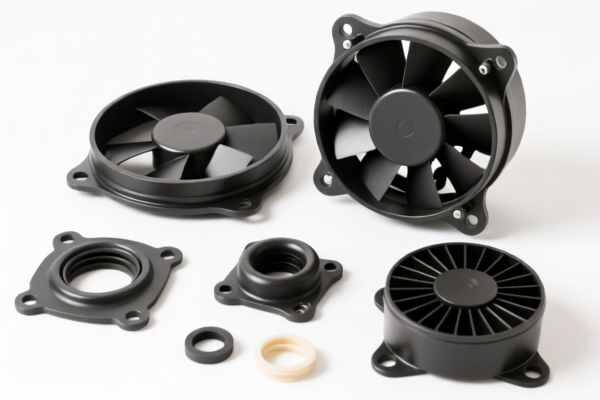
AI Analysis
🚗 Car Fans (Automotive Cooling Fans)
🌐 HS Code Reference & Customs Clearance Guide | 2026 Latest Tariff Analysis | Professional-Level Strategy
📌 I. Product Definition and Classification: Do You Really Understand "Car Fans"?
Car fans, in the context of international trade, are primarily categorized based on their power source, integration, and primary function. They are generally split into two distinct logical paths:
- Household/General Electric Appliances: Fans with their own electric motor, often used in automotive workshops or as aftermarket accessories, classified under Chapter 85.
- Vehicle Parts: Fans integrated into the vehicle's cooling system (radiator/engine), classified under Chapter 84 as parts of air pumps or similar machinery.
⚠️ Key Distinction Point:
- If the fan is standalone, has its own plug/motor, and is sold as a "home appliance" or "general fan" (even if marketed for cars) → Often falls under 8509 (Electrical Household Appliances).
- If the fan is a component for air circulation (radiator fan, cooling fan) without being a standalone "household appliance" → Falls under 8414 (Air Pumps/Vacuum Pumps, Fans).
📦 2. HS Code Classification Details (2026 Latest Tariff Authority Comparison)
Based on the provided data, here are the four potential HS Codes and their logical derivations:
| HS Code | Product Description | Logical Basis (From Data) | Tax Rate (Total) |
|---|---|---|---|
| 8509.80.50.95 | Electrical Fan (Household Appliance Category) | Classified as a household appliance with its own electric motor. Not excluded (like electric toothbrushes). Fits "Other" category. | 14.2% |
| 8414.51.90.60 | Fan (Air Circulation Category) | Core name "Fan" matches classification explanation exactly. No material/form conflict. | 14.7% |
| 8414.51.90.90 | Fan (Other Air Circulation) | Fits "Fan" morphology. Uses "Other" catch-all principle due to lack of specific power/installation data. | 14.7% |
| 8509.80.10.00 | Other Electrical Mechanical Apparatus (Appliance) | Inferred as a motor-driven mechanical appliance. Fits "Other appliances" category. No material/form conflict. | 10.0% |
🔍 Critical Note:
- The choice between 8509 (Appliance) and 8414 (Part of Machine/Fan) depends on how the product is marketed and packaged.
- If sold as a "Radiator Cooling Fan" installed on the vehicle, 8414 is more appropriate.
- If sold as a "Portable Car Fan" or "Aftermarket Cabin Fan" with a plug, 8509 is more likely.
- 8509.80.10.00 offers the lowest base duty (0%), but must strictly fit the "Other Electrical Mechanical Apparatus" definition.
💰 3. 2026 Latest Tariff Rate Breakdown (Including Surcharges)
✅ Applicable Country: United States (US)
✅ Country of Origin: China (CN)
✅ Effective Date: 2025 November 10 onwards
🎯 1. 8509.80.50.95 – Electrical Fan (Household Appliance)
| Item | Content |
|---|---|
| Base Tariff | 4.2% (ad valorem) |
| Section 301 Surcharge | 0.0% (Note: Data indicates 0% for this specific subheading in this context, but see note below) |
| Section 122 Surcharge | +10% (Specific clause mentioned in data) |
| Total Tariff | 14.2% |
| Calculation Method | CIF Value × 14.2% |
| Legal Basis Path | USITC:8509.80.50.95 → Section 122: 10% |
📌 Explanation:
- This classification treats the fan as a general electrical appliance.
- The 10% Section 122 tariff is applied specifically.
- Base tariff is higher than option 4, but the surcharge structure is clear.
🎯 2. 8414.51.90.60 – Fan (Air Circulation, Specific Subheading)
| Item | Content |
|---|---|
| Base Tariff | 4.7% (ad valorem) |
| Section 301 Surcharge | 0.0% |
| Section 122 Surcharge | +10% |
| Total Tariff | 14.7% |
| Calculation Method | CIF Value × 14.7% |
| Legal Basis Path | USITC:8414.51.90.60 → Section 122: 10% |
📌 Note:
- This is a more precise classification for "Fans" in Chapter 84.
- Slightly higher total tax than8509.80.50.95due to higher base rate.
🎯 3. 8414.51.90.90 – Fan (Air Circulation, Other)
| Item | Content |
|---|---|
| Base Tariff | 4.7% (ad valorem) |
| Section 301 Surcharge | 0.0% |
| Section 122 Surcharge | +10% |
| Total Tariff | 14.7% |
| Calculation Method | CIF Value × 14.7% |
| Legal Basis Path | USITC:8414.51.90.90 → Section 122: 10% |
📌 Note:
- This is the "catch-all" for fans in Chapter 84 when not covered by more specific subheadings.
- Identical tax rate to8414.51.90.60.
🎯 4. 8509.80.10.00 – Other Electrical Mechanical Apparatus (Best Tax Rate)
| Item | Content |
|---|---|
| Base Tariff | 0.0% (ad valorem) |
| Section 301 Surcharge | 0.0% |
| Section 122 Surcharge | +10% |
| Total Tariff | 10.0% |
| Calculation Method | CIF Value × 10.0% |
| Legal Basis Path | USITC:8509.80.10.00 → Section 122: 10% |
📌 Important:
- Lowest Total Tax Rate: Only 10%.
- Condition: Must clearly fall under "Other Electrical Mechanical Apparatus" with its own motor, and not be classified as a specific "Fan" under Chapter 84.
- Risk: Customs may challenge this if the product is clearly identified as a "Fan" in documentation. Must ensure product description aligns with "Electrical Mechanical Apparatus" rather than "Fan".
🛠️ 4. Customs Clearance Practical Advice (Real-World Pitfall Avoidance)
✅ 1. Documentation Checklist (Essential)
| Document | Mandatory | Description |
|---|---|---|
| ✅ Product Specification Sheet | ✔️ | Must clearly state: "Fan" or "Electrical Mechanical Apparatus", Motor Power (Watts), Voltage (V), RPM. |
| ✅ Product Photos | ✔️ | Clear images of the motor, blades, housing, and any plugs/connectors. |
| ✅ Commercial Invoice | ✔️ | Describe precisely: e.g., "12V DC Car Cabin Fan with Motor" vs. "Radiator Cooling Fan Assembly". |
| ✅ Bill of Lading | ✔️ | Ensure packaging matches invoice description. |
| ✅ Certifications | ✔️ | UL, ETL, DOT (if applicable for automotive use), FCC (if electronic control). |
✅ 2. Declaration Strategy (Key Mnemonic)
🔥 "Know Your Function, Choose Your Chapter!"
| Scenario | Recommended HS Code | Reason |
|---|---|---|
| Standalone Fan (e.g., 12V plug-in fan for car cabin) | 8509.80.10.00 | Best tax rate (10%). Fits "Electrical Mechanical Apparatus". |
| Workshop/General Use Fan | 8509.80.50.95 | Fits "Household Appliance" definition. Tax 14.2%. |
| Integrated Radiator/Engine Fan | 8414.51.90.60/90 | Fits "Fan" for air circulation/pumping. Tax 14.7%. |
| Part of AC System | 8414.51.90.60/90 | If part of a larger HVAC unit, still Chapter 84. |
⚠️ Warning:
- Do NOT declare a "Car Fan" as a "Part of Motor Vehicle" (8708) unless it is a complex assembly not separately classified. Fans are specifically provided for in Chapters 84 and 85.
- Avoid vague descriptions like "Car Accessory". Be specific: "DC Cooling Fan".
✅ 3. Special Situations
| Situation | Handling Advice |
|---|---|
| OEM Parts | If supplied directly to car manufacturers as a component, use 8414.51.90.60. |
| Aftermarket Accessories | If sold in retail packaging as a "Car Fan", use 8509.80.10.00 (if structurally a standalone appliance) for tax savings. |
| Mixed Shipment | If shipment contains both "Household Fans" and "Car Radiator Fans", separate declarations are required. Do not mix HS codes. |
| Section 122 Applicability | Ensure the product is not excluded from Section 122. Most electrical fans are subject to the 10% surcharge. |
🌍 5. Global Market Comparison (2026)
| Country/Region | Recommended HS Code | Tariff (China Origin) | Notes |
|---|---|---|---|
| 🇺🇸 USA | 8509.80.10.00 |
10.0% | Best option if classified correctly. |
| 🇺🇸 USA | 8414.51.90.60 |
14.7% | Standard for "Fans". |
| 🇪🇺 EU | 8414.51.90 |
~7-9% | Different tariff structure; no Section 122. |
| 🇨🇳 China | 8414.51.90 |
~7-10% | Import duty for China. |
📌 Conclusion:
- The US market has specific surcharges (Section 122) that apply to these codes.
-8509.80.10.00is the most tax-efficient if the product structure allows it (standalone electrical mechanical apparatus).
- Always verify if the "Fan" is considered a "Household Appliance" or a "Machine Part" based on marketing and function.
📌 6. Common Errors & Pitfalls (Lessons Learned)
❌ Error 1: Declaring a "Car Fan" as "Part of Vehicle" (8708)
👉 Consequence: Rejection by Customs. Fans have specific headings in Chapters 84/85. Misclassification leads to penalties.
❌ Error 2: Using 8414.51.90 for a standalone plug-in fan
👉 Consequence: Higher tax (14.7%) instead of 10%. If the fan has its own motor and plug, it can often be classified as an electrical appliance (8509).
❌ Error 3: Ignoring Section 122 Surcharge
👉 Consequence: Unexpected 10% tax increase. All listed codes in the data include a 10% Section 122 surcharge. Plan cash flow accordingly.
❌ Error 4: Vague Description "Car Accessory"
👉 Consequence: Customs may assign the highest applicable duty or request additional info, delaying clearance.
✅ Correct Approach:
"12V DC Brushless Cooling Fan, with Built-in Motor, for Automotive Aftermarket Use, Model ABC"
- If standalone: 8509.80.10.00 (10%)
- If integrated part: 8414.51.90.60 (14.7%)
🎯 7. Conclusion: Professional Classification, Cost Optimization!
🎯 Remember the Rule:
🔹 "Standalone Plug-in? Try 8509.80.10.00 (10%)."
🔹 "Integrated Part? Use 8414.51.90 (14.7%)."
🔹 "Always Account for Section 122 (10%)."
📌 Pro Tip:
If you are exporting standalone car fans to the US, ensure your product description emphasizes "Electrical Mechanical Apparatus with Motor" rather than just "Fan" to support the 8509.80.10.00 classification.
Consider applying for an Advance Ruling from CBP if the classification is ambiguous.
📣 Immediate Action:
📞 Consult with a licensed customs broker.
📦 Provide detailed specs (Motor type, Voltage, Installation method).
🚀 Optimize your HS Code to save 4.7% in tariffs!
✨ Precision in Classification, Efficiency in Clearance!
💼 Every Percentage Point Saved is Profit Added!
Customer Reviews
About HS Code Classification
The Harmonized System (HS) is an internationally standardized nomenclature developed by the World Customs Organization (WCO) to classify traded products. Over 200 countries use the HS system as the basis for customs tariffs, trade statistics, and import/export regulations.
Each HS code follows a hierarchical structure:
- Chapter (2 digits) — Broad category of goods (e.g., Chapter 84: Machinery and Mechanical Appliances)
- Heading (4 digits) — More specific grouping within the chapter
- Subheading (6 digits) — Internationally standardized breakdown, used by all WCO member countries
- National subdivisions (8-10 digits) — Country-specific extensions for further classification, such as US HTSUS 10-digit codes
Correct HS code classification is essential for smooth customs clearance, accurate duty payment, and compliance with trade regulations. Misclassification can lead to customs delays, overpayment of duties, or penalties.
When importing from CN to US, the applicable tariff rates may include:
- Most-Favored-Nation (MFN) rate — The standard duty rate applied to WTO members
- General rate — Applied to countries without trade agreements
- Trade remedy duties — Additional tariffs such as Section 301 (anti-dumping), Section 232 (national security), or countervailing duties
The information provided on this page is for reference purposes only. For official classification, please consult with your local customs authority or a licensed customs broker.