沙发
CN → US| HS Code | Tariff Rate | Origin | Destination | Doc |
|---|---|---|---|---|
| 9401698090 | 35.0% | CN | US | Official Doc |
| 9401804026 | 35.0% | CN | US | Official Doc |
| 4016990500 | 20.9% | CN | US | Official Doc |
| 4016910000 | 37.7% | CN | US | Official Doc |
| 9023000000 | 10.0% | CN | US | Official Doc |
Product Images
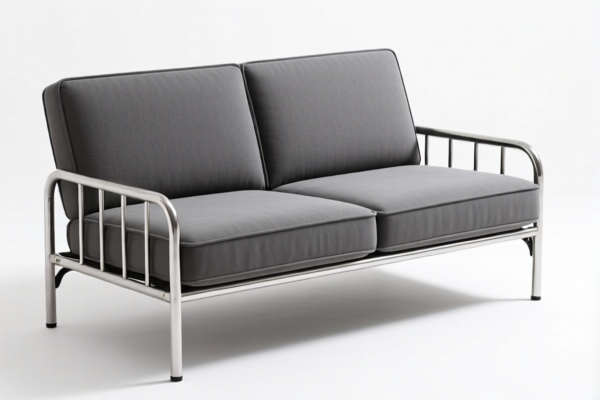



AI Analysis
🛋️ Sofa & Seating Solutions: The Ultimate HS Code & Customs Clearance Guide (2026)
🌐 HS Code Reference & Clearance Strategy | 2026 Latest Tariff Analysis | Professional Compliance Protocol
📌 Part 1: Product Definition & Classification: Do You Really Know Your "Sofa"?
The Sofa is a cornerstone of global furniture trade, ranging from luxury living room pieces to industrial seating. In international trade, the classification depends heavily on material composition, frame structure, and intended use.
Key Distinctions: * Wooden Frame Sofas (9401 Series): The traditional structure where wood is the primary framing material, regardless of upholstery (fabric, leather). * Rubber/Plastic Component Sofas (4016 Series): Sofas where the core structural or functional parts (e.g., base, cushions, frame) are made of rubber or plastic, potentially shifting classification away from furniture to "rubber articles." * Specialized/Non-Sofa Classifications (9023): Items that look like sofas but function as educational models, demonstration units, or displays (e.g., sand tables with seating).
⚠️ Critical Warning:
- Misclassification Risk: Classifying a rubber-based sofa as a standard wooden sofa leads to a 35% tariff vs. a potential 20.9% if correctly identified as a rubber article (though some rubber classifications carry higher duties).
- Component Dominance: If the sofa is >50% rubber by weight/function, it may fall under Chapter 40 (Rubber), not Chapter 94 (Furniture).
- Functional Override: If the "sofa" is actually a sand table/diagram model for teaching, it belongs in Chapter 90, not Chapter 94.
📦 Part 2: HS Code Classification Details (2026 Latest Tariff Authority)
Based on the provided dataset, here is the authoritative breakdown for Sofas:
| HS Code | Product Description | Summary & Classification Logic | Total Tariff (China Origin to US) |
|---|---|---|---|
| 9401.69.80.90 | Wooden Frame Sofas (Other) | Category: Finished furniture. Logic: Fits "Other seats with wooden frames." Standard sofas with wood skeletons and fabric/leather upholstery. |
35.0% |
| 9401.80.40.26 | Rubber Sofas (Rubber/Plastic Seating) | Category: Rubber/Plastic made seats/sofas. Logic: Specifically classified as rubber or plastic made seating if the frame is rubber/plastic. |
35.0% |
| 4016.99.05.00 | Household Rubber Articles | Category: Other household rubber articles. Logic: Treats rubber sofas as "Other household items" made of rubber. Often applies if the rubber content is the defining feature for utility. |
20.9% |
| 4016.91.00.00 | Sulfurized Rubber Carpets & Mats | Category: Sulfurized rubber articles. Logic: Fits under "Carpets and mats" category. Applied when the sofa is considered a floor covering/rubber mat variant. |
37.7% |
| 9023.00.00.00 | Demonstration Models / Sand Tables | Category: Instruments/Models for education/exhibition. Logic: If the "sofa" is actually a Sand Table (沙盘) or educational model, not for actual sitting. |
10.0% |
🔍 Key Insight:
- Sofas (Standard): Generally fall under 9401 (Wood or Rubber Frame). - Sofas (Pure Rubber/Household): Can fall under 4016 (Rubber articles), potentially lowering duty to 20.9% if the structure is entirely rubber and fits the "household item" definition, but beware of the 37.7% rate for rubber mats/carpets. - Fake Sofas (Models): If it's a Sand Table (沙盘) used for teaching, the rate drops to a low 10.0%, but mislabeling a real sofa as a "model" is Customs Fraud.
💰 Part 3: 2026 Tariff Rate Deep Dive (Including Surcharges & Policy Add-ons)
✅ Applicable Market: United States (US)
✅ Country of Origin: China (CN)
✅ Effective Date: Nov 10, 2025 (Current Policy Context)
🎯 1. 9401.69.80.90 & 9401.80.40.26 —— Standard & Rubber Frame Sofas
| Item | Details |
|---|---|
| Base Tariff (MFN) | 0.0% (Most Favored Nation rate is typically zero for furniture) |
| Section 301 / "Add-on" Tariff | +25.0% (Standard punitive tariff for Chinese furniture/goods) |
| Section 122 Tariff | +10.0% (Specific add-on for certain categories, likely related to recent trade actions) |
| Total Effective Rate | 35.0% |
| Tax Calculation | CIF Value × 35% |
| De Minimis Exemption | ❌ NO (Furniture generally excluded from $800 de minimis if classified as taxable goods) |
| Legal Path | 301:9903.88.01 → 122 Clause → 9401.69.80.90 |
📌 Explanation:
- Despite the 0% base rate, the 25% Section 301 tariff makes Chinese sofas expensive in the US.
- The 10% Section 122 tariff is an additional layer, pushing the total to 35%.
- Both Wood (9401.69) and Rubber Frame (9401.80) sofas face this identical high rate.
🎯 2. 4016.99.05.00 —— Household Rubber Articles (Potential Optimization)
| Item | Details |
|---|---|
| Base Tariff | 3.4% (Standard MFN for rubber articles) |
| "Add-on" Tariff | +7.5% (Lower surcharge compared to furniture) |
| Section 122 Tariff | +10.0% (Still applies) |
| Total Effective Rate | 20.9% |
| Tax Calculation | CIF Value × 20.9% |
| De Minimis Exemption | ❌ NO |
| Legal Path | 301 → 122 Clause → 4016.99.05.00 |
📌 Strategic Opportunity:
- If your sofa is primarily a rubber article (e.g., all-rubber frame, inflatable sofa, or specific rubber composite) and fits the "Other household items" definition, you can save 14.1% in duties compared to standard sofas.
- Caution: The description must be precise: "Rubber Sofa" vs. "Wooden Sofa with Rubber Cushions."
🎯 3. 4016.91.00.00 —— Rubber Carpets/Mats (High Risk)
| Item | Details |
|---|---|
| Base Tariff | 2.7% |
| "Add-on" Tariff | +25.0% (Heavy surcharge applied here) |
| Section 122 Tariff | +10.0% |
| Total Effective Rate | 37.7% |
| Status | ⚠️ Highest Risk Category |
📌 Warning:
- If customs classifies your rubber sofa as a "mat" or "carpet" (4016.91), the duty jumps to 37.7%.
- This often happens if the sofa is viewed as a floor covering or lacks a distinct "seating frame" structure.
🎯 4. 9023.00.00.00 —— Sand Tables / Educational Models
| Item | Details |
|---|---|
| Base Tariff | 0.0% |
| "Add-on" Tariff | 0.0% |
| Section 122 Tariff | +10.0% |
| Total Effective Rate | 10.0% |
| Condition | Must be proven as an educational model/diagram (Sand Table), not a functional sofa. |
📌 Strict Compliance:
- This 10% rate is ONLY for Sand Tables (沙盘) or demonstration models.
- DO NOT use this code for a real sofa. If you declare a real sofa as a "Sand Table," you face seizure, fines, and back taxes.
🛠️ Part 4: Customs Clearance Practical Advice (Avoiding Pitfalls)
✅ 1. Documentation Checklist (Must-Haves)
| Document | Requirement | Why It Matters |
|---|---|---|
| ✅ Product Specification Sheet | ✔️ Essential | Must clearly state: Frame Material (Wood vs. Rubber), Upholstery, Dimensions. |
| ✅ Photos (Clear & Labeled) | ✔️ Essential | Show the frame structure. If it's rubber, prove it. If it's a model, show the "educational" aspect. |
| ✅ Bill of Materials (BOM) | ✔️ Strongly Recommended | Break down the % of wood, rubber, fabric, and plastic. Critical for 4016 vs 9401 disputes. |
| ✅ Commercial Invoice | ✔️ Mandatory | Description must match the HS Code logic (e.g., "Wooden Frame Sofa" vs. "Rubber Household Article"). |
| ✅ Certificate of Origin | ✔️ Mandatory | Proof of China origin triggers the 35% tariff; needed for all calculations. |
✅ 2. Declaration Strategies (Key Rules)
🔥 Golden Rule: "Structure Defines Classification, Purpose Defines Code!"
| Scenario | Correct Declaration | Wrong Declaration (Risk) |
|---|---|---|
| Standard Wooden Sofa | HS 9401.69.80.90Desc: "Sofa, Wooden Frame, Fabric Upholstery" |
Classify as Rubber (4016) → Rejection + Penalties |
| All-Rubber Sofa | HS 4016.99.05.00Desc: "Rubber Household Sofa" |
Classify as Furniture (9401) → Overpay 14.1% |
| Rubber Sofa (Firm/Flat) | HS 4016.91.00.00 (if mat-like) |
Classify as "Sofa" (9401) → Risk of 37.7% vs 35% |
| Educational "Sofa" (Sand Table) | HS 9023.00.00.00Desc: "Educational Sand Table Model with Seating" |
Classify as "Sofa" (9401) → Overpay 25%. Classify as "Sofa" but call it "Model" → FRAUD. |
✅ 3. Special Cases & Handling
| Situation | Action Plan |
|---|---|
| Mixed Material Sofa (Wood frame + Rubber cushions) | Default to 9401. The frame determines the primary classification unless the rubber is the sole functional component. |
| Inflatable Rubber Sofa | Aim for 4016.99.05.00. Ensure it's marketed as a "Household Rubber Article" to get the 20.9% rate. |
| OEM Custom Sofas | Provide detailed design drawings. If the client wants a "Wood Frame," do not classify as Rubber. |
| Shipping with Packaging | Ensure the packaging doesn't make a "Wood Sofa" look like a "Rubber Mat" (or vice versa). Keep descriptions consistent. |
🌍 Part 5: Market Comparison (2026 Context)
| Region | Recommended HS Code | Tariff (China Origin) | Key Requirement |
|---|---|---|---|
| 🇺🇸 United States | 9401.69.80.90 or 4016.99.05.00 |
35.0% (Wood) / 20.9% (Rubber) | Strict Section 301 + 122 clauses apply. |
| 🇪🇺 European Union | 9401.61.00 (Wood) |
~6% - 10% (No 122 clause) | EUDR (Deforestation) compliance may be needed for wood. |
| 🇨🇳 China (Export) | N/A (Export Duty is 0%) | 0% | N/A |
📌 Conclusion:
- US Tariffs are Brutal: Even with a 0% base rate, the 25% + 10% add-ons make Chinese sofas expensive.
- Rubber Optimization: If your product is truly a "Rubber Household Item" (4016.99.05.00), you can save 14.1% in US tariffs.
- Model Trap: Never use9023for real furniture. It's a legal landmine.
📌 Part 6: Common Errors & Pitfalls (Lessons Learned)
❌ Error 1: Calling a wooden sofa a "Rubber Sofa" to avoid 35% tax.
👉 Result: Customs Seizure. If the frame is wood, you must use 9401. Misdeclaration leads to fines.
❌ Error 2: Declaring a real sofa as a "Sand Table" (9023) to get 10% tax.
👉 Result: Customs Fraud. If the item is for sitting, it's furniture. Using 9023 is illegal.
❌ Error 3: Confusing "Rubber Frame" (9401.80) with "Rubber Article" (4016.99).
👉 Result: Discrepancy. If the rubber is just a coating, use 9401. If the rubber is the core, use 4016.
❌ Error 4: Not declaring the "122 Clause" in the invoice.
👉 Result: Delayed Clearance. The 10% surcharge must be accounted for in the commercial invoice to avoid customs holds.
✅ Correct Practice:
"Sofa, Wooden Frame, Polyester Upholstery, Model XYZ" → HS
9401.69.80.90(35%)
"Sofa, 100% Rubber Frame, Household Use, Model ABC" → HS4016.99.05.00(20.9%)
"Educational Sand Table with Seating, Model DEF" → HS9023.00.00.00(10%)
🎯 Part 7: Final Verdict: Precision is Profit!
🎯 Key Takeaway:
🔹 "Wood Frame = 35% | Pure Rubber = 20.9% | Models = 10% (If Legal)"
🔹 "Don't gamble with 122 Clause! It adds 10% to everything."
🔹 "HS Code is the lifeline: Get it wrong, pay double. Get it right, save thousands."
📌 Pro Tip:
If you are importing Rubber Sofas to the US, strictly ensure the BOM (Bill of Materials) highlights the rubber content. If the frame is wood, accept the 35% rate. If the frame is rubber, fight for 4016.99.05.00 to get the 20.9% rate. Never use 9023 for real furniture.
✨ Professional Clearance Starts with Accurate Classification!
💼 Your every penny of cost is worth calculating precisely!
Customer Reviews
About HS Code Classification
The Harmonized System (HS) is an internationally standardized nomenclature developed by the World Customs Organization (WCO) to classify traded products. Over 200 countries use the HS system as the basis for customs tariffs, trade statistics, and import/export regulations.
Each HS code follows a hierarchical structure:
- Chapter (2 digits) — Broad category of goods (e.g., Chapter 84: Machinery and Mechanical Appliances)
- Heading (4 digits) — More specific grouping within the chapter
- Subheading (6 digits) — Internationally standardized breakdown, used by all WCO member countries
- National subdivisions (8-10 digits) — Country-specific extensions for further classification, such as US HTSUS 10-digit codes
Correct HS code classification is essential for smooth customs clearance, accurate duty payment, and compliance with trade regulations. Misclassification can lead to customs delays, overpayment of duties, or penalties.
When importing from CN to US, the applicable tariff rates may include:
- Most-Favored-Nation (MFN) rate — The standard duty rate applied to WTO members
- General rate — Applied to countries without trade agreements
- Trade remedy duties — Additional tariffs such as Section 301 (anti-dumping), Section 232 (national security), or countervailing duties
The information provided on this page is for reference purposes only. For official classification, please consult with your local customs authority or a licensed customs broker.