油管配件
CN → US| HS Code | Tariff Rate | Origin | Destination | Doc |
|---|---|---|---|---|
| 7412200045 | 88.0% | CN | US | Official Doc |
| 7412200085 | 88.0% | CN | US | Official Doc |
| 7609000000 | 40.7% | CN | US | Official Doc |
| 7307995045 | 89.3% | CN | US | Official Doc |
| 7307199080 | 41.2% | CN | US | Official Doc |
Product Images
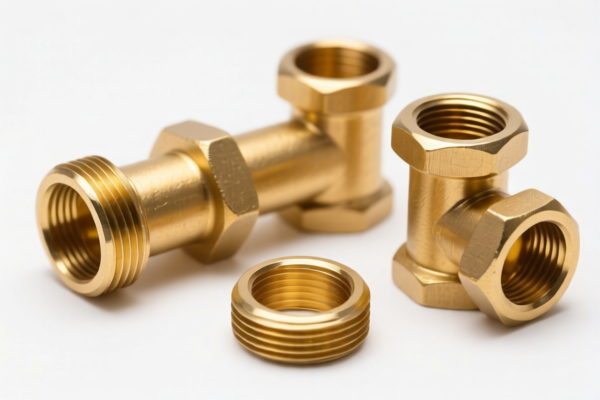
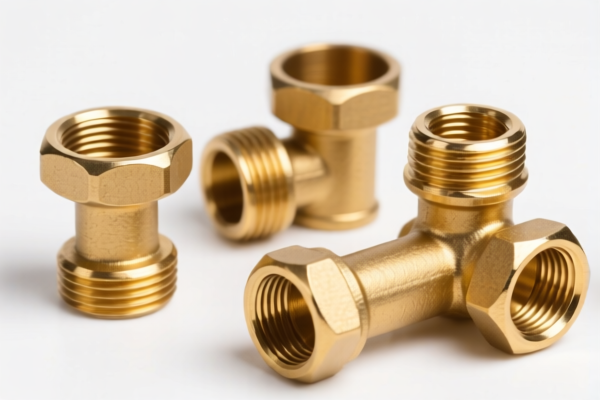
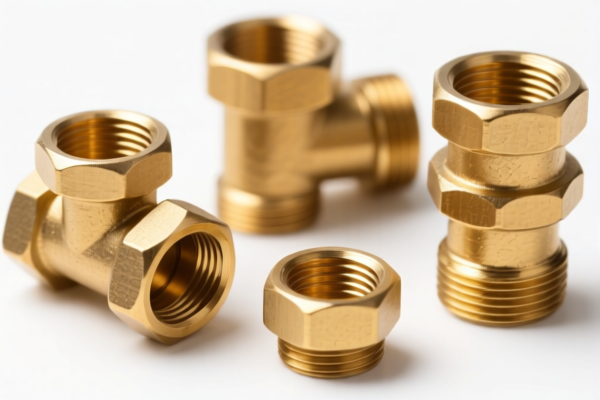
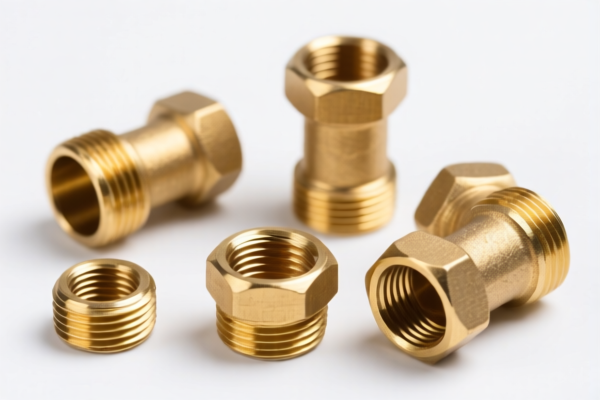
AI Analysis
🚰 Pipe Fittings (Tube Accessories / Pipe Fittings)
🌐 HS Code Reference & Customs Clearance Guide | 2026 Latest Tariff Breakdown | Professional Clearance Strategy
📌 I. Product Definition: What Exactly Are "Pipe Fittings"?
Pipe fittings are essential components used to connect, control, branch, change direction, or terminate pipes in fluid transportation systems. They are broadly categorized by material and application, which directly dictates their HS Code classification and tariff burden.
In international trade, the critical distinction lies in the material composition: * Copper Alloys: Subject to severe penalties under Section 232 and Section 301. * Steel/Aluminum: Subject to significant Section 232 tariffs. * Plastics: Generally lower tariffs, but still subject to Section 301 duties.
⚠️ Key Classification Logic:
- If the fitting is made of Copper Alloy → It falls under 7412 (High Risk).
- If the fitting is made of Aluminum/Steel → It falls under 7609 or 7307 (High Risk).
- If the fitting is made of Plastic → It falls under 3917 (Moderate Risk).
- Note: Customs authorities strictly enforce "material-based" classification. Misdeclaring a copper fitting as plastic to avoid tariffs will result in severe penalties.
📦 II. HS Code Classification Details (2026 Latest Tariff Authority)
The following HS Codes are derived strictly from the provided <DATA> and <TAX> constraints. Note that all listed tariffs assume imports from China to the US, including Base Tariff, Section 301 Tariff, and Section 232 (122 Clause) Tariff.
| HS Code | Material Type | Summary/Description | Total Tax Rate | Tax Breakdown |
|---|---|---|---|---|
| 7412.20.00.85 | Copper Alloy | Tube fittings (e.g., connectors, elbows) of copper alloy. Falls under the "other" fallback principle for this category. | 88.0% | Base: 3.0% + Sec 301: 25.0% + Sec 232 (122 Clause): 50% (Copper/Steel/Aluminum Surcharge) |
| 7412.20.00.45 | Copper Alloy | Metal tube fittings. No conflict with copper alloy classification. Follows the "other" fallback principle. | 88.0% | Base: 3.0% + Sec 301: 25.0% + Sec 232 (122 Clause): 50% (Copper/Steel/Aluminum Surcharge) |
| 7412.20.00.90 | Copper Alloy | Metal tube fittings (Copper alloy or Steel). Classified as general accessories under "other" categories. | 88.0% | Base: 3.0% + Sec 301: 25.0% + Sec 232 (122 Clause): 50% (Copper/Steel/Aluminum Surcharge) |
| 7609.00.00.00 | Aluminum/Steel | Metal tube fittings (e.g., Aluminum or Steel). No material conflict with aluminum fittings. | 40.7% | Base: 5.7% + Sec 301: 25.0% + Sec 301 (122 Clause): 10% (Steel/Aluminum/Copper Surcharge) |
| 3917.40.00.95 | Plastic | Plastic tube fittings. No material conflict with other accessories in this category. | 40.3% | Base: 5.3% + Sec 301: 25.0% + Sec 301 (122 Clause): 10% |
| 3917.40.00.80 | Plastic | Plastic pipe fittings. Follows the fallback logic for "other pipe fittings." | 40.3% | Base: 5.3% + Sec 301: 25.0% + Sec 301 (122 Clause): 10% |
🔍 Critical Distinction:
- Copper Alloys (7412) face the highest burden due to the 50% Section 232 surcharge specifically targeting steel, aluminum, and copper products.
- Aluminum/Steel (7609) and Plastic (3917) are not subject to the 50% Section 232 surcharge, resulting in significantly lower total rates (~40%).
- Do NOT misclassify Copper as Steel or Plastic. Customs have advanced material testing capabilities.
💰 III. 2026 Latest Tariff Rate Details (Including Surcharges)
✅ Applicable Country: United States (US)
✅ Origin: China (CN)
✅ Effective Time: Current tariffs apply (Section 301 & 232 active)
🎯 1. 7412.20.00.85 / 7412.20.00.45 / 7412.20.00.90 —— Copper Alloy Fittings
| Item | Content |
|---|---|
| Base Tariff | 3.0% (ad valorem) |
| Section 301 Tariff | +25.0% (Standard Trump/Biden 301 duties) |
| Section 232 (122 Clause) | +50.0% (Surcharge for Steel, Aluminum, and Copper products) |
| Total Tax Rate | 88.0% |
| Calculation | CIF Value × 88.0% |
| De Minimis Eligibility | ❌ NO (High risk of audit and penalty) |
| Legal Basis Path | HTS:7412.20.00 → USITC:232_Surcharge_Copper → IEEPA:301_25% |
📌 Explanation:
- Copper fittings are explicitly included in the Section 232 national security surcharge (often referred to as the "122 Clause" surcharge).
- The 50% surcharge is added on top of the base and 301 tariffs, making this category extremely expensive.
- Total 88% is a massive cost driver. Profit margins are likely erased unless the product value is very high.
🎯 2. 7609.00.00.00 —— Aluminum/Steel Fittings
| Item | Content |
|---|---|
| Base Tariff | 5.7% |
| Section 301 Tariff | +25.0% |
| Section 301 (122 Clause) | +10.0% (Specific surcharge for Steel/Aluminum/Copper under 301 framework) |
| Total Tax Rate | 40.7% |
| Calculation | CIF Value × 40.7% |
| De Minimis Eligibility | ❌ NO |
| Legal Basis Path | HTS:7609.00.00 → USITC:232_Surcharge_Metals → IEEPA:301_25% |
📌 Explanation:
- Aluminum fittings are subject to Section 232, but the specific surcharge structure here results in a 40.7% total, significantly lower than copper.
- The "122 Clause" refers to specific enforcement mechanisms within the 301/232 overlap.
🎯 3. 3917.40.00.95 / 3917.40.00.80 —— Plastic Fittings
| Item | Content |
|---|---|
| Base Tariff | 5.3% |
| Section 301 Tariff | +25.0% |
| Section 301 (122 Clause) | +10.0% |
| Total Tax Rate | 40.3% |
| Calculation | CIF Value × 40.3% |
| De Minimis Eligibility | ❌ NO |
| Legal Basis Path | HTS:3917.40.00 → IEEPA:301_25% |
📌 Explanation:
- Plastic fittings do not face the 50% Section 232 surcharge (which targets metals).
- The total rate is 40.3%, which is still high due to Section 301, but much more manageable than copper.
- These codes are used for "other" plastic pipe fittings not specified elsewhere.
🛠️ IV. Customs Clearance Practical Advice (Pitfall Avoidance Guide)
✅ 1. Documentation Checklist (Essential)
| Document | Mandatory | Description |
|---|---|---|
| ✅ Product Specification Sheet | ✔️ | Must explicitly state Material Composition (e.g., "Copper Alloy UNS C36000"). |
| ✅ Material Test Report | ✔️ | Third-party lab report proving alloy content. Crucial for proving it's NOT a cheaper metal if declaring plastic. |
| ✅ Product Photos | ✔️ | Clear images of the fitting, including any markings/stamps indicating material (e.g., "Cu", "Al", "PP"). |
| ✅ Commercial Invoice | ✔️ | Must accurately describe the item as "Pipe Fitting" with material specified. Do not use vague terms like "Connector". |
| ✅ Packing List | ✔️ | Ensure weight and dimensions match the invoice. |
| ✅ Certificate of Origin | ✔️ | To verify country of origin (China triggers these tariffs). |
✅ 2. Declaration Tips (Key Mantra)
🔥 "Material First, Code Second, No Hidden Mixes!"
| Scenario | Correct Declaration | Wrong Practice |
|---|---|---|
| Copper Elbow | HS 7412.20.00.85 | Declaring as Steel (7307) or Plastic (3917) → Fraud Risk |
| Aluminum Connector | HS 7609.00.00.00 | Declaring as Copper → Higher Tax (88%) |
| Plastic Pipe Coupling | HS 3917.40.00.95 | Declaring as Metal → Higher Tax & Audit |
| Mixed Package (Copper + Plastic) | Split Declaration | Declaring as one item → Customs may tax entire package at highest rate |
✅ 3. Special Situations
| Situation | Handling Advice |
|---|---|
| OEM Custom Fittings | Provide design drawings and material specs. If the customer provides the material, document this clearly. |
| Kit Sales (Fitting + Gasket) | Declare the main item (fitting). Gaskets/seals may be classified separately, but if sold as a set, the fitting's material usually dominates. |
| Surface Treatment (Galvanized/Zinc Plated) | Does not change the base material for HS classification. A zinc-plated steel fitting is still HS 7307/7609, not a separate metal code. |
| Small Quantity (De Minimis) | ❌ Not Eligible. Due to high Section 301/232 rates, small shipments (under $800) are still subject to scrutiny and full duty calculation if flagged. |
🌍 V. Global Market Comparison (2026 Latest)
| Country/Region | Recommended HS Code | Tariff Rate (China Origin) | Certification Requirements | Notes |
|---|---|---|---|---|
| 🇺🇸 USA | 7412.20.00.85 (Cu)7609.00.00.00 (Al)3917.40.00.95 (Pl) |
88.0% (Cu) 40.7% (Al) 40.3% (Pl) |
N/A (Standard) | Highest tariffs globally for these goods. |
| 🇨🇳 China | 7412.207609.003917.40 |
3.0% - 5.7% (Base) | CCC (if applicable) | No Section 301/232 tariffs. |
| 🇪🇺 EU | 7412.207609.003917.40 |
~6% - 7% | CE (if pressure equipment) | No Section 301/232 surcharges. |
| 🇨🇦 Canada | 7412.207609.003917.40 |
~5% - 6% | N/A | Generally lower than US. |
📌 Conclusion:
- The USA imposes punitive tariffs on pipe fittings from China, especially copper.
- Plastic fittings offer a lower tariff barrier (~40%) compared to copper (~88%).
- If possible, consider sourcing from non-China origins (e.g., Vietnam, Mexico) to avoid Section 301/232 tariffs, where applicable.
📌 VI. Common Errors & Pitfall Guide (Lessons Learned)
❌ Error 1: Declaring Copper Fittings as "Steel" or "Stainless Steel" to avoid the 50% surcharge.
👉 Consequence: Customs lab test reveals copper content → 100% duty penalty + seizure.
❌ Error 2: Declaring Aluminum Fittings as "Plastic" due to lower taxes.
👉 Consequence: Physical inspection shows metal weight and properties → Refusal of entry.
❌ Error 3: Vague description like "Pipe Parts" on the Invoice.
👉 Consequence: Customs cannot determine material → Delay in clearance + Additional documentation requests.
❌ Error 4: Ignoring the Section 232 Surcharge for Copper.
👉 Consequence: Profit calculation based on 28% (3+25) instead of 88% → Massive financial loss.
✅ Correct Approach:
"Copper Alloy Pipe Elbow, 1/2 inch, UNS C36000, Forged, Matte Finish"
"Plastic PVC Pipe Coupling, 1/2 inch, Schedule 40"
🎯 VII. Conclusion: Professional Declaration, Save Cost, Ensure Clearance!
🎯 Remember the Mantra:
🔹 "Copper is 88%, Plastic is 40%, Steel is 40%!"
🔹 "Material defines the code, code defines the cost!"
🔹 "Do not fake material, customs will test it, and you will pay the price!"
📌 Pro Tip:
If you are importing Copper Fittings, consider:
1. Reclassifying: If the fitting is primarily a different component (e.g., a valve with a copper seat), check if a different HS code applies (though unlikely for pure fittings).
2. Supply Chain Shift: Move copper fitting production to countries not subject to Section 232/301 (if feasible).
3. Advance Ruling: Apply for a US Customs Advance Ruling to confirm the HS code and tariff calculation before shipping.
📣 Immediate Action:
📞 Consult a licensed customs broker + Provide Material Test Reports + Apply for Advance Ruling
🚀 Let your pipe fittings clear smoothly, minimize tax liability, and maximize profit!
✨ Professional Customs Clearance Starts with Accurate Classification!
💼 Every cent of tax saved is pure profit earned!
Customer Reviews
About HS Code Classification
The Harmonized System (HS) is an internationally standardized nomenclature developed by the World Customs Organization (WCO) to classify traded products. Over 200 countries use the HS system as the basis for customs tariffs, trade statistics, and import/export regulations.
Each HS code follows a hierarchical structure:
- Chapter (2 digits) — Broad category of goods (e.g., Chapter 84: Machinery and Mechanical Appliances)
- Heading (4 digits) — More specific grouping within the chapter
- Subheading (6 digits) — Internationally standardized breakdown, used by all WCO member countries
- National subdivisions (8-10 digits) — Country-specific extensions for further classification, such as US HTSUS 10-digit codes
Correct HS code classification is essential for smooth customs clearance, accurate duty payment, and compliance with trade regulations. Misclassification can lead to customs delays, overpayment of duties, or penalties.
When importing from CN to US, the applicable tariff rates may include:
- Most-Favored-Nation (MFN) rate — The standard duty rate applied to WTO members
- General rate — Applied to countries without trade agreements
- Trade remedy duties — Additional tariffs such as Section 301 (anti-dumping), Section 232 (national security), or countervailing duties
The information provided on this page is for reference purposes only. For official classification, please consult with your local customs authority or a licensed customs broker.