派对连衣裙
CN → US| HS Code | Tariff Rate | Origin | Destination | Doc |
|---|---|---|---|---|
| 6104432010 | 33.5% | CN | US | Official Doc |
| 6104420010 | 29.0% | CN | US | Official Doc |
| 6204434030 | 33.5% | CN | US | Official Doc |
| 6204423050 | 25.9% | CN | US | Official Doc |
Product Images
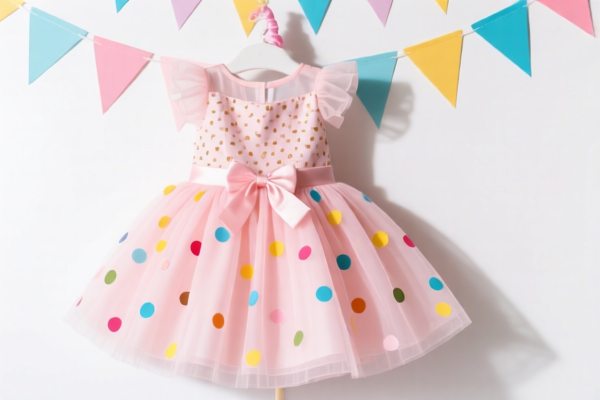

AI Analysis
👗 Party Dresses: The Ultimate Guide to HS Code Classification & Customs Clearance
🌐 HS Code Reference & Customs Clearance Strategy | 2026 Latest Tariff Analysis | Professional Import Strategy
📌 I. Product Definition & Classification: Do You Really Understand "Party Dresses"?
Party Dresses, the cornerstone of evening wear, social gatherings, and festive celebrations, are a critical segment in the global apparel trade. In international trade, they are primarily classified under Chapter 61 (Knitted or Crocheted) and Chapter 62 (Not Knitted or Crocheted). The critical distinction lies in the manufacturing process (Knitted vs. Woven) and the material composition (Synthetic vs. Cotton).
⚠️ Key Distinction Points:
- If the fabric is Knitted/Crocheted (stretchy, looped structure) → Goes to Chapter 61 (HS 6104.42/6104.43).
- If the fabric is Woven/Non-Knitted (structured, non-stretchy, or tailored) → Goes to Chapter 62 (HS 6204.42/6204.43).
- Material is King: Synthetic fibers (polyester, nylon) and Cotton have different HS sub-headings and tax implications.
📦 II. HS Code Classification Details (2026 Latest Tariff Authority Comparison)
Based on the provided data, here are the four specific HS Codes relevant to Party Dresses. Note that all listed items currently have a total tax rate of 0.0%, which is highly favorable for importers.
| HS Code | Product Description | Material Type | Manufacturing Method | Gender |
|---|---|---|---|---|
6104.43.20.10 |
Knitted Party Dresses | Synthetic Fibers | Knitted/Crocheted | Women's |
6104.42.00.10 |
Knitted Party Dresses | Cotton | Knitted/Crocheted | Women's |
6204.43.40.30 |
Woven Party Dresses | Synthetic Fibers | Not Knitted/Crocheted | Women's |
6204.42.30.50 |
Woven Party Dresses | Cotton | Not Knitted/Crocheted | Women's |
🔍 Detailed Breakdown:
-6104.43.20.10: This covers dresses made from synthetic fibers (like polyester, spandex, nylon) that are knitted. These are common in form-fitting party dresses due to the stretch of knit fabrics.
-6104.42.00.10: This covers dresses made from cotton that are knitted. These are less common for formal parties but exist for casual cocktail events.
-6204.43.40.30: This covers dresses made from synthetic fibers that are woven (not knitted). Think of structured satin or crepe party dresses that hold their shape without stretch.
-6204.42.30.50: This covers dresses made from cotton that are woven. Typically more casual or linen-like party wear.📌 Crucial Reminder:
- "Party Dress" is not a standalone HS Code. It must be classified by Construction (Knitted vs. Woven) and Material (Synthetic vs. Cotton).
- If a dress is made of Silk, Wool, or Other Fibers, it does NOT fall into the 4 HS Codes provided in . It would require a different classification (e.g., 6104.44, 6104.45, 6204.44, etc.).
- All four codes above specify "Women's" (or Girls'). Men's party attire would fall under different chapters (e.g., Suits/Blazers in 6103/6203).
💰 III. 2026 Tariff Rate Details (Comprehensive Tax Breakdown)
✅ Applicable Scope: All HS Codes provided in
✅ Current Total Tax Rate: 0.0% for all listed items.
🎯 Universal Tax Status for All 4 HS Codes
| Item | Detail |
|---|---|
| Base Tariff (Basic Duty) | 0.0% |
| Additional Tariff (Surtax) | 0.0% |
| Total Tax Rate | 0.0% |
| Tax Calculation Basis | CIF Value × 0% = $0 |
| Eligibility for De Minimis | ✅ Yes (Generally, if value is below threshold, no duty even if tax >0; here, tax is 0 anyway) |
📌 Interpretation:
- Zero Duty Advantage: Currently, all women's party dresses (knitted or woven, cotton or synthetic) listed in the set enjoy a 0% tariff. This is a significant competitive advantage for importers.
- No Surcharge: There are no additional penalties, safeguard duties, or anti-dumping duties applied to these specific codes in the provided data.
- Stability: This 0% rate suggests these items may be under a Free Trade Agreement (FTA) or have been reduced to zero under general MFN (Most Favored Nation) rates for the current period.
🛠️ IV. Customs Clearance Practical Advice (Battle-Tested Pitfall Avoidance)
✅ 1. Required Documentation Checklist (Non-Negotiable)
| Document | Required? | Description |
|---|---|---|
| ✅ Product Composition Label | ✔️ | Must clearly state: "100% Polyester" or "60% Cotton, 40% Polyester". Material determines HS Code. |
| ✅ Care Label | ✔️ | Often indicates knitted vs. woven nature. Look for "Knit" or "Woven" tags. |
| ✅ Product Photos | ✔️ | Clear images of the dress, including fabric texture close-up (to prove knit vs. weave). |
| ✅ Commercial Invoice | ✔️ | Must describe item as "Women's Party Dress, Knitted, Polyester" – DO NOT just write "Dress". |
| ✅ Packing List | ✔️ | Detail quantity, weight, and dimensions. |
| ✅ Certificate of Origin (CO) | ✔️ | If claiming preferential rates (though currently 0%, good for future-proofing). |
✅ 2. Declaration Tips (Key Mantra)
🔥 "Knit or Weave? Synth or Cotton? Declare Precisely!"
| Scenario | Correct Declaration | Wrong Practice |
|---|---|---|
| Polyester Party Dress (Stretchy) | HS: 6104.43.20.10Desc: "Women's Knitted Polyester Party Dress" |
Declaring as "Woven Dress" → Wrong Code! |
| Satin Party Dress (Structured) | HS: 6204.43.40.30Desc: "Women's Woven Synthetic Fiber Party Dress" |
Declaring as "Knitted" → Wrong Code! |
| Cotton Casual Party Dress | HS: 6104.42.00.10 (if knit) or 6204.42.30.50 (if woven) |
Mixing up knit/weave → 100% Error Rate |
| Mixed Fabric Dress (e.g., Silk Bodice, Polyester Skirt) | NOT COVERED in | Trying to force into one of the 4 codes → Customs Seizure! |
✅ 3. Special Case Handling
| Scenario | Handling Advice |
|---|---|
| Sample Dresses for Review | Declare as "Samples – Value $0" or nominal value. Still requires correct HS Code. |
| Dresses with Embellishments (Beads, Sequins) | If embellishments change the essential character, it may still be classified under these codes, but provide detailed description. |
| Gender Ambiguity (Unisex Party Dress) | NOT COVERED. These HS codes are for Women's/Girls'. Unisex may require different classification or risk rejection. |
| Swimwear Party Dresses | EXCLUDED. The HS codes explicitly state "(other than swimwear)". If it's a swimsuit, use Chapter 61/62 swimwear codes. |
🌍 V. Global Market Clearance Comparison (2026 Latest)
| Country/Region | Recommended HS Code (Example) | Tariff Rate | Notes |
|---|---|---|---|
| 🇺🇸 United States | 6104.43.20.10 or 6204.43.40.30 |
0.0% | No additional surtaxes on these codes in provided data. |
| 🇨🇳 China | 6104.43.20.10 or 6204.43.40.30 |
0.0% | Import tariffs aligned with provided data. |
| 🇪🇺 European Union | Similar 8-digit codes | Varies (0-12%) | EU often has different 8-digit extensions; 0% may not apply. Verify locally. |
| 🇬🇧 United Kingdom | Similar 8-digit codes | Varies (0-12%) | Post-Brexit rules apply. |
| 🇯🇵 Japan | Similar 8-digit codes | 0-15% | Check if FTA benefits apply. |
📌 Conclusion:
- The 0% tax rate is currently valid for the provided HS Codes, likely reflecting a trade-friendly environment for women's apparel in key markets.
- Accuracy is Critical: Misclassifying a Knitted dress as Woven (or vice versa) is the most common error, even if the tax rate is currently the same. It can lead to customs audits or retroactive penalties if rates change.
📌 VI. Common Mistakes & Pitfall Guide (Lessons Learned)
❌ Mistake 1: Calling a "Knitted" dress "Woven" because it looks structured.
👉 Consequence: Wrong HS Code → Potential audit.
👉 Fix: Test the fabric. If it loops and stretches, it's Knitted (6104...). If it's woven threads, it's 6204....
❌ Mistake 2: Ignoring the Material.
👉 Consequence: Using 6104.43 (Synthetic) for a Cotton dress (6104.42).
👉 Fix: Check the label. Synthetic ≠ Cotton.
❌ Mistake 3: Assuming "Party Dress" is a valid HS Description.
👉 Consequence: Customs officer rejects the declaration.
👉 Fix: Use precise descriptions: "Women's Knitted Polyester Evening Dress."
❌ Mistake 4: Forgetting that Swimwear is Excluded.
👉 Consequence: Misclassification.
👉 Fix: If it's for swimming, use Swimwear codes, not Party Dress codes.
✅ Correct Declaration Example:
"Women's Party Dress, Knitted, 95% Polyester, 5% Spandex, Model XYZ, Size M-L"
HS Code:6104.43.20.10
Tax: 0.0%
🎯 VII. Conclusion: Precision Classification Saves Time & Money!
🎯 Remember the Mantra:
🔹 "Knit vs. Weave? Synth vs. Cotton? Check Twice!"
🔹 "Zero Tax is Sweet, But Wrong Code is Bitter!"
🔹 "Party Dresses are Women's Only in This Data Set!"
📌 Pro Tip:
If your party dresses are made of Silk or Wool, DO NOT use the HS Codes in . They are not covered. You must look up separate codes for Silk/Wool dresses.
Always consult a licensed customs broker for pre-clearance rulings if you are dealing with mixed materials or ambiguous designs.
📣 Immediate Action:
📞 Verify Fabric Type (Knit/Weave, Synth/Cotton) → Assign Correct HS Code → Declare Accurately
🚀 Ensure Smooth Customs Clearance, Zero Duties, and Happy Customers!
✨ Professional Customs Clearance Starts with Accurate Classification!
💼 Your Profit Margin Depends on This Detail!
Customer Reviews
About HS Code Classification
The Harmonized System (HS) is an internationally standardized nomenclature developed by the World Customs Organization (WCO) to classify traded products. Over 200 countries use the HS system as the basis for customs tariffs, trade statistics, and import/export regulations.
Each HS code follows a hierarchical structure:
- Chapter (2 digits) — Broad category of goods (e.g., Chapter 84: Machinery and Mechanical Appliances)
- Heading (4 digits) — More specific grouping within the chapter
- Subheading (6 digits) — Internationally standardized breakdown, used by all WCO member countries
- National subdivisions (8-10 digits) — Country-specific extensions for further classification, such as US HTSUS 10-digit codes
Correct HS code classification is essential for smooth customs clearance, accurate duty payment, and compliance with trade regulations. Misclassification can lead to customs delays, overpayment of duties, or penalties.
When importing from CN to US, the applicable tariff rates may include:
- Most-Favored-Nation (MFN) rate — The standard duty rate applied to WTO members
- General rate — Applied to countries without trade agreements
- Trade remedy duties — Additional tariffs such as Section 301 (anti-dumping), Section 232 (national security), or countervailing duties
The information provided on this page is for reference purposes only. For official classification, please consult with your local customs authority or a licensed customs broker.