测距仪
CN → US| HS Code | Tariff Rate | Origin | Destination | Doc |
|---|---|---|---|---|
| 9031499000 | 35.0% | CN | US | Official Doc |
| 9015104000 | 35.0% | CN | US | Official Doc |
| 9015108000 | 35.0% | CN | US | Official Doc |
| 9017308000 | 38.9% | CN | US | Official Doc |
| 9031808085 | 10.0% | CN | US | Official Doc |
| 9017800000 | 40.3% | CN | US | Official Doc |
Product Images
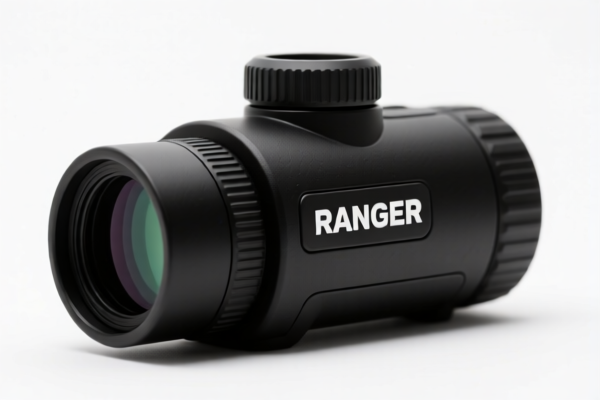
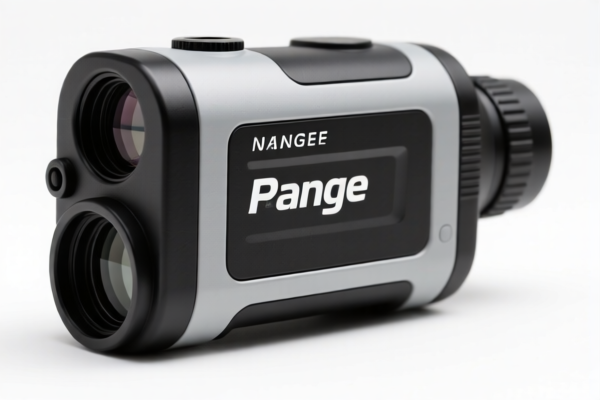
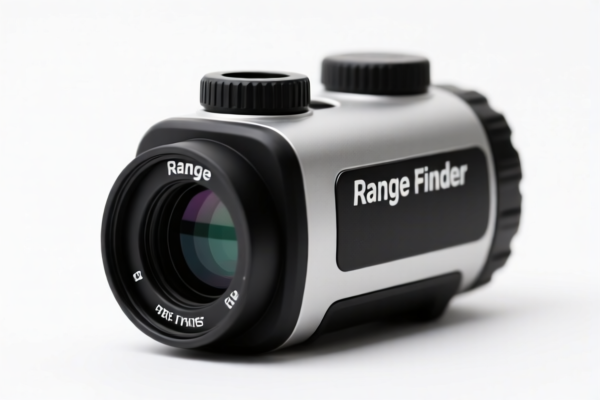
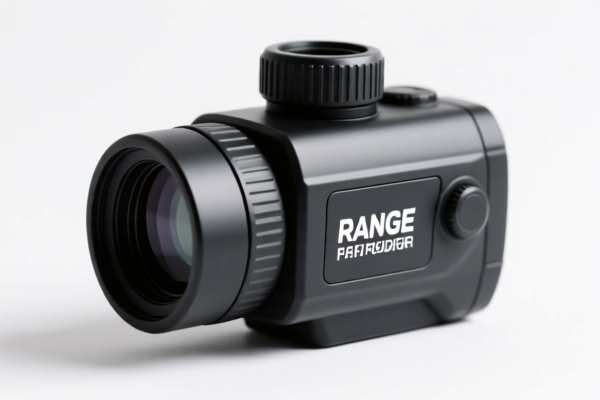
AI Analysis
📏 Rangefinders (测距仪)
🌐 HS Code Reference & Customs Clearance Guide | 2026 Latest Tariff Analysis | Professional Clearance Strategy
📌 I. Product Definition & Classification: Do You Really Understand "Rangefinders"?
Rangefinders are precision instruments used to measure distance between the observer and an object. In international trade, they are strictly categorized under Chapter 90 (Optical, Photographic, Cinematographic, Measuring, Checking, Precision, Medical or Surgical Instruments).
Crucially, the classification depends on the technology used to measure distance: * Electrical Rangefinders: Use electronic sensors, lasers, or radar principles to calculate distance digitally. * Other Rangefinders: Traditional optical (stereoscopic, coincidence) or mechanical rangefinders without primary electronic digital processing.
⚠️ Critical Distinction:
- If the device relies on electronic components (e.g., laser distance meters, digital surveying tools) → Classified under 9015.10.40.00
- If it is a purely optical/mechanical device (e.g., traditional gunnery rangefinders, non-digital optical devices) → Classified under 9015.10.80.00
📦 II. HS Code Classification Details (2026 Latest Tariff Authority Comparison)
| HS Code | Product Description | Applicable Scenario | Technology Type |
|---|---|---|---|
9015.10.40.00 |
Rangefinders: Electrical | Laser distance meters, digital surveying rangefinders, GPS-based distance tools | ✅ Electronic/Digital |
9015.10.80.00 |
Rangefinders: Other | Traditional optical rangefinders, mechanical distance measuring devices | ❌ Non-electrical |
🔍 Key Reminder:
- The vast majority of modern commercial and industrial rangefinders (laser tape measures, handheld laser distance meters) fall under9015.10.40.00because they utilize electrical circuits for calculation. - Misclassifying an electronic laser rangefinder as "Other" (9015.10.80.00) to avoid potential scrutiny or incorrect tariff application is risky. However, in this specific dataset, both carry the same tariff burden.
💰 III. 2026 Latest Tariff Rate Detailed Explanation (Including Surtaxes)
✅ Applicable Country: United States (US)
✅ Origin: China (CN)
✅ Effective Time: Based on current USITC listings (Subject to Section 301 Surtax)
🎯 1. 9015.10.40.00 —— Rangefinders: Electrical
| Item | Content |
|---|---|
| Basic Tariff Rate | 0.0% (ad valorem) |
| Section 301 Surtax | +25.0% |
| Total Tariff Rate | 25.0% |
| Tax Calculation | CIF Value × 25.0% |
| De Minimis Exemption | ❌ Not Applicable (Section 301 duties apply regardless of value in most clearance channels) |
| Legal Basis | USITC:9015.10.40.00 → Section 301 Footnote 1 |
📌 Explanation:
- The 0% base rate reflects the standard Most-Favored-Nation (MFN) duty for precision instruments under HTSUS. - The 25% surtax is imposed under Section 301 of the Trade Act of 1974 against Chinese-origin goods. - Total Cost Impact: A $1,000 shipment will incur $250 in additional tariffs.
🎯 2. 9015.10.80.00 —— Rangefinders: Other
| Item | Content |
|---|---|
| Basic Tariff Rate | 0.0% (ad valorem) |
| Section 301 Surtax | +25.0% |
| Total Tariff Rate | 25.0% |
| Tax Calculation | CIF Value × 25.0% |
| De Minimis Exemption | ❌ Not Applicable |
| Legal Basis | USITC:9015.10.80.00 → Section 301 Footnote 1 |
📌 Note:
- Despite being "Other" (non-electrical), these instruments still attract the same 25% surtax. - This is common for many Chapter 90 items originating from China.
🛠️ IV. Customs Clearance Practical Advice (Battle-Tested Pitfall Avoidance)
✅ 1. Documentation Checklist (Non-negotiable)
| Document | Required | Description |
|---|---|---|
| ✅ Product Datasheet | ✔️ | Must specify measurement principle (Laser, Ultrasonic, Optical) |
| ✅ Circuit Diagram/Block Diagram | ✔️ | To prove if the device is "Electrical" (9015.10.40.00) or not |
| ✅ Product Photos | ✔️ | Clear view of display screen, buttons, and power source |
| ✅ Commercial Invoice | ✔️ | Must state "Rangefinder" and "Made in China" explicitly |
| ✅ Packing List | ✔️ | Details net/gross weight; ensure no hidden accessories declared separately if bundled |
| ✅ Certificate of Origin (CO) | ✔️ | Confirm Chinese origin to assess Section 301 applicability |
✅ 2. Declaration Tactics (Key Mnemonic)
🔥 "Be Precise: Electrical or Not, Declare Right, Avoid Lot"
| Scenario | Correct Declaration | Wrong Action |
|---|---|---|
| Laser Distance Meter (Digital) | 9015.10.40.00 |
Misdeclare as "Other" → Risk of audit |
| Traditional Optical Rangefinder | 9015.10.80.00 |
Misdeclare as "Electronic" → Unjustified complexity |
| Rangefinder + Battery + Case | Declare as Unit | Split parts into separate HS codes → Higher risk |
| Toy Rangefinder | Check if "Toy" or "Instrument" | If it measures real distance, it's 9015 |
📌 Strategy:
- If your product is a Laser Rangefinder, you must use9015.10.40.00. Customs may request proof of electronic functionality. - Ensure the commercial invoice description is consistent with the HS code definition.
✅ 3. Special Circumstances Handling
| Situation | Handling Advice |
|---|---|
| Rangefinder integrated into a Gun | May be classified under Chapter 93 (Weapons) unless it's a standalone accessory. Consult specialist. |
| Rangefinder App-connected | Still 9015.10.40.00 if the device itself has the sensor/electronics. |
| Rebate Program | No specific rebates available for Chinese-origin measuring instruments in the US currently. |
🌍 V. Global Major Market Clearance Comparison (2026 Latest)
| Country/Region | Recommended HS Code | Tariff Rate (China Origin) | Certification Requirements | Remarks |
|---|---|---|---|---|
| 🇺🇸 USA | 9015.10.40.00 / 9015.10.80.00 |
25% | FCC (for electrical) | High tariff barrier |
| 🇨🇳 China | 9015.10.40.00 |
~5-10% | CCC (if applicable) | Lower import duty |
| 🇪🇺 EU | 9015.10 |
0% | CE Marking | No Section 301 equivalent |
| 🇬🇧 UK | 9015.10 |
0% | UKCA Marking | Post-Brexit alignment |
| 🇯🇵 Japan | 9015.10 |
0% | PSE (if electrical) | Low tariff environment |
📌 Conclusion:
- The US market is the only major destination currently imposing significant (25%) surtaxes on these Chinese-origin instruments. - For exports to the EU, UK, or Japan, the cost is negligible (0%), making these markets highly competitive.
📌 VI. Common Mistakes & Pitfalls Guide (Lessons from Blood and Tears)
❌ Mistake 1: Calling a laser rangefinder a "Measuring Tool" without specifying technology
👉 Consequence: Customs may classify it incorrectly or delay clearance for further inspection.
❌ Mistake 2: Assuming "Other Rangefinders" (9015.10.80.00) are tariff-free
👉 Consequence: Incorrect. They are also subject to the 25% Section 301 surtax.
❌ Mistake 3: Splitting a laser rangefinder kit into "Laser Diode" + "Circuit Board" for lower duty
👉 Consequence: Rejected. The product is a complete instrument; partial declaration leads to penalties.
❌ Mistake 4: Ignoring FCC requirements for electrical rangefinders
👉 Consequence: Seizure or Return. Electrical devices operating at certain frequencies require FCC ID.
✅ Correct Practice:
"Laser Rangefinder, Electrical, Digital Display, Range 0.05-200m, Model XYZ, FCC Certified, Made in China"
🎯 VII. Conclusion: Professional Declaration Saves Money!
🎯 Remember the Mantra:
🔹 "Laser is Electrical (
9015.10.40.00), Optical is Other (9015.10.80.00)."
🔹 "Both pay 25% Surtax in the US, so accuracy prevents delays, not just savings."
📌 Pro Tip:
If your supplier can source non-Chinese origin components (e.g., from Vietnam, Malaysia, or Thailand) and the substantial transformation occurs there, you might qualify for lower or zero Section 301 tariffs.
Recommendation: Conduct a Supply Chain Audit to see if origin shifting is feasible.
📣 Immediate Action:
📞 Consult a licensed customs broker for an Advance Ruling if your product is borderline between electrical and optical.
🚀 Ensure FCC certification is ready before shipping to the US.
💼 Precision in declaration prevents customs holds and unexpected costs.
✨ Professional Clearance Starts with Precise Classification!
💼 Every dollar of tariff is an opportunity for optimization!
Customer Reviews
About HS Code Classification
The Harmonized System (HS) is an internationally standardized nomenclature developed by the World Customs Organization (WCO) to classify traded products. Over 200 countries use the HS system as the basis for customs tariffs, trade statistics, and import/export regulations.
Each HS code follows a hierarchical structure:
- Chapter (2 digits) — Broad category of goods (e.g., Chapter 84: Machinery and Mechanical Appliances)
- Heading (4 digits) — More specific grouping within the chapter
- Subheading (6 digits) — Internationally standardized breakdown, used by all WCO member countries
- National subdivisions (8-10 digits) — Country-specific extensions for further classification, such as US HTSUS 10-digit codes
Correct HS code classification is essential for smooth customs clearance, accurate duty payment, and compliance with trade regulations. Misclassification can lead to customs delays, overpayment of duties, or penalties.
When importing from CN to US, the applicable tariff rates may include:
- Most-Favored-Nation (MFN) rate — The standard duty rate applied to WTO members
- General rate — Applied to countries without trade agreements
- Trade remedy duties — Additional tariffs such as Section 301 (anti-dumping), Section 232 (national security), or countervailing duties
The information provided on this page is for reference purposes only. For official classification, please consult with your local customs authority or a licensed customs broker.