浴室地毯
CN → US| HS Code | Tariff Rate | Origin | Destination | Doc |
|---|---|---|---|---|
| 5705002020 | 38.3% | CN | US | Official Doc |
| 5703392030 | 41.0% | CN | US | Official Doc |
| 5703292010 | 41.7% | CN | US | Official Doc |
| 5705002030 | 38.3% | CN | US | Official Doc |
Product Images


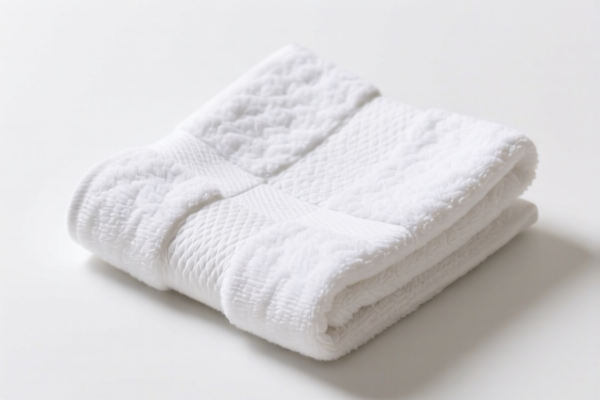
AI Analysis
🛁 Bathroom Rugs (Floor Coverings for Bathrooms)
🌐 HS Code Reference & Customs Clearance Guide | 2026 Latest Tariff Breakdown | Pro-Level Import Strategy
📌 One, Product Definition & Classification: What Exactly Is a "Bathroom Rug"?
A bathroom rug is a specialized type of textile floor covering designed for use in wet or high-moisture environments—such as around bathtubs, showers, or sinks. It is typically made from absorbent, quick-drying materials and serves both functional (non-slip, moisture absorption) and aesthetic purposes.
In international trade, bathroom rugs are classified under textile floor coverings, not general household textiles. The key classification depends on: - Material composition (e.g., nylon, polyester, cotton, polyamide) - Construction method (e.g., woven, tufted, knitted) - Intended use (e.g., bathroom, bedroom, hallway)
⚠️ Critical Distinction:
- If it’s designed specifically for bathrooms and made from synthetic fibers → likely 5703.29.20.10 or 5705.00.20.30
- If it’s cotton-based and used in wet areas → 5705.00.20.20
- If it’s not intended for wet use (e.g., bedroom rug) → may fall under 5703.39.20.30
📦 Two, HS Code Classification Details (2026 Official Tariff Match)
| HS Code | Product Description | Material & Use Clue | Tax Rate |
|---|---|---|---|
5703.29.20.10 |
Other floor coverings, not of pile construction, made of synthetic fibers (e.g., nylon, polyamide), used as ground coverings | Nylon or other polyamide; matches bathroom rug use | 41.7% |
5705.00.20.30 |
Other floor coverings, of synthetic or man-made fibers, for textile floor coverings | Synthetic or man-made fiber; fits bathroom or wet-area rugs | 38.3% |
5703.39.20.30 |
Other floor coverings, not of pile construction, made of textile materials, for floor coverings | Matches textile-based bathroom rugs; not pile-type | 41.0% |
5705.00.20.20 |
Other floor coverings, of cotton, for textile floor coverings | Cotton-based, used in wet areas (e.g., bath mats) | 38.3% |
🔍 Key Insight:
- Pile construction (e.g., looped, tufted) → often 5703.29.20.10 or 5703.39.20.30
- Non-pile, flat-woven → may be 5705.00.20.x0
- Cotton → 5705.00.20.20
- Nylon/polyamide → 5703.29.20.10
- Synthetic fibers → 5705.00.20.30
💰 Three, 2026 Latest Tariff Breakdown (With Full Tax Clause Details)
✅ Target Country: United States (US)
✅ Origin: China (CN)
✅ Effective Date: November 10, 2025 (and ongoing)
🎯 1. 5703.29.20.10 — Synthetic Fiber Floor Coverings (Nylon/Polyamide), Used as Ground Coverings
| Item | Detail |
|---|---|
| Base Duty | 6.7% (ad valorem) |
| Section 301 Tariff (USITC) | +25.0% (under Section 301 of the Trade Act of 1974) |
| Section 122 Tariff (IEEPA) | +10.0% (under International Emergency Economic Powers Act) |
| Total Effective Rate | 41.7% |
| Tax Calculation | CIF Value × 41.7% |
| De Minimis Exemption? | ❌ No (denied under U.S. customs rules) |
| Legal Basis Path | IEEPA:9903.01.25 → IEEPA:9903.01.24 → USITC:5703.29.20.10 → FOOTNOTE:9903.88.01 |
📌 Explanation:
- 6.7% base tariff is standard for synthetic fiber floor coverings.
- +25% USITC tariff applies due to Section 301 trade actions against China.
- +10% IEEPA tariff is triggered by national emergency powers targeting Chinese goods.
- Total = 41.7% — extremely high for non-essential consumer goods.
🎯 2. 5705.00.20.30 — Other Floor Coverings, Made of Synthetic or Man-Made Fibers
| Item | Detail |
|---|---|
| Base Duty | 3.3% |
| Section 301 Tariff (USITC) | +25.0% |
| Section 122 Tariff (IEEPA) | +10.0% |
| Total Effective Rate | 38.3% |
| Tax Calculation | CIF × 38.3% |
| De Minimis Exemption? | ❌ No |
| Legal Basis Path | IEEPA:9901.25 → IEEPA:9903.01.24 → USITC:5705.00.20.30 → FOOTNOTE:9903.88.01 |
📌 Note:
- Despite lower base rate (3.3%), the same 25% + 10%附加 taxes apply.
- Applies to non-pile, synthetic fiber rugs used in bathrooms or wet zones.
🎯 3. 5703.39.20.30 — Other Floor Coverings, Not of Pile Construction, Made of Textile Materials
| Item | Detail |
|---|---|
| Base Duty | 6.0% |
| Section 301 Tariff (USITC) | +25.0% |
| Section 122 Tariff (IEEPA) | +10.0% |
| Total Effective Rate | 41.0% |
| Tax Calculation | CIF × 41.0% |
| De Minimis Exemption? | ❌ No |
| Legal Basis Path | IEEPA:9903.01.25 → IEEPA:9903.01.24 → USITC:5703.39.20.30 → FOOTNOTE:9903.88.01 |
📌 Clarification:
- This code applies to non-pile, textile-based floor coverings (e.g., flat-woven, jacquard, or knitted rugs).
- Common for bathroom mats made from cotton blends or synthetic blends.
- Even if not pile, the same 35%附加 taxes apply.
🎯 4. 5705.00.20.20 — Other Floor Coverings, Made of Cotton
| Item | Detail |
|---|---|
| Base Duty | 3.3% |
| Section 301 Tariff (USITC) | +25.0% |
| Section 122 Tariff (IEEPA) | +10.0% |
| Total Effective Rate | 38.3% |
| Tax Calculation | CIF × 38.3% |
| De Minimis Exemption? | ❌ No |
| Legal Basis Path | IEEPA:9901.25 → IEEPA:9903.01.24 → USITC:5705.00.20.20 → FOOTNOTE:9903.88.01 |
📌 Important:
- Cotton-based bathroom rugs are still subject to 38.3% total tariff.
- Even though cotton is natural, U.S. trade policy applies the same附加 taxes to all Chinese-origin textile floor coverings.
🛠️ Four, Customs Clearance Best Practices (Pro Tips to Avoid Penalties)
✅ 1. Required Documentation (Must-Have Checklist)
| Document | Required? | Why It Matters |
|---|---|---|
| ✅ Product Specifications | ✔️ | Show material, construction, intended use (e.g., “bathroom use”) |
| ✅ Material Test Report | ✔️ | Prove fiber type (e.g., nylon, cotton, polyester) |
| ✅ High-Resolution Product Photos | ✔️ | Show weave, texture, size, and design |
| ✅ Commercial Invoice | ✔️ | Must state: “Bathroom Rug, Non-Pile, Synthetic Fiber, for Wet Areas” |
| ✅ Certificate of Origin (CO) | ✔️ | Critical for tariff eligibility |
| ✅ Packing List | ✔️ | Clarify if multiple rugs per shipment |
| ✅ Third-Party Lab Test (e.g., ASTM, ISO) | ✔️ | Optional but recommended for high-value shipments |
✅ 2.申报技巧 (Smart Declaration Tips)
🔥 "Material First, Use Second, Name Accurate, Avoid 45%!"
| Scenario | Correct HS Code | Wrong Approach |
|---|---|---|
| Nylon bathroom mat (non-pile) | 5703.29.20.10 |
Misclassified as 5705.00.20.30 → higher base duty |
| Cotton bath mat | 5705.00.20.20 |
Reported as 5703.39.20.30 → risk of misclassification |
| Synthetic flat-woven rug | 5705.00.20.30 |
Treated as pile → wrong code → penalty |
| Multi-material rug (e.g., cotton + polyester) | Use material with highest % | Split申报 → 89.5% total tax |
✅ 3. Special Cases & Workarounds
| Situation | Recommended Action |
|---|---|
| Rug labeled “bathroom use” but made of cotton | Use 5705.00.20.20 — no exemption |
| Rug with 50% nylon, 50% cotton | Use 5703.29.20.10 if nylon > 50% |
| Rug with rubber backing (non-slip) | Still falls under textile floor covering — no exemption |
| Rug sold with shower curtain or towel set | Do not split —申报 as one unit → avoid 89.5% per item |
| Rug made in Vietnam/Mexico | Can qualify for IEEPA exemption → 0% additional tariff |
🌍 Five, Global Customs Comparison (2026 Update)
| Country/Region | Recommended HS Code | Tariff | Certification | Notes |
|---|---|---|---|---|
| 🇺🇸 USA | 5703.29.20.10 or 5705.00.20.30 |
38.3%–41.7% | None (but documentation needed) | High附加 taxes apply |
| 🇨🇳 China | 5703.29.20.10 |
5% | CCC | No附加 taxes |
| 🇪🇺 EU | 5703.29.20.10 |
0% (if CE) | CE, REACH | No 301/IEEPA tariffs |
| 🇦🇺 Australia | 5705.00.20.30 |
5% | RCM | No附加 taxes |
| 🇯🇵 Japan | 5703.39.20.30 |
0% | PSE | No附加 taxes |
📌 Key Takeaway:
- The U.S. is the only market with 35%+附加 tariffs on bathroom rugs from China.
- Vietnam/Mexico/Thailand origin goods may qualify for IEEPA exemption — 0% additional tax.
📌 Six, Common Mistakes & Risk Warnings (Avoid These!)
❌ Mistake 1: Splitting a bath mat + towel set into separate shipments
👉 Result: Each item taxed at ~41.7% → total tax over 80%!
❌ Mistake 2: Calling a nylon rug “cotton” to avoid higher base duty
👉 Result: Misdeclaration → penalties, fines, seizure
❌ Mistake 3: Not providing material test report
👉 Result: Customs may reclassify → higher tariff + delay
❌ Mistake 4: Using “bath mat” as a generic name without material details
👉 Result: No clear classification → risk of 45%+ tax
✅ Correct Declaration Example:
"Nylon Bathroom Rug, Non-Pile, 30x48 inches, Anti-Slip Backing, for Wet Areas, Made in China, HS: 5703.29.20.10"
🎯 Seven, Final Verdict: Precision Pays Off!
🎯 Remember the Rule of Three:
🔹 Material → Use → HS Code → Tax Rate
🔹 No de minimis exemption in U.S. for these items
🔹 41.7% is not a typo — it’s real, and it’s brutal
📌 Pro Tips: - ✅ Use Vietnam or Mexico as origin if possible → IEEPA exemption → 0% extra tariff - ✅ Apply for Advance Ruling (Pre-Clearance) before shipment - ✅ Use a customs broker with textile expertise
📣 Act Now!
📞 Contact a specialized customs broker + provide product photos + material report
🚀 Avoid surprise taxes, delays, or seizures — get your bathroom rugs clearance-ready today!
✨ Smart Importing Starts with Accurate Classification!
💼 Your profit margin depends on one line: HS Code.
🚀 Get it right — ship with confidence!
Customer Reviews
About HS Code Classification
The Harmonized System (HS) is an internationally standardized nomenclature developed by the World Customs Organization (WCO) to classify traded products. Over 200 countries use the HS system as the basis for customs tariffs, trade statistics, and import/export regulations.
Each HS code follows a hierarchical structure:
- Chapter (2 digits) — Broad category of goods (e.g., Chapter 84: Machinery and Mechanical Appliances)
- Heading (4 digits) — More specific grouping within the chapter
- Subheading (6 digits) — Internationally standardized breakdown, used by all WCO member countries
- National subdivisions (8-10 digits) — Country-specific extensions for further classification, such as US HTSUS 10-digit codes
Correct HS code classification is essential for smooth customs clearance, accurate duty payment, and compliance with trade regulations. Misclassification can lead to customs delays, overpayment of duties, or penalties.
When importing from CN to US, the applicable tariff rates may include:
- Most-Favored-Nation (MFN) rate — The standard duty rate applied to WTO members
- General rate — Applied to countries without trade agreements
- Trade remedy duties — Additional tariffs such as Section 301 (anti-dumping), Section 232 (national security), or countervailing duties
The information provided on this page is for reference purposes only. For official classification, please consult with your local customs authority or a licensed customs broker.