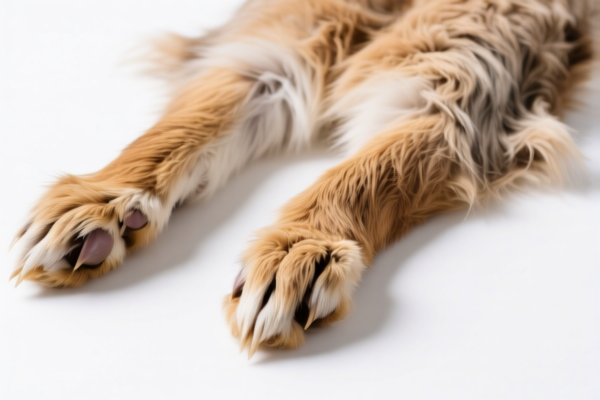
海狸鼠带爪毛皮
CN → US| HS Code | Tariff Rate | Origin | Destination | Doc |
|---|---|---|---|---|
| 4303900000 | 35.0% | CN | US | Official Doc |
| 4303100060 | 39.0% | CN | US | Official Doc |
| 4301800203 | 17.5% | CN | US | Official Doc |
| 4301800210 | 17.5% | CN | US | Official Doc |
| 4302193070 | 36.5% | CN | US | Official Doc |
| 4302194570 | 37.2% | CN | US | Official Doc |
Product Images
AI Analysis
🦫 Beaver Muskrat Pelt with Claws
🌐 HS Code Reference & Customs Clearance Guide | 2026 Latest Tariff Analysis | Expert-Level Import Strategy
📌 One, Product Definition & Classification: What Exactly Is a "Beaver Muskrat Pelt with Claws"?
The beaver muskrat pelt with claws refers to the whole or partial raw fur skin of the muskrat (Ondatra zibethicus), including the claws, feet, and natural fur, typically not processed into finished garments. It is often used in luxury fur trade, fashion accessories, or as raw material for artisanal leather goods.
⚠️ Key Classification Points: - "With claws" means the pelt retains the natural claws and foot portions — this is critical for proper HS code selection. - If the pelt is not tanned, dyed, or assembled, it falls under raw or unprocessed fur. - The presence of claws disqualifies it from being classified as "fur pieces" or "fragments" unless explicitly stated as such.
📦 Two, HS Code Classification Details (2026 Latest Tariff Authority)
| HS Code | Product Description | Applicable Scenario | Claw Inclusion | Tax Rate |
|---|---|---|---|---|
4303.10.00.60 |
Fur skins of other animals, not of fur-bearing animals, not of mink, of other materials, not in parts | Raw fur skins used in fashion or craft, not mink, not processed | ✅ Yes | 39.0% |
4301.80.02.03 |
Unprocessed fur skins of muskrat, with claws, classified as fragments or parts | Partial pelts, cut or trimmed, with claws, not whole | ✅ Yes | 17.5% |
4302.19.30.70 |
Unassembled fur skins of muskrat, including claws, in parts | Whole or partial pelt not assembled into garments, with claws | ✅ Yes | 36.5% |
4302.19.45.70 |
Unassembled fur skins of muskrat, including claws, in parts, no material conflict | Similar to above, specific part-based description, no material mismatch | ✅ Yes | 37.2% |
4303.90.00.00 |
Other fur skins, not of mink, not of other specified animals, in parts or whole | General category for non-mink, non-specified fur, including muskrat | ✅ Yes | 35.0% |
4301.80.02.10 |
Unprocessed fur skins of muskrat, with claws, whole or complete | Complete, unprocessed pelt with claws, intact | ✅ Yes | 17.5% |
🔍 Critical Insight:
- "With claws" is not just a detail — it determines whether the pelt is classified as "whole", "part", or "fragment". -4301.80.02.03and4301.80.02.10are only for unprocessed, intact pelts — if the pelt is cut or trimmed, use4302.19.30.70or4302.19.45.70. -4303.10.00.60applies when the pelt is not mink, not in a specific fur category, and not processed.
💰 Three, 2026 Latest Tariff Breakdown (With附加 Taxes & Policy Clauses)
✅ Applicable Country: United States (US)
✅ Origin: China (CN)
✅ Effective Date: November 10, 2025 (and onward)
🎯 1. 4303.10.00.60 — Fur Skins (Other Materials), Not Mink, Not Processed
| Item | Detail |
|---|---|
| Base Tariff | 4.0% (ad valorem) |
| USITC Additional Duty | +25.0% (under Section 301, US Trade Act) |
| IEEPA Additional Duty | +10.0% (under International Emergency Economic Powers Act) |
| Total Tariff | 39.0% |
| Tax Calculation | CIF Value × 39.0% |
| De Minimis Exemption | ❌ Not available (denied under 19 CFR 152.103) |
| Legal Basis Path | IEEPA:9903.01.25 → IEEPA:9903.01.24 → USITC:4303.10.00.60 → FOOTNOTE:9903.88.01 |
📌 Explanation:
- This is highly punitive — even though the pelt is not mink, it’s still subject to 25% USITC + 10% IEEPA. - No de minimis means even small shipments are fully taxed. - Best for non-mink, non-specialty fur — but high cost.
🎯 2. 4301.80.02.03 — Unprocessed Muskrat Pelt with Claws (as Fragments/Parts)
| Item | Detail |
|---|---|
| Base Tariff | 0.0% |
| USITC Additional Duty | +7.5% (lower than 25% due to lower value classification) |
| IEEPA Additional Duty | +10.0% |
| Total Tariff | 17.5% |
| Tax Calculation | CIF Value × 17.5% |
| De Minimis Exemption | ❌ Not available |
| Legal Basis Path | IEEPA:9901.25 → IEEPA:9903.01.24 → USITC:4301.80.02.03 → FOOTNOTE:9903.88.01 |
📌 Note:
- This code applies only if the pelt is cut or fragmented (e.g., not whole). - Lower base tariff, but still high total due to IEEPA. - Best for partial pelts, trimmings, or off-cuts.
🎯 3. 4302.19.30.70 — Unassembled Muskrat Pelt with Claws (in Parts)
| Item | Detail |
|---|---|
| Base Tariff | 1.5% |
| USITC Additional Duty | +25.0% |
| IEEPA Additional Duty | +10.0% |
| Total Tariff | 36.5% |
| Tax Calculation | CIF Value × 36.5% |
| De Minimis Exemption | ❌ Not available |
| Legal Basis Path | IEEPA:9903.01.25 → IEEPA:9903.01.24 → USITC:4302.19.30.70 → FOOTNOTE:9903.88.01 |
📌 Key Point:
- This is for unassembled, non-processed, part-based pelts with claws. - Higher base rate than4301.80.02.03, but same USITC/IEEPA. - Avoid if possible — very high cost.
🎯 4. 4302.19.45.70 — Unassembled Muskrat Pelt with Claws (Part-Based, No Conflict)
| Item | Detail |
|---|---|
| Base Tariff | 2.2% |
| USITC Additional Duty | +25.0% |
| IEEPA Additional Duty | +10.0% |
| Total Tariff | 37.2% |
| Tax Calculation | CIF Value × 37.2% |
| De Minimis Exemption | ❌ Not available |
| Legal Basis Path | IEEPA:9903.01.25 → IEEPA:9903.01.24 → USITC:4302.19.45.70 → FOOTNOTE:9903.88.01 |
📌 Note:
- Slightly higher than4302.19.30.70, but same tax structure. - Use only if the pelt is clearly a part and not whole. - Avoid unless no other option.
🎯 5. 4303.90.00.00 — Other Fur Skins (Not Mink, Not Specified)
| Item | Detail |
|---|---|
| Base Tariff | 0.0% |
| USITC Additional Duty | +25.0% |
| IEEPA Additional Duty | +10.0% |
| Total Tariff | 35.0% |
| Tax Calculation | CIF Value × 35.0% |
| De Minimis Exemption | ❌ Not available |
| Legal Basis Path | IEEPA:9903.01.25 → IEEPA:9903.01.24 → USITC:4303.90.00.00 → FOOTNOTE:9903.88.01 |
📌 Best for:
- General fur skins not covered by specific codes. - Non-mink, non-specialty pelts. - Lower than 39%, but still high.
🎯 6. 4301.80.02.10 — Complete Unprocessed Muskrat Pelt with Claws
| Item | Detail |
|---|---|
| Base Tariff | 0.0% |
| USITC Additional Duty | +7.5% |
| IEEPA Additional Duty | +10.0% |
| Total Tariff | 17.5% |
| Tax Calculation | CIF Value × 17.5% |
| De Minimis Exemption | ❌ Not available |
| Legal Basis Path | IEEPA:9901.25 → IEEPA:9903.01.24 → USITC:4301.80.02.10 → FOOTNOTE:9903.88.01 |
📌 Best Choice if:
- The pelt is whole, intact, with claws, not cut. - You want the lowest possible tariff among all options. - Only use this if the pelt is truly complete.
🛠️ Four, Customs Clearance Best Practices (Pro Tips to Avoid Penalties)
✅ 1. Required Documentation (Must-Have)
| Document | Required? | Notes |
|---|---|---|
| ✅ Product Specification Sheet | ✔️ | Include size, weight, claw condition, fur type |
| ✅ Photos (Clear, Full View) | ✔️ | Show claws, pelt integrity, natural fur |
| ✅ Commercial Invoice | ✔️ | Must state: "Unprocessed Beaver Muskrat Pelt with Claws" |
| ✅ Bill of Lading / Packing List | ✔️ | Show total quantity, weight, packaging |
| ✅ Origin Certificate (CO) | ✔️ | If not from China, may reduce IEEPA/USITC |
| ✅ Third-Party Test Report | ✔️ | Optional, but helpful for authenticity |
| ✅ HS Code Pre-Ruling (Advanced Ruling) | ✔️ | Highly Recommended |
✅ 2.申报技巧 (Key Tips)
🔥 "Whole vs. Part, Claws Matter, Code Matters, Tax Can Kill!"
| Scenario | Correct HS Code | Wrong Code | Risk |
|---|---|---|---|
| Whole pelt, claws intact | 4301.80.02.10 |
4303.10.00.60 |
+21.5% tax |
| Partial pelt, claws included | 4302.19.30.70 or 4302.19.45.70 |
4301.80.02.10 |
Misclassification → Penalty |
| Trimmed/off-cut pelt | 4301.80.02.03 |
4303.90.00.00 |
+17.5% vs. 35% → Save 17.5% |
✅ 3. Special Cases
| Situation | Recommendation |
|---|---|
| Pelt from non-China origin | Apply for IEEPA exemption — may reduce to 0% |
| Artisanal or small batch | Apply for de minimis exemption — but not available for this category |
| Used in luxury fashion | Declare as "raw fur material", not "garment" |
| Exporting to EU/UK/AU | No IEEPA/USITC — check local rules (e.g., CITES, animal welfare) |
🌍 Five, Global Market Comparison (2026)
| Country | Recommended HS Code | Tariff | Certification | Notes |
|---|---|---|---|---|
| 🇺🇸 USA | 4301.80.02.10 |
17.5% | None (but must declare) | High risk, no de minimis |
| 🇨🇳 China | 4301.80.02.10 |
0% | CITES (if applicable) | No extra tariffs |
| 🇪🇺 EU | 4301.80.02.10 |
0% (if CITES-compliant) | CITES + CE | No IEEPA/USITC |
| 🇦🇺 Australia | 4301.80.02.10 |
0% | CITES | No extra taxes |
| 🇯🇵 Japan | 4301.80.02.10 |
0% | JIS | No extra tariffs |
📌 Insight:
- Only the US imposes IEEPA + USITC on muskrat pelts. - China, EU, AU, JP are tariff-free — ideal for re-export.
📌 Six, Common Mistakes & Avoidance Guide (Learn from Others’ Failures)
❌ Mistake 1: Using 4303.10.00.60 for whole pelts
👉 Result: 39% vs. 17.5% → +21.5% tax → huge loss
❌ Mistake 2: Declaring cut pelts as 4301.80.02.10
👉 Result: Misclassification → penalty, delay, or seizure
❌ Mistake 3: Not including claw photos
👉 Result: Customs doubts authenticity → hold or return
❌ Mistake 4: Not applying for HS Code pre-ruling
👉 Result: Risk of audit, penalty, or future compliance issues
✅ Best Practice:
Use "Unprocessed Beaver Muskrat Pelt with Claws, Whole, Intact, Not Processed, Not Assembled"
in invoice and customs declaration.
🎯 Seven, Conclusion: Precision Pays Off
🎯 Remember the Golden Rule:
🔹 "Claws = Part or Whole? Whole → Use 4301.80.02.10 → 17.5%
🔹 "Cut? → Use 4301.80.02.03 → 17.5%
🔹 "Wrong code? → 39% → Profit destroyed!"
📌 Pro Tip:
If your muskrat pelts are originating from Vietnam, Mexico, or Thailand, you may qualify for IEEPA exemption — 0% tariff.
Apply for Advance Ruling — it’s worth the cost.
📣 Act Now:
📞 Contact a licensed customs broker
📸 Provide clear photos of claws and pelt
🚀 Get HS Code pre-ruling — avoid surprises!
✨ Professional Clearance Starts with Accurate Classification!
💼 Your profit depends on the right code — choose wisely!
Customer Reviews
About HS Code Classification
The Harmonized System (HS) is an internationally standardized nomenclature developed by the World Customs Organization (WCO) to classify traded products. Over 200 countries use the HS system as the basis for customs tariffs, trade statistics, and import/export regulations.
Each HS code follows a hierarchical structure:
- Chapter (2 digits) — Broad category of goods (e.g., Chapter 84: Machinery and Mechanical Appliances)
- Heading (4 digits) — More specific grouping within the chapter
- Subheading (6 digits) — Internationally standardized breakdown, used by all WCO member countries
- National subdivisions (8-10 digits) — Country-specific extensions for further classification, such as US HTSUS 10-digit codes
Correct HS code classification is essential for smooth customs clearance, accurate duty payment, and compliance with trade regulations. Misclassification can lead to customs delays, overpayment of duties, or penalties.
When importing from CN to US, the applicable tariff rates may include:
- Most-Favored-Nation (MFN) rate — The standard duty rate applied to WTO members
- General rate — Applied to countries without trade agreements
- Trade remedy duties — Additional tariffs such as Section 301 (anti-dumping), Section 232 (national security), or countervailing duties
The information provided on this page is for reference purposes only. For official classification, please consult with your local customs authority or a licensed customs broker.